
Stainless steel appliances — refrigerators, dishwashers, ovens, range hoods, and sinks — look sharp when clean but show every fingerprint, water spot, and grease splatter immediately. Cooking grease and baked-on oil residue are the toughest stainless steel challenges. The good news is that dish soap, isopropyl alcohol, or a light application of mineral oil handles most grease effectively — and stainless steel, unlike many other surfaces, responds very well to simple cleaning. Here’s the complete guide to removing fresh grease, baked-on grease, and restoring the shine on stainless steel appliances.
What You’ll Need
- Mild dish soap
- Warm water
- Isopropyl alcohol (70% or 91%)
- Microfiber cloths (2–3 clean ones)
- White vinegar (for water spots and light grease)
- Baking soda (for stubborn baked-on grease)
- Mineral oil or baby oil (for finishing)
- Stainless steel cleaner/polish (optional)
Safety and Precautions
- Always wipe in the direction of the grain. Stainless steel has a brushed grain (visible as fine parallel lines). Always clean in the same direction as the grain — wiping perpendicular to it causes visible scratch marks that are difficult to remove.
- Never use steel wool or abrasive pads. These scratch stainless steel permanently and cause it to rust at the scratch points.
- Avoid chlorine bleach on stainless steel. Bleach corrodes stainless steel and causes pitting over time.
- Don’t use ammonia-based cleaners on stainless steel appliances with touchscreens or printed panels. Ammonia can damage display screens and printed control labels.
- Test new cleaners in a hidden area first — particularly on colored or fingerprint-resistant coated stainless steel finishes that some manufacturers use.
Step-by-Step: Removing Fresh Grease from Stainless Steel
Wipe Away Excess Grease First
Before applying any cleaner, use a dry microfiber cloth or paper towel to wipe away as much fresh grease as possible. Removing the bulk of the grease first means the cleaning solution works on residue rather than heavy oil pooling.
Apply Dish Soap to a Damp Cloth
Add a few drops of mild dish soap to a damp microfiber cloth. Don’t spray water directly on stainless steel appliances — it creates water spots and may damage internal electronics if it gets into seams or vents.
Wipe in the Grain Direction
Wipe the greasy area with the soapy cloth in the direction of the metal grain (the fine parallel lines on the surface). Work in long, even strokes rather than circles. Circles create spiral marks that show against the grain pattern. Check the grain direction under a light before starting — it changes between different sections on some appliances.
Rinse with a Clean Damp Cloth
Wipe the cleaned area with a clean damp cloth to remove all soap residue. Soap residue is the primary cause of streaking on stainless steel. A thorough rinse step eliminates most streaking issues.
Dry Immediately and Buff
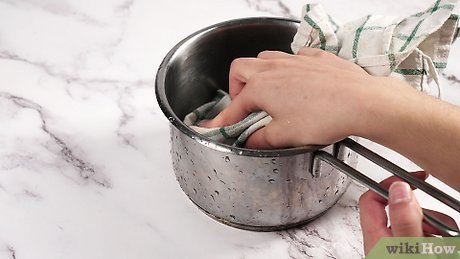
Dry with a clean, dry microfiber cloth in the grain direction. Stainless steel water spots form quickly — dry while the surface is still wet. Buff lightly with the dry cloth to add shine and eliminate any remaining streaks.
How to Remove Baked-On Grease from Stainless Steel
Baked-on grease near stovetops, range hoods, and oven surrounds is more challenging than fresh grease. Two approaches work well:
Method 1: Dish Soap Soak
For baked-on grease on removable stainless steel parts (range hood filters, small pans), soak in very hot water with a generous amount of dish soap for 15–30 minutes. The heat and extended soap contact breaks down the polymerized oil. After soaking, scrub with a non-scratch sponge in the grain direction. Rinse and dry.
Method 2: Baking Soda Paste
For non-removable baked-on grease on range hood faces, oven doors, or stovetop surrounds, mix baking soda with a small amount of dish soap and warm water into a thick paste. Apply the paste to the grease deposits and let sit for 15–30 minutes. The mild alkaline baking soda and surfactants in the dish soap break down the polymerized grease. Scrub in the grain direction with a damp microfiber cloth, then rinse and dry thoroughly.
Method 3: Isopropyl Alcohol
For medium-weight grease that dish soap doesn’t fully cut through, isopropyl alcohol (70–91%) applied to a microfiber cloth is highly effective. Alcohol dissolves cooking oil residue rapidly. Wipe in the grain direction, then follow with a plain water wipe and dry immediately. This is also the best method for removing the hazy film that builds up on stainless steel refrigerator doors over time.
How to Remove Fingerprints from Stainless Steel
Fingerprints are oil from skin that smears on stainless steel and shows clearly because of the reflective surface. The three most effective methods:
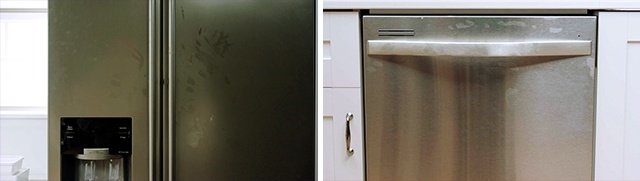
- Rubbing alcohol: Apply to a microfiber cloth and wipe in the grain direction. Dries quickly and leaves no streaks — the fastest method for fingerprint removal.
- Glass cleaner (ammonia-free): Spray on a cloth (not the appliance directly) and wipe in the grain direction. Works well for light fingerprints and water spots combined.
- Mineral oil or baby oil: A tiny amount on a microfiber cloth, buffed in the grain direction, removes fingerprints and leaves a protective coating that repels future fingerprints. This is the best method for fingerprint-prone surfaces like refrigerators near kitchens.
How to Restore Shine to Stainless Steel
After degreasing and cleaning, restoring shine with a light oil application takes 2 minutes and makes a significant visual difference:
- Ensure the surface is completely clean and dry.
- Apply a small amount of mineral oil or baby oil to a clean microfiber cloth.
- Buff the entire surface in the grain direction using firm, even strokes.
- Use a clean dry cloth to buff off any excess oil — you want a barely-there protective film, not a greasy surface.
- The result is a polished, fingerprint-resistant surface that looks like new.
Alternatively, commercial stainless steel polishes (Weiman, Magic Stainless Steel Cleaner) combine cleaning and polishing in one product and work well on appliances.
How to Clean Stainless Steel Sink Grease
Kitchen sinks accumulate cooking grease, food residue, and water deposits. For a stainless steel sink:
- Apply baking soda to the dry sink surface and rub gently with a damp sponge in the direction of the sink’s brushed grain.
- Rinse with hot water and a few drops of dish soap.
- For hard water spots around drains, apply white vinegar and let sit for 5 minutes before rinsing.
- Dry immediately after cleaning — water standing in a stainless steel sink causes water marks and mineral spots.
- Buff with a dry cloth and optionally apply a thin coat of mineral oil to protect the surface and restore shine.
Pro Tips for Stainless Steel Maintenance
- Clean regularly to prevent buildup. Fresh cooking grease wipes off in seconds with a damp cloth. Baked-on grease from multiple cooking sessions takes 30 minutes. Daily or weekly cleaning prevents the accumulation.
- Apply mineral oil monthly. A monthly oil application takes 5 minutes and provides fingerprint resistance, repels water spots, and maintains the appearance between deeper cleanings.
- Know your grain direction before cleaning a new appliance. Check multiple sections — grain often runs horizontally on doors and vertically on sides.
- Keep a spray bottle of 70% isopropyl alcohol nearby in the kitchen. A quick alcohol wipe on stainless steel during cooking keeps it looking clean with virtually no effort.
Common Mistakes When Cleaning Stainless Steel
- Wiping against the grain. Creates visible scratch marks across the brushed finish — always follow the grain direction.
- Using steel wool or abrasive pads. Scratches the surface permanently.
- Leaving water on the surface. Water spots form quickly on stainless steel. Always dry after cleaning.
- Using bleach. Causes pitting and corrosion over time.
- Using too much oil. Excess mineral oil makes the surface feel greasy and attracts dust — a light film is all that’s needed.
Frequently Asked Questions
What removes grease from stainless steel without streaks?
Isopropyl alcohol on a microfiber cloth wiped in the grain direction is the most streak-free method for stainless steel grease removal. It evaporates quickly without leaving residue. Follow with a quick dry-cloth buff for a streak-free result. Dish soap works well too but requires a thorough rinse step to prevent soap streak formation.
Can I use WD-40 to clean stainless steel?
WD-40 can remove grease and fingerprints from stainless steel and leaves a temporary protective coating. It’s effective but leaves an oily residue that needs to be buffed off — and it smells strongly. Mineral oil achieves the same effect with less residue and no odor. WD-40 is fine in a pinch but not the best regular maintenance choice.
Why does my stainless steel look cloudy after cleaning?
Cloudiness after cleaning is usually residual soap film that wasn’t fully rinsed off. Wipe with a cloth dampened with diluted white vinegar (1:1 with water), then dry immediately. The vinegar cuts through soap residue and the cloudiness should clear immediately. Alternatively, a wipe with isopropyl alcohol removes soap haze effectively.
How do I get rust off stainless steel?
True rust on stainless steel usually indicates either surface rust (from another metal item left on the surface that transferred rust) or pitting from chlorine exposure. For surface rust, apply a paste of baking soda and water and rub gently in the grain direction with a damp cloth. For stainless steel cleaners specifically formulated for rust removal, Bar Keepers Friend (liquid) works well — apply, rub gently in grain direction, and rinse thoroughly.
How do I protect stainless steel from future grease buildup?
Apply a thin coat of mineral oil or a dedicated stainless steel protectant after cleaning. The oil fills the microscopic surface texture and makes grease and fingerprints less likely to adhere — they wipe off more easily on the next cleaning. Reapply monthly for maximum benefit.
Conclusion
Cleaning grease off stainless steel is straightforward when you know the fundamentals: always work in the grain direction, use dish soap for fresh grease, baking soda or alcohol for baked-on deposits, and finish with mineral oil for shine and fingerprint resistance. The most important rule is grain direction — follow it consistently and your stainless steel surfaces will look pristine without scratches or streaks.
For more kitchen surface cleaning guides, check out our articles on how to clean Formica countertops and how to clean Corian countertops. Our guide on how to clean metal covers a broader range of metal surface types in similar detail.
