
Corian countertops are tough, low-maintenance, and nonporous — but they’re not indestructible. Daily use brings water spots, grease, food stains, and surface scuffs. The good news: most Corian problems clean up quickly with mild soap and warm water, and even deeper stains respond well to baking soda paste or a light buff with an abrasive pad. Here’s exactly how to clean Corian countertops for everyday care and tougher situations.
What You’ll Need
- Dish soap (mild, non-abrasive)
- Warm water
- Soft cloth or microfiber cloth
- Baking soda
- Isopropyl alcohol (rubbing alcohol)
- White vinegar (diluted, for hard water spots)
- Scotch-Brite tan or white scrubbing pad (non-scratch)
- Mr. Clean Magic Eraser or Corian-approved abrasive pad
- Corian cleaning spray or DuPont surface cleaner (optional)
- Spray bottle
Safety and Precautions
- No bleach on colored or dark Corian. Bleach can lighten or discolor non-white Corian surfaces permanently. Use it only in small dilutions on white Corian if absolutely necessary.
- Avoid harsh abrasive pads. Steel wool and green Scotch-Brite scrubbers will scratch the surface. Stick to white or tan pads.
- Never use paint strippers or solvent-based cleaners unless specifically directed by DuPont for removal of stubborn adhesives. Rinse thoroughly if you must.
- Heat caution: Corian can withstand brief heat exposure, but placing hot pots directly on the surface repeatedly causes thermal cracking. Always use trivets.
- Rinse thoroughly after any cleaner. Residue left behind can dull the finish or attract buildup.
Step-by-Step: Everyday Cleaning
Wipe Down with Warm Soapy Water
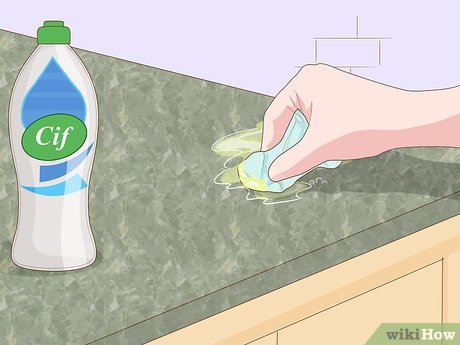
Mix a few drops of mild dish soap into warm water. Dampen your microfiber cloth and wipe the entire countertop surface, including edges. This handles grease, food smears, and general grime that builds up daily. Rinse the cloth and wipe again with clean water to remove soap residue.
Dry the Surface Immediately
Hard water spots are the #1 complaint from Corian owners. If you leave water pooling — especially near the sink — it evaporates and leaves mineral deposits. Dry your countertop after cleaning with a clean, dry cloth. This single habit prevents most water spot issues before they start.
Tackle Food Stains with Baking Soda Paste
For coffee, berry, mustard, or tomato sauce stains, mix baking soda and water into a thick paste. Apply it directly to the stain and let it sit for 5–10 minutes. Rub gently in a circular motion using a soft cloth or tan scrubbing pad. Rinse clean and dry. Repeat if the stain is still visible — baking soda is gentle enough for multiple passes.
Remove Grease Buildup with Rubbing Alcohol
For greasy residue near the stove or cooking area, dampen a cloth with isopropyl alcohol (70% or 91%) and wipe in a circular motion. Alcohol cuts through cooking grease without damaging the surface. Follow up with a soapy water wipe and rinse dry.
Dissolve Hard Water Spots with Diluted Vinegar
Mix equal parts white vinegar and water in a spray bottle. Spray directly onto mineral deposits or lime scale buildup — typically around the faucet base or sink edges. Let it sit for 3–5 minutes, then wipe away with a cloth. Rinse with clean water and dry. Don’t leave vinegar sitting too long as it can dull the finish with repeated use.
Use a Scrubbing Pad for Scuff Marks and Dull Spots
Corian is repairable, which is one of its best features. Light scuffs and surface scratches on a matte or satin finish can be rubbed out using a Scotch-Brite tan abrasive pad with a little soapy water. Use small circular motions and blend the area outward so there’s no obvious patch. For semi-gloss or high-gloss finishes, call a professional refinisher — DIY buffing on gloss finishes can make scratches more visible.
Disinfect the Surface
For disinfecting after raw meat prep or illness, use a diluted bleach solution (1 tablespoon bleach per quart of water) on white or light Corian only. For colored Corian, use a food-safe antibacterial kitchen spray instead. Apply, let sit 1–2 minutes, then rinse thoroughly and dry. According to DuPont, Corian is nonporous and meets NSF 51 food safety standards, so standard disinfecting keeps it hygienic with minimal effort.
How to Remove Tough Stains from Corian
Ink or Marker
Dab rubbing alcohol on the stain with a cotton ball or cloth. Let it sit for 30 seconds and rub gently. Stubborn ink may require a Magic Eraser — wet it and rub in circular motions. Rinse and dry when done.
Nail Polish
Apply a small amount of non-acetone nail polish remover to a cloth and dab the stain — do not rub aggressively. Wipe clean immediately, then follow with soapy water and rinse. Acetone can dull Corian’s surface so use it sparingly and only if needed.
Rust Stains
Rust from metal cans or drain hardware responds well to a paste of Bar Keepers Friend (powder version) and water. Apply to the rust spot, let sit 5 minutes, scrub gently with a soft cloth, and rinse thoroughly. This also works on heat discoloration and stubborn mineral staining.
Burn Marks
Light heat discoloration can often be removed by buffing with a fine-grit abrasive pad (400-grit sandpaper works on matte finishes) using soapy water. Work in small circles, blend outward, then rinse. For deep burns that penetrate the surface, contact a Corian-certified fabricator — deep burns may require a section replacement.
Wax or Candle Drips
Let the wax fully harden, then gently scrape it off with a plastic scraper or old credit card. Avoid metal tools that will scratch the surface. After removing the bulk of the wax, clean residue with a cloth dampened in rubbing alcohol. Finish with warm soapy water.
Pro Tips for Maintaining Corian Countertops
- Match your cleaning routine to your finish. Matte and satin Corian hides small scratches and is very forgiving. High-gloss Corian shows every mark and requires gentler, more consistent care.
- Don’t let standing water pool near seams. Although Corian is nonporous, water sitting in seams can slowly degrade the adhesive bonding underneath.
- Clean spills immediately. Corian resists staining, but red wine, coffee, and turmeric will penetrate if left for hours. Same-day cleanup is the easiest prevention.
- Never use abrasive cleansers like Ajax or Comet powder regularly. An occasional gentle use is fine for tough stains, but regular use will permanently dull the surface finish.
- Avoid cutting directly on Corian. It will damage both the surface and your knife blade. Always use a cutting board.
- Restore luster with a Corian polish. If your counters look dull overall, a light application of Gel-Gloss or a manufacturer-recommended Corian surface polish can restore the sheen without professional refinishing.
Common Mistakes When Cleaning Corian
- Using bleach on colored Corian. Even diluted bleach will lighten dark or bold-colored Corian over time. Reserve it for white surfaces only.
- Leaving soap residue. Not rinsing after cleaning causes a filmy buildup that dulls the countertop’s appearance.
- Using steel wool or green scrub pads. These will leave fine scratch patterns visible in light. Only use tan or white non-scratch pads.
- Applying polish without cleaning first. Polishing over grease or grit will trap debris and create more problems. Always clean thoroughly before any restoration step.
- Ignoring manufacturer guidance on solvents. Some chemical strippers will permanently damage Corian. When in doubt, test in a hidden area first or call DuPont’s support line.
Troubleshooting Corian Surface Issues
| Problem | Likely Cause | Fix |
|---|---|---|
| Dull, hazy surface | Soap residue buildup or repeated abrasive cleaning | Clean with diluted vinegar, then apply Corian polish |
| White spots around faucet | Hard water mineral deposits | Diluted vinegar soak + wipe; repeat as needed |
| Scratch marks visible | Abrasive pad, metal utensils, or cutting on surface | Buff out with tan Scotch-Brite pad + soapy water (matte finish only) |
| Stain won’t come out with baking soda | Stain has had time to set | Try Bar Keepers Friend paste or a Magic Eraser; repeat 2–3 times |
| Burn mark won’t buff out | Deep thermal damage | Contact a Corian-certified fabricator for section repair |
Frequently Asked Questions
Can I use bleach on Corian countertops?
You can use diluted bleach (1 tablespoon per quart of water) on white or near-white Corian for disinfecting. However, avoid bleach entirely on dark, colored, or patterned Corian — it will cause permanent lightening. Rinse thoroughly after use regardless of color.
What’s the best everyday cleaner for Corian?
Mild dish soap and warm water is all you need for daily maintenance. For a quick spray-down, a diluted all-purpose kitchen cleaner works fine. The key is to rinse thoroughly and dry the surface after every cleaning.
Can scratches on Corian be repaired?
Yes — this is one of Corian’s biggest advantages over granite and quartz. Light surface scratches on matte or satin finishes can be buffed out using a fine abrasive pad with soapy water. Deeper scratches may need 400-grit sandpaper followed by polish. Very deep gouges require professional refinishing.
Is Corian heat resistant?
Corian can handle brief contact with warm pots (up to around 212°F), but sustained heat exposure causes discoloration and surface cracking. Always use a trivet or hot pad when placing hot cookware on the countertop.
How do I remove black marks or scuffs on Corian?
Black marks from rubber feet on appliances, pots, or skid marks usually come off with rubbing alcohol on a cloth. If alcohol doesn’t work, try a Magic Eraser with gentle circular pressure. Rinse and dry after.
Conclusion
Cleaning Corian countertops is straightforward when you know what to use and what to avoid. For daily care, warm soapy water and a microfiber cloth handle 95% of messes. For stains, baking soda paste and rubbing alcohol solve most problems without risking the surface. The real power of Corian is its repairability — unlike stone countertops, surface scratches and scuffs can actually be buffed out at home. Keep up with daily drying, avoid harsh abrasives, and your Corian counters will look great for years.
If you’re dealing with stains on other kitchen surfaces, check out our guide on how to clean and shine a porcelain sink. For broader countertop care, see our article on how to clean epoxy countertops. Need to tackle the whole kitchen? Our cast iron griddle cleaning guide covers another commonly neglected surface.
