
Epoxy countertops are nonporous, highly durable, and resistant to most household chemicals — but they’re not maintenance-free. The surface can stain from prolonged contact with dark liquids, get scratched by abrasive cleaners, or become dull from improper products. For everyday cleaning, warm water and mild dish soap is all you need. For stains and residue, isopropyl alcohol, baking soda, or acetone (used carefully) handles most problems. Here’s a complete guide to cleaning and maintaining epoxy countertops without damaging the finish.
What You’ll Need
- Mild dish soap
- Warm water
- Microfiber cloth or soft sponge
- Isopropyl alcohol (rubbing alcohol, 70% or 91%)
- Baking soda
- Acetone or nail polish remover (for stubborn spots only)
- Spray bottle
- Clean dry cloth
- Epoxy-safe countertop wax or polish (for maintenance)
Safety and Precautions
- No abrasive cleaners or scrubbing pads. Steel wool, Comet, Ajax, and green scrubbing pads scratch the epoxy surface — scratches are permanent and make the surface harder to keep clean.
- Avoid prolonged contact with strong acids or bases. Undiluted bleach, muriatic acid, and drain cleaners can damage or discolor epoxy. Diluted bleach in small amounts is generally tolerated for disinfecting but should be rinsed immediately.
- Test acetone in a hidden area first. Acetone (the active ingredient in most nail polish removers) can dull or soften some epoxy formulations. Test before applying to a visible surface.
- Avoid leaving spills to sit. Even though epoxy is nonporous, prolonged contact with red wine, turmeric, mustard, and acidic liquids can cause staining especially on lighter-colored countertops.
- Don’t place hot pots directly on epoxy. Epoxy has lower heat tolerance than stone — direct contact with pots from a hot stove can cause heat hazing, discoloration, or surface softening.
Step-by-Step: Daily Cleaning
Wipe Down with Warm Soapy Water
Mix a few drops of mild dish soap in warm water. Dampen a microfiber cloth and wipe the entire countertop surface, cleaning up food residue, crumbs, and general grime. This handles 95% of everyday cleaning needs and is safe for regular daily use without any risk to the epoxy finish.
Rinse with Clean Water
Wipe down with a clean, damp cloth to remove soap residue. Soap film left on epoxy can dull the surface gloss over time if it builds up. A quick rinse wipe keeps the surface looking polished.
Dry Thoroughly
Dry the surface with a clean, dry microfiber cloth. Epoxy is nonporous so water won’t damage it, but drying prevents mineral deposits from hard water from accumulating on the surface. It also maintains the reflective gloss that makes epoxy countertops so attractive.
How to Remove Stains from Epoxy Countertops
Food and Beverage Stains (Coffee, Wine, Juice)
For fresh stains, clean immediately with dish soap and water — these lift off easily when fresh. For set stains, dampen a cloth with isopropyl alcohol (70–91%) and wipe the stained area in circular motions. Rubbing alcohol is highly effective at cutting through organic food staining on epoxy without damaging the surface. Follow with a soapy water wipe and rinse dry.
Grease and Oil Residue
Cooking grease near the stovetop is common. Dampen a microfiber cloth with isopropyl alcohol and wipe in circular motions to cut through the grease film. For heavy buildup, apply a small amount of dish soap to the cloth directly rather than diluting in water — the concentrated soap works better on thick grease. Rinse and dry after.
Turmeric, Mustard, and Dye Stains
These highly pigmented stains are the most challenging for light-colored epoxy. Apply a paste of baking soda and water to the stained area and let it sit for 15–20 minutes. Scrub gently with a soft cloth in circular motions. Rinse and dry. If the stain persists, try dabbing with isopropyl alcohol. For very stubborn turmeric staining that won’t respond to alcohol, a brief application of diluted hydrogen peroxide can help — apply, let sit 5 minutes, rinse immediately.
Marker, Ink, and Crayon
Isopropyl alcohol on a cotton ball removes most marker and ink from epoxy easily. For waxy residue like crayon, let it harden if it’s not already, then carefully scrape off with a plastic scraper. Follow with an alcohol wipe for any remaining color.
Hard Water and Mineral Deposits
White mineral deposits around sinks and faucets can be removed with diluted white vinegar (1:1 with water) on a cloth. Let it sit for 5 minutes, wipe, and rinse. Avoid extended vinegar contact on epoxy — the mild acid is generally tolerated in short applications but shouldn’t be left to soak.
Epoxy-Specific Stains: Heat Hazing
If heat hazing (a cloudy or whitish discoloration from heat exposure) occurs, this is surface damage that’s difficult to reverse with cleaning alone. Light hazing may respond to polishing with an epoxy-safe countertop polish and buffing. Significant heat damage requires re-coating or refinishing the affected area by the original installer or an epoxy flooring/countertop professional.

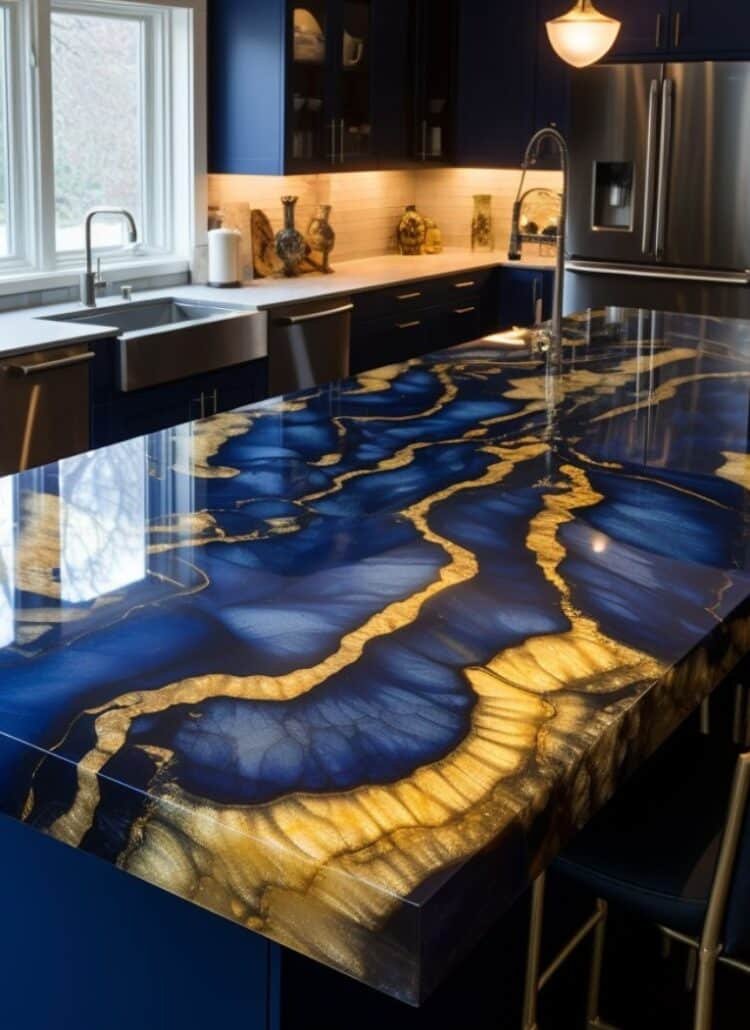
How to Remove Scratches and Restore Epoxy Gloss
Light surface scratches on epoxy countertops can sometimes be buffed out using a very fine automotive polishing compound (such as Meguiar’s PlastX or similar) applied with a soft cloth using circular motions. Work in small sections, apply moderate pressure, and buff off the residue with a clean cloth. This method works well for hairline surface scratches — deeper scratches that penetrate the epoxy layer require spot recoating.
To restore overall gloss and protect the surface, apply a thin coat of carnauba wax or a product specifically marketed for epoxy countertops (many epoxy manufacturers sell a companion polish). Apply with a soft cloth, let haze, and buff off. This should be done every 3–6 months for high-use countertops.
Disinfecting Epoxy Countertops
Epoxy is nonporous and one of the most hygienic countertop surfaces available. For regular disinfecting, a 70% isopropyl alcohol spray is safe, effective, and won’t damage the surface. Apply, let sit 30 seconds, and wipe dry. For food prep areas, a very diluted bleach solution (1 tablespoon per gallon of water) also works — apply, let sit 1 minute, then rinse immediately with clean water and dry. Don’t use concentrated bleach or leave it on the surface.
Pro Tips for Epoxy Countertop Maintenance
- Use trivets and hot pads. Epoxy has a lower heat tolerance than granite or quartz — most formulations start to soften or discolor at temperatures above 300°F (150°C). Hot pots from a high burner can exceed this easily.
- Clean spills immediately. Epoxy resists staining, but sitting spills — especially acidic or highly pigmented ones — will penetrate if given enough time. Wiping immediately keeps cleanup to a soap-and-water job.
- Wax every few months. A thin coat of carnauba wax every 3–6 months maintains the gloss, adds minor scratch resistance, and makes daily cleaning easier.
- Cut on a cutting board always. Knives will scratch epoxy. The scratches aren’t just cosmetic — they create grooves where bacteria can harbor.
- Avoid harsh chemical drain cleaners near the sink. Splashes of products like Drano contain lye (sodium hydroxide) which can damage epoxy on contact. If a drain cleaner splash occurs, rinse immediately with water.
Common Mistakes When Cleaning Epoxy Countertops
- Using abrasive cleaners or pads. These scratch the surface permanently. Only soft cloths and sponges belong on epoxy.
- Letting strong acidic cleaners sit. Vinegar, lemon juice, and commercial acidic cleaners used in high concentrations or left too long etch the surface over time.
- Using bleach as a daily cleaner. Occasional diluted bleach is fine, but regular use yellows and degrades the epoxy surface.
- Not drying after cleaning. Regular water pooling leads to mineral deposit buildup and dull patches.
- Placing hot items directly on the surface. Heat damage to epoxy is one of the most common issues and is preventable with trivets.
Frequently Asked Questions
Can I use Windex or glass cleaner on epoxy countertops?
Yes — ammonia-based glass cleaners like Windex are generally safe for epoxy countertops and work well for a quick streak-free shine. However, regular use of ammonia-based products can gradually dull some epoxy finishes over time. Isopropyl alcohol is a safer and equally effective alternative for regular streak-free cleaning.
Can epoxy countertops be repaired if damaged?
Yes — one advantage of epoxy countertops is that they can be repaired and re-coated. Minor scratches and dull spots can be polished out. Chips and deeper damage can be filled with a matching epoxy and sanded smooth. Larger sections can be re-coated over the existing surface. This repairability is an advantage over natural stone surfaces.
Does epoxy stain easily?
Epoxy is quite stain-resistant compared to other countertop materials because it’s fully nonporous. However, highly pigmented substances like turmeric, red wine, and permanent marker can stain light-colored epoxy if left sitting. Cleaning spills immediately prevents almost all staining.
How do I remove scuff marks from epoxy countertops?
Rubber scuffs from appliances or the bottoms of objects usually come off with isopropyl alcohol on a cloth. If the scuff doesn’t respond to alcohol, try a Magic Eraser with light pressure — test in a hidden area first as Magic Erasers are mildly abrasive and could dull the finish on very glossy surfaces.
What’s the best way to clean epoxy countertops around a sink?
The area around a sink accumulates the most mineral deposits and soap scum. Clean regularly with diluted white vinegar (1:1 with water) to prevent buildup. After treating with vinegar, rinse well with clean water and dry immediately. Applying a light coat of carnauba wax to the sink surround area makes it much easier to wipe clean during daily use.
Conclusion
Epoxy countertops are among the easiest surfaces to maintain when you know what to use. Mild dish soap for daily cleaning, isopropyl alcohol for stains and grease, periodic waxing for gloss maintenance, and trivets for heat protection — that’s the complete care routine. Avoid abrasives and prolonged contact with strong chemicals, and your epoxy countertops will stay glossy and beautiful for years without professional attention.
For related countertop care guides, check out our articles on how to clean Corian countertops and how to clean epoxy floors. If you’re dealing with stains on other kitchen surfaces, our guide on how to clean cultured marble covers bathroom vanity care in similar detail.
