
Enameled cast iron — whether it’s a Le Creuset Dutch oven, a Lodge enamel skillet, or any similar piece — is easier to care for than bare cast iron because the enamel coating doesn’t require seasoning and isn’t affected by acidic foods. But the enamel can stain, chip, and dull if you clean it incorrectly. For most everyday cooking residue, warm water and dish soap work fine. For stubborn stains and baked-on food, a baking soda simmer and Bar Keepers Friend are your best tools. Here’s everything you need to know.
What You’ll Need
- Mild dish soap
- Warm to hot water
- Baking soda
- Bar Keepers Friend (liquid or powder, non-scratch)
- Soft sponge or nylon scrubbing pad (non-scratch)
- Wooden or silicone utensil for loosening stuck food
- Clean cloth or towel
- Cooking oil or Le Creuset conditioner (for lid knob maintenance)
Safety and Precautions
- Never use steel wool or metal scouring pads. These permanently scratch and chip the enamel coating — damage that cannot be repaired. Use only soft sponges or nylon non-scratch pads.
- Avoid sudden temperature changes. Don’t plunge a hot enameled cast iron piece into cold water — thermal shock can crack the enamel. Allow it to cool to near room temperature before washing.
- Enameled cast iron is technically dishwasher safe per most manufacturers, but repeated dishwasher use degrades the enamel and dulls the color over time. Hand washing is strongly recommended.
- Do not use bleach or oven cleaners on enameled cast iron — these chemicals degrade the enamel finish and can cause discoloration or surface damage.
- Handle chips carefully. Small enamel chips expose the raw cast iron beneath — continued cooking use is generally still safe, but a chipped piece should be used with care on acidic foods.
Step-by-Step: Everyday Cleaning
Let the Pan Cool First
Allow the enameled cast iron to cool completely or to a comfortable warm temperature before cleaning. This prevents thermal shock damage and makes handling safer. Never set a hot pan in the sink under cold water.
Wash with Warm Soapy Water
Add a squirt of mild dish soap and warm water to the pan. Use a soft sponge or nylon pad to clean the interior and exterior surfaces. For most everyday cooking — sautéing vegetables, braising, making stews — this is all you need. Rinse thoroughly and dry immediately with a clean cloth.
Deal with Stuck Food While Warm
If there’s food stuck to the bottom of the pan, fill it halfway with warm water and a drop of dish soap and let it sit for 15–20 minutes. The stuck food will soften and lift away easily with a soft sponge. For more stubborn residue, proceed to the simmer method below.
Dry Completely and Store Properly
After washing, dry the pan thoroughly with a clean cloth — including the rim and exterior. Enameled cast iron is heavy and retains heat well, so it dries quickly. Store with a folded paper towel inside the lid to prevent moisture accumulation and allow air circulation. This prevents odors and any chance of surface moisture damage over time.
How to Remove Stubborn Stains and Burnt Food
Method 1: Baking Soda Simmer
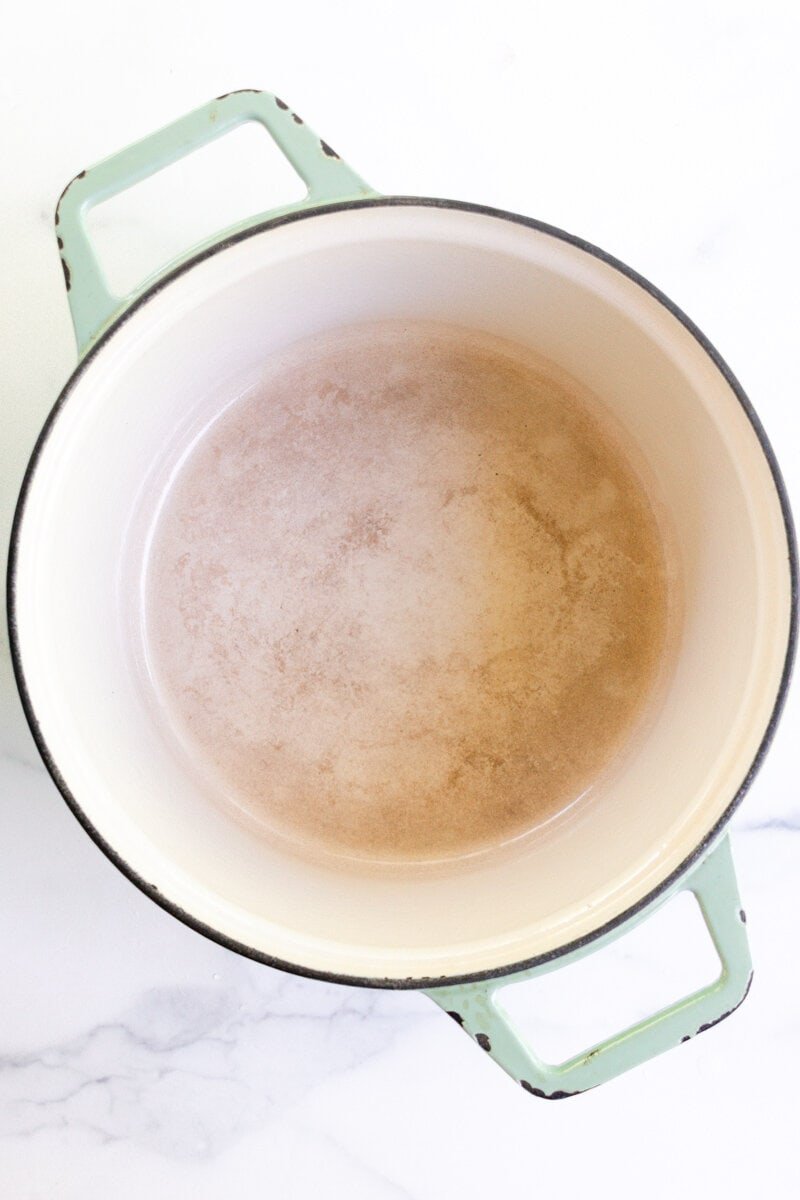
This is the most effective and safest method for baked-on food and brown interior staining. Fill the pan with enough water to cover the stained area. Add 2–3 tablespoons of baking soda. Bring to a boil on the stovetop over medium heat, then reduce to a simmer for 5–10 minutes. The simmering water and baking soda loosen the burnt residue. Remove from heat, allow to cool, then use a wooden or silicone spatula to gently scrape away the loosened food. Finish with a normal wash.
Method 2: Bar Keepers Friend
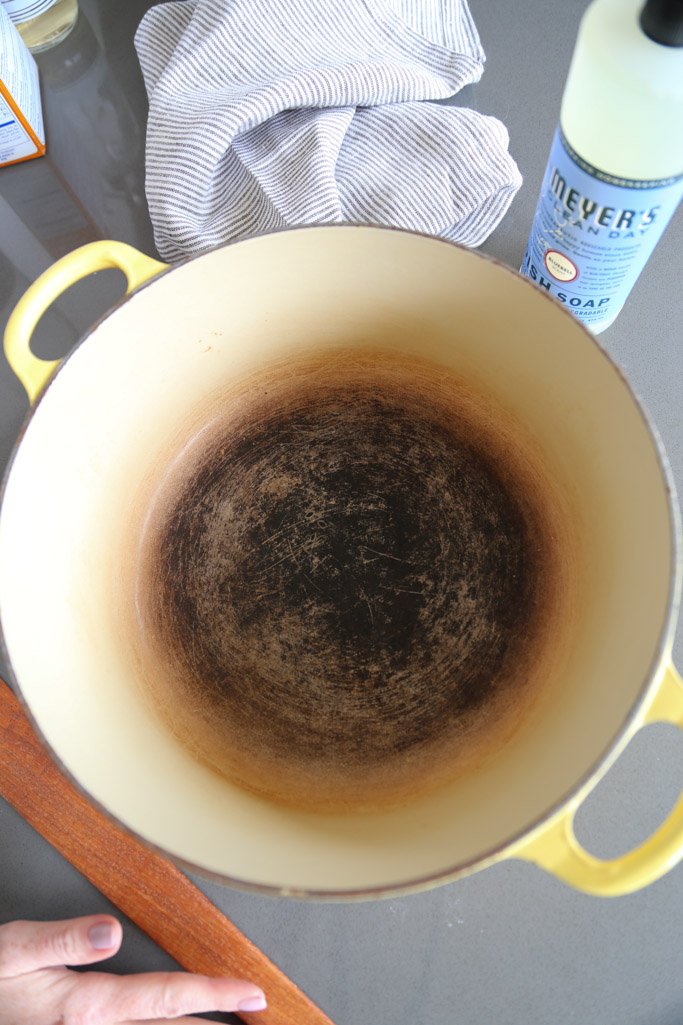
For stubborn brown staining, discoloration, and the yellowish patina that builds up on the interior of white-enameled pieces, Bar Keepers Friend is the most powerful safe cleaner available. Wet the surface and sprinkle a small amount of Bar Keepers Friend powder (or use the liquid version). Use a damp soft cloth or sponge to work it in using light circular motions. Rinse very thoroughly after — Bar Keepers Friend contains oxalic acid and should not remain in contact with enamel for more than 1–2 minutes. Multiple passes may be needed for heavy staining, but this method routinely restores heavily stained white enamel to near-original brightness.
Method 3: Overnight Baking Soda Soak
For really stubborn stains that won’t respond to simmering, mix 3 tablespoons of baking soda in enough warm water to fill the pan and let it soak overnight. The extended contact time allows the mild alkaline solution to break down tough organic deposits. Scrub gently in the morning and rinse.
How to Clean the Exterior of Enameled Cast Iron
The exterior of enameled cast iron (Le Creuset’s classic gradient colors, for example) gets just as stained as the interior — splatters, heat discoloration, and oil residue build up on the sides and bottom over time. Apply Bar Keepers Friend to the exterior with a damp cloth, work in small circular sections, and rinse thoroughly. For the flat bottom, use a nylon pad with dish soap. Avoid using the baking soda simmer method on the exterior — it only applies to the interior cooking surface.
How to Clean the Enamel Lid
Lids clean the same way as the pot — mild soap and water for everyday use, Bar Keepers Friend for staining. The knob on top of some lids is made of different materials: phenolic (black plastic) knobs are dishwasher safe up to certain temperatures, while stainless steel knobs are fully dishwasher safe. For the enamel lid surface, all the same rules apply — no steel wool, no bleach, no harsh abrasives.
Pro Tips for Enameled Cast Iron Care
- Season the rim and lid rim. The raw cast iron rim where the lid contacts the pot is not enamel-coated on most pieces. Wipe a thin layer of cooking oil on these exposed rims after drying to prevent surface rust.
- Use wooden and silicone utensils only. Metal utensils don’t damage enamel in a single use but cause micro-scratches over time that dull the surface and increase staining.
- Don’t cook on high heat. Enameled cast iron distributes heat so well that medium heat is almost always sufficient. High heat accelerates interior staining and can cause thermal stress to the enamel.
- Clean while still slightly warm for best results. Warm (not hot) pans clean more easily than fully cooled ones where residue has hardened.
- Le Creuset Cleaner vs. Bar Keepers Friend: Le Creuset makes a branded cookware cleaner that works similarly to Bar Keepers Friend. Both are effective — Bar Keepers Friend is significantly cheaper for identical results.
Common Mistakes When Cleaning Enameled Cast Iron
- Using steel wool. This is the most common and most damaging mistake — permanently scratches the enamel surface.
- Thermal shock (hot to cold water). Cracking enamel from sudden temperature change is irreversible.
- Regular dishwasher use. Even though technically dishwasher safe, repeated cycles degrade enamel color and surface quality.
- Leaving food soaking too long without baking soda. Plain water soaks are less effective than baking soda solution for loosening baked-on food.
- Ignoring exterior buildup. Staining on the outside is just as fixable as interior staining but gets neglected until it becomes very heavy. Regular exterior cleaning keeps it manageable.
Frequently Asked Questions
Can I put enameled cast iron in the dishwasher?
Most manufacturers say yes, but repeated dishwasher cycles dull the enamel, fade the color, and reduce the non-stick quality of the interior surface over time. Hand washing is strongly recommended to preserve your investment — especially for high-end pieces like Le Creuset or Staub.
Why is the inside of my Dutch oven turning brown?
Brown discoloration is a normal result of repeated cooking — oils polymerize on the enamel surface over time. It’s not harmful and doesn’t affect cooking performance. Bar Keepers Friend will remove even heavy brown patina from white enamel with a few passes, restoring the original color.
Can I use Bar Keepers Friend on Le Creuset?
Yes — Le Creuset themselves acknowledge that Bar Keepers Friend is an appropriate cleaner for their enameled cookware. Use it on the interior for brown staining and on the exterior for splatters. Apply, scrub briefly with a soft cloth, and rinse very thoroughly. It’s one of the most effective cleaning tools for stubborn enamel staining.
What do I do if the enamel chips?
Small chips that don’t expose raw iron throughout the cooking surface are generally still safe for use. Small chips in the interior of a Dutch oven or skillet do expose raw iron, but this isn’t a health risk for most cooking — the exposed area is minimal and will develop a small seasoning patch. However, chipped pieces should not be used for long-simmering highly acidic foods (tomato sauces, citrus) which can interact with exposed iron. Major chipping that compromises the cooking surface means it’s time to replace the piece.
How do I clean the black residue around the rim of my Dutch oven?
The black residue around the exterior rim and lid contact area is a combination of carbon deposits, burnt drips, and oil. Use a paste of baking soda and dish soap applied with a soft toothbrush to work into this specific area. Rinse thoroughly. Bar Keepers Friend also works well here. The raw cast iron rim should be dried and lightly oiled after cleaning to prevent rust.
Conclusion
Enameled cast iron is one of the most durable and rewarding cooking surfaces you can own — but its longevity depends on gentle cleaning. Soft sponges and mild soap for everyday use; baking soda simmers and Bar Keepers Friend for stubborn stains; no steel wool, no thermal shock, and no regular dishwasher use. Follow these guidelines and your enameled Dutch oven or skillet will cook beautifully for decades.
For more cast iron care, see our guide on how to clean a cast iron griddle. If you’re dealing with other cookware cleaning challenges, our article on how to clean Corningware covers glass-ceramic bakeware using similar techniques.
