
To clean old tools, soak them in undiluted white vinegar for 1–24 hours to remove rust, scrub with a wire brush or steel wool, rinse, dry completely, and apply a light coat of WD-40 or mineral oil to prevent re-rusting. For grease and grime (without rust), a parts cleaning spray or dish soap and a stiff brush cleans most hand tools in minutes. Old tools found in garages, barns, or estate sales are often restorable to full function with the right approach — and vintage hand tools in particular can be worth restoring. This guide covers rust removal, grease cleaning, wood handle restoration, and long-term tool protection.
What You’ll Need
For Rust Removal
- White distilled vinegar (undiluted)
- Wire brush or steel wool (coarse and fine grades)
- Naval Jelly or rust converter (for heavy rust)
- Sandpaper (80–220 grit)
- Angle grinder with wire wheel (for heavy rust on large tools)
For Grease and Grime
- Mineral spirits or parts cleaning solvent
- Dish soap and warm water
- Old toothbrush and stiff-bristle brush
- Degreaser spray
For Finishing and Protection
- WD-40 or mineral oil
- Boiled linseed oil (for wood handles)
- Fine steel wool or Scotch-Brite pad (for final polishing)
- Clean cloths
Safety and Precautions
- Wear safety glasses when using a wire brush or angle grinder. Wire bristles break off and fly at high speed during power tool wire brushing.
- Wear rubber gloves when handling vinegar, rust converters, and solvents. These products irritate skin with prolonged contact.
- Work in a ventilated area with solvents and degreasers.
- Don’t soak wooden handles in vinegar. Vinegar loosens the wood-to-metal bonds in tools with wooden handles (chisels, hammers, axes). Remove handles or keep them dry when vinegar soaking the metal.
- Dry tools completely before oiling. Applying oil to wet tools traps moisture and accelerates rusting.
Step-by-Step: How to Remove Rust From Old Tools
Step 1 — Remove Loose Rust First
Before soaking, use a wire brush or coarse steel wool to knock off loose, flaking rust. This removes the top layer of oxidation and gives the vinegar access to the bonded rust beneath. For tools with heavy rust crust, an angle grinder with a wire wheel removes rust far faster than hand wire brushing — use it for the bulk removal, then switch to hand tools for finer work.
Step 2 — Vinegar Soak
Place the tools in a container and cover completely with undiluted white vinegar. The acetic acid in vinegar reacts with iron oxide (rust) to form soluble iron acetate, effectively dissolving the rust. Leave to soak:
- Light surface rust: 1–3 hours
- Moderate rust: 4–8 hours
- Heavy rust: 12–24 hours
- Extremely heavy pitting: up to 48 hours
Check the tools periodically — over-soaking in vinegar can etch the steel and cause surface pitting in very long treatments. After 24 hours, check and consider switching to mechanical removal for any remaining rust.
Step 3 — Scrub With Wire Brush or Steel Wool
After soaking, remove the tools and immediately scrub with a wire brush or steel wool while the surface is still wet from the vinegar. The dissolved rust lifts off easily. Work systematically across all surfaces. For flat areas like plane bodies, sandpaper on a flat block works well to remove residual rust and level the surface simultaneously. Start with coarser grit (80–120) for heavy rust and finish with finer grit (220) for a smoother surface.
Step 4 — Rinse Thoroughly and Dry Immediately
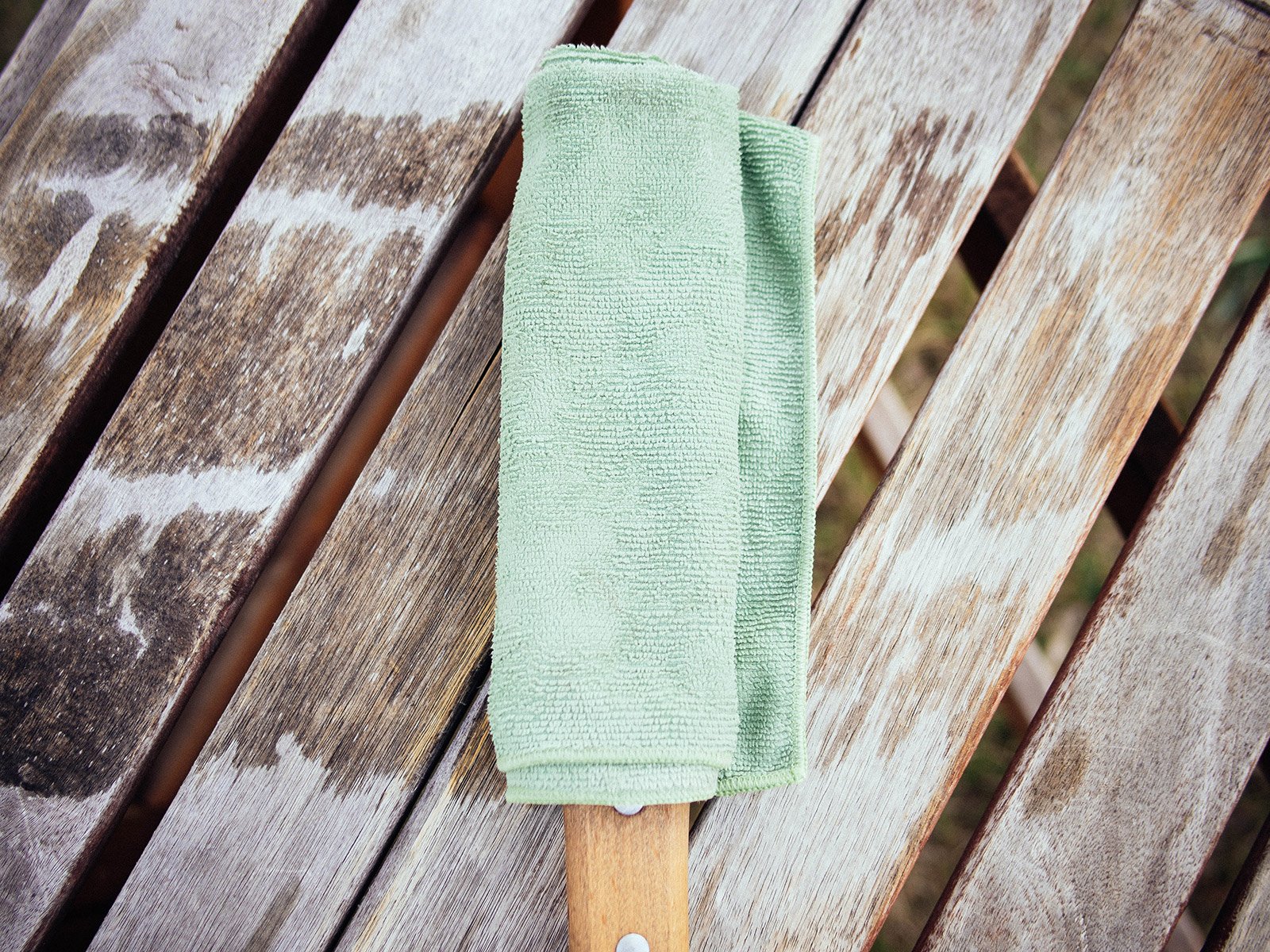
Rinse tools in clean water to remove all vinegar and rust residue. Vinegar left on metal continues to etch the surface and accelerates corrosion — thorough rinsing is essential. Dry immediately and completely using a clean cloth and compressed air for any recessed areas. Don’t let tools air dry wet — re-rusting begins within hours.
Step 5 — Apply Rust Protection Immediately
While the tools are still slightly warm from drying, apply a light coat of WD-40, mineral oil, or 3-IN-ONE oil to all metal surfaces. The oil penetrates the clean, porous metal surface and creates a moisture barrier. Wipe off excess — you want a thin film, not a dripping coat. For long-term storage, a light coat of paste wax (Johnson Paste Wax or similar) provides longer-lasting rust protection than oil alone.
How to Clean Greasy Old Tools
Step 1 — Degrease With Mineral Spirits or Parts Cleaner
For tools caked in old grease, oil, and grime (typical of old garage finds): soak a stiff brush in mineral spirits or commercial parts cleaner and scrub all surfaces. Mineral spirits dissolve petroleum-based grease and oil very effectively. Work over a container to catch the solvent runoff. For heavily caked tools, a brief soak in mineral spirits (15–30 minutes) loosens the grease before brushing.
Step 2 — Scrub With Dish Soap and Water
After the initial degreasing, wash with warm water and dish soap to remove the remaining solvent residue and any water-soluble grime. Scrub with a stiff brush or toothbrush in crevices. Rinse well.
Step 3 — Dry and Oil


Dry completely and apply a light protective oil coat as described above.
How to Restore Wooden Tool Handles
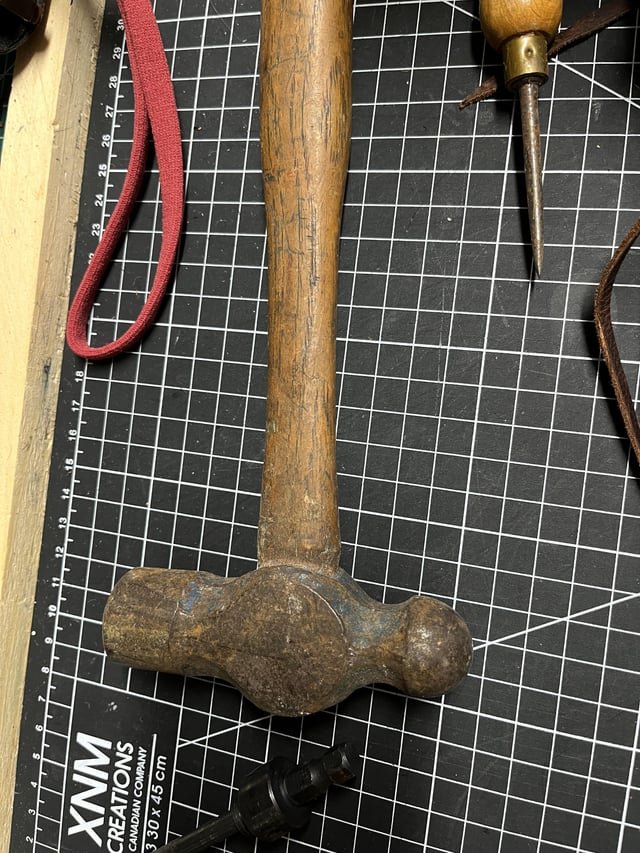
Old wooden handles on hammers, chisels, axes, and hand planes often need as much attention as the metal parts:
Step 1 — Sand the Handle
Sand the handle with 120-grit sandpaper to remove old finish, grease, and surface grime. Follow with 220-grit for smoothing. Sanding reveals clean wood and opens the grain for conditioning.
Step 2 — Apply Boiled Linseed Oil
Boiled linseed oil (BLO) is the traditional tool handle conditioner. Apply a generous coat, work it into the grain with a cloth, let soak for 15–20 minutes, then wipe off the excess. Apply 2–3 coats over several days, allowing each coat to cure fully. BLO penetrates the wood, strengthens it against moisture, and gives it a rich, natural appearance. WARNING: Rags soaked in boiled linseed oil can spontaneously combust as they dry — spread them out flat outdoors to dry, or put them in a metal bucket with water before disposal.
Rust Removal Method Comparison
| Method | Best For | Time | Effort |
|---|---|---|---|
| White vinegar soak | Light to heavy rust on most tools | 1–24 hours | Low (mostly waiting) |
| Naval Jelly | Heavy rust, complex shapes | 30–60 min | Low |
| Wire brush / angle grinder | Very heavy rust, large surfaces | 30–60 min | High |
| Sandpaper | Flat surfaces, final finishing | 30–60 min | Medium |
| Electrolytic rust removal | Complex tools, best results | Several hours | Setup required |
Pro Tips and Common Mistakes
- Don’t rush the vinegar soak. The biggest mistake is pulling tools out too early and scrubbing when rust is still bonded. Extended soak time dramatically reduces the effort needed to scrub.
- Dry tools immediately after any water exposure. Iron rusts fast — leave a clean tool on the workbench wet and it will show rust within a few hours in humid conditions.
- Sharpen tools after cleaning. Cleaning rust from edges like chisels, plane blades, and saw teeth often dulls the edge. Resharpening after cleaning is part of a complete tool restoration.
- Consider electrolytic rust removal for complex or valuable tools. Electrolysis (using a battery charger, sodium carbonate solution, and a sacrificial iron anode) removes rust from recessed areas and complex shapes that wire brushes can’t reach effectively. It’s especially useful for restoring antique tools with intricate profiles.
Frequently Asked Questions
How long should I soak rusty tools in vinegar?
Light surface rust: 1–3 hours is usually sufficient. Moderate rust (red and brown patches, but no deep pitting): 8–12 hours. Heavy rust (deep orange crust, significant pitting): 12–24 hours. Check periodically — over 24 hours can begin to etch clean steel. After soaking, scrub while still wet for best results.
Does WD-40 remove rust from tools?
WD-40 helps loosen and displace light surface rust and moisture, but it’s not an effective rust remover for moderate to heavy rusting. For actual rust removal, white vinegar, Naval Jelly, or mechanical wire brushing is far more effective. WD-40 is excellent for post-cleaning protection and rust prevention — it’s a lubricant and rust preventive, not a rust remover.
Can I restore pitted rusty tools?
Yes — rust pitting is damage to the steel surface, but tools with even significant pitting are often fully functional after restoration. The pits won’t fill in (short of welding and grinding), but once cleaned of rust, they don’t affect the tool’s function. For hand plane faces and chisels (where flatness matters), deep pitting may need grinding to flatten before the tool is usable for precision work. Surface pitting on handles and frames doesn’t affect function at all.
How do I clean saw blades?
Soak saw blades in undiluted white vinegar for 1–3 hours for rust. Scrub teeth individually with a fine wire brush. For pitch buildup (sappy resin from cutting wood), spray with a pitch and resin remover (available at woodworking stores) and scrub with a toothbrush. Dry immediately and apply a thin coat of WD-40 or saw wax. Sharpen teeth with a saw file after restoration if edges are dull.
What is the best rust remover for tools?
White vinegar is the most cost-effective and widely available option for most tool rust removal. Evapo-Rust is a highly effective commercial product that’s safer than acids (pH-neutral, non-toxic) and works extremely well for soaking complex-shaped items. Naval Jelly (phosphoric acid) is excellent for heavy rust on flat surfaces. For the ultimate result on valuable tools, electrolytic rust removal gives the most complete rust removal with the least mechanical abrasion to the steel surface.
Conclusion
Old tools are almost always worth restoring — the steel in vintage hand tools is often higher quality than modern budget equivalents, and a clean, sharp tool outperforms a rusty one every time. The process is simple: soak in vinegar to dissolve rust, scrub while wet, rinse immediately, dry completely, and protect with oil. For related maintenance guides, see our articles on how to clean galvanized steel and how to clean old rubber at GuideGrove.
