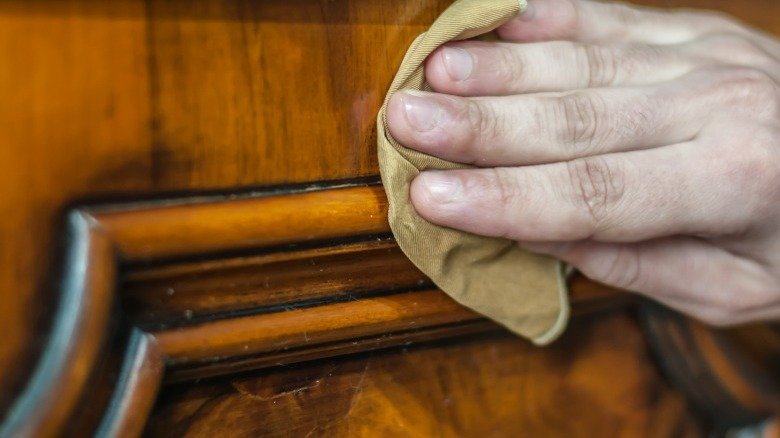
To clean old wood, wipe with a soft cloth lightly dampened in a solution of warm water and a few drops of mild dish soap or Murphy Oil Soap, then dry immediately. The approach depends entirely on whether the wood is finished (lacquered, varnished, polyurethane-coated) or unfinished, and on how much grime has built up. Old wood furniture, antique pieces, and aged hardwood floors need gentle cleaning that removes dirt without stripping the protective finish or introducing excess moisture into the grain. This guide covers cleaning finished wood, unfinished wood, antiques, and how to address specific problems like black water stains, white rings, and deep grime.
What You’ll Need
- Soft microfiber cloths
- Mild dish soap or Murphy Oil Soap
- Warm water
- Mineral spirits (for heavy grime on finished wood)
- Boiled linseed oil or furniture oil (for conditioning unfinished wood)
- White vinegar (diluted — for mineral deposits or sticky buildup)
- Baking soda (for specific stain treatment)
- Steel wool 0000 grade (for final polishing on finished wood)
- Furniture wax or paste wax (for protection)
- Old toothbrush (for crevices and carved details)
Identify Your Wood Type Before Cleaning
The cleaning method must match the wood’s condition and finish type:
- Finished wood (polyurethane, lacquer, varnish, shellac): Has a glossy or semi-gloss surface that resists water. Wipe test: put a drop of water on the surface — if it beads up, it’s sealed. Clean with mild soap and water or Murphy Oil Soap. Can tolerate minimal moisture.
- Waxed wood: Softer sheen, slightly waxy feel. Clean only with a dry cloth or a wood-safe cleaner. Water and soap can cloud waxed surfaces. Re-wax after cleaning.
- Oiled wood: Matte appearance, slightly porous feel. Wipe test: water soaks in slightly. Clean with a barely damp cloth; re-oil after cleaning.
- Unfinished wood: No protective coating. Very sensitive to moisture — wipe immediately dry. Clean with dry brushing or a barely damp cloth only.
- Antique furniture: Older pieces often have shellac or lacquer finishes — both sensitive to alcohol and water. Clean very conservatively.
Safety and Precautions
- Never saturate wood with water. Even a few seconds of standing water causes raised grain, watermarks, and finish damage. Always use a barely damp cloth and dry immediately.
- Avoid bleach and ammonia on wood. Both strip finishes, discolor wood stains, and damage the natural wood surface.
- Don’t use silicone-based furniture sprays for regular cleaning. Products like Pledge build up a silicone residue on wood that prevents future refinishing and can cause long-term dulling.
- Never use steel wool coarser than 0000 grade on finished wood. Coarser grades scratch through the finish. 0000 steel wool is used only for final polish buffing.
Step-by-Step: How to Clean Old Wood Furniture
Step 1 — Dust Thoroughly First
Before any wet cleaning, dust the entire piece with a soft dry microfiber cloth. Remove loose debris from carvings and crevices with a soft-bristle brush or dry paintbrush. Dusting before wet cleaning prevents grit from scratching the finish during wiping.
Step 2 — Test Your Cleaning Solution
Test any cleaning solution on a hidden area first — the underside of a leaf, the inside of a drawer, or the back of the piece. Apply a small amount, let sit 30 seconds, and wipe clean. If the finish is unchanged (no cloudiness, no tackiness, no color change), proceed. Old shellac and lacquer finishes can react unexpectedly to cleaning products.
Step 3 — Wipe With Mild Cleaning Solution
For finished wood: mix warm water with 2–3 drops of mild dish soap. Dampen a microfiber cloth and wring out completely — the cloth should feel barely damp. Wipe the wood surface in the direction of the grain in overlapping strokes. Work in sections. For Murphy Oil Soap: dilute per label directions and apply the same way. Murphy Oil Soap is specifically formulated for wood surfaces and is a very safe choice for finished hardwood furniture and floors.
For intricate carvings: use an old toothbrush or cotton swab dipped in the cleaning solution to work into detailed areas. Don’t push liquid deep into crevices — just lightly clean the surface of the wood detail.
Step 4 — Dry Completely and Immediately
Follow each wiped section with a dry microfiber cloth immediately. Don’t allow the wood to air dry — buffing dry in the direction of the grain prevents watermarks and keeps the finish looking clean.
Step 5 — Polish or Condition (Optional)
Once the wood is clean and dry, apply a wood conditioner, furniture oil, or paste wax appropriate for the finish type to restore luster and add a protective layer. For finished (polyurethane/lacquer) wood: a thin coat of paste wax, buffed to a shine with a soft cloth, adds protection and sheen. For oiled wood: a few drops of boiled linseed oil or furniture oil, rubbed in with a cloth and buffed off. For waxed wood: a new coat of furniture wax maintains the protective layer.
How to Clean Heavily Grime-Coated Old Wood
Old furniture that has decades of polish buildup, wax buildup, or surface grime requires more than a standard soap wipe:
Method 1 — Murphy Oil Soap Deep Clean
Mix Murphy Oil Soap at double the recommended dilution. Apply with a cloth, let sit for 2–3 minutes on particularly grimy areas, then wipe clean with a fresh cloth. Murphy Oil Soap cuts through wax buildup and old polish residue effectively. Follow with a clean water rinse wipe and dry.
Method 2 — Mineral Spirits for Heavy Buildup
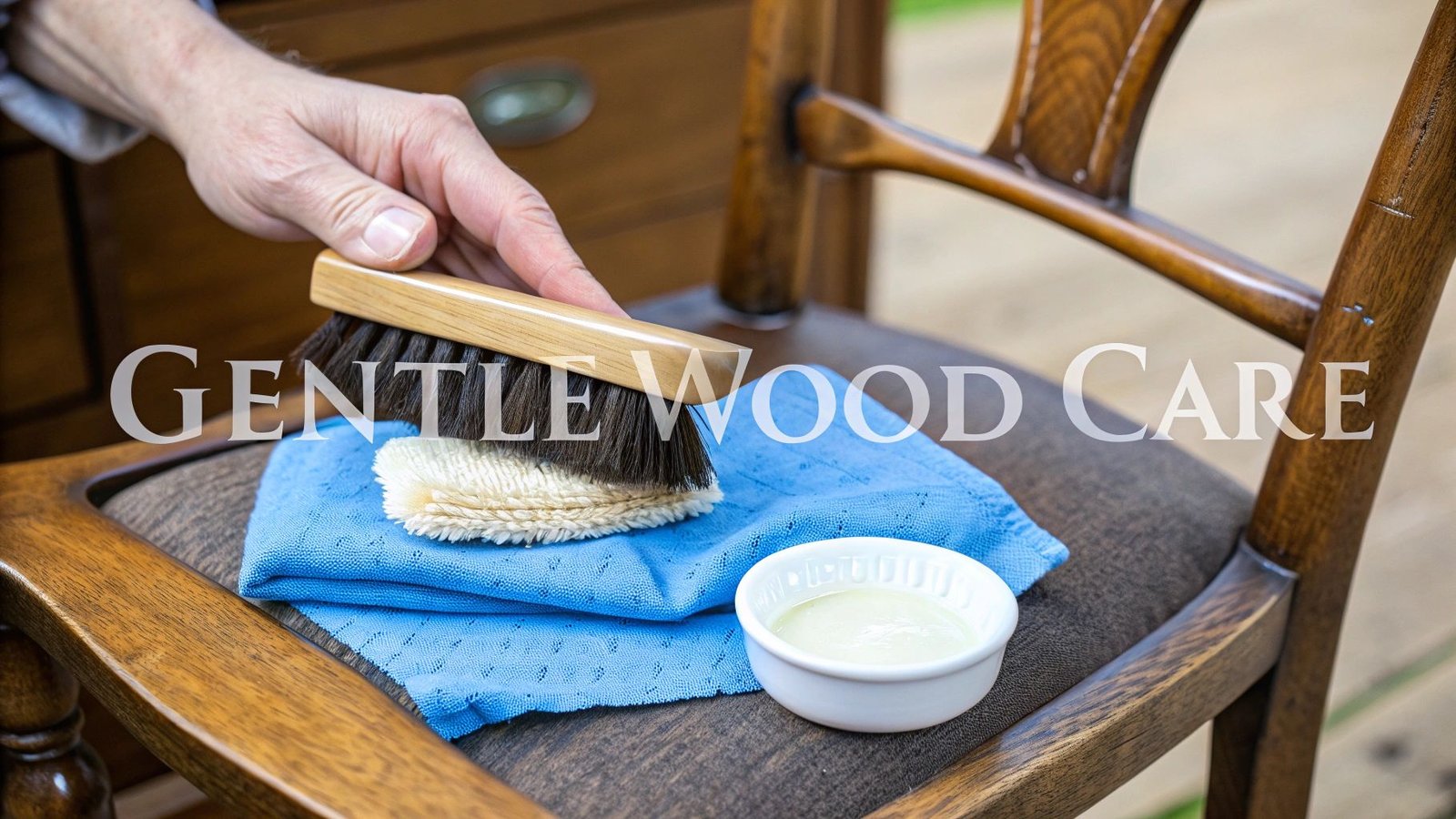
Mineral spirits (paint thinner) are safe for most finished wood surfaces and are highly effective at dissolving wax buildup, old polish, and oily grime. Apply to a cloth and wipe the surface — the grime will come off dramatically on the first few passes. Mineral spirits evaporate quickly without raising the wood grain. Follow with a wood conditioner or polish after the mineral spirits evaporate fully. Test in a hidden area first — mineral spirits can dull some older lacquer finishes.
Removing Specific Stains From Old Wood
| Stain Type | Method | Notes |
|---|---|---|
| White rings (water marks on finish) | Rub with petroleum jelly and let sit overnight, wipe clean; or rub with a cloth dampened in equal parts vinegar and olive oil | Works on the finish surface, not deep stains |
| Black water stains (deep in wood) | Oxalic acid (wood bleach) — apply per product directions, neutralize, and refinish affected area | Requires stripping finish in the stained area first |
| Sticky residue / wax buildup | Mineral spirits on cloth; wipe clean | Follow with polish or conditioner |
| Grease / oil stains | Apply dish soap directly, let sit 5 min, wipe clean, rinse, dry | Act quickly for fresh grease |
| Ink stains | Isopropyl alcohol on cotton swab — test first on finished wood | May lift finish; test area first |
| Crayon or candle wax | Freeze with ice, chip off bulk, remove residue with mineral spirits | Never use heat to remove wax |
How to Clean Unfinished and Antique Wood
Unfinished Wood
Unfinished wood has no protective barrier against moisture — every drop of water that touches it soaks in and raises the grain. For routine cleaning: dry dusting with a cloth or brush only. For grime: use a barely damp cloth with just enough moisture to lift the surface dirt, working quickly and drying immediately. Apply a coat of boiled linseed oil or a natural wood oil conditioner after cleaning to protect and condition the bare wood.
Antique and Vintage Wood Furniture
Antique pieces often have shellac or lacquer finishes that are centuries old and very fragile. Shellac is dissolved by alcohol — never use alcohol-based cleaners on shellac. Test with a tiny drop of rubbing alcohol in a hidden spot; if the finish becomes tacky, it’s shellac. Clean shellac-finished antiques with dry methods only (barely damp cloth, immediately dried). For pieces of significant value, consult a furniture conservator before attempting any cleaning beyond light dusting.
Pro Tips and Common Mistakes
- Murphy Oil Soap is not a polish. It doesn’t leave a protective layer or restore luster — it cleans. Follow with an appropriate wood conditioner or polish after using Murphy Oil Soap for cleaning.
- Don’t over-clean wood. Old wood with decades of patina is valuable — excessive cleaning strips the natural aging that gives antique pieces their character and value. Clean grime; preserve patina.
- Oil-finish wood needs re-oiling, not more cleaning. If oiled wood looks dull and dry after cleaning, it needs more oil, not more cleaning. A thin coat of tung oil, danish oil, or boiled linseed oil is the correct restoration step.
- Always clean in the direction of the grain. Cross-grain wiping leaves visible fine scratches on finished wood surfaces that catch the light. Going with the grain looks natural and even.
- Humidity matters for old wood. Old furniture that’s been in dry conditions often has stress cracks. Avoid placing old wood furniture near heating vents or in extremely dry rooms. A humidifier in the room prevents cracking from dryness.
Frequently Asked Questions
Can I use water to clean old wood furniture?
A very small amount of water — barely dampening a cloth — is acceptable for cleaning most finished old wood surfaces. The key is “barely damp” and “dry immediately.” Standing water, soaking, or wet cleaning without immediate drying causes watermarks, finish lifting, and wood swelling. For unfinished wood and antiques with unknown finishes, use dry cleaning methods only.
How do I remove black stains from old wood?
Black stains on wood are typically iron tannate stains — formed when water interacts with the tannins in the wood and an iron source (nail, metal clamp, or iron in the water). These stains are in the wood itself, not on the surface, and require oxalic acid (available as “wood bleach” at hardware stores) applied to the bare wood. You need to strip the finish from the stained area, apply the oxalic acid solution, neutralize, re-sand, and refinish.
How do I clean antique wood furniture without damaging it?
Start with the minimum intervention: dry dust first. If more is needed, test a tiny drop of water in a hidden area — if it’s immediately absorbed, the wood is unfinished or the finish is severely degraded; dry methods only. If it beads slightly, a barely damp cloth with no cleaner is the next step. Never use commercial multi-purpose sprays, furniture polishes containing silicone, or alcohol on antique finishes.
Why does old wood furniture look cloudy after cleaning?
Cloudiness after cleaning is almost always caused by: using too much water (moisture fogged the finish), cleaning a waxed finish with soap-and-water (the soap disrupts wax), or cleaning in cold conditions where moisture condenses on the surface. For cloudy waxed finish: buff with a clean dry cloth. For cloudy lacquer/polyurethane: allow to dry fully, then buff with 0000 steel wool and paste wax.
How do I clean old wood that smells musty?
Musty smell in old wood furniture usually comes from mold growth in the drawer interior, back panels, or joints. Remove drawers, air them out fully. Clean visible mold with a cloth barely dampened in diluted white vinegar (1:1 with water) and dry immediately. Place activated charcoal packets inside closed areas to absorb residual odor. Ensure storage in a ventilated area with reasonable humidity (40–50% RH) to prevent recurrence.
Conclusion
Cleaning old wood is about restraint: dust first, use barely damp cloths with mild cleaners, wipe with the grain, dry immediately, and condition after cleaning. For furniture, Murphy Oil Soap is a reliable choice; for floors, a pH-neutral floor cleaner in small amounts; for antiques, dry methods and professional advice for anything beyond dusting. The wood that has survived decades deserves careful maintenance to last decades more. For related wood care guides, check out our articles on how to clean oak cabinets and how to clean old tools at GuideGrove.
