
A cast iron griddle is one of the most durable cooking surfaces you own — but it needs specific care to stay non-stick and rust-free. The cleaning process is different from other cookware: no soaking, minimal soap, and always dry and oil after washing. This guide covers daily cleaning after cooking, deep cleaning baked-on grease, removing rust from neglected griddles, and restoring the seasoning layer that makes cast iron work.
What You’ll Need
- Coarse kosher salt or chain mail scrubber
- Paper towels or clean cloth
- Stiff brush or cast iron scrubber
- Dish soap (very small amount — only when needed)
- Fine-grit sandpaper or steel wool (for rust removal only)
- Neutral cooking oil with high smoke point (vegetable, canola, flaxseed, or Crisco)
- Oven (for re-seasoning)
Safety and Precautions
Never soak cast iron in water — even brief soaking causes rust to form rapidly. Never put cast iron in the dishwasher — the prolonged water and alkaline detergent strips the seasoning completely and causes immediate rust. Cast iron retains heat long after being removed from the stove — allow it to cool for 10 to 15 minutes before handling or cleaning to avoid burns. Never use cold water on a screaming hot cast iron griddle — thermal shock can crack the metal.
Daily Cleaning After Cooking
Let the Griddle Cool Slightly
Allow the griddle to cool for 10–15 minutes after cooking — not completely cold, but cool enough to handle safely. Cleaning while still warm is much easier than cleaning a cold griddle with hardened grease.
Scrub with Coarse Salt and a Paper Towel
Pour a tablespoon of coarse kosher salt onto the griddle and scrub with a folded paper towel using circular motions. The salt acts as a gentle abrasive that lifts food residue without scratching the seasoning layer. Discard the salt and food debris.
Add Water and Scrub If Needed
For stuck-on food, add a small amount of hot water and scrub with a stiff brush or chain mail cast iron scrubber. The water and scrubbing action lifts carbonized food residue. Bring the griddle with water to a low heat on the stove to help loosen stubborn deposits.
Rinse Quickly and Dry Immediately
Rinse quickly under hot running water. Then immediately dry the griddle completely — either on the stove on low heat for two to three minutes, or with a clean dry cloth followed by stove drying. The goal is zero remaining moisture.
Apply a Thin Oil Coat
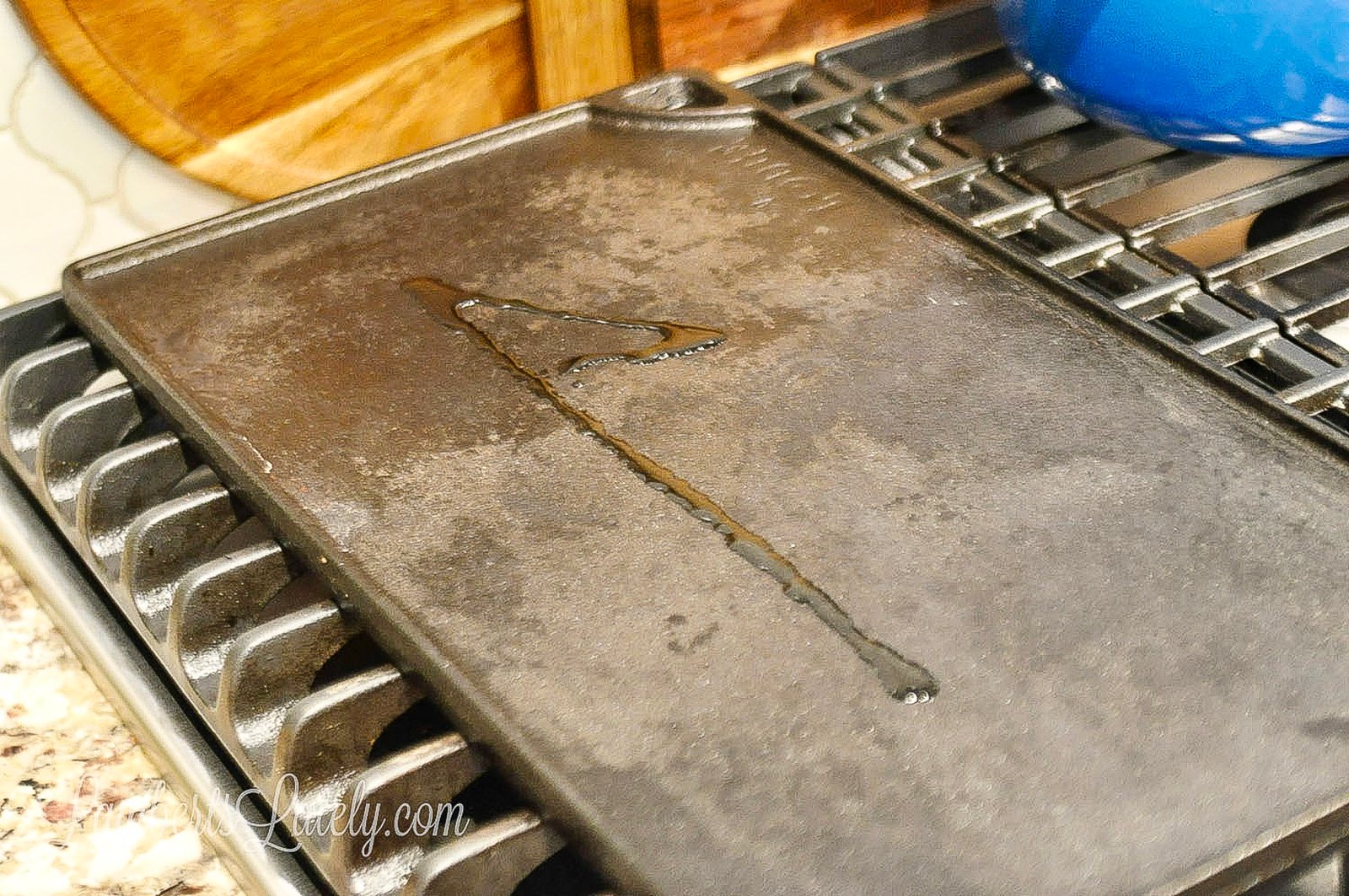
While the griddle is still warm (not hot), apply a very thin coat of cooking oil using a paper towel. Wipe off almost all of it — the griddle should look nearly dry, not greasy. This maintains the seasoning layer for the next use.
Deep Cleaning: Removing Baked-On Grease Buildup
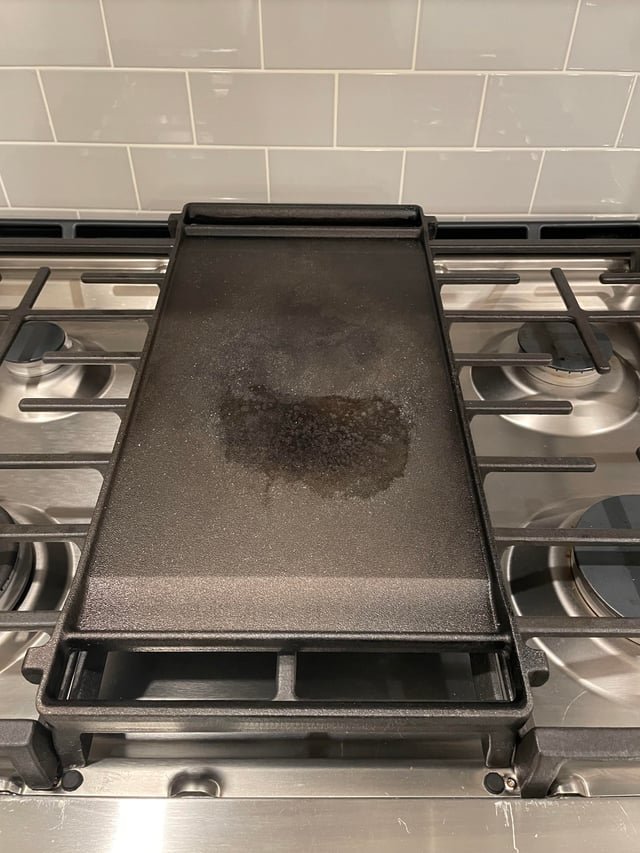
Over time, cast iron griddles accumulate thick layers of polymerized grease and carbon buildup that create uneven surfaces and can eventually cause food to stick. Address buildup before it gets out of hand.
Scrub with a Small Amount of Dish Soap
Contrary to the old rule that cast iron should never touch soap, a small amount of dish soap on a stiff brush during an occasional deep clean will not damage well-seasoned cast iron. It removes surface grease without stripping the cured seasoning layer. Scrub, rinse immediately, and dry completely. Don’t make this a regular habit — reserve soap for deep cleaning only.
Boil Water in the Griddle
For stubborn baked-on buildup, add an inch of water to the griddle and bring to a boil on the stove. The boiling water softens and lifts carbonized deposits. Use a stiff brush to scrub while the water is still warm, then drain and dry on the stove.
Re-Season After Deep Cleaning
After any deep cleaning that may have affected the seasoning, re-season the griddle: apply a very thin coat of oil to all surfaces, place upside down in an oven preheated to 450–500°F, with foil on the rack below to catch drips. Bake for one hour, then let cool completely in the oven. This restores the polymerized oil layer that makes cast iron non-stick.
Removing Rust from a Cast Iron Griddle
A neglected cast iron griddle with rust can be fully restored — rust doesn’t mean it’s ruined.
Scrub Rust with Steel Wool
Use medium or fine steel wool to scrub all rusted areas vigorously. Work until the rust-colored material is gone and you see bare gray metal. Use dish soap during this step — you’re stripping the entire surface back to bare metal anyway.
Rinse and Dry Completely
Rinse thoroughly and dry immediately and completely on the stove at medium heat for five minutes.
Re-Season from Scratch
Apply a very thin coat of flaxseed oil or vegetable shortening to every surface including the bottom. Wipe off almost all of it — a very thin film is what you want. Bake upside down at 450–500°F for an hour. Repeat this seasoning process two to three times for a robust, non-stick base layer.
Pro Tips
- Never air dry cast iron: Even five minutes of air drying can produce surface rust spots. Always dry on the stove.
- Thin oil layers season better: Too much oil applied during seasoning creates a sticky, gummy surface instead of a hard non-stick layer. Apply the absolute minimum amount of oil — wipe on, then wipe most of it back off.
- Store with a paper towel: Place a paper towel inside the griddle when storing to absorb any residual moisture and prevent rust during storage.
Frequently Asked Questions
Can I use soap on cast iron?
A small amount of mild dish soap occasionally for deep cleaning won’t damage well-seasoned cast iron. The modern dish soaps are much milder than the lye-based soaps that gave cast iron its “never use soap” reputation. However, avoid soap for daily cleaning — the salt scrub method is better for maintaining seasoning.
How do I fix sticky cast iron seasoning?
Sticky seasoning means too much oil was applied. Scrub the griddle with a stiff brush under hot water to remove the gummy layer, dry completely on the stove, then re-season with a very thin oil application. The film should be almost invisible when wiped on.
How do I clean a flat-top cast iron griddle used on a stove?
Same method — salt scrub while warm, rinse quickly, dry on heat, thin oil coat. For the burner-to-burner flat top, use a metal griddle scraper to push food debris to one end before scrubbing. The scraper is more effective than a brush on large flat surfaces.
How do I know if my cast iron seasoning is good?
Good seasoning looks dark and smooth (not shiny-slick like non-stick, but matte dark gray or black) and food releases from it without sticking. Uneven spots, gray patches, or sticky areas indicate the seasoning needs rebuilding through the re-seasoning process.
My cast iron has a white residue after cleaning. What is it?
White residue after cleaning is usually mineral deposits from hard tap water or soap residue. Dry on the stove at medium heat — hard water deposits evaporate quickly with heat. If it persists, wipe with a cloth dampened with diluted white vinegar, rinse quickly, and re-dry on the stove.
Conclusion
Cast iron griddle care is simple once the rhythm becomes habit: scrub while warm, rinse quickly, dry completely on the stove, and apply a thin oil coat. That routine takes three minutes and keeps cast iron performing beautifully for decades. Rust and deep buildup are fixable problems — steel wool and a full re-seasoning restores even seriously neglected griddles. For other cookware cleaning, see our guide on how to clean enameled cast iron — similar care principles but different surface requirements for the enamel coating.
