
Cast aluminum outdoor furniture, hammered aluminum cookware and décor, and corroded aluminum surfaces all need slightly different approaches — but they share the same core principle: mild acid or alkaline cleaners remove oxidation, while abrasives restore surface texture. This guide covers how to clean each type of aluminum, remove white powdery oxidation, and restore corroded aluminum to usable condition.
What You’ll Need
- Mild dish soap and warm water
- White vinegar or cream of tartar
- Baking soda
- Aluminum cleaner or brightener (commercial)
- Non-scratch scrub pad or soft-bristle brush
- Fine steel wool (0000 grade — for corroded areas only)
- Automotive aluminum polish (for polished surfaces)
- Car wax or clear sealant (for protection)
- Rubber gloves
Safety and Precautions
Never use strong caustic cleaners (oven cleaners, lye-based products) on aluminum — alkalis react aggressively with aluminum and cause severe pitting. Avoid chlorine bleach — it discolors aluminum and can cause surface damage. Do not use steel wool on anodized or painted aluminum — it removes protective coatings. Do not use steel wool on cast aluminum furniture unless removing active corrosion (white powdery oxidation), and always follow steel wool use with a thorough rinse and protective wax application.
How to Clean Cast Aluminum Patio Furniture
Rinse Off Loose Debris
Spray down the furniture with a garden hose to remove dirt, bird droppings, and loose debris before applying any cleaner. This prevents abrasion from dirt particles during scrubbing.
Wash with Dish Soap Solution
Mix dish soap in warm water and scrub the furniture with a soft brush or non-scratch scrub pad. Pay attention to the texture of cast aluminum — the porous, grainy surface traps dirt in the recesses. Scrub thoroughly in all directions to reach into the surface texture.
Treat White Oxidation with Vinegar
White powdery or chalky areas are aluminum oxidation. Apply undiluted white vinegar with a cloth and scrub. The mild acidity dissolves the aluminum oxide layer. For more stubborn oxidation, apply a paste of cream of tartar and water, scrub, and rinse.
Rinse and Dry
Rinse thoroughly and dry with a clean cloth. Apply a coat of paste car wax to the clean surface — this provides a barrier against future oxidation and makes the furniture easier to clean next time.
How to Clean Hammered Aluminum
Hammered aluminum decorative pieces, trays, and cookware have a textured surface with many small dimples that collect grime. The hammered texture is more forgiving than polished aluminum — minor scratches are invisible against the textured background. Wash with warm soapy water and a soft brush reaching into the dimples. For tarnish or discoloration: apply a paste of cream of tartar and water, let sit five minutes, scrub with a soft toothbrush, and rinse. The cream of tartar is mildly acidic and gentle enough for repeated use on aluminum without dulling the finish. Dry immediately and completely to prevent water spotting in the texture recesses.
How to Clean Corroded Aluminum
Heavy aluminum corrosion appears as thick white powdery deposits, rough chalky surfaces, or pitting. For corroded aluminum that still has structural integrity:
Remove Loose Corrosion Mechanically
Use 0000 (ultra-fine) steel wool or a non-scratch abrasive pad to scrub the corroded area. Work in consistent strokes in one direction. This removes the loose corroded layer to expose cleaner aluminum beneath.
Apply Aluminum Brightener
Commercial aluminum brighteners (used in boat and RV maintenance) contain phosphoric or oxalic acid that dissolves aluminum oxide effectively. Apply per product directions — typically spray on, let dwell one to five minutes, then rinse. These products dramatically restore the appearance of heavily oxidized aluminum.
Polish and Protect
After cleaning corroded aluminum, apply an automotive aluminum polish to restore surface luster. Follow with clear sealant, automotive wax, or anodizing sealant to slow future corrosion.
Cleaning Aluminum Cookware (Cast or Hammered)
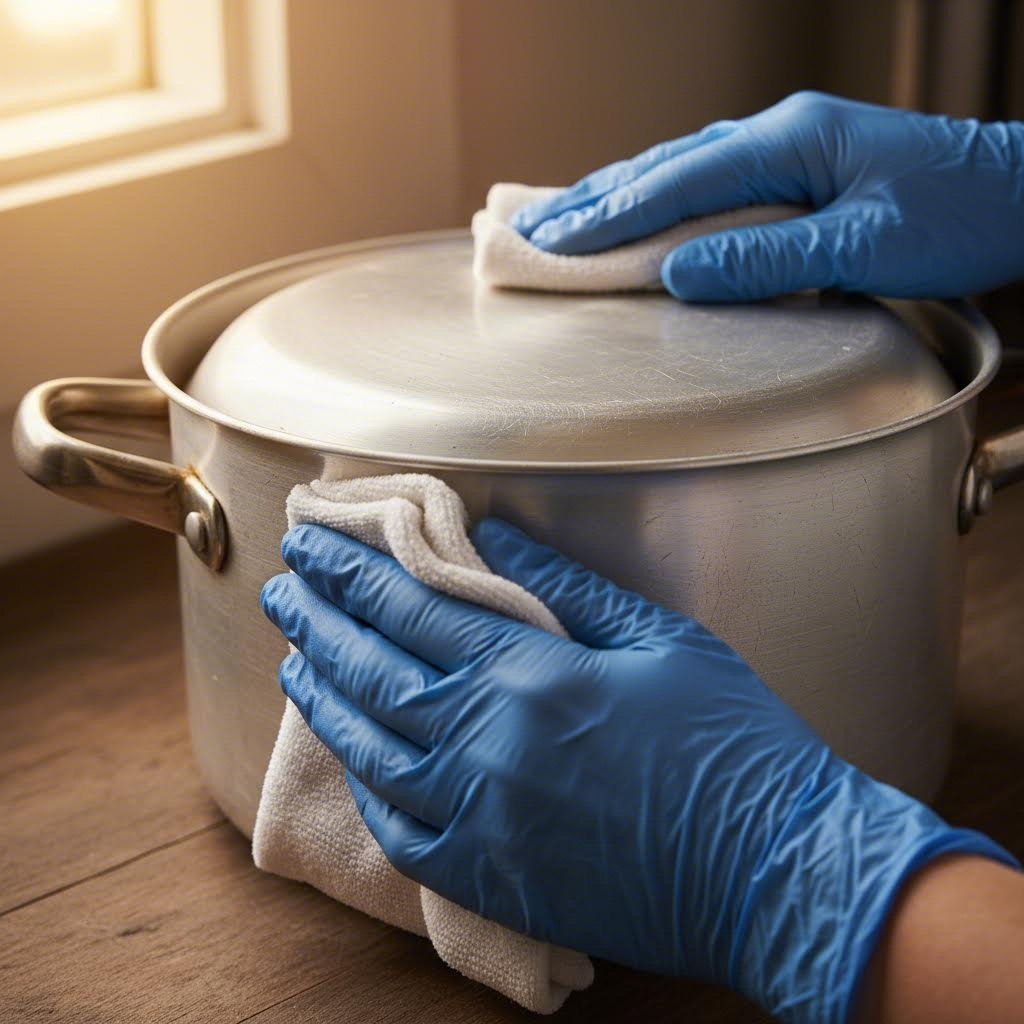
Aluminum cookware that has discolored from heat or hard water can be restored by boiling water with a few tablespoons of cream of tartar or white vinegar inside the pot for 10 minutes. The acid solution circulating through the pan dissolves the discoloration from the inside. For the outside of aluminum cookware, use Bar Keepers Friend with a damp cloth — the oxalic acid removes exterior staining and heat discoloration effectively. Never put aluminum cookware in the dishwasher — alkaline dishwasher detergents cause permanent discoloration and pitting.
Pro Tips
- Wax cast aluminum furniture annually: Paste car wax applied after the spring cleaning prevents the white oxidation layer from developing and makes the next cleaning significantly easier.
- Store cushions — not furniture: Cast aluminum furniture can stay outside year-round — it won’t rust. But store cushions to prevent mold. The aluminum itself just needs its annual wax treatment.
- Distilled water for final rinse: Hard tap water leaves mineral deposits in textured aluminum surfaces. A final rinse with distilled water followed by immediate drying prevents the white mineral spotting that makes aluminum look dirty even after cleaning.
Frequently Asked Questions
How do I remove white spots from aluminum?
White spots are either water mineral deposits or aluminum oxidation. For mineral deposits: wipe with a cloth dampened with white vinegar, let sit two minutes, then rinse. For oxidation: scrub with cream of tartar paste or a commercial aluminum brightener, rinse, and protect with wax.
Can I use bleach to clean aluminum patio furniture?
No — chlorine bleach reacts with aluminum and causes discoloration and surface damage. Use dish soap, vinegar, or a dedicated aluminum cleaner instead.
How do I get rust off cast aluminum furniture?
True rust (iron oxide) doesn’t form on aluminum — aluminum can’t rust. The reddish-brown spots on aluminum furniture are usually metal transfer from steel fasteners, tools, or iron-rich water. Treat with Bar Keepers Friend or an oxalic acid-based rust remover, scrub gently, and rinse.
What is the white powder on my aluminum?
White powder is aluminum oxide — the result of the aluminum reacting with oxygen and moisture. It’s not structurally damaging at the surface level but indicates the protective oxide layer has broken down. Clean with vinegar or aluminum brightener and apply protective wax to slow recurrence.
How often should I clean cast aluminum patio furniture?
Wash with soapy water at the start and end of the outdoor season — spring and fall. Apply wax in the spring after washing. Spot clean as needed between seasons. In coastal or high-humidity environments, quarterly cleaning prevents oxidation buildup.
Conclusion
Cast aluminum, hammered aluminum, and corroded aluminum all respond to mild acid treatments — vinegar, cream of tartar, and commercial aluminum brighteners. The key differences are texture and severity: cast furniture needs annual waxing to prevent oxidation, hammered pieces need detail work in the dimples, and heavily corroded surfaces may need mechanical abrasion before chemical treatment. Protective wax after cleaning is the most valuable maintenance step for all aluminum types. For aluminum on your home’s exterior, see our guide on how to clean aluminum siding for exterior-specific methods.
