
Ceiling cleaning is one of the most overlooked home tasks — and one of the most noticeable when it hasn’t been done. Smoke stains, water marks, mold spots, and cobwebs all accumulate on ceilings and make a room look grimy even when the walls and floors are clean. Most painted ceilings can be wiped down with mild cleaners, though popcorn and textured ceilings need gentler treatment to avoid damaging the texture. Here’s how to clean every common ceiling type.
What You’ll Need
- Step ladder or extension ladder
- Long-handled mop or ceiling cleaning brush
- Microfiber cloths or clean sponges
- Mild dish soap and warm water
- White vinegar (for mold and mildew)
- Hydrogen peroxide (3% — for mold stains)
- TSP cleaner (for heavy smoke and grease stains)
- Drop cloths for floors and furniture
- Safety goggles and hat or old clothing (to protect from drips)
- Fan or open windows (ventilation)
Safety and Precautions
Always use a stable, properly positioned ladder — ceiling cleaning requires both hands and holding cleaning materials, which creates balance challenges. Wear safety goggles to protect from cleaning solution drips. Wear old clothing or a hat — cleaning solution drips are inevitable. Cover floors and furniture with drop cloths before starting. If cleaning mold, ensure the room is well-ventilated. If mold covers more than 10 square feet of ceiling, this indicates a serious moisture problem that likely requires professional remediation rather than surface cleaning.
General Ceiling Cleaning: Flat Painted Ceilings
Remove Cobwebs and Dust First
Use a long-handled duster or a clean dry mop to sweep cobwebs and dust off the ceiling before any wet cleaning. Start at corners and work toward the center. This prevents wet cleaning from turning dry dust into muddy streaks.
Cover Floors and Furniture
Lay drop cloths on the floor directly below your cleaning area. Cover any furniture that can’t be moved. Cleaning solution drips are unavoidable when working overhead.
Mix Cleaning Solution
For most painted ceilings, a solution of a few drops of dish soap in a bucket of warm water is sufficient. For greasy ceilings above kitchens, add one tablespoon of TSP per gallon. For mildew, use equal parts white vinegar and water.
Wring Out Thoroughly — Work in Small Sections
Wring out your sponge or cloth until it’s barely damp — not dripping. Excess water on painted ceilings causes paint peeling, raises drywall paper, and creates new water stains. Work in 2×2-foot sections, cleaning one area at a time.
Wipe in One Direction
Wipe across the ceiling in consistent parallel strokes rather than circular motions. Circular scrubbing can remove paint sheen unevenly, creating visible swirl marks on flat paint. One-direction wiping blends cleanly.
Rinse with Clean Water
Follow each cleaned section with a second pass using a clean cloth dampened with plain water. This removes soap residue that can dull the paint finish when it dries.
Cleaning Popcorn or Textured Ceilings
Popcorn texture is extremely fragile — the texture pearls break off with minimal contact and wet cleaning can cause large sections to dissolve or detach. For popcorn ceilings, dry cleaning only is recommended: use a very low-suction vacuum with a soft brush attachment to remove dust, or gently sweep with a soft-bristle broom. For individual stains on popcorn ceilings, dab (don’t wipe) with a barely damp cloth. For significant mold on popcorn ceilings, consult a professional — cleaning is likely to cause more visible damage than the mold stain.
Removing Stains from Ceilings
Water Stains (Brown Rings)
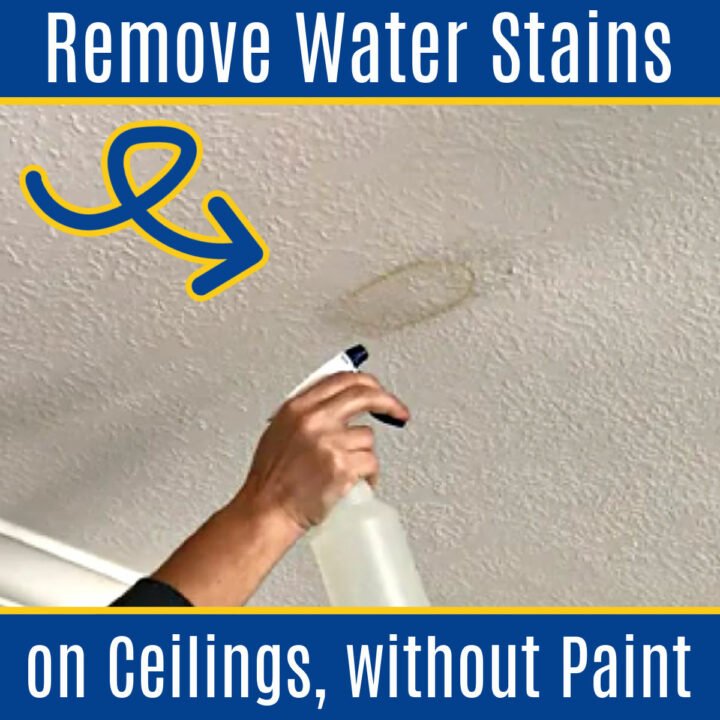
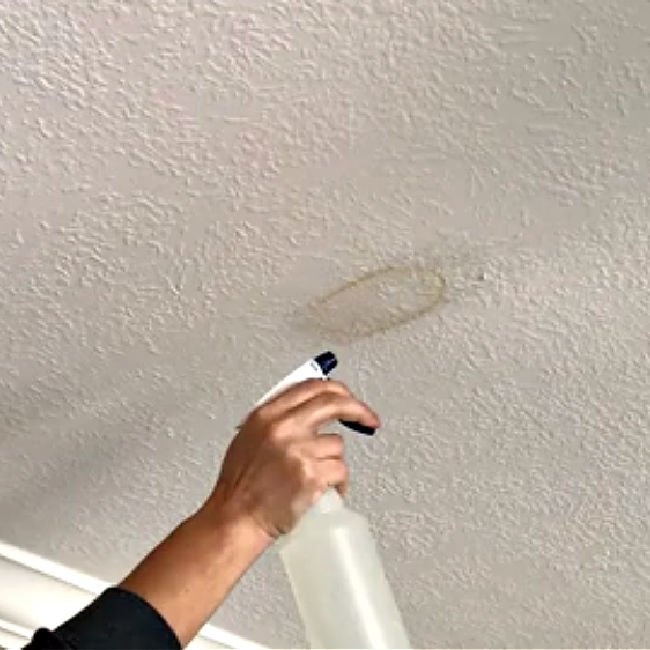
Water stains from old leaks leave yellow-brown rings. First confirm the leak is fixed before cleaning. Clean the stained area with a diluted bleach solution (one cup per gallon of water) applied with a damp cloth. Blot rather than scrub. Let dry completely. If the stain is still visible after cleaning, apply a stain-blocking primer (like Zinsser BIN or Kilz) and repaint — water stains almost always bleed through regular paint without a stain blocker.
Mold and Mildew
Apply a 1:1 solution of white vinegar and water with a spray bottle directly to the mold. Let it sit for 10–15 minutes. Wipe with a damp cloth. For stubborn mold staining, apply 3% hydrogen peroxide, let sit for 10 minutes, and wipe. Hydrogen peroxide bleaches mold stains more effectively than vinegar. Follow with improved ventilation to address the moisture source.
Smoke and Nicotine Stains
Smoke stains are among the most difficult to remove from ceilings. Start with a TSP solution (one tablespoon per gallon of water) applied with a damp sponge. Wipe in parallel strokes. For heavy nicotine staining, a degreasing cleaner or sugar soap (common in UK cleaning) works well. In most cases of heavy smoke staining, cleaning reduces the stain but complete removal requires a stain-blocking primer and fresh paint.
Pro Tips
- Work in natural light: Cleaning stains on a ceiling is much easier when you can clearly see what you’re treating. Open curtains wide or use a bright work light aimed at the ceiling surface.
- Two-bucket system: Use one bucket for cleaning solution and one for clean rinse water. This keeps your cleaning solution from getting progressively dirtier as you work.
- Wear a wide-brimmed hat: A simple hat or baseball cap protects your hair and face from drips during overhead work.
- Don’t over-wet: This is the single most common ceiling cleaning mistake. A barely damp cloth does more than a wet one — and doesn’t risk paint damage.
Frequently Asked Questions
How do I clean a white ceiling without leaving streaks?
Work in sections no larger than 2×2 feet, wipe in one consistent direction (not circular), use a barely wrung-out cloth, and follow with a clean water rinse wipe before the cleaning solution dries. Letting cleaning solution dry on the ceiling is the primary cause of streaks.
Can I clean a ceiling without a ladder?
For routine dusting and cobweb removal: yes — a long-handled ceiling duster or mop with a microfiber head reaches most 8-foot ceilings from the floor. For stain treatment and wet cleaning, a ladder is needed to apply targeted cleaning pressure safely.
How do I clean black mold off a bathroom ceiling?
Apply 3% hydrogen peroxide or equal parts bleach and water with a spray bottle. Let sit for 10 minutes. Wipe with a damp cloth. Ensure the bathroom has proper ventilation — mold returns on bathroom ceilings without addressing the humidity source. An exhaust fan that vents outside (not just to the attic) is the permanent solution.
How often should I clean my ceilings?
Dust ceilings annually as part of a thorough home cleaning. Kitchens and bathrooms benefit from a damp wipe-down twice a year. Treat stains as they appear rather than waiting for scheduled cleaning — fresh stains are significantly easier to remove than set-in ones.
Will cleaning a popcorn ceiling damage it?
Wet cleaning will likely damage popcorn texture — the pearls detach easily when wet. Stick to dry dusting only for popcorn ceilings. For stains, spot-treat with a very lightly damp cloth and minimal pressure. Significant cleaning needs on popcorn ceilings often end in repainting or texture repair.
Conclusion
Ceiling cleaning is a once-or-twice-a-year project for most homes that dramatically improves how a room looks and feels. The critical success factors are: remove dust dry before any wet cleaning, use barely-damp cloths, work in small sections in one direction, and rinse after cleaning. Stains — water marks, mold, and smoke — need targeted treatment before or after the general clean. For a complete room cleaning approach, see our guide on how to clean a house — ceiling cleaning fits into the room-by-room system laid out there.
