
Cellular (honeycomb) shades trap dust inside their cells and on the fabric surface — and they need gentle care because the fabric is delicate and the honeycomb structure collapses if handled too roughly. Most cellular shades are cleaned with compressed air for dust and a damp cloth for spot treatment. A full bath cleaning is possible for fabric shades that aren’t glued, but it’s a project that requires care to dry them correctly. This guide covers all three approaches.
What You’ll Need
- Compressed air can or vacuum with soft brush attachment
- Hair dryer (cool setting)
- Mild dish soap (very small amount)
- Clean water
- Soft cloths or sponge
- Large bathtub (for full bath cleaning)
- Towels for drying
Safety and Precautions
Never scrub cellular shade fabric — the honeycomb cells are held together with glue and the fabric tears easily under pressure. Never put cellular shades in a washing machine or dryer — machine agitation destroys the honeycomb structure. Do not use hot water — heat can melt the adhesive holding the cells together. Do not use spray cleaners directly on the shade — apply cleaning solution to a cloth first, then blot the shade. Dry cellular shades completely in the extended position to prevent the cells from collapsing as they dry.
Method 1: Dry Dusting (Regular Maintenance)
Lower the Shade Fully
Lower the cellular shade to its full length. This exposes all cells to cleaning access and prevents dust from falling into collapsed cells during cleaning.
Use Compressed Air
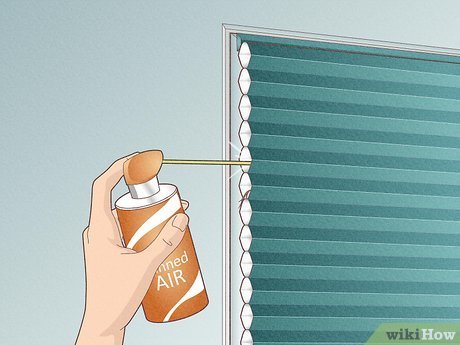
Hold the compressed air can upright and use short bursts to blow dust out of the honeycomb cells. Work from top to bottom so dislodged dust falls away from cleaned areas. Direct the air at a slight downward angle into the cells to force dust out the bottom.
Hair Dryer on Cool Setting
A hair dryer set to the cool setting (no heat) works similarly to compressed air for dust removal. Hold 6–8 inches from the shade and move steadily across and down the shade. This method is gentler and won’t over-pressurize individual cells.
Vacuum with Soft Brush
Use a vacuum cleaner with a soft upholstery brush attachment on the lowest suction setting. Lightly move the brush across the front surface of the shade without pressing into the cells. This removes surface lint, pet hair, and fine dust.
Method 2: Spot Cleaning
Identify the Stain Type
Act on stains as quickly as possible — fresh stains are much easier to remove than set-in ones. Identify what caused the stain: grease and food stains need soap; water stains need plain water; sticky residue may need a very light rubbing alcohol application.
Mix Mild Soap Solution
Add one or two drops of mild dish soap to a cup of lukewarm water. The solution should be barely soapy.
Dab — Don’t Rub
Dampen a clean soft cloth with the soap solution, wring it out thoroughly so it’s barely damp, and dab the stained area with light pressure. Never rub — rubbing spreads the stain laterally and can distort the honeycomb cells. Dab repeatedly with a fresh section of cloth as the cloth picks up the stain.
Rinse with Clean Water Dab
Follow with a second dab using a cloth dampened with plain clean water to remove soap residue. Soap left in the fabric attracts future dust faster.
Dry with Cool Air
Use a hair dryer on cool setting to dry the spot-cleaned area immediately. Wet spots left to air dry can create water rings visible on the fabric. The cool air dries the fabric without risking adhesive damage from heat.
Method 3: Full Bath Cleaning (Heavily Soiled Shades)
For shades with accumulated grime that spot cleaning won’t address, a full bath is the deepest cleaning option available without professional cleaning.
Remove the Shade
Lower the shade fully, then unhook the headrail from its mounting brackets. Bring the shade — still in the lowered, extended position — to the bathtub. Keep it extended throughout the cleaning process.
Fill Tub with Cool Water and Mild Soap
Fill the bathtub with cool water and add a small amount of mild dish soap. Submerge the shade gently in the extended position. Let it soak for 15 minutes to loosen accumulated grime.
Gently Agitate — No Scrubbing
Gently move the shade back and forth in the water. Do not scrub, wring, or fold the shade. Let the water do the work. Dab any visibly stained areas with a soft cloth rather than rubbing.
Drain and Rinse
Drain the soapy water and refill with clean cool water. Gently move the shade to rinse. Repeat the clean water rinse once more. Lift the shade out of the tub carefully.
Remove Excess Water and Hang to Dry
Gently press the shade between two clean towels to remove excess water — do not wring. Hang the shade in the extended position from a shower rod or clothesline. Allow to dry completely in the fully extended position before rehinging. This is critical — hanging to dry collapsed will cause cells to permanently deform as the adhesive dries in the wrong shape.
Pro Tips
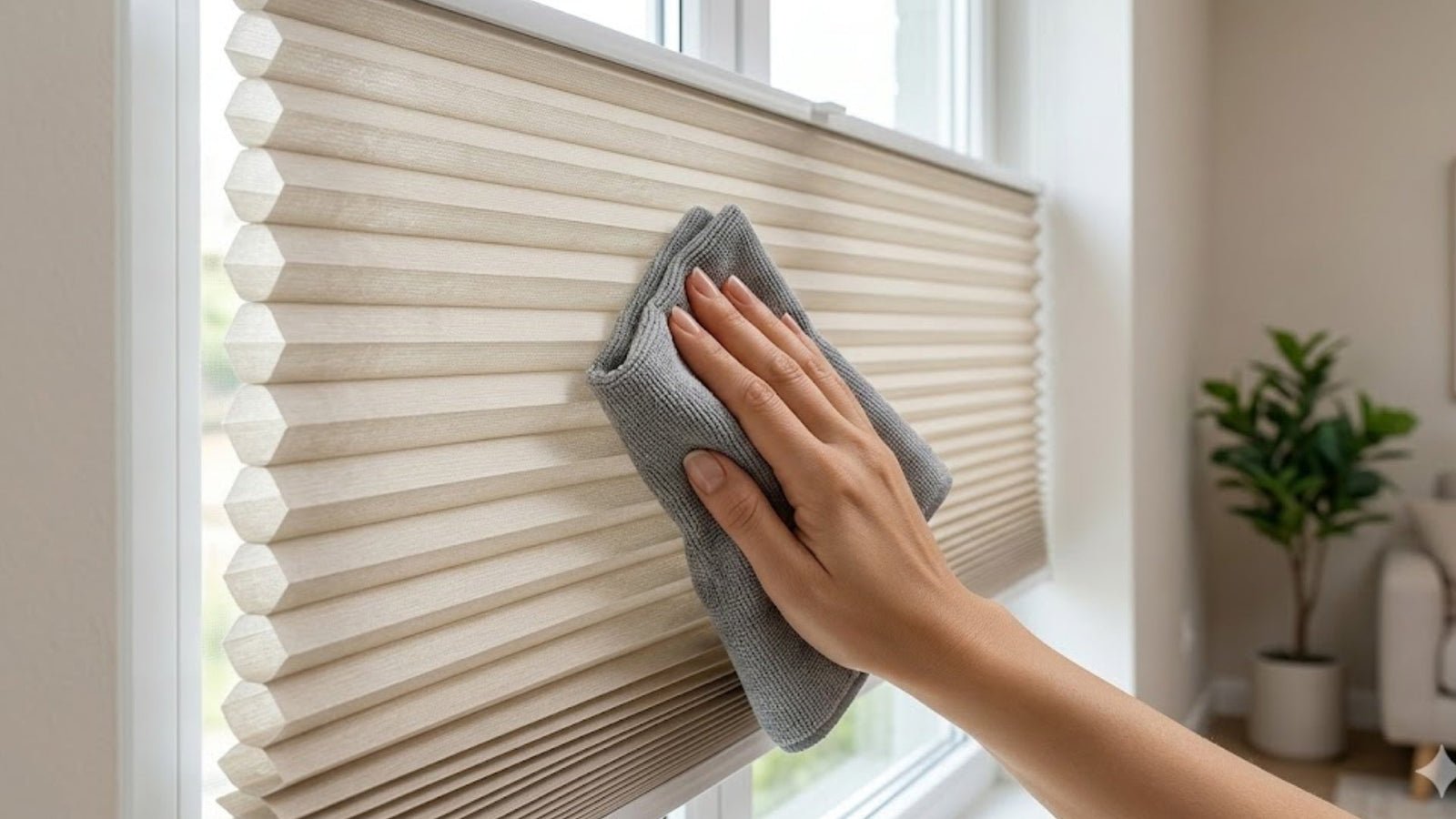
- Dust monthly to prevent buildup: Cellular shades that are dusted regularly with compressed air or a hair dryer rarely need spot cleaning or bath treatment. The five-minute monthly dust-down prevents all the harder cleaning scenarios.
- Never fold when wet: A wet cellular shade that gets folded or rolled will dry in that shape permanently. Always keep the shade in its natural extended position during any wet cleaning.
- Check the manufacturer’s tag: Some cellular shades are explicitly labeled “dry clean only” or “surface clean only.” Check before attempting bath cleaning.
Frequently Asked Questions
Can cellular shades be washed in a washing machine?
No — machine washing destroys the honeycomb structure through agitation and heat. Hand bath cleaning in a tub is the maximum wet cleaning approach for cellular shades.
How do I clean cellular shades without taking them down?
Dust with compressed air or a cool hair dryer while the shade is hanging. Spot clean individual stains with a barely damp cloth and mild soap, dabbing carefully. This handles most maintenance needs without removal.
How often should I clean cellular shades?
Dust every two to four weeks. Spot clean stains immediately when they occur. Full bath cleaning every one to two years if the shades are in a dusty environment or kitchen area.
My cellular shade has a grease stain near the kitchen. How do I remove it?
Apply a tiny amount of dish soap directly to a damp cloth — not to the shade — and dab the grease stain gently. Dish soap’s degreasing agents dissolve the grease. Rinse with a damp cloth dab, then dry with cool air immediately.
My cellular shade yellowed. Can I restore the color?
Yellowing from UV exposure is permanent fabric degradation that cannot be cleaned or reversed. Yellowing from smoke or nicotine can be partially addressed with a hydrogen peroxide solution (3%) dabbed on a cloth and applied to the yellowed area. Let sit two minutes, blot with clean water, and dry with cool air.
Conclusion
Cellular shades need gentle, consistent care — rough handling destroys the honeycomb structure that makes them work. Monthly compressed air dusting is the most valuable maintenance habit, keeping the shades clean without the risk of wet cleaning. For stains, the dab-don’t-rub rule is the most important technique to remember. When a full clean is needed, the bathtub method gets great results when you keep the shade extended throughout. For other window treatment cleaning, see our guide on how to clean Venetian blinds — a different structure but similar top-to-bottom care approach.
