
Venetian blinds collect dust fast and can look grimy even when the rest of your room is clean. For regular maintenance, close the slats and wipe them down with a microfiber cloth or duster — this takes under five minutes. For a deep clean on blinds with greasy buildup or stubborn grime, remove the blinds and soak them in your bathtub. Here’s how to handle both approaches based on how dirty your blinds are.
What You’ll Need
- Microfiber cloth or microfiber duster
- Old cotton gloves or white cotton socks (for slat-by-slat wiping)
- Dish soap (mild)
- Warm water
- Bathtub or large basin (for deep cleaning)
- Soft brush or toothbrush (for cords and hardware)
- Towels for drying
- Vacuum with brush attachment (optional)
Safety and Precautions
Do not use hot water on aluminum Venetian blinds — it can cause warping. Avoid soaking fabric or wood blinds in water; those materials require dry or lightly damp cleaning only. For blinds with string cords, handle gently during bathtub cleaning — cords can tangle or fray if pulled roughly. Always re-hang blinds completely dry before raising and lowering them, as wet cords can stretch and mechanism parts can rust if moisture sits in the brackets.
Method 1: Quick Dusting (Weekly Maintenance)
Close the Slats Facing Down
Use the tilt rod or cord to close the slats so they face downward at a slight angle. This presents the flat face of each slat toward you, making it easier to wipe the full surface of every slat in one pass. You’ll clean one side, then reverse the slats to do the other.
Wipe Top to Bottom with a Microfiber Cloth
Hold the bottom of the blind steady with one hand to prevent swinging. With the other hand, wipe across the slats from top to bottom using a microfiber cloth or duster. Work in sections — five or six slats at a time. Microfiber traps dust rather than pushing it around, which is why it outperforms a feather duster for blinds.
Reverse the Slats and Repeat
Tilt the slats in the opposite direction to expose the other face. Repeat the top-to-bottom wipe. Two passes cleans both surfaces of every slat in just a few minutes. Shake out or rinse your cloth before the second pass so you’re not re-depositing dust.
Wipe the Top Rail and Headrail
The top rail accumulates more dust than the slats because it’s flat and horizontal. Run your cloth along the top rail and down the sides of the headrail housing. Don’t forget the pull cords — wipe those down too since hands touch them constantly.
Method 2: Slat-by-Slat Wipe (Moderate Buildup)
When light dusting isn’t cutting it — you can see visible grime on individual slats — clean each slat individually while the blinds are still hanging.
Put on Cotton Gloves or Use Sock Method
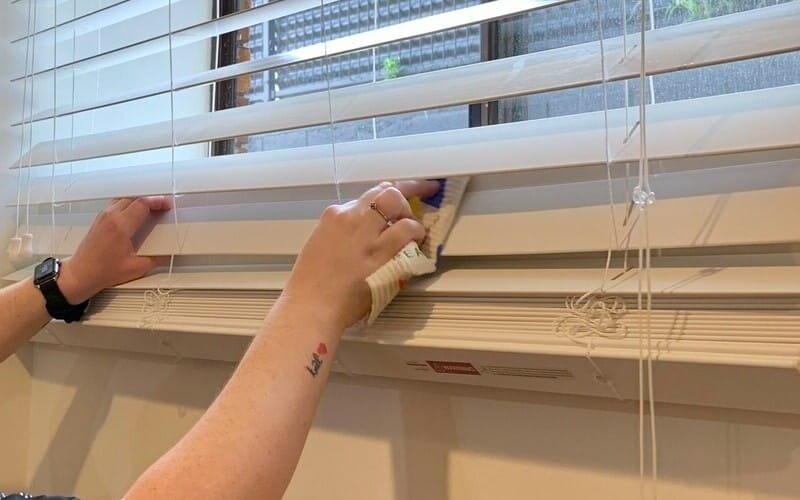
Put old cotton gloves on your hands, or slip a clean cotton sock over each hand. Dip your gloved/socked fingers in a solution of warm water mixed with a few drops of dish soap. Wring out so your hands are damp, not dripping.
Pinch and Slide Each Slat
Pinch each slat between your thumb and forefinger (one on top, one underneath) and slide from one end to the other. This cleans both surfaces of the slat simultaneously in a single motion. Work your way down the blind from the top slat to the bottom slat.
Rinse and Dry Each Slat
Follow with a second pass using clean water on fresh gloves or socks to remove any soap residue. Then do a final dry pass with a dry cloth to prevent water spots — especially important on aluminum slats.
Method 3: Bathtub Deep Clean (Heavy Grime and Grease)

For kitchen blinds with grease buildup or blinds that haven’t been cleaned in years, removing them and soaking in the bathtub is the most effective approach.
Remove the Blinds from the Window
Fully raise the blinds to the top position. Most Venetian blinds have a tilt rod that can be lifted out of brackets at each end. Release the brackets (usually by pressing a tab or sliding the blind sideways out of the bracket) and lower the blind down carefully. Carry it to the bathroom.
Fill the Bathtub with Warm Water and Dish Soap
Fill your bathtub with warm (not hot) water. Add a few generous squirts of dish soap and swirl to mix. For grease-heavy kitchen blinds, add a cup of white vinegar to cut through the grease before soaking.
Submerge and Soak for 15–20 Minutes
Lower the blind into the tub and let it soak fully submerged for 15 to 20 minutes. The soak loosens dried grime, grease, and dust that has been baked on by sunlight over time. Gently agitate the slats during the soak to help the soapy water work between them.
Scrub Individual Slats as Needed
After soaking, use a soft brush or cloth to wipe down any slats that still have stuck-on grime. Pay attention to the ends of the slats where dust and grease accumulate near the cord holes. Use an old toothbrush to scrub around the cord holes and along the head rail.
Rinse Thoroughly
Drain the soapy water and refill the tub with clean water. Submerge and agitate the blind to rinse off all soap. Drain and repeat one more time if suds persist. Soap residue left on slats will attract dust faster after the blind is rehung.
Hang to Dry Before Rehinging
Hang the blind over the bathtub curtain rod, a towel rack, or drape it over your shower door to drip dry. Shake off excess water first. Allow at least one to two hours of drying time, or until all slats and cords feel completely dry to the touch before rehinging.
How to Clean Specific Venetian Blind Materials
| Material | Best Method | Avoid |
|---|---|---|
| Aluminum | All three methods — most durable | Hot water (warping risk) |
| Faux Wood (PVC) | Damp wipe or bathtub soak | Prolonged soaking |
| Real Wood | Dry dusting or barely damp wipe only | Water soaking — swells and warps |
| Vinyl | All three methods | Abrasive scrubbers |
Pro Tips
- Dust weekly to avoid deep cleaning: A two-minute weekly dust-down prevents the buildup that makes bathtub cleaning necessary. Make it part of your window-cleaning routine.
- Use a blind-cleaning tool: Microfiber blind-cleaning tools with multiple fingers clean several slats simultaneously and cost very little — they make the slat-by-slat method much faster.
- Don’t skip the cords: Blinds cords get grimy from hand oils and transfer grime back to the slats every time you operate the blind. Wipe them down with a damp cloth every few months.
- Vacuum first before wet cleaning: Using a vacuum with a brush attachment to remove loose dust before wet cleaning keeps your wash water cleaner and reduces how many slats need scrubbing.
Frequently Asked Questions
How often should I clean Venetian blinds?
Dust weekly or every two weeks in normal conditions. Do a deeper slat-by-slat wipe-down monthly if you’re in a dusty area or have pets. Full bathtub cleaning once or twice a year is usually enough for most homes — more often for kitchen blinds near cooking areas.
Can I clean Venetian blinds without removing them?
Yes — both the quick dust method and the slat-by-slat wipe method work with the blinds still hanging. Only the bathtub method requires removal, and that’s reserved for heavily soiled blinds that need complete submersion to get clean.
What’s the fastest way to clean dusty Venetian blinds?
Put on a pair of old cotton gloves or slip a sock over your hand, dampen slightly, and pinch-and-slide each slat. It sounds tedious but most window blinds can be done top to bottom in three to five minutes with this method.
My slats are bent — can I straighten them?
For minor bends on aluminum slats, carefully flatten the slat between your thumbs and fingers using even pressure along the length of the bend. Severe bends or creases are usually permanent on aluminum. Replacement slats are available for most blind brands if the damage is significant.
Are there any blinds I should never soak in water?
Yes — real wood blinds should never be submerged in water. Water causes wood slats to warp, swell, crack, and lose their finish. Use only dry dusting or a barely damp cloth for real wood blinds. Faux wood (PVC) blinds look like wood but handle water fine.
Conclusion
Clean Venetian blinds make a noticeable difference in how a room looks and feels. The weekly dust routine keeps them from ever getting bad, and the bathtub method handles any blind that’s been neglected for a season or two. Whatever material your blinds are made of, the principle is the same: start dry, go damp only when needed, and always dry completely before rehinging. For other window-area cleaning tasks, check out our guide on how to clean a slate hearth — the stone cleaning methods there also apply to slate window sills.
