
Slate hearths get stained with ash, soot, heat discoloration, and the residue from years of firelighting — and unlike tile, slate is a natural stone that requires careful cleaning. Acidic cleaners (vinegar, lemon) etch slate. Abrasive tools scratch it. The right approach is a pH-neutral stone cleaner for routine maintenance, a baking soda paste for stain treatment, and slate oil or sealer to restore color and protect the surface. Here’s the complete cleaning and restoration guide.
What You’ll Need
Tools
- Soft-bristle brush (not metal)
- Microfiber cloths
- Old toothbrush (for grout lines)
- Flat plastic scraper (for hardened residue)
Materials
- pH-neutral stone cleaner (Black Diamond Stone Cleaner, Method Daily Stone Spray)
- Dish soap (mild, for routine cleaning)
- Baking soda (for stain paste)
- Hydrogen peroxide 3% (for organic stains)
- Slate oil or penetrating stone sealer (Lithofin Slate Oil, Black Bison Slate Wax)
What NOT to Use
- Vinegar, lemon juice, or any acidic cleaner — etches slate surfaces permanently
- Bleach — discolors slate and can cause long-term surface damage
- Abrasive powders or steel wool — scratch and dull the surface
Safety Precautions
- Always let the fireplace cool completely before cleaning the hearth — slate retains heat.
- Sweep or vacuum ash and debris before applying any liquid cleaner — wet ash creates a paste that smears into the stone surface.
- Test any new product on an inconspicuous area of the slate first.
How to Clean a Slate Hearth Step by Step
Step 1: Remove Ash and Dry Debris
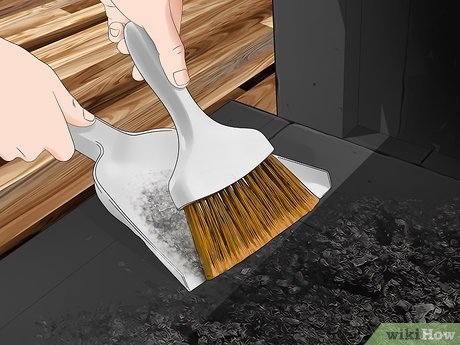
Before any wet cleaning, remove all dry debris. Let the fireplace cool completely, then use a soft brush and dustpan to remove loose ash and debris from the hearth surface. Vacuum thoroughly with a brush attachment to remove fine ash particles from the slate texture. Slate has a naturally rough texture that traps fine particles — vacuuming before wet cleaning prevents smearing ash into the stone.
Step 2: Routine Cleaning with pH-Neutral Cleaner
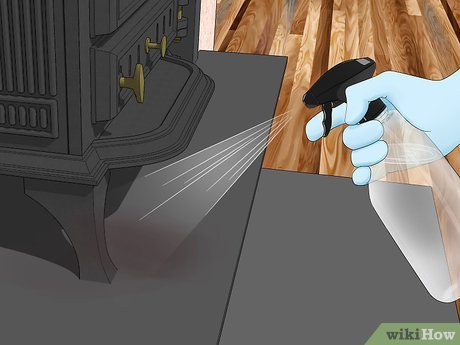
Apply a pH-neutral stone cleaner to the hearth surface per the product directions. Wipe with a soft cloth or sponge, working in the direction of the slate’s cleavage pattern. Rinse with a clean damp cloth. Wipe dry immediately — water left on slate can leave mineral spots. This routine cleaning removes normal soot dust, grease from the room, and general grime without any risk to the stone surface.
Step 3: Remove Ash and Soot Staining
For hearths with visible ash staining or grey soot marks, make a paste of baking soda and water (enough water to form a thick, spreadable paste). Apply the paste to the stained areas, let sit for 10–15 minutes, then scrub gently with a soft brush. The mild abrasive quality of baking soda lifts soot particles from the slate texture without scratching. Rinse thoroughly with clean water and dry.
Step 4: Remove Tough Stains
For oil-based stains (fallen candles, grease splatters), apply a paste of baking soda and acetone or mineral spirits. Spread 1/4 inch thick over the stain, cover with plastic wrap, and leave for 24 hours. The paste draws the oil stain out of the slate pores as it dries. Remove, rinse, and dry. For organic stains (mildew, brown marks), apply hydrogen peroxide (3%) to the stain and let sit for 15 minutes before rinsing. For iron or rust staining (common near old iron fireplace grates), use a commercial iron stain remover formulated for natural stone — never use acidic rust removers on slate.
Step 5: Clean Grout Lines
If your slate hearth has grout between the tiles, clean the grout lines with an old toothbrush dipped in the baking soda paste or pH-neutral stone cleaner. Scrub along the grout lines and wipe away with a damp cloth. For dark grey or black grout (the most common type with slate), avoid bleach — it strips the dye from colored grout and leaves white patches.
Step 6: Seal or Oil the Slate
Unprotected slate is porous and absorbs stains readily. Sealing or oiling the slate after cleaning provides a protective layer that makes future cleaning easier and prevents immediate re-staining. For a natural oil finish that darkens and deepens the color: apply slate oil (such as Black Bison Slate Oil or teak oil) with a soft cloth, rubbing it into the slate surface. Let penetrate for 10–15 minutes, wipe off excess, and allow to cure for several hours before the next fire use. For a more durable protective coating, apply a penetrating stone sealer — this is invisible, doesn’t change the slate color, and creates a longer-lasting stain resistance.
Slate Hearth Maintenance Schedule
| Task | Frequency |
|---|---|
| Dry brush/vacuum loose ash | After every fireplace use |
| pH-neutral wipe-down | Weekly during fire season |
| Baking soda stain treatment | As needed when staining appears |
| Slate oil application | Every 6–12 months |
| Stone sealer application | Every 1–2 years |
Frequently Asked Questions
Can I use WD-40 on slate to make it shine?
WD-40 does temporarily darken and shine slate, but it leaves a petroleum residue that attracts dirt and becomes sticky over time. It also leaves a strong odor when the fireplace heats the hearth. Use slate-specific oil or black beeswax (Black Bison Slate Wax) for a proper oil finish that conditions the stone without these side effects.
My slate hearth has white powdery deposits — what are they?
White powdery deposits on slate are usually efflorescence — mineral salts carried to the surface by water migrating through the stone or underlying substrate. This happens when there’s moisture movement behind or beneath the hearth. Clean with a pH-neutral stone cleaner and a brush. Treat the underlying moisture source — if the hearth is continually getting wet from an exterior or condensation source, the efflorescence will return until the moisture issue is resolved. A penetrating sealer slows but doesn’t stop efflorescence if a moisture source is active.
How do I restore the dark color to faded slate?
Slate that has lightened or faded to grey over time has dried out and lost its natural oils. Apply slate oil generously — rub it in thoroughly with a cloth, let it penetrate for 15–30 minutes, and wipe off excess. The color should deepen immediately. For long-term color restoration, use a color-enhancing stone sealer (these are formulated to permanently deepen natural stone color). A test on a small area first confirms the result before treating the full surface.
Can I power wash a slate hearth?
No — pressure washing forces water into the slate’s natural cleavage cracks and the grout joints, potentially causing delamination (splitting along natural planes) and grout failure. Hand scrubbing with appropriate cleaners and a soft brush is the correct approach.
Conclusion
Cleaning a slate hearth requires understanding what slate can handle — pH-neutral cleaners and soft brushes are always safe; acid and abrasives are never appropriate. Remove ash dry first, clean with the right chemistry, treat stains with baking soda paste, and reseal or oil annually to protect the surface and maintain the deep natural color that makes slate one of the most beautiful hearth materials available.
For other fireplace maintenance, see our guide on how to clean a gas fireplace for the firebox and glass above your slate hearth. For other natural stone surfaces in the home, our guide on how to clean a marble table covers another acid-sensitive stone.
