
A clean spa filter is the foundation of clear hot tub water — a clogged filter reduces circulation, strains the pump, and allows bacteria and algae to establish in the water. Hot tub cartridge filters need weekly rinsing, monthly chemical soaking, and replacement every 1–2 years. This guide covers all three cleaning methods, the right products to use, and how to tell when your filter is past cleaning and needs replacing.
What You’ll Need
Tools
- Garden hose with trigger nozzle (for rinsing)
- Large bucket or plastic trash can (for soaking)
- Soft brush (optional — for stubborn deposits)
Materials
- Spa filter cleaner spray (Leisure Time Filter Clean, Natural Chemistry Filter Perfect) — for quick weekly spray clean
- Spa filter chemical soak (cartridge cleaner specifically rated for spa use)
- Replacement spa filter (same size and part number as your current filter)
Safety Precautions
- Turn off the spa pump before removing the filter — running the pump without a filter allows debris to enter the circulation system and damage the pump impeller.
- Never use household dish soap or laundry detergent to clean a spa filter — soap residue creates massive foam in the spa water when the filter is reinstalled. Use only spa-specific filter cleaners.
- Wear rubber gloves when handling filter chemical soak — concentrated filter cleaners contain chelating agents and acids that irritate skin with prolonged contact.
- Allow the filter to dry or rinse thoroughly after chemical soaking before reinstalling — chemical residue in the spa water affects water chemistry and can cause skin irritation.
Hot Tub Filter Cleaning: Three Methods
Method 1: Weekly Rinse (Quick Maintenance)
Remove the filter from the spa per your hot tub model’s procedure (most simply lift out or unscrew). Hold the filter vertically with one end at a 45-degree angle and rinse between the pleats with a garden hose on medium pressure. Rotate the filter as you rinse, working up and down the pleats systematically. Rinse until the water running off the filter is clear. This removes trapped debris and body oils from the outermost layer of the filter pleats. Reinstall the filter (or your clean spare) and restore pump operation. This method takes 3–5 minutes and prevents the heavy biofilm buildup between deeper cleans.
Method 2: Monthly Spray Chemical Clean
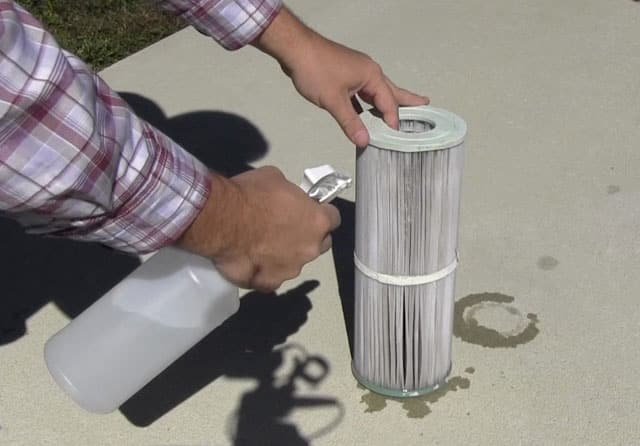
After rinsing, spray spa filter cleaner concentrate directly onto the pleats, coating all surfaces. Allow to sit for the dwell time specified on the product (typically 5–15 minutes). This chemical dwell dissolves oils and biofilm that water rinsing doesn’t remove. Rinse thoroughly after the dwell period until all chemical residue is gone — the water should flow off clearly with no foam or chemical color. Allow the filter to dry partially (30 min) before reinstalling, or install your spare and let the cleaned filter dry completely outside the spa for 24 hours. A dry filter performs better than a wet one because dry fibers have better mechanical filtration of debris.
Method 3: Overnight Chemical Soak (Deep Clean — Quarterly)
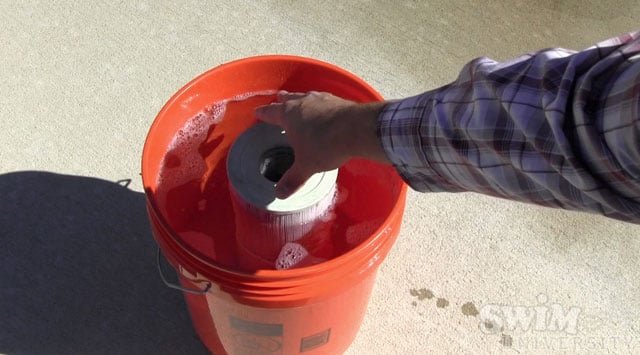
For the deepest clean, mix a full spa filter chemical soak solution in a large bucket per the product directions — typically one cap or measured dose per gallon of water. Fully submerge the filter and allow to soak for 8–24 hours (overnight works well). The extended soak dissolves embedded calcium deposits, oils, biofilm, and mineral scale throughout the depth of the pleats, not just the surface. After soaking, remove the filter and rinse extremely thoroughly — multiple minutes under a running hose until no chemical odor remains. Allow to dry fully (24 hours) before reinstalling.
Filter Cleaning and Replacement Schedule
| Task | Frequency |
|---|---|
| Rinse with garden hose | Weekly |
| Spray chemical clean | Monthly |
| Full overnight chemical soak | Every 3 months |
| Filter replacement | Every 12–24 months depending on use and water chemistry |
When to Replace Instead of Clean
- Filter pleats are grey, brown, or discolored even after overnight soaking
- Pleats are torn, frayed, or collapsed
- The end caps are cracked or the core tube is damaged
- The filter has a persistent musty smell after soaking and drying
- Water clarity problems persist despite correct chemistry and a clean filter
- The filter has been in use for more than 2 years with regular use
Pro Tips
- Buy two filters — rotate them. While one is soaking and drying, the other is installed and running. This is the professional hot tub owner approach and prevents ever running the spa without filtration.
- Label your filters with the installation date — use a permanent marker on the end cap to note when you installed it. Tracking replacement intervals is easy when the date is right on the filter.
- Clean your filter more frequently when water is heavily used — a hot tub used daily by multiple people needs weekly chemical spray cleaning, not just rinsing, to keep up with the bioload.
Frequently Asked Questions
Can I put my spa filter in the dishwasher?
No — the high heat of a dishwasher melts and deforms the polyester filter fibers, destroying the filter’s ability to capture fine particles. It also melts the end cap adhesive in some filter designs. Use only the cold-water rinse and chemical soak methods described above for spa filters.
My hot tub water is cloudy even after cleaning the filter — what’s wrong?
Cloudy hot tub water after a clean filter indicates a water chemistry imbalance — most commonly high phosphates (from body oils, cosmetics, and sunscreen), pH out of range, or insufficient sanitizer (chlorine or bromine). Test the water with a hot tub test strip or kit: check pH (target 7.4–7.6), total alkalinity (target 80–120 ppm), sanitizer level, and calcium hardness (target 150–250 ppm). Shock the spa water with a non-chlorine oxidizer shock treatment to break down organic compounds, then filter for 24 hours.
How do I know what replacement filter to buy?
Look at the end cap of your current filter — most spa filters have the part number printed on the end cap. Write it down before disposing of the old filter. Alternatively, measure the filter diameter and length and take it to a spa supply store. Filtration area (measured in square feet) matters — using an undersized replacement filter causes faster clogging and reduced water quality.
Conclusion
Spa filter maintenance takes minutes per week but prevents hours of water chemistry problems and expensive pump repairs. Weekly rinsing, monthly spray cleaning, quarterly overnight soaking, and annual or biannual replacement keeps the filter performing at its best and your hot tub water crystal clear. The two-filter rotation system is the most effective setup — always have a clean spare ready.
For related pool and spa maintenance, see our guide on how to clean a salt cell and sand filter for pool system maintenance alongside your spa. For sauna care, our guide on how to clean a sauna covers the dry heat alternative to hot tub relaxation.
