
A kitchen sponge can harbor millions of bacteria after just a few days of use. The good news: you can sanitize a sponge in under two minutes using your microwave, dishwasher, or a bleach solution. Clean your sponge daily if you use it for dishes, and replace it every one to two weeks regardless of how clean it looks.
What You’ll Need
- Microwave (or dishwasher)
- White vinegar or household bleach
- Dish soap
- Clean bowl or container
- Water
- Rubber gloves (for bleach method)
Safety and Precautions
Never microwave a dry sponge — it can catch fire or melt. Always saturate the sponge thoroughly with water before microwaving. If using bleach, wear rubber gloves and work in a ventilated area. Never mix bleach with vinegar or any other cleaner. Discard sponges with torn pieces, heavy discoloration, or a smell that won’t come out — no cleaning method can fix a sponge that’s truly spent.
Method 1: Microwave Sanitizing (Fastest)
Soak the Sponge Completely
Run the sponge under hot water and squeeze it repeatedly until it’s saturated throughout. A dry or partially wet sponge can arc or catch fire in the microwave. It should feel heavy and fully soaked.
Add a Squirt of Dish Soap
Work a small amount of dish soap into the sponge before microwaving. This helps break down grease and food residue while the heat does the sanitizing work. Squeeze it a few times to distribute the soap evenly.
Microwave on High for 1–2 Minutes
Place the soapy, wet sponge in the center of the microwave. Run it on high for one minute. If the sponge still smells off after removing, run it for another 30 seconds. Studies show that two minutes on high kills over 99% of bacteria in kitchen sponges.
Let It Cool Before Touching
The sponge will be extremely hot. Leave it in the microwave for one to two minutes before removing. Use tongs or let it cool naturally — don’t squeeze it right away or you’ll burn your hands.
Rinse and Squeeze Dry
Once cool enough to handle, rinse the sponge under clean water to remove any soap residue. Squeeze out as much water as possible, then stand it on its edge or prop it up where air can circulate on all sides to dry. Never leave a wet sponge flat on the sink — that’s how bacteria grow back fast.
Method 2: Bleach Soak (Deepest Disinfection)
Mix a Bleach Solution
Combine 3/4 cup of household bleach per gallon of water in a bowl or bucket. This concentration is strong enough to kill bacteria and mold spores without destroying the sponge fibers. Put on rubber gloves before handling the bleach solution.
Submerge the Sponge for 5 Minutes
Push the sponge fully into the bleach solution and let it soak for five minutes. You don’t need to leave it longer — extended bleach exposure can break down the sponge material faster and won’t kill more bacteria than a five-minute soak already does.
Rinse Thoroughly
Remove the sponge with gloves and rinse it under cold running water for 30 to 60 seconds. Squeeze and re-rinse several times until the bleach smell is minimal. Residual bleach will fade as the sponge dries.
Air Dry Completely
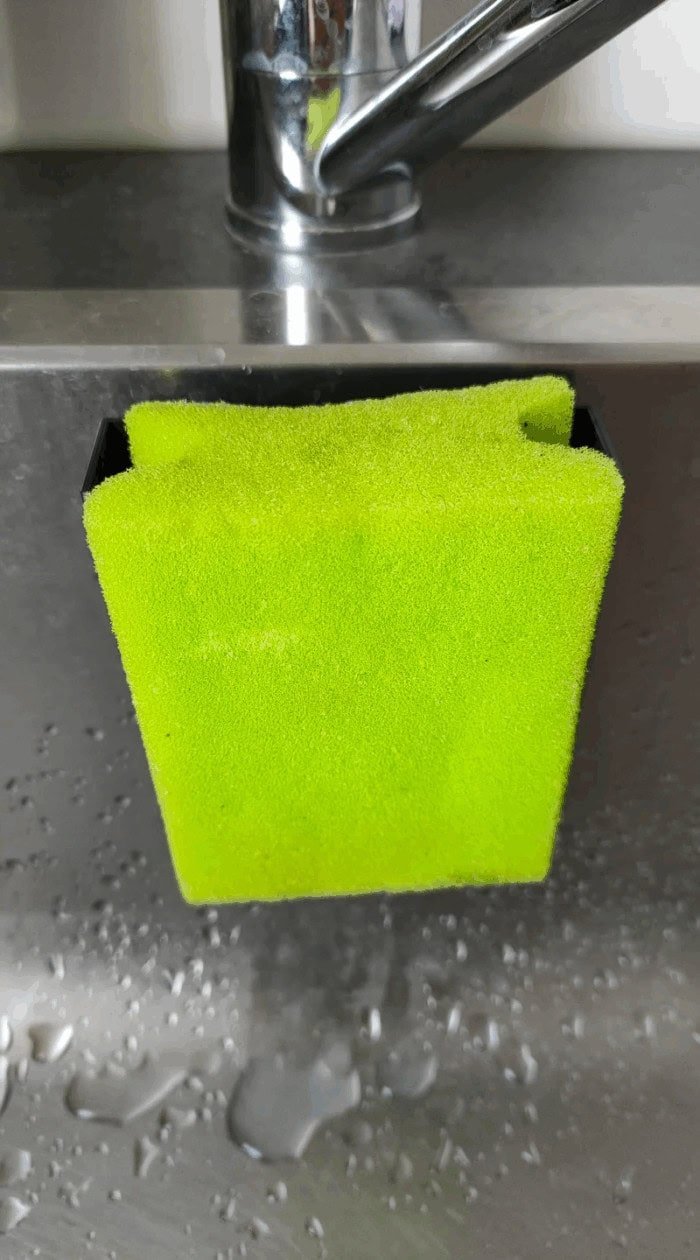
Stand the sponge on its edge or use a sponge holder that allows airflow on all sides. Do not place it back near your dish rack or countertop until it is fully dry. A completely dry sponge is a hostile environment for bacterial regrowth.
Method 3: Dishwasher Cleaning
Place the Sponge on the Top Rack
Lay the sponge flat on the top rack of your dishwasher or stand it upright in the silverware basket. Don’t place it on the bottom rack where it can contact the heating element.
Run a Hot Water Cycle with Heat Dry
Use the hottest wash setting and make sure the heat-dry cycle is turned on. The combination of high-temperature water and the drying cycle sanitizes the sponge effectively. Skip the sanitize rinse option — it’s unnecessary for sponges.
Remove and Let Air Finish
After the cycle completes, remove the sponge and let it air dry for another 15–20 minutes before using it. The dishwasher gets sponges very clean but may not dry the interior fully.
Method 4: Vinegar Soak (Natural Option)
Vinegar is less effective than bleach or microwave heat but works as a daily freshener between deeper sanitizing sessions. Soak the sponge in undiluted white vinegar for five minutes, then rinse and squeeze dry. This reduces surface odors and kills some surface bacteria, but it does not penetrate deep into the sponge fibers the way bleach or high heat does.
How Often Should You Clean Your Sponge?
For a kitchen sponge used daily on dishes: microwave or bleach soak every day or every other day. For a general cleaning sponge used on counters or bathrooms: disinfect every 2–3 days. Replace any sponge every 1–2 weeks, or sooner if it smells even after cleaning, has visible mold, or has started to fall apart. No amount of sanitizing can restore a physically degraded sponge.
Pro Tips
- Separate sponges by task: Use different sponges for dishes versus counters versus bathrooms. Color-code them so they never get mixed up.
- Dry vertically: Store sponges upright or in a ventilated holder, never flat in a puddle. Moisture is the enemy.
- Don’t wipe raw meat areas: If a sponge contacts raw chicken, beef, or fish surfaces, discard it immediately rather than trying to clean it — the contamination risk isn’t worth it.
- Natural sea sponges need different care: Don’t microwave natural sea sponges — they can deteriorate. Use a vinegar soak or gentle bleach solution only.
- Cellulose sponges microwave best: Standard yellow cellulose sponges handle microwave sanitizing better than scrub sponges with plastic mesh. The mesh can melt.
Common Mistakes to Avoid
- Microwaving a dry sponge: Fire and melting hazard — always fully saturate first.
- Leaving sponges flat and wet: Bacteria doubles roughly every 20 minutes in warm, moist environments.
- Using the same sponge for weeks: Cleaning extends life but doesn’t make a sponge last indefinitely.
- Mixing bleach and other cleaners: Bleach plus ammonia or vinegar creates toxic fumes — never mix.
- Not rinsing after bleach: Residual bleach left in a sponge can leave faint bleach flavor on dishes — always rinse thoroughly.
Troubleshooting
- Sponge still smells after microwaving: Add a tablespoon of white vinegar to the sponge before microwaving. The steam helps cut odor-causing compounds.
- Sponge falling apart after bleach soak: You may have used too high a concentration or soaked too long. Use the 3/4 cup per gallon ratio and limit soaks to five minutes.
- Sponge turns dark or changes color: Discoloration that doesn’t wash out is usually mold or permanent staining from food — replace the sponge.
- Dishwasher didn’t remove the smell: Some food odors are deeply embedded in the sponge fibers. Follow with a microwave or bleach treatment, or replace the sponge.
Frequently Asked Questions
Does microwaving a sponge actually kill bacteria?
Yes — research from the USDA Agricultural Research Service found that microwaving a wet sponge for two minutes on high kills over 99% of bacteria, including E. coli and salmonella. The key is that the sponge must be fully saturated before microwaving.
Is it safe to put a sponge in the dishwasher?
Yes, as long as it’s placed on the top rack away from the heating element. The hot water and heat-dry cycle sanitize effectively. Just make sure the sponge doesn’t have any metallic scrubbing pads that could rust or damage dishwasher parts.
How do I know when to throw away a sponge?
Replace a kitchen sponge every one to two weeks, or immediately if: it smells even after thorough cleaning, has visible black or green mold, is physically falling apart, or has contacted raw meat. When in doubt, replace it — sponges are inexpensive.
Can I use hydrogen peroxide instead of bleach?
Yes — a 3% hydrogen peroxide solution (standard drugstore strength) can be used as a bleach alternative. Soak the sponge for ten minutes, then rinse thoroughly. It’s gentler on sponge fibers and has less odor than bleach, though slightly less powerful as a disinfectant.
Why does my sponge smell even when it looks clean?
Odors come from bacteria living deep inside the sponge fibers, not just the surface. A visual inspection can’t detect bacterial colonies. Use the microwave method — the internal steam is the only way to kill bacteria throughout the entire sponge, not just on the outside.
Conclusion
A clean sponge is one of the simplest ways to reduce bacteria in your kitchen. The microwave method is your fastest daily option, bleach works best for deep disinfection, and the dishwasher handles it passively when you’re already running a load. Whatever method you choose, the non-negotiable habit is drying the sponge completely between uses — that single step does more to slow bacterial growth than any cleaning method. Once you’ve got your sponge routine down, take a look at your kitchen sink next. Our guide on how to clean a stainless steel sink covers polishing, deodorizing, and restoring shine to both stainless and granite sinks.
