
A dull stainless steel sink has lost its shine due to mineral deposits, soap scum, water spots, and micro-scratches from abrasive cleaners. The fix is a combination of cleaning the right way (always with the grain), removing calcium buildup with vinegar or Bar Keepers Friend, and finishing with a light coat of mineral oil to restore luster and repel water. This guide covers daily cleaning, deep stain removal, and how to polish a dull sink back to near-original brightness.
What You’ll Need
Tools
- Soft sponge or microfiber cloth
- Soft-bristle brush or old toothbrush (for drain area)
- Dry microfiber cloth for buffing
Materials
- Dish soap (mild)
- White vinegar (distilled)
- Baking soda
- Bar Keepers Friend (powder or liquid) — most effective for stains and dulling
- Mineral oil or baby oil (for finishing/polishing)
- Flour (optional — old polishing technique)
What NOT to Use
- Steel wool or wire brushes — leave deep scratches in the steel surface
- Bleach or chlorine-based cleaners — damages stainless steel’s chromium oxide protective layer and causes pitting and rust over time
- Abrasive powders like Ajax or Comet on a dull sink — will worsen micro-scratching
- Scrubbing across the grain — always scrub parallel to the brushed grain lines
Safety Precautions
- Always work with the grain of the stainless steel (the brushed lines running in one direction). Scrubbing across the grain creates visible scratches that dull the surface permanently.
- Rinse thoroughly after using Bar Keepers Friend — the oxalic acid in Bar Keepers Friend is effective but must be fully rinsed to prevent dulling from residue.
- Test a small area first if using a new product on a high-end sink finish.
How to Clean a Dull Stainless Steel Sink Step by Step
Step 1: Identify the Grain Direction
Look closely at the sink surface — you’ll see faint parallel lines running in one direction. This is the “grain” of the brushed stainless steel finish. Every scrubbing motion you make throughout this process must go with these lines, never perpendicular to them. On most kitchen sinks, the grain runs front-to-back or side-to-side. Establishing this before you start prevents new scratches from undoing your cleaning work.
Step 2: Basic Clean with Dish Soap
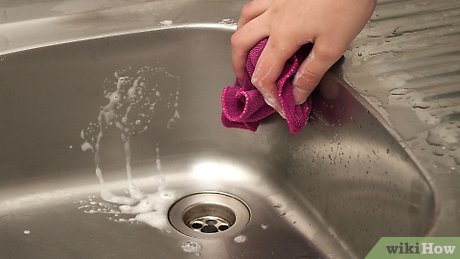
Wet the sink and add a few drops of dish soap to a soft sponge. Scrub the entire sink surface following the grain direction. Pay extra attention to the bottom basin where water and food particles collect. Rinse thoroughly with warm water. This removes loose debris, food residue, and light grease that would otherwise interfere with the deeper cleaning steps.
Step 3: Remove Mineral Deposits and Water Spots with Vinegar
White vinegar dissolves calcium and mineral deposits — the white chalky buildup that is the primary cause of stainless steel looking dull. Saturate a cloth or paper towel with undiluted white vinegar and lay it over the dull or spotted areas. Let it sit for 5–15 minutes. Remove the cloth and scrub lightly with a soft sponge, following the grain. Rinse with warm water and wipe dry immediately — air drying allows new water spots to form instantly.
For the drain area and edges where mineral deposits concentrate, dip an old toothbrush in vinegar and scrub those areas specifically.
Step 4: Deep Clean with Bar Keepers Friend
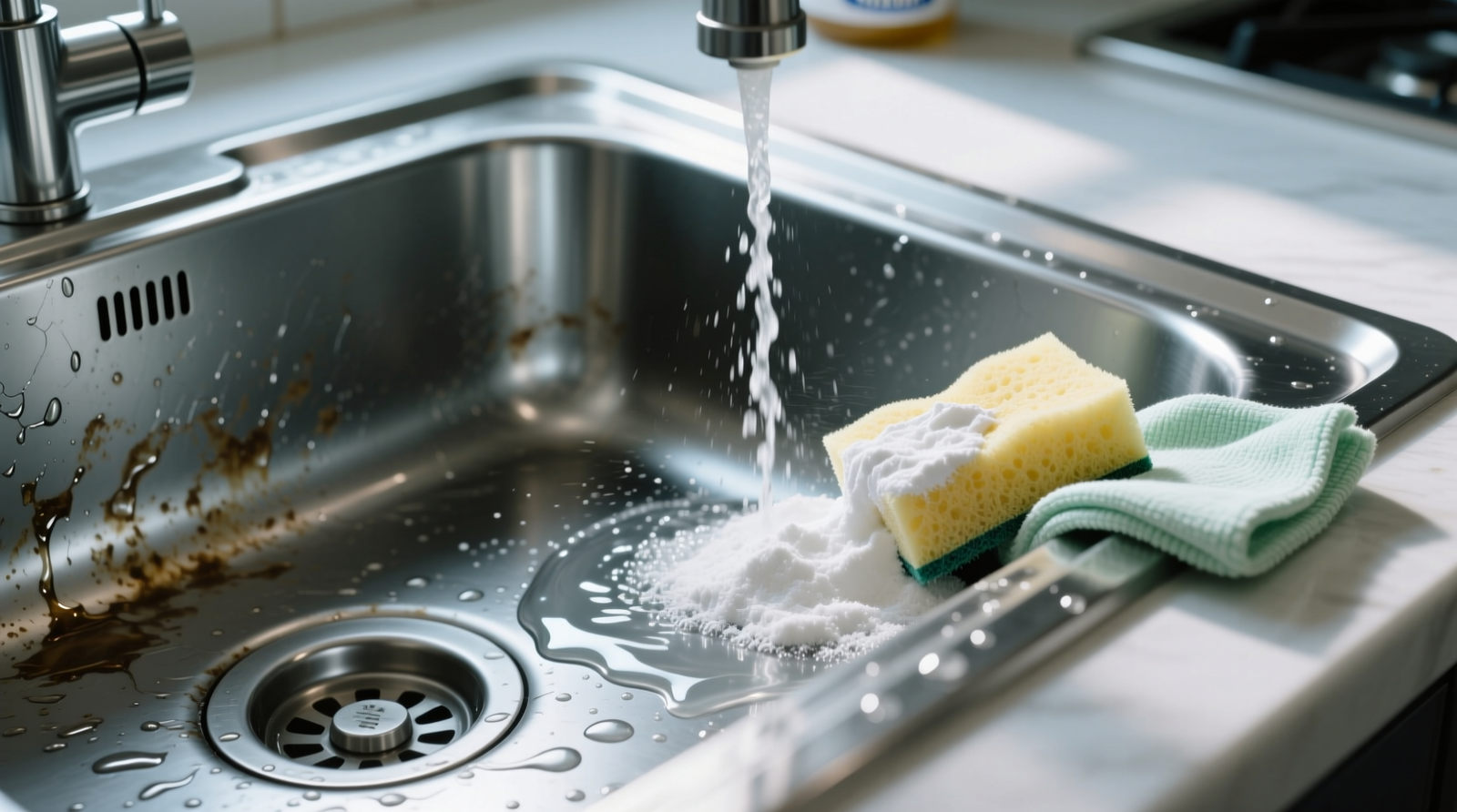
Bar Keepers Friend (BKF) contains oxalic acid, which removes rust stains, hard water stains, and restores the underlying brightness of stainless steel more effectively than any household remedy. Wet the sink surface, then sprinkle a small amount of BKF powder directly onto the sink. Using a damp soft sponge, rub gently in the direction of the grain. You’ll see the powder turn into a light grey paste as it lifts staining. Work in sections. Rinse thoroughly — every trace of BKF must be washed away, as the acid residue can cause dulling if left. Wipe dry with a clean microfiber cloth immediately.
If you have a particularly stubborn rust spot (often caused by leaving cast iron pans or steel cans on the sink surface), apply a paste of BKF mixed with a small amount of water directly to the spot, let sit for 1–2 minutes, then scrub and rinse.
Step 5: Baking Soda Scrub for Odors and Light Stains
If you want a gentler approach for routine deep cleaning without Bar Keepers Friend, baking soda is a mild abrasive that cleans without harsh chemistry. Wet the sink, sprinkle baking soda across the surface, and scrub with a damp cloth following the grain. The fine abrasive particles lift light staining while the alkalinity neutralizes odors from the drain area. Rinse thoroughly and dry immediately.
Step 6: Polish with Mineral Oil
This is the step that transforms a clean-but-flat sink into a genuinely polished one. After the sink is completely dry, put a few drops of food-grade mineral oil (or baby oil) onto a clean, dry microfiber cloth. Rub it into the sink surface using circular motions first to work it in, then finish with a final wipe following the grain direction. Buff off any excess with a second dry cloth. The mineral oil fills micro-scratches optically, restores the deep luster of brushed steel, and creates a light barrier that makes water bead off the surface instead of pooling and creating new spots.
Reapply mineral oil every 2–4 weeks for ongoing protection.
Dealing with Specific Stains
| Stain Type | Best Treatment |
|---|---|
| White chalky deposits (hard water) | White vinegar soak — 5–15 minutes, scrub with grain, rinse dry |
| Orange rust spots | Bar Keepers Friend paste on spot; leave 1–2 min; scrub with grain; rinse |
| Black or brown stains (tannins from tea/coffee) | Baking soda paste; let sit 5 min; scrub gently with grain |
| Grease film (rainbow sheen) | Dish soap + warm water scrub; follow with vinegar wipe |
| Scratches (light surface) | Mineral oil fills and hides light scratches optically; deep scratches require professional re-finishing |
| General dullness / lost luster | Bar Keepers Friend full clean + mineral oil polish |
Daily Maintenance Routine
- Rinse the sink after every use and wipe dry with a cloth — water spots are the #1 cause of dulling and they form within minutes of water evaporating.
- Don’t leave wet sponges, steel wool pads, or cast iron cookware sitting on the sink surface — they transfer rust and leave permanent marks.
- Wipe down with a damp soapy cloth daily in heavy-use kitchen sinks.
- Apply mineral oil monthly to maintain shine and water-repellency.
Pro Tips
- Use the flour trick for a brilliant polish — dry the sink completely, then dust a handful of flour across the surface and rub in circular motions with a dry cloth. The flour buffs the steel to a high shine. Rinse and dry. This old-fashioned technique works surprisingly well for a final polish after cleaning.
- Lemon juice as a vinegar alternative — fresh lemon juice has similar acidity to diluted vinegar and works well for mineral spots. It also leaves a pleasant scent.
- Club soda shines stainless — pour a small amount of club soda into the sink and scrub with a cloth for a quick mid-week shine without full cleaning.
Frequently Asked Questions
Can I use Windex to clean a stainless steel sink?
Windex works for surface smudges on some stainless finishes, but it’s not ideal for a kitchen sink. The ammonia in Windex can leave streaks and doesn’t address mineral deposits. Dish soap + vinegar + mineral oil is more effective and safer for regular sink use. Windex is better suited for stainless steel appliances with smoother finishes than brushed sink surfaces.
Why does my stainless steel sink keep getting rust spots even after cleaning?
Rust spots on stainless steel are almost always surface rust transferred from another object — steel cans, cast iron pans, steel wool scrubbers left wet on the sink surface. The sink itself isn’t rusting; it’s collecting rust particles from those items. Keep cast iron off the sink surface, never leave steel wool on the sink, and store sponges in a dry location away from the basin. Once the source is removed, the spots won’t return.
Does Bar Keepers Friend damage stainless steel?
Bar Keepers Friend is safe for stainless steel when used correctly — wet surface, gentle scrubbing with the grain, and thorough rinsing. The oxalic acid it contains is mild and doesn’t damage steel’s protective chromium oxide layer. The risk comes from leaving the product on the surface too long (more than a few minutes) or using too much pressure. Don’t use BKF more than once a week on the same surface.
My sink has deep scratches — can they be removed?
Deep scratches in stainless steel require mechanical re-finishing with abrasive pads to bring the surface back to a uniform finish. This is a skilled job that can go wrong quickly if done incorrectly (creating a blotchy finish). For a kitchen sink with significant deep scratching, consult a countertop or appliance refinishing professional. Light scratches are hidden effectively by regular mineral oil applications.
How often should I deep clean a stainless steel kitchen sink?
Do a full clean (vinegar + BKF + mineral oil) once a week if the sink is in daily heavy use, or every 2 weeks for lighter use. Daily wipe-downs (rinse and dry after use) reduce the frequency of deep cleaning needed significantly. A monthly mineral oil application maintains the protective finish between full cleans.
Conclusion
Restoring a dull stainless steel sink to its original shine takes about 20 minutes and three things: white vinegar for mineral deposits, Bar Keepers Friend for stains and rust, and mineral oil for polishing and protection. Maintain the habit of wiping the sink dry after use and you’ll prevent most dulling from happening in the first place. A stainless steel sink that’s cared for properly can look sharp for 20 years or more.
For full kitchen surface maintenance, see our guide on how to clean a granite sink if you have composite or granite fixtures alongside your stainless steel. For related fixture care, our guide on how to clean a faucet covers the handles and spout that pair with your sink.
