
A slow or smelly sink drain almost always comes down to one of three culprits: buildup in the drain itself, a clogged P-trap (the curved pipe under the sink), or gunk in the drain pipe further down the line. Cleaning all three takes less than an hour with basic tools and no professional help required. This guide covers every method from simple baking soda flushes to manually cleaning the P-trap — fix any sink drain problem in your kitchen or bathroom today.
What You’ll Need
Tools
- Bucket (to catch water under the sink)
- Adjustable pliers or slip-joint pliers
- Drain snake or flexible cleaning brush (for deeper clogs)
- Old toothbrush (for drain cover cleaning)
- Rubber gloves
Materials
- Baking soda
- White vinegar
- Boiling or very hot water
- Dish soap (a few drops)
- Enzyme drain cleaner (for biological buildup — Bio-Clean or similar)
Safety Precautions
- Never mix bleach and vinegar in a drain — the resulting chlorine gas is toxic in enclosed under-sink spaces.
- Don’t pour boiling water into PVC pipes — use very hot tap water instead, or water just off the boil cooled for 1 minute. Boiling water can soften PVC joints.
- Wear rubber gloves when handling drain contents — the biological material in sink drains is a significant bacteria source.
- Place a bucket under the P-trap before loosening — there’s always water sitting in the trap and it will spill when you remove it.
Method 1: Clean a Smelly Drain Without Disassembly
If your drain smells but drains normally, the smell is coming from biofilm — a layer of bacteria, soap scum, and organic material coating the inside of the drain and the drain pipe just below the strainer. Try this before taking anything apart.
Step 1: Remove and Clean the Drain Strainer or Stopper
Pop out or unscrew the drain strainer or stopper. Most bathroom stoppers are held by a pivot rod connected to the drain assembly — you can usually pull them straight up or turn a quarter turn to release. Use an old toothbrush and dish soap to scrub the strainer thoroughly — the biofilm on the underside of the strainer is often the primary odor source. Rinse clean.
Step 2: Baking Soda and Vinegar Flush
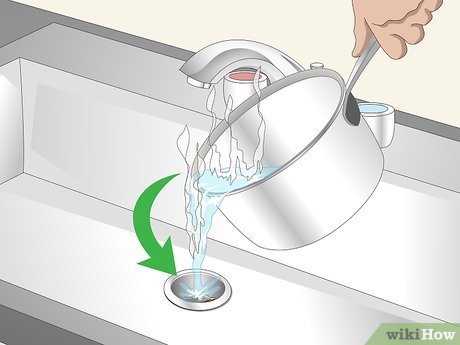
Pour 1/2 cup of baking soda down the drain, followed immediately by 1/2 cup of white vinegar. The reaction creates fizzing that loosens organic buildup on the pipe walls. Cover the drain opening with a cloth or stopper for 15–20 minutes to keep the reaction working inside the pipe rather than fizzing out into the sink. After 20 minutes, flush with a full kettle of very hot water (just off the boil, or your tap’s hottest setting if you have PVC pipes).
Step 3: Repeat or Follow with Enzyme Cleaner
For persistent odors, follow the baking soda flush with a commercial enzyme drain cleaner poured according to package instructions. Enzyme cleaners (like Bio-Clean or Green Gobbler) consume the biological material coating the pipes without using harsh chemicals that damage pipes or septic systems. These work slowly — let them sit overnight for best results.
Method 2: Clean a Slow or Clogged Drain
Step 1: Try Hot Water and Dish Soap First
Squirt several drops of dish soap down the drain, then pour a full kettle of very hot water. Dish soap is a degreaser — for kitchen sinks clogged primarily with grease buildup, this alone often restores full drainage. Repeat 2–3 times if needed. If flow improves but doesn’t fully restore, the partial clog is in the P-trap or further in the drain pipe.
Step 2: Use a Drain Snake
A drain snake (also called a drain auger) is the most effective tool for clogs that don’t respond to flushing. Insert the snake into the drain opening and push it down while rotating the handle clockwise. When you feel resistance, you’ve hit the clog. Continue rotating to break through or snag the material. Pull the snake back out — most of the clog material comes out with it. Run hot water to flush any remaining debris. Drain snakes are available for under $20 at hardware stores and reach 15–25 feet into the pipe.
Method 3: Clean the P-Trap (Under-Sink)
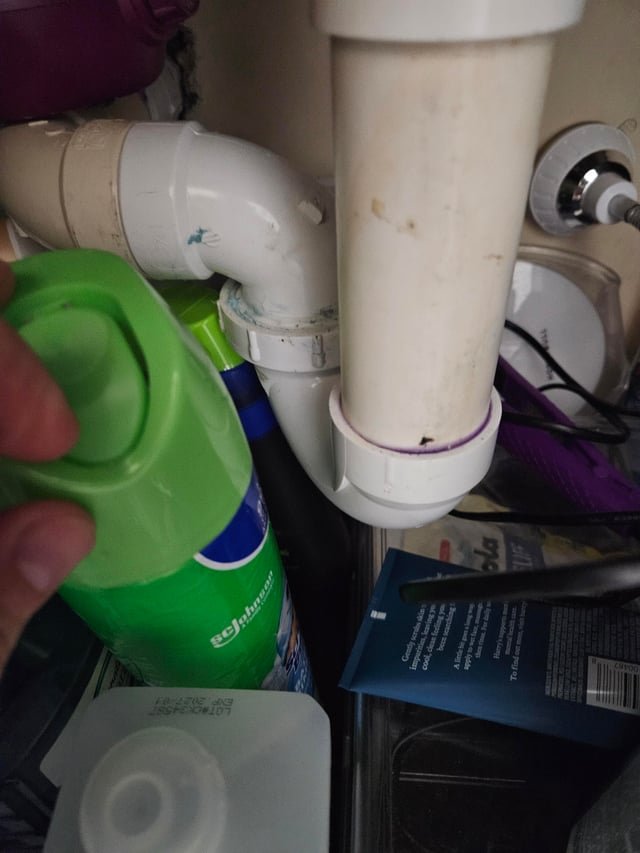
The P-trap is the curved U-shaped pipe directly under the sink drain. It holds a small amount of water that blocks sewer gases from entering your home. It’s also a trap for hair, debris, and grease — if your drain is completely stopped or Method 1 and 2 didn’t solve the smell, it’s time to physically clean the P-trap.
Step 1: Clear Out the Cabinet Under the Sink
Remove everything from under the sink. Place a bucket directly below the P-trap to catch the water that will spill out.
Step 2: Remove the P-Trap
The P-trap connects to the sink drain tailpiece above it and the wall drain pipe to the side. It’s held by two slip-joint nuts — one at the top where it meets the tailpiece, one at the side where it meets the wall pipe. These are usually hand-tightenable plastic nuts on modern plumbing. Loosen both nuts counterclockwise (use pliers if they’re tight). Support the trap with one hand as you remove the second nut — it will drop and water will pour out. Let it drain completely into your bucket.
Step 3: Clean the P-Trap
Take the P-trap to the larger sink (kitchen sink if you’re doing a bathroom, or outside). Remove any large debris by hand (wearing gloves). Use an old bottle brush or a flexible cleaning brush to scrub the inside of the curved trap. Rinse thoroughly under running water. If it smells, soak it in a solution of 1 cup white vinegar and hot water for 10 minutes, then scrub and rinse.
Step 4: Check and Clean the Drain Pipe Opening in the Wall
With the P-trap removed, you have direct access to the horizontal drain pipe going into the wall. Shine a flashlight inside. If you see buildup or debris, use your drain snake here — insert it into the wall pipe and push forward until you feel resistance. This removes buildup further into the drain system than you can reach with the trap in place.
Step 5: Reinstall the P-Trap
Reattach the P-trap by threading both slip-joint nuts back on by hand, then snugging them with pliers — don’t overtighten (especially plastic threads). Run water and check both connection points for drips. A slow drip at the nuts means they need another quarter-turn tightening. A drip from the middle of the trap itself means a crack — replace the trap section (under $10 at any hardware store).
Drain Cleaning Cheat Sheet
| Problem | Best Method | Time |
|---|---|---|
| Smelly drain, normal flow | Baking soda + vinegar flush; enzyme cleaner | 30 min |
| Slow drain | Hot water + dish soap; drain snake | 20–30 min |
| Complete blockage | P-trap removal and cleaning; drain snake into wall pipe | 45–60 min |
| Recurring smell after cleaning | Enzyme cleaner overnight; check vent pipe for blockage | Overnight |
| Gurgling after flushing nearby toilet | Likely vent pipe issue — call a plumber | N/A |
Pro Tips
- Use a drain strainer — a $3 mesh strainer in your bathroom sink catches hair before it reaches the drain. It’s the single most effective drain maintenance tool for bathroom sinks.
- Run hot water after every kitchen use — 30 seconds of the hottest tap water after washing dishes keeps grease moving through the drain line instead of solidifying in the trap.
- Monthly baking soda flush — a monthly 1/2 cup of baking soda followed by hot water prevents slow drain buildup from ever reaching the clog stage.
- Avoid chemical drain openers for routine use — products like Drano work by dissolving organic material with lye (sodium hydroxide). Effective once, but repeated use corrodes older metal drain pipes and can damage PVC glue joints over time. Use mechanical methods (snake) and enzyme cleaners for regular maintenance.
Frequently Asked Questions
Why does my sink smell even though it drains fine?
Normal-draining sinks that smell are almost always a biofilm issue — the organic layer coating the underside of the stopper, the drain strainer, and the first 6–12 inches of drain pipe. Remove and scrub the stopper/strainer, then do a baking soda and vinegar flush followed by an enzyme drain cleaner treatment. If smell persists after this, the P-trap may have dried out (if the sink isn’t used often) — run water to refill it, since a dry P-trap allows sewer gas to enter your home.
How do I clean a kitchen sink drain that smells like grease?
Kitchen sink grease smell responds best to dish soap + hot water flushes and enzyme drain cleaners. Pour a generous amount of dish soap down the drain, follow immediately with a full kettle of hot water, and repeat 3 times. Follow with an overnight enzyme treatment. Avoid pouring cooking grease down the sink in the first place — pour it into a container and dispose of it in the trash when solidified.
Can I use Drano in a sink with a garbage disposal?
Drano and similar chemical drain openers are not recommended for use with garbage disposals — the chemical can corrode the disposal components and the rubber gasket inside. Use a drain snake through the disposal opening (with the disposal turned off and unplugged) or manually clean the P-trap instead.
My P-trap keeps getting clogged — is there something wrong with my plumbing?
Frequent P-trap clogs usually indicate one of three things: too much hair or debris entering the drain (use a strainer), a pipe slope issue (the drain pipe running to the wall should slope downward at 1/4 inch per foot — if it’s too flat, debris settles), or a partial blockage further down the line that’s causing backflow into the trap. A plumber with a camera can identify deeper blockages quickly.
How do I clean a drain pipe that runs through the wall?
With the P-trap removed, use a hand-powered drain snake inserted into the wall opening. Push forward while rotating until you feel resistance, then work it back and forth. Electric drain augers (rentable at hardware stores) reach further — up to 50 feet — for clogs deeper in the drain line. For main line clogs affecting multiple fixtures, call a plumber with professional water jetting equipment.
Conclusion
Most sink drain problems — clogs, slow drains, and smells — can be solved without calling a plumber. Start with the simplest method (baking soda and vinegar flush), move to a drain snake if needed, and physically clean the P-trap for complete blockages or persistent odors. With a monthly maintenance flush and a drain strainer in place, you’ll rarely deal with serious drain issues.
For related plumbing maintenance, see our guide on how to clean a stainless steel and ceramic sink for surface-level sink care. If water backing up is a larger issue, our guide on how to build a French drain covers exterior drainage solutions for yard and basement water problems.
