
Down pillows can and should be machine washed — most handle it well with the right settings, detergent, and drying method. The keys are using a front-load or top-load machine without an agitator, a small amount of gentle detergent, and a long, low-heat drying cycle with dryer balls to break up clumps. Skip any of these steps and you’ll end up with a lumpy, flat pillow that smells damp. Here’s the complete process to wash, dry, and fully restore a down pillow.
What You’ll Need
Tools
- Front-loading washing machine or top-loader without agitator
- Dryer with low/medium heat setting
- 2–3 wool dryer balls (or 2 clean tennis balls in a sock)
Materials
- Gentle or down-specific liquid detergent (Nikwax Down Wash, Woolite, or a small amount of regular HE detergent)
- White vinegar (optional — neutralizes odor)
- Baking soda (optional — for deodorizing wash)
Safety Precautions
- Always check the care label first — most down pillows are machine washable, but some higher-end or antique pillows specify dry clean only. Honor that label.
- Inspect for holes or weak seams before washing — even a small tear becomes a significant problem in the washing machine, releasing down into the drum and clogging the machine’s drain.
- Never use fabric softener or dryer sheets on down — they coat the down clusters and destroy loft permanently.
- Never store a down pillow that is even slightly damp — down that isn’t fully dry develops mildew that is very difficult to remove.
How to Clean a Down Pillow Step by Step
Step 1: Check the Care Label and Inspect the Pillow
Read the care tag on your pillow. Most down pillows are machine washable, labeled “machine wash gentle” or simply “machine washable.” If the label says dry clean only, take it to a professional cleaner — attempting to machine wash a dry-clean-only down pillow can cause the shell fabric to shrink and force the seams open. Before loading the pillow into the washer, run your hands along every seam and press lightly across the surface looking for any thin spots, tears, or areas where the down is escaping. Even a pinhole becomes a serious tear in agitation — repair any weak seams with a needle and thread before washing.
Step 2: Wash Two Pillows at a Time
Always wash two down pillows together, even if only one needs cleaning. Two pillows balance the load in the drum, preventing the machine from becoming unbalanced during the spin cycle. An unbalanced single pillow in a large drum can cause the washing machine to walk across the floor or trigger an error stop mid-cycle.
Step 3: Set the Machine and Load
Use the delicate or gentle cycle with warm water (not hot — hot water can damage down clusters and shell fabric). Use a small amount of gentle liquid detergent — about 1 tablespoon, or less than the cap suggests. Too much detergent is the most common mistake: it gets trapped deep in the down and is nearly impossible to rinse out fully, leaving a soapy residue that clumps the fill and causes odors. For extra freshness, add 1/2 cup of white vinegar to the rinse cycle — it neutralizes any residual odor without leaving a scent once dried.
Set the machine to run an extra rinse cycle if that option is available. Down requires thorough rinsing to remove all detergent.
Step 4: Run a Second Rinse Cycle
After the wash cycle completes, run the pillows through an additional rinse cycle without adding anything. This ensures all detergent is removed. Squeeze the pillow gently before transferring to the dryer — if the water coming out feels soapy, run another rinse. Detergent residue in a dryer is a fire hazard and will also cause the down to clump into hard lumps that won’t fluff out.
Step 5: Transfer to Dryer — Add Dryer Balls
Transfer both pillows to the dryer. Add 2–3 wool dryer balls (or two clean tennis balls placed in a clean sock and knotted). Dryer balls continuously beat against the pillows throughout the cycle, physically breaking up down clumps as they form during drying. Without them, the down consolidates into wet, dense lumps in the corners of the pillow that don’t dry evenly and won’t break apart later.
Step 6: Dry on Low Heat — Multiple Cycles
Set the dryer to the lowest heat setting, or use the “air fluff” or “delicate” setting if your dryer has it. Start with a 60-minute cycle. When it ends, remove the pillows and break apart any clumps you feel with your hands by squeezing and kneading the pillow. Fluff each pillow vigorously by holding opposite corners and shaking. Then return to the dryer for another 45–60 minute cycle. Repeat this process — it typically takes 3–4 full dryer cycles for down pillows to dry completely.
The most important rule: The pillow must be completely dry before you use or store it. Down that is even 10–15% damp in the center will develop mildew within 24–48 hours. Check by pressing firmly into the center of the pillow — if it feels at all cool, damp, or clumped in the center, it needs more drying time.
Step 7: Final Fluff and Air Out
Once fully dry, give the pillows a vigorous shake and fluff outside or in a well-ventilated room for 30–60 minutes. Fresh air and a final hand-fluff restores maximum loft and disperses any remaining dryer heat from the core of the pillow. Your down pillow should feel nearly as full and springy as when it was new.
How to Spot-Clean a Down Pillow
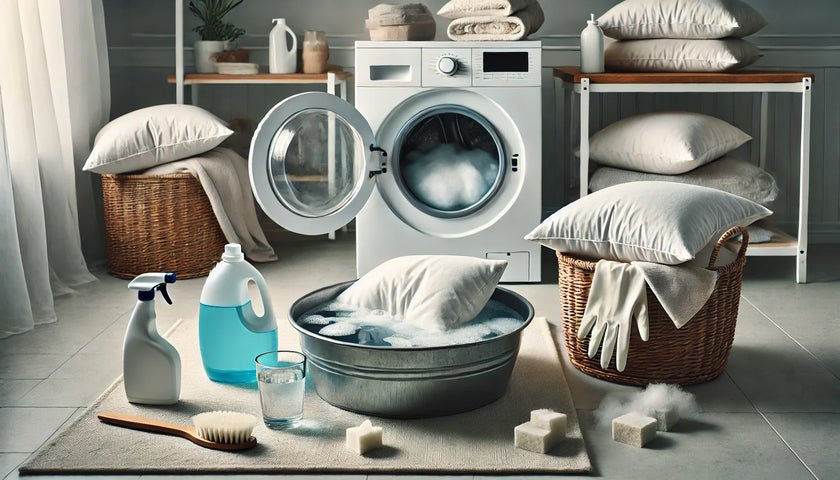
For small stains on the pillow shell without doing a full wash, use a clean cloth dampened with cool water and a drop of dish soap. Blot (don’t rub) the stain. Use a second damp cloth with plain water to rinse. Blot dry and allow to air dry completely — this can take several hours because down absorbs and holds moisture. Point a fan at the pillow to speed drying.
How Often to Wash Down Pillows
| Use Pattern | Wash Frequency |
|---|---|
| Primary sleeping pillow with pillowcase | Every 3–6 months |
| Decorative pillow or guest room | Annually |
| Pillow with noticeable odor or visible staining | Immediately, regardless of last wash date |
| After illness (cold, flu, etc.) | Immediately |
Pro Tips
- Use a pillow protector — a zippered cotton pillow protector under your pillowcase keeps sweat, oils, and skin cells from penetrating the shell. This extends the time between full washes significantly.
- Don’t compress down pillows for storage — vacuum storage bags crush down clusters permanently. Store in a breathable cotton bag with room to expand.
- Sunlight refreshes down naturally — for light deodorizing between washes, lay the pillows outside in direct sunlight for 2–3 hours. UV exposure naturally neutralizes bacteria and odors.
- Know when to replace — a down pillow that no longer springs back when folded in half, has permanently clumped fill, or retains odor after washing has reached end of life. Most quality down pillows last 5–10 years with proper care.
Frequently Asked Questions
Can I wash a down pillow in a top-loading machine with an agitator?
You can, but it’s riskier. The central agitator creates uneven force that can tear pillow seams and tangle the shell fabric around the post. If a top-loader with agitator is your only option, place the pillow vertically around the agitator rather than flat on top of it, and use the delicate cycle. Washing two at a time still helps with balance.
My down pillow came out of the dryer still clumpy — what do I do?
This means it either didn’t dry long enough or still has detergent residue. Put it back in the dryer with dryer balls for another full cycle. If it’s still clumped after multiple cycles, rewash with no detergent and an extra rinse to remove residue, then dry again from scratch. Clumping that doesn’t resolve usually means the down clusters have been damaged by heat or detergent — the pillow may need replacing.
Can I dry clean a down pillow instead of washing it?
Dry cleaning uses chemical solvents that can damage down clusters and remove the natural oils that give down its loft properties. Professional wet cleaning (not solvent-based) is a better option if you prefer not to machine wash. If the label says dry clean only, use a professional wet cleaner, not a standard dry cleaner.
How do I get a sweat smell out of a down pillow?
Add 1/2 cup of white vinegar to the wash cycle and use an extra rinse. For persistent odors, sprinkle the dry pillow (before washing) with baking soda, let sit for 15 minutes, shake off outside, then wash normally. Thorough drying is critical — incomplete drying is the most common cause of persistent odors in down pillows.
Can I use a laundromat for down pillows?
Yes — laundromat machines are often front-loaders with larger drums than home machines, which is ideal for down pillows. Many laundromats also have large-capacity dryers. Bring your own dryer balls and use a gentle detergent. The larger drum makes it easier to wash two king-size down pillows that might be too large for a standard home washer.
Conclusion
Down pillows reward proper care with years of excellent sleep. The wash-and-dry process is straightforward as long as you use minimal detergent, run extra rinse cycles, dry completely with dryer balls over multiple cycles, and never put away a pillow that still has moisture in the center. With a wash every 3–6 months and a pillow protector in between, a quality down pillow can last a decade.
For related bedding care, see our guide on how to clean a mattress with baking soda to pair pillow cleaning with a complete bedding refresh. If you’re dealing with a wet mattress situation, our guide on how to clean a wet bed covers water and accident cleanup step by step.
