
A dehumidifier pulls moisture from the air — but the water it collects, the filter it uses, and the coils inside all accumulate mold, bacteria, and dust over time. Cleaning your dehumidifier every two weeks to monthly keeps it running at full capacity and prevents it from redistributing mold spores through your home. The process takes about 30–45 minutes and requires only household cleaning supplies.
What You’ll Need
Tools
- Soft brush or vacuum with brush attachment
- Soft sponge or microfiber cloths
- Small toothbrush (for coil fins and tight spaces)
- Bucket or sink for tank washing
Materials
- Warm water
- Mild dish soap
- White vinegar
- Hydrogen peroxide (3%) — optional, for mold
Safety Precautions
- Unplug the dehumidifier before any cleaning — never clean a plugged-in unit.
- Wear gloves when cleaning the water tank — standing water in dehumidifiers grows bacteria and mold that you don’t want on your skin.
- Don’t use abrasive scrubbers on coil fins — the aluminum fins are delicate and bend easily, reducing efficiency.
- Allow all parts to dry completely before reassembling and plugging in. Moisture near electrical components is hazardous.
How to Clean a Dehumidifier Step by Step
Step 1: Unplug and Remove the Water Tank
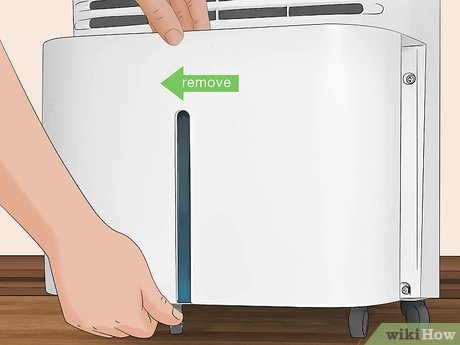
Unplug the dehumidifier from the wall. Remove the water collection tank — on most units this slides out from the front or bottom. If the tank has water in it, empty it into a drain or outside. Don’t leave collected dehumidifier water sitting — it grows bacteria quickly in warm conditions.
Step 2: Clean the Water Tank
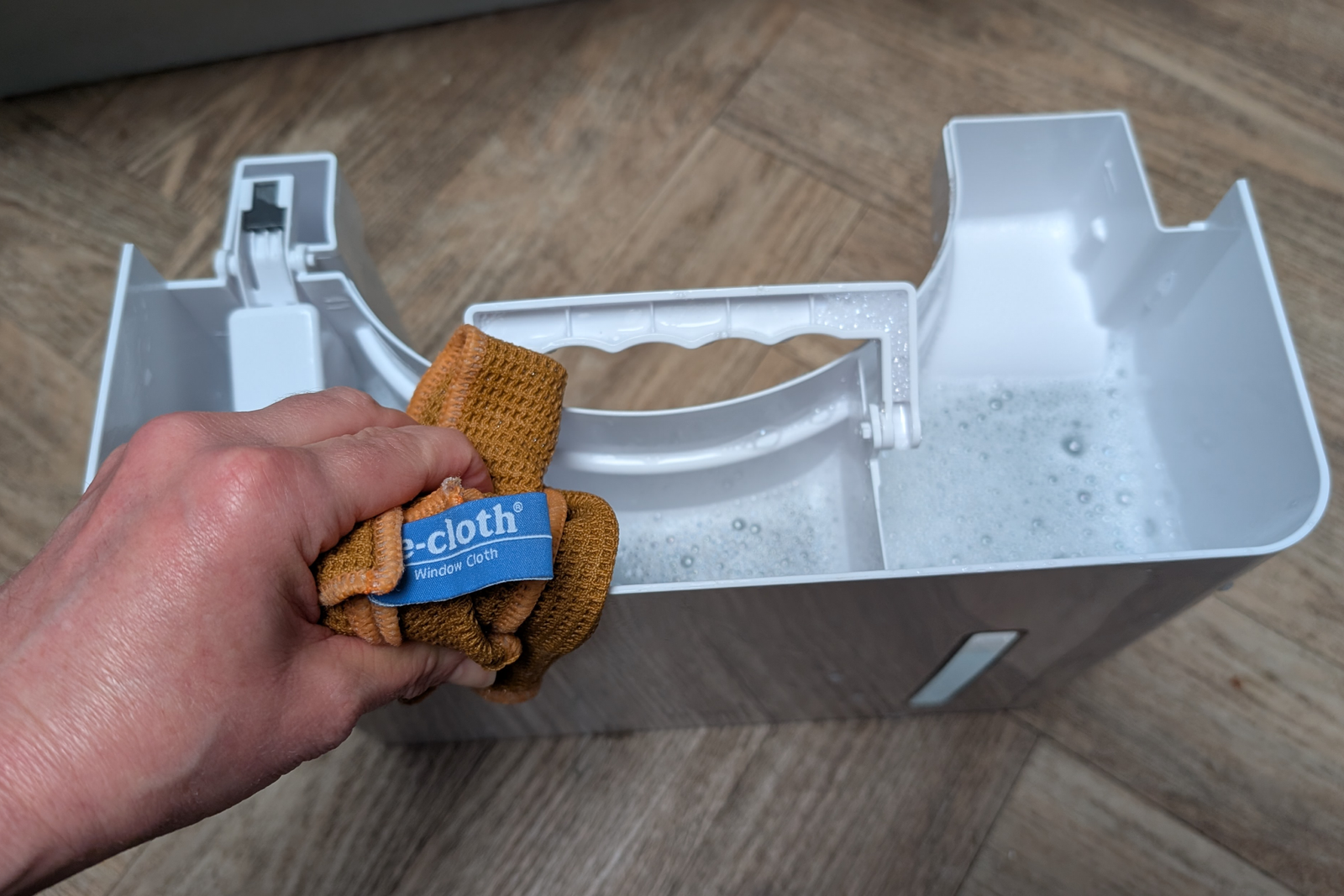
Wash the tank with warm water and a few drops of dish soap. Use a soft sponge or cloth to wipe all interior surfaces. For pink or black mold growth (common in tanks that sit for days), fill the tank with a solution of 1 part white vinegar to 3 parts water and let it soak for 15–20 minutes. Scrub with a sponge, then rinse thoroughly with clean water. Alternatively, use a dilute hydrogen peroxide solution (1 part 3% hydrogen peroxide to 3 parts water) for mold — it kills spores without leaving a vinegar odor. Rinse well and allow the tank to air dry completely before reinserting.
Step 3: Clean or Vacuum the Air Filter
Most dehumidifiers have a washable or vacuumable air filter that captures dust particles before air passes over the coils. Remove the filter — it’s usually accessed from the back or side of the unit. Hold the filter over a trash can and use a vacuum with a brush attachment to remove dust from both sides. For a deeper clean, rinse the filter under lukewarm running water until the water runs clear. Do not use soap on mesh filters — it leaves residue that clogs the mesh. Allow the filter to air dry completely — never insert a wet filter. Some dehumidifiers use disposable filters that should simply be replaced when visibly clogged.
Step 4: Clean the Coils
The evaporator and condenser coils are internal aluminum fins inside the unit. They attract dust and can develop mold in humid environments. To access them, you’ll need to remove the outer housing — check your appliance manual for how the housing is removed on your model (usually secured by a few screws on the back panel). Once accessible, use a soft brush or the brush attachment on your vacuum to gently remove dust from the fins, working with the direction of the fins (never across them — this bends the fins). For visible mold on coils, spray lightly with undiluted white vinegar, let sit for 5 minutes, then wipe off with a soft cloth. Don’t saturate the coils — you want minimal moisture near the motor and electrical components.
Step 5: Wipe the Housing and Vents
Wipe the exterior housing with a damp microfiber cloth. For sticky grime or dust buildup in the vent slots, use a toothbrush dipped in warm water to scrub the louvers and vent openings. Pay attention to the air intake vent — this is where the most dust accumulates. Wipe down any knobs, buttons, or digital display panels with a barely damp cloth — avoid getting water into any openings.
Step 6: Clean the Drain Hose (If Applicable)
If your dehumidifier uses a continuous drain hose instead of a tank, disconnect the hose and flush it with a solution of white vinegar and water. Let the vinegar solution sit in the hose for 10 minutes, then flush with clean water. Reattach securely. Check the hose connection point on the unit for slime or buildup and wipe clean.
Step 7: Reassemble and Test
Once all parts are completely dry, reinstall the filter, slide the tank back in, and replace the housing if removed. Plug the dehumidifier in and run it for 15 minutes. Check that it’s collecting water normally and that the air coming out feels clean. Unusual sounds after cleaning can indicate a filter that isn’t fully seated or a tank that isn’t locked in place — check both.
Cleaning Schedule by Component
| Component | How Often |
|---|---|
| Water tank | Every 1–2 weeks (or whenever you empty it) |
| Air filter | Every 2–4 weeks during active use |
| Coils and housing | Every 3–6 months |
| Drain hose | Monthly if using continuous drain |
| Full deep clean | At the start and end of the humid season |
Pro Tips
- Empty the tank every day during peak humidity season — standing water in the tank for more than 24–48 hours in warm conditions grows mold. If you can’t empty it daily, use the continuous drain hose option if your unit has one.
- Clean the filter before storing for the season — a dirty filter left all winter becomes a mold colony. Clean, dry, and store with the unit unplugged and tank empty.
- Set humidity to 45–50% — running a dehumidifier below 40% relative humidity causes the coils to ice over, reducing efficiency and increasing cleaning frequency.
- Check the coil fins annually — if any fins are bent, use a fin comb (available at HVAC supply stores) to carefully straighten them. Bent fins reduce airflow and efficiency.
Frequently Asked Questions
Why does my dehumidifier smell musty even after cleaning?
If the musty smell persists after cleaning the tank and filter, the mold is likely on the coils or inside the housing. Remove the outer panel and inspect the coils for visible mold growth. A vinegar spray directly on the coils, followed by a thorough wipe-down, usually resolves this. If the smell continues, the internal foam or insulation inside the unit may be contaminated — at that point, replacement is often more practical than continued cleaning.
Can I use bleach to clean a dehumidifier?
Dilute bleach can be used on the water tank (1 tablespoon per gallon of water) and is effective against mold. Rinse the tank several times after using bleach to remove all residue. Do not use bleach on the coils, filter, or housing — it can corrode aluminum coil fins and damage plastic components. White vinegar or hydrogen peroxide are safer alternatives for those parts.
How do I know if my dehumidifier filter needs replacing versus cleaning?
Washable mesh filters should be cleaned, not replaced, unless the mesh is torn or the frame is warped. If the mesh looks clean after washing but airflow still seems reduced, check the coils for blockage. Disposable paper or HEPA-style filters should be replaced every 3–6 months or when they appear visibly grey and clogged — washing them damages the filter media.
My dehumidifier coils freeze up — is that a cleaning issue?
Coil icing is usually a settings or placement issue, not a cleaning issue. It happens when the room temperature is below 65°F (most units aren’t designed to run efficiently below this temperature) or when the humidity setting is too low. However, a clogged filter can restrict airflow enough to cause icing — cleaning the filter often resolves it. If icing persists after cleaning, check that nothing is blocking the air intake or exhaust vents.
How often should I clean a whole-house dehumidifier?
Whole-house or ducted dehumidifiers require cleaning every 3–6 months — check the filter more frequently (monthly). Because they move higher volumes of air, filters clog faster. The drain line should be inspected quarterly for biofilm or algae growth, especially in warm climates where the drain line stays moist year-round.
Conclusion
Cleaning a dehumidifier is one of those maintenance tasks that pays dividends in both air quality and appliance longevity. A clean unit pulls more moisture per hour than a clogged one, runs more quietly, and doesn’t circulate mold spores back into the rooms you’re trying to dry out. Two-week tank cleanings and monthly filter checks are all it takes to keep your dehumidifier in peak condition through the humid season.
For related home air quality guides, check our article on how to clean a HEPA filter. If you’re managing moisture issues in a larger area, our guide on how to build a French drain covers exterior drainage solutions that reduce basement humidity at the source.
