
Gas fireplaces need cleaning once a year — ideally before heating season — even though they don’t produce the ash and soot of a wood-burning fireplace. White haze on the glass, dusty ceramic logs, and debris in the burner assembly are the main issues. Most of the job is accessible without tools; the glass cleaning is the most visible improvement. Here’s how to clean every part of a gas fireplace safely and completely.
What You’ll Need
Tools
- Soft brush or paintbrush (for logs and burner)
- Vacuum with soft brush attachment
- Microfiber cloths
- Screwdriver (for removing glass panel — if applicable)
Materials
- Fireplace glass cleaner (specialized product — NOT regular glass cleaner)
- White vinegar and water solution (1:1 ratio) — as an alternative to commercial glass cleaner
- Newspaper (for glass cleaning application)
- Dish soap and warm water (for exterior housing)
Safety Precautions
- Turn off the gas supply to the fireplace at the shutoff valve before cleaning. The valve is typically behind a cover panel on the fireplace or along the gas line feeding the unit.
- Allow the fireplace to cool completely — wait at least 2–3 hours after the last use. Gas fireplace glass and internal components retain heat for a long time.
- Never use standard glass cleaner (Windex) on fireplace glass — the ammonia in standard cleaners burns off when the fireplace runs and can create hazardous fumes. Use only fireplace-rated glass cleaner.
- Don’t spray water or liquid inside the firebox directly — moisture around the gas burner assembly and ignition components is a safety and equipment damage risk.
- If you smell gas at any point, stop and ventilate — do not proceed with any cleaning. Call your gas company.
How to Clean a Gas Fireplace Step by Step
Step 1: Turn Off Gas and Allow to Cool
Turn the fireplace off at the wall switch or remote, then turn off the gas supply valve. Wait at least 2–3 hours. If you need to do the cleaning urgently, use an infrared thermometer to confirm the glass surface is below 100°F before touching — hot glass looks identical to cold glass. While waiting, remove the outer decorative surround cover if your model has one; this gives you access to the entire fireplace front.
Step 2: Remove the Glass Panel
Most gas fireplaces have a removable glass panel (also called the viewing panel) secured by spring clips, latches, or screws. Check your owner’s manual for your specific model — removing it incorrectly can crack the special tempered fireplace glass. With spring clips, squeeze or release them to free the panel. With screws, use the appropriate screwdriver. Carry the glass panel to a clean, padded flat surface — kitchen counter with a towel works well.
Step 3: Clean the Fireplace Glass
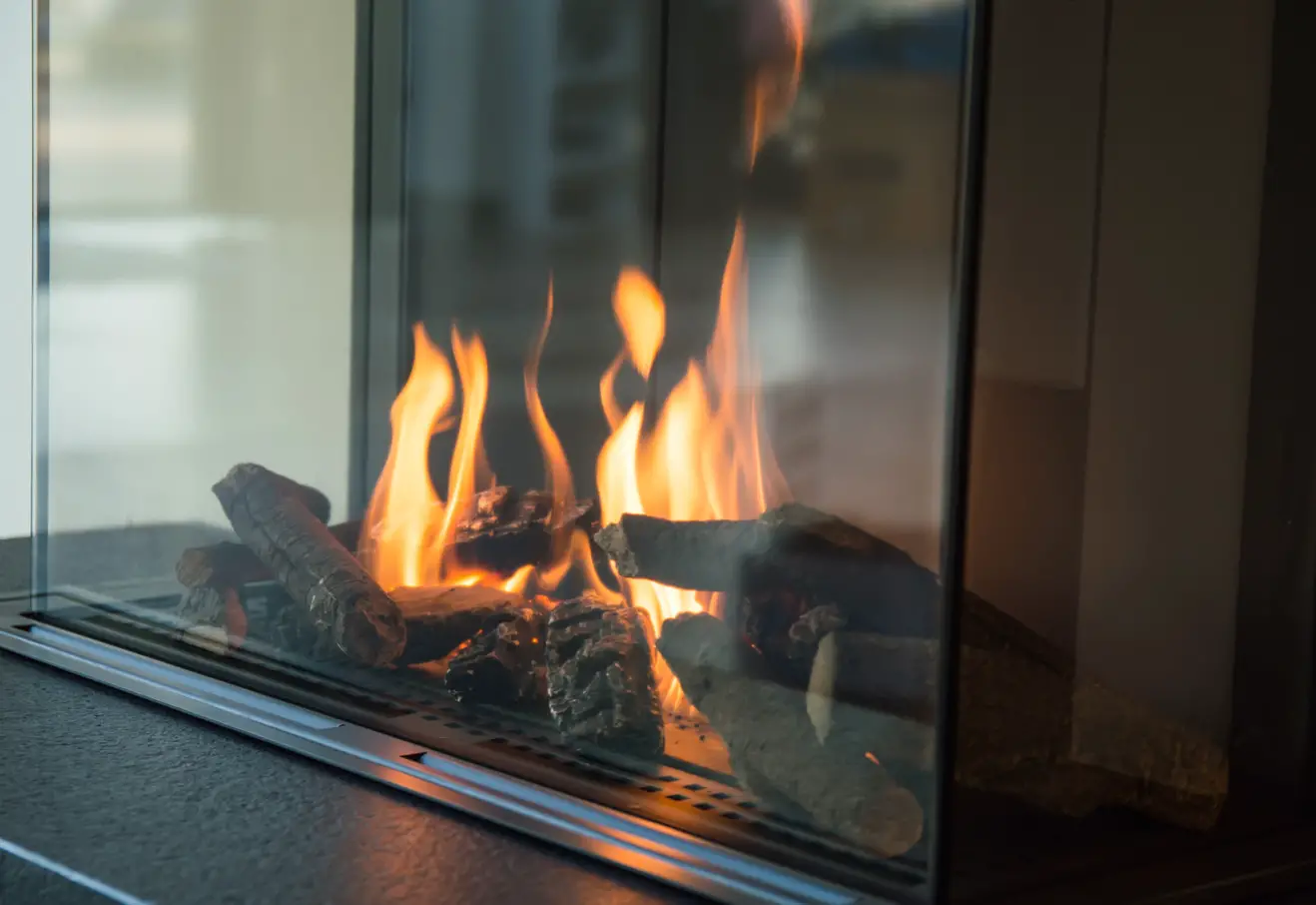
The white or grey haze on gas fireplace glass is caused by mineral deposits from combustion byproducts — particularly from the water vapor that natural gas combustion produces. It’s not soot or carbon (which is what wood fires leave). This means standard soot cleaners and regular glass cleaner don’t work well on it.
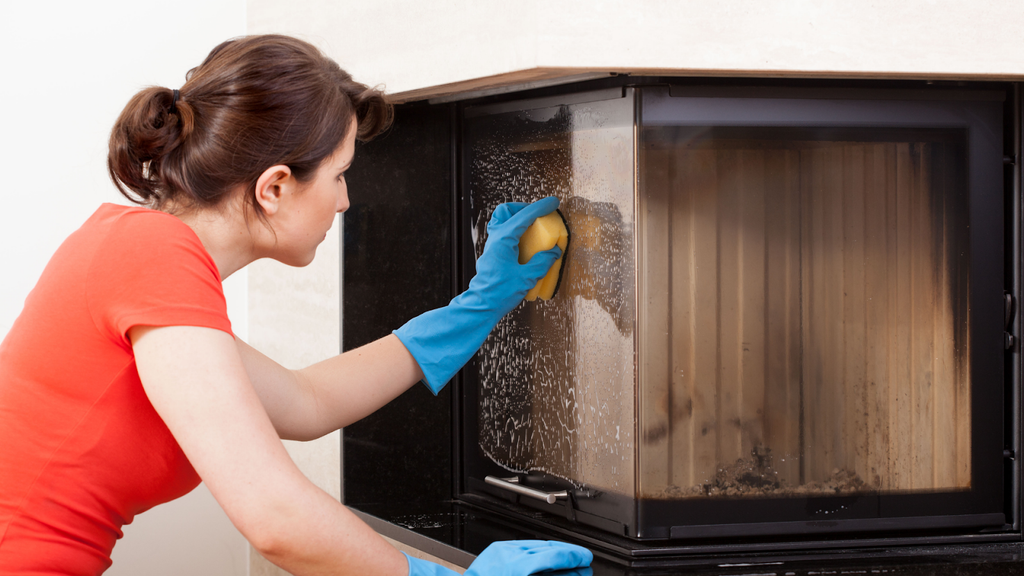
Apply fireplace glass cleaner directly to the glass surface. Let it sit for 1–2 minutes. Wipe off with a clean microfiber cloth or crumpled newspaper (newspaper is excellent for streak-free glass cleaning). Buff with a second dry cloth for a clear finish. For stubborn deposits, apply a second application and let sit for 5 minutes before wiping.
Alternatively, mix equal parts white vinegar and water, apply with a cloth, let sit for 5 minutes, and wipe off. This works for lighter deposits but requires more effort than purpose-made fireplace glass cleaner for heavy buildup. Never use newspaper with vinegar — the acidity and ink can react on some fireplace glass coatings.
Step 4: Clean the Ceramic Logs and Ember Bed
Use a soft paintbrush or the soft brush attachment on your vacuum to gently remove dust from the ceramic or refractory logs. Don’t move the logs from their positions — ceramic logs are arranged in a specific configuration to direct gas flow through the burner ports correctly. Moving them disrupts the flame pattern and can cause uneven burning or even flashback. Simply dust them in place. The ember bed (the material between and around the logs that glows when heated) can be lightly fluffed with a dry brush — don’t wet it or vacuum it aggressively.
Step 5: Clean the Burner Assembly
With the logs in place, use a soft brush to gently dust the visible portions of the burner tube (the metal pipe with holes where the gas flame emerges). Vacuum up any dislodged dust or debris from the firebox floor. Check that all burner ports are clear — they should all be open and unobstructed. Insects sometimes nest in burner ports during the off-season. If a port appears blocked, use a thin wire or pin to carefully clear it. Do not use water. After clearing, verify the pilot light and igniter connections are dust-free.
Step 6: Clean the Firebox Interior
Vacuum the firebox floor (the area below the logs and around the burner). Remove any visible dust, insect debris, or loose ceramic ember material. Wipe the interior walls of the firebox with a barely damp microfiber cloth if there’s visible dust or mild discoloration — gas fireplaces don’t accumulate true wood soot, so deep scrubbing of the firebox walls is rarely needed. If the firebox walls have significant black carbon staining (which indicates incomplete combustion), that’s a sign the gas/air mixture needs adjustment by a professional, not just a cleaning issue.
Step 7: Clean the Exterior Housing and Surround
Wipe the exterior metal housing, frame, and decorative surround with a damp cloth and mild dish soap. Dry immediately to prevent water marks on metal surfaces. For painted metal surrounds, use a dry cloth to avoid disturbing the paint. For stone or tile surrounds, see our companion guide on how to clean a slate hearth for stone-specific care.
Step 8: Reinstall Glass Panel and Test
Ensure the glass panel is completely dry before reinstalling. Reattach using the same clips or screws you removed. Make sure the panel seats fully and seals properly around the edges — gaps allow combustion gases to enter the room. Turn the gas supply valve back on. Turn on the fireplace and observe the first lighting cycle: the flame should come up evenly across the burner, all ports should show flame, and the glass should remain clear (the first few seconds of operation may show brief condensation that clears quickly).
Cleaning Frequency by Component
| Component | Cleaning Frequency |
|---|---|
| Glass panel | Every 1–3 months during use; at least once annually |
| Ceramic logs — dust | Annually (before heating season) |
| Burner assembly | Annually |
| Firebox interior vacuum | Annually |
| Exterior housing wipe | Monthly during use |
| Full professional service | Every 2–3 years |
Pro Tips
- Clean the glass when the fireplace hasn’t been run for a few days — freshly operated fireplaces have electrostatic charge on the glass that makes deposits harder to remove. A day or two of rest makes the glass much easier to clean.
- Use newspaper for streak-free glass — crumpled newspaper remains one of the best glass polishing tools because the ink and paper combination buffs without leaving lint behind.
- Check the vent termination cap outside annually — the exterior vent cap (on your home’s exterior wall or roof) can become blocked by birds, insects, or debris. A blocked vent cap reduces combustion efficiency and can cause dangerous backdrafting of gases.
- Schedule a professional inspection every 2–3 years — a qualified gas fireplace technician checks gas pressure, valve function, thermocouple or thermopile output, and the condition of the firebox seals — items outside DIY scope.
Frequently Asked Questions
Why does my gas fireplace glass keep turning white/cloudy?
The white haze is mineral deposits from combustion byproducts — this is normal for gas fireplaces and doesn’t indicate a problem with the fireplace. It happens faster in homes with higher humidity. Regular cleaning with fireplace glass cleaner (every 1–3 months during the heating season) prevents heavy buildup from forming. Running the fireplace regularly also helps — short, infrequent burns cause more condensation on the glass than long, steady operation.
Can I move the ceramic logs to clean them more thoroughly?
Only move them if you’re replacing them or have a diagram showing exactly where each log sits. Gas logs are positioned to direct flame through specific burner ports in a pattern designed for both appearance and complete combustion. Logs put back in the wrong position can cause uneven flames, yellow tips (indicating incomplete combustion), or in rare cases, flashback at the burner. Photograph the log arrangement from multiple angles before moving any logs.
My gas fireplace smells musty when it first turns on — is that a cleaning issue?
A musty smell on first start after a long off-season is usually dust burning off the burner and logs — this is normal and clears within a few minutes. If the smell persists beyond the first few runs of the season, it may indicate moisture in the firebox from a failed flue seal or exterior vent issue. A persistent burning smell (different from the brief first-start musty smell) warrants a professional inspection.
Can I use a steam cleaner on a gas fireplace?
No — moisture from steam cleaning directly inside a gas fireplace is a safety hazard around the gas valve, igniter, and electrical components. Steam also damages the ceramic logs and ember bed material. Dry cleaning methods (vacuuming, soft brushing) are the correct approach for the interior components.
Should I have my gas fireplace serviced professionally even if it seems fine?
Yes — every 2–3 years at minimum. A gas technician checks components you can’t assess visually: thermocouple or thermopile output (these fail gradually), gas valve function, firebox seals, and flue condition. These components affect both safety and efficiency. In the US, the National Fireplace Institute (NFI) certifies gas fireplace technicians — look for an NFI-certified professional in your area.
Conclusion
Gas fireplace cleaning is mostly low-effort, high-impact work. Clean the glass every month or two during the heating season, vacuum the logs and burner area annually before the season starts, and your fireplace will look great and run efficiently for years. The key rules: no Windex on the glass, no water inside the firebox, don’t move the logs, and turn the gas off before you start.
For related fireplace and hearth care, see our guide on how to clean a slate hearth for the stone surround around your fireplace. If you’re adding another fireplace or outdoor heat source to your property, our guide on how to build a backyard firepit covers the outdoor fire option.
