
A backyard firepit built from retaining wall block or natural stone can be completed in a single weekend for $150–$400 in materials — no mortar required for most DIY designs. The result is a functional, durable gathering spot that lasts for years. The most important part of the process is location and foundation: pick the right spot, level the ground correctly, and the rest of the build is straightforward stacking.
What You’ll Need
Tools
- Shovel and spade
- Tamper or plate compactor (rent for a day)
- Carpenter’s level and tape measure
- Rubber mallet
- Wheelbarrow
- Garden hose or marking paint (for layout)
- Safety glasses and work gloves
Materials
- Retaining wall blocks, natural stone, or firebrick (for the firepit ring)
- Pea gravel or crushed stone (for base drainage)
- Landscape fabric (optional, to prevent weeds)
- Sand or leveling compound (for base leveling)
- Firepit grate or grill grate (optional)
- Steel ring liner (optional, for a cleaner look and added durability)
Material Quantity Guide
For a standard 3-foot diameter firepit (2 courses high): approximately 30–36 standard retaining wall blocks and 0.5 cubic yards of pea gravel for the base. For a 4-foot diameter pit (3 courses): approximately 50–60 blocks and 0.75 cubic yards of gravel.
Safety and Precautions
- Check local codes and HOA rules first. Many municipalities require minimum setback distances from structures (typically 10–25 feet from any building, fence, or overhang). Some areas prohibit open burning — verify before building.
- Never build a firepit under a tree canopy or within 10 feet of a deck, fence, or structure.
- Do not use regular concrete blocks or decorative paving stones for the interior of a firepit — they can crack or explode when heated. Use purpose-made retaining wall blocks or firebrick, which are designed to handle high heat.
- Always have water nearby when the firepit is in use — a garden hose or bucket of water should be within reach before any fire is lit.
- Call 811 (Dig Safe) before digging to have underground utilities marked — required in all US states before any digging project.
Step-by-Step: How to Build a Backyard Firepit
Step 1 — Choose the Location
Select a spot that is at least 10 feet from any structure, fence, overhanging branches, or flammable material. The location should be on relatively flat ground — slight slope is manageable, but steep grades create drainage and leveling problems. Avoid low spots where water pools. Check your local fire codes for required setback distances — some municipalities require 15 or 25 feet from structures, particularly in dry climates or fire-prone areas. Also verify there are no underground utilities at your chosen spot before digging (call 811).
Step 2 — Mark the Firepit Perimeter
Determine the diameter of your firepit — 36 to 48 inches is the most practical size for home use. Use a stake, string, and marking paint to mark the circle on the ground. For a circular layout: drive a stake at the center point, tie a string to the desired radius length (half the diameter), and walk around the stake while marking the circle on the ground with marking paint or a can of chalk spray. This gives you a precise circle to excavate.
Step 3 — Excavate the Site
Dig out the interior of the marked circle to a depth of 6–8 inches. This excavation creates the drainage bed that prevents water from pooling in your firepit — standing water evaporating during a fire creates instability and can crack blocks. Also excavate the perimeter ring where the first course of blocks will sit — dig outward from your circle mark by the width of your blocks, to the same 6-inch depth. Remove all grass, roots, and soft soil. You want to be working on undisturbed, compacted native soil.
Step 4 — Create the Gravel Base
Fill the excavated area with 4–6 inches of pea gravel or crushed stone. The gravel layer provides drainage — rain water flows through instead of pooling. Spread the gravel evenly with a rake and compact it firmly with a hand tamper or plate compactor. The gravel surface should be level and firm enough that you don’t sink into it when you step on it. Check level across the gravel surface with a long board and carpenter’s level — the gravel base must be flat and level for the block ring to sit correctly.
Step 5 — Lay the First Course of Blocks
Set the first course of retaining wall blocks on the leveled gravel, following the circle you marked. Work around the full circle, placing blocks end-to-end and checking level frequently with your carpenter’s level. Tap blocks down with a rubber mallet to adjust height — never strike retaining wall blocks with a metal hammer, as this can crack them. The first course is the most important — every subsequent course depends on it being level and properly aligned. If any block is high, add or remove gravel beneath it until the block sits level with its neighbors.
Step 6 — Add Subsequent Courses
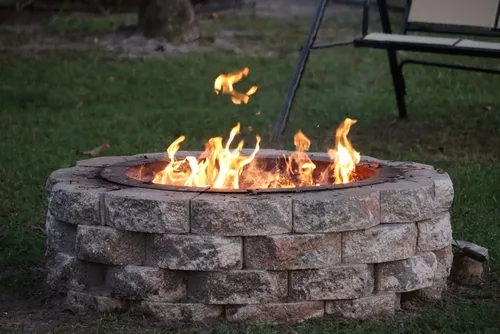
Stack additional courses of blocks on top of the first, offsetting the joints by half a block width (staggering) for structural strength — the same technique used in brick laying. Most retaining wall blocks have a locking mechanism (a lip on the back) that keeps successive courses aligned; face the lip inward toward the firepit center. For a standard 2-course firepit (approximately 12–14 inches tall), two courses of standard retaining wall block is sufficient. For a taller pit with a seating-height ledge, three or four courses can be built without mortar on level ground.
Step 7 — Fill the Interior Base with Gravel
Once the block ring is complete, fill the interior bottom of the firepit with an additional 2–3 inches of pea gravel or crushed stone. This is where the fire will burn — the gravel allows ash and water to drain through and prevents soil under the fire from getting overheated and cracking. Do not fill the interior with soil, sand, or concrete. Leave the gravel surface as the fire floor — it’s functional and easy to rake clean.
Step 8 — Add Optional Steel Ring Liner
A steel ring insert placed inside the block ring protects the blocks from direct flame contact, extends their lifespan significantly, and makes the firepit look more finished. Steel rings (also called firepit insert rings) are available at hardware stores in 30–48 inch diameters for $30–$80. Simply set the steel ring inside the block ring with the ring resting on the gravel base. The ring can be removed and replaced if it eventually rusts through, without having to rebuild the entire firepit.
Step 9 — Finish the Surrounding Area
Create a non-combustible safety perimeter around the firepit. Options include a ring of pea gravel, decomposed granite, concrete pavers, or natural flagstone extending 2–3 feet around the pit. This area keeps grass and combustible material away from the fire zone and creates a cleaner, more defined seating area. Install landscape fabric under any loose material to suppress weed growth.
Step 10 — First Use and Cure
For the first fire in a new block firepit, start with a small fire and allow the blocks to heat up slowly. Heating new blocks quickly with a large fire can cause stress cracking as moisture in the stone vaporizes rapidly. Let the small fire burn for 30–45 minutes, then let everything cool completely before using the firepit at full capacity. After the first cure fire, inspect all blocks for cracks — minor surface cracks in the first interior-facing course are normal and don’t affect function; major structural cracks should be replaced.
Pro Tips for Building a Firepit
- Allan Block, Pavestone, and Belgard all make retaining wall blocks specifically rated for firepit use — use these rather than generic concrete blocks, which can crack and spall under fire heat.
- A circular firepit is not strictly required — square and rectangular firepits build faster (straight lines, no curve adjustments) and can be just as functional. Simply adjust your block count and layout.
- Add a spark screen to your finished firepit — a round spark screen grate prevents embers from escaping on windy evenings and is the most important safety accessory you can add.
- Cover the firepit when not in use — a round firepit cover keeps rain out, prevents water from soaking the gravel and blocks, and dramatically extends the life of the firepit and any steel insert.
Common Mistakes to Avoid
- Using regular concrete or decorative blocks: Standard concrete blocks and landscape pavers are not designed for sustained heat — they spall (surface flaking) and can explode under intense firepit heat. Use retaining wall blocks or firebrick specifically rated for high heat.
- Skipping the gravel base: A firepit built directly on soil without a gravel drainage layer will collect water and heave during freeze-thaw cycles, destabilizing the block ring.
- Building too close to structures: Even 6 feet feels like far away until a windy evening — maintain the recommended minimum clearances religiously.
- Building without checking codes: Some counties and HOAs prohibit open-air firepits entirely. A quick call to your local planning department or HOA manager takes five minutes and prevents an expensive removal.
Frequently Asked Questions
How much does it cost to build a backyard firepit?
A basic DIY block firepit costs $150–$400 in materials depending on size and block type. A 36-inch diameter, 2-course firepit using standard retaining wall blocks is typically $150–$200 in materials. A larger 48-inch pit with a steel insert and surrounding paver patio can run $350–$600. Professional installation of comparable firepits typically costs $800–$2,000.
Do I need mortar to build a firepit?
No — a dry-stacked (no mortar) firepit is completely functional for home use. Retaining wall blocks are designed to be stacked dry, and their weight and interlocking lips hold them securely in place. The advantage of dry-stacked is that individual blocks can be replaced if damaged without demolishing the whole structure. Mortar is used for permanent masonry firepits built with natural stone or firebrick, but requires more skill and planning.
How far should a firepit be from the house?
The general guideline is a minimum of 10 feet from any structure, fence, or overhanging tree branch — and 25 feet is safer and required in some municipalities. Check your local fire code for specific requirements in your area. In states with high wildfire risk (California, Colorado, Arizona, etc.), setback requirements are often stricter.
What should I put at the bottom of a firepit?
Pea gravel or crushed stone — 4–6 inches of it. Gravel allows drainage, prevents soil heating problems, and provides a stable, clean base for the fire. Do not use sand (it can turn into glass-like material under heat), soil (holds water and can heave), or concrete (cracks under sustained heat). The gravel base also makes ash cleanup easy — rake ashes off the surface and add fresh gravel as needed over time.
Can I build a firepit on a wooden deck?
No — a wood-burning firepit should never be placed on a wooden deck. Even with a heat shield, the combination of sparks, radiant heat, and combustible deck material creates an unacceptable fire risk. Gas firepit tables with a sealed burner are specifically designed for deck use and are the appropriate option for deck installations. For wood-burning firepits, maintain a minimum 10-foot clearance from any wooden structure.
Conclusion
Building a backyard firepit is a highly achievable weekend project. Choose a legal, safe location, dig out and level a gravel base, stack retaining wall blocks in two courses, fill the interior with gravel, and add a steel ring insert for longevity. The whole project takes 4–6 hours of actual work and costs a fraction of buying a pre-made fire bowl or hiring a contractor. Done correctly, a DIY block firepit lasts for years and becomes one of the most-used spots in your backyard.
Once your firepit is built, you might want to create a complete outdoor space around it. See our guide on How to Build a Wood Fence to define the space, or check out How to Build a Backyard Pond for another great weekend outdoor project.
