
Building a basic cabinet is one of the most practical DIY woodworking skills you can develop. A simple box cabinet — one back, two sides, one top, one bottom, and a door — can be built in a day with basic tools and a sheet of plywood. Whether you’re building a kitchen base cabinet, a garage storage cabinet, or a simple bathroom vanity cabinet, the construction process is the same. This guide walks you through from cutting the plywood to installing the door and hardware.
What You’ll Need
Tools
- Circular saw with a fine-tooth plywood blade (or table saw)
- Drill/driver and drill bits
- Pocket hole jig (Kreg jig or similar — highly recommended for beginners)
- Clamps (bar clamps and corner clamps)
- Carpenter’s square
- Measuring tape and pencil
- Level
- Sandpaper (120 and 220 grit)
- Paintbrush or foam roller
Materials (for a standard 24x30x12″ base cabinet)
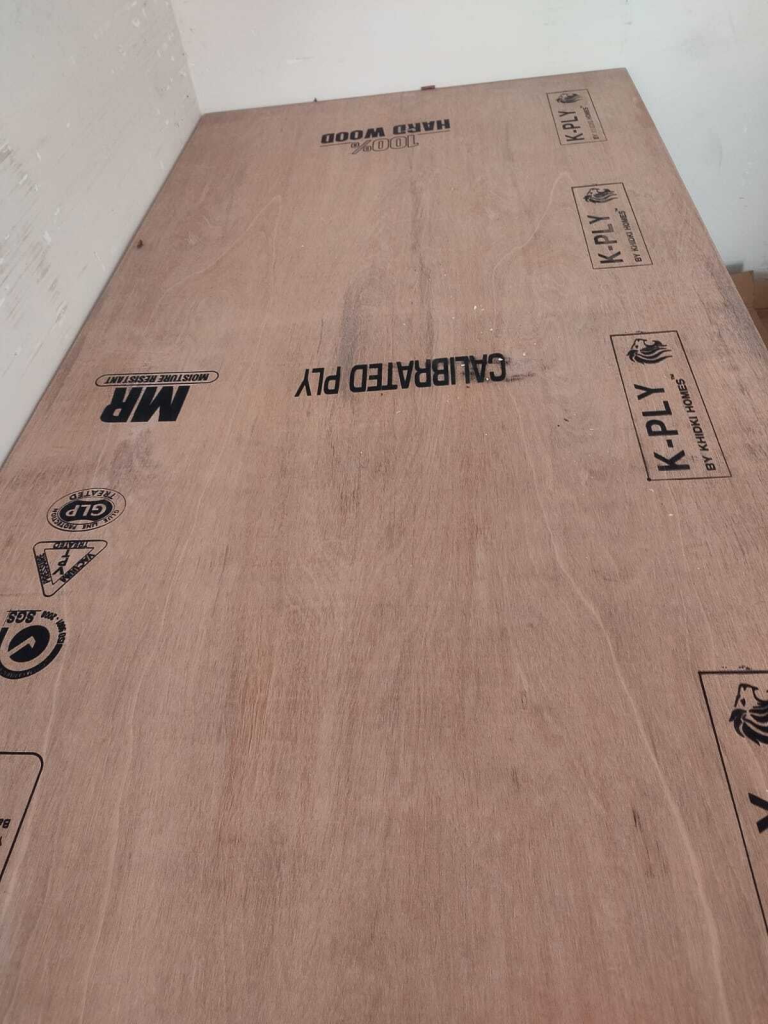
- One 4×8 sheet of 3/4-inch plywood (cabinet-grade birch, maple, or oak)
- One 4×8 sheet of 1/4-inch plywood (for the back panel)
- Pocket hole screws (1-1/4 inch for 3/4″ material)
- Wood glue
- Sandpaper
- Wood filler or iron-on edge banding (to cover plywood edges)
- Piano hinge or European cup hinges (for the door)
- Cabinet pull or knob
- Paint, stain, or polyurethane (for finish)
Safety and Precautions
- Use a fine-tooth blade designed for plywood — general purpose blades tear out the veneer on cabinet-grade plywood, leaving ragged edges.
- Support plywood fully when cutting — unsupported sheet goods can bind and kick back. Use sawhorses with a foam support board beneath the cut line.
- Wear safety glasses when drilling and cutting — fine wood chips and dust travel at high speed.
- Always clamp workpieces before drilling pocket holes — a slipping jig or drill bit can cause the piece to spin into your hands.
- If wall-mounting the finished cabinet, anchor it into wall studs — cabinets loaded with contents can weigh 50–150 lbs and must be anchored into structural framing.
Cabinet Anatomy and Terminology
Before building, understand the basic components. A simple face-frame cabinet has: two side panels (vertical); one top panel and one bottom panel (horizontal, sandwiched between the sides); one back panel (thinner 1/4″ plywood); a face frame (the visible front frame made of solid wood) — optional for a frameless (European) style; and one or more doors and/or drawers. A frameless (Eurostyle) cabinet is simpler to build and is what this guide focuses on.
Step-by-Step: How to Build a Cabinet
Step 1 — Plan Your Dimensions
Measure the space where the cabinet will live. Standard kitchen base cabinets are 34.5 inches tall (24 inches to the countertop with a 1.5-inch countertop on top), 24 inches deep, and 12–36 inches wide. Upper cabinets are typically 12 inches deep and 30 inches tall. For a standalone storage or garage cabinet, dimensions can be anything practical. Sketch a simple cut diagram showing all your pieces and dimensions before you cut — this is your “cut list” and prevents costly mistakes.
Step 2 — Cut All Your Pieces
Set up your circular saw with a rip fence guide or use a straightedge clamped to the plywood as a cutting guide for long straight cuts. Cut all pieces from your cut list: two sides, one top, one bottom, and one back. Cut slowly and steadily along the cut line — rushing causes the saw to wander. Label each piece with a pencil mark as you cut it. For the 1/4-inch back panel, cut it to fit the exact outside dimensions of the assembled box (top, bottom, and two sides combined). After all cutting, sand all cut edges with 120-grit sandpaper to remove any tearout.
Step 3 — Apply Edge Banding to Visible Plywood Edges
The front edges of your side, top, and bottom panels will be visible in the finished cabinet. Iron-on edge banding (a thin wood veneer strip with heat-activated glue on the back) covers these edges and gives the cabinet a clean, professional look. Iron the edge banding onto each visible edge with a household iron set to medium heat, pressing firmly as you go. Trim the overhang with a sharp utility knife. Sand flush with 220-grit sandpaper. Apply edge banding before assembly — it’s much easier to iron and trim on individual flat pieces than on an assembled box.
Step 4 — Drill Pocket Holes
A pocket hole jig creates angled holes for pocket screws — the easiest and strongest method for assembling cabinet boxes without a router or dado saw. Using a Kreg jig set to 3/4-inch thickness, drill two pocket holes on each end of the top and bottom panels, facing inward (so holes will be hidden inside the assembled cabinet). Also drill pocket holes on the back edges of the top and bottom panels for attaching the back panel later. Following pocket hole jig instructions precisely produces joints that are both strong and invisible in the finished piece.
Step 5 — Assemble the Cabinet Box
Apply a thin bead of wood glue to the contact faces of each joint. Stand the two side panels upright and position the top panel between them at the top. Clamp together with corner clamps. Drive pocket screws through the pocket holes in the top panel into the side panels. Repeat for the bottom panel. Check the assembly for square using a carpenter’s square on each corner — a square corner should match exactly. If the box is racked (out of square), adjust by clamping diagonally across the longer diagonal and tightening until both diagonals are equal.
Step 6 — Attach the Back Panel
The 1/4-inch back panel squares the cabinet and adds rigidity. Set the back panel in position against the back of the assembled box. Before fastening, check that the back panel’s corners align perfectly with the cabinet box corners — if the back is square, the cabinet must also be square when they align. Fasten with 1-inch brad nails or 1-inch screws around the perimeter, every 8 inches. The back panel being nailed in square locks the cabinet in its correct shape permanently.
Step 7 — Build and Hang the Door
For a simple inset or overlay door, cut a door panel from 3/4-inch plywood sized to the door opening (for overlay door, cut the door 1 inch wider and 1 inch taller than the opening so it overlaps the face). Apply edge banding to all four edges of the door. Install European cup hinges (the most beginner-friendly hinge type): drill a 35mm hole using a Forstner bit for each hinge cup, press the hinge into the hole and screw in place, then attach the mounting plate to the cabinet side. European hinges allow full adjustability of door alignment with simple screw adjustments after installation.
Step 8 — Install a Shelf (Optional)
For a cabinet with an adjustable shelf, drill two rows of 5mm shelf pin holes on the inside faces of both side panels. Use a shelf pin drilling template (a strip of pegboard works well) to keep the hole rows perfectly aligned. Standard spacing is every 32mm. Drill holes to 1/2-inch depth. The shelf (cut from 3/4-inch plywood with edge banding on the front) rests on four shelf pins and can be repositioned as needed.
Step 9 — Sand and Apply Finish
Sand the entire cabinet with 120-grit sandpaper, then 220-grit. Fill any gaps at joints with wood filler, let dry, then sand flush. Apply your finish: paint gives the most polished look; stain + polyurethane shows the wood grain. For paint: apply primer first (one coat), sand lightly with 220 grit, then apply two coats of paint. For stain: apply pre-stain conditioner, then stain, then two to three coats of polyurethane sanded between coats with 320 grit.
Step 10 — Install Hardware and Mount
Install the door pull or knob using a hardware template (or mark the center location yourself and drill through the door). Install any drawer hardware if applicable. To mount a wall cabinet: find wall studs with a stud finder, hold the cabinet in position at the correct height, and drive 2.5-inch screws through the cabinet back into at least two wall studs. For a base cabinet, level the cabinet on the floor (shim if needed) and screw through the cabinet back into the wall studs for stability.
Pro Tips for Cabinet Building
- A pocket hole jig is the single best investment for beginner cabinet building — it makes strong, square cabinet box joints achievable without advanced woodworking skills.
- Buy cabinet-grade plywood, not construction plywood — cabinet-grade has a smoother veneer, fewer voids in the core, and cuts without tearout.
- Dry-fit everything before applying glue — clamp the entire assembly without glue first to check that all pieces fit correctly and the box is square.
- European cup hinges are adjustable in three directions after installation — don’t worry about perfect door alignment during hanging; fine-tune with the hinge adjustment screws.
Frequently Asked Questions
What type of wood is best for building cabinets?
For painted cabinets: birch plywood is the most popular choice — it has a smooth surface that paints beautifully and has excellent dimensional stability. For stained cabinets: oak, maple, or cherry plywood shows the wood grain most attractively. Avoid MDF for the main box structure — it’s heavy, doesn’t hold screws well at edges, and doesn’t tolerate moisture. MDF is acceptable for doors and drawer fronts that will be painted.
Do I need a table saw to build cabinets?
No — a circular saw with a straightedge guide produces accurate, clean cuts in plywood suitable for cabinet building. A table saw is faster and more precise for production work, but a skilled circular saw user with a good fence guide can match the results for one-off projects. The key is a sharp fine-tooth blade and a solid cutting guide.
How long does it take to build a cabinet?
A simple single-door base cabinet takes a full day for a beginner — 2–3 hours for cutting and prep, 2–3 hours for assembly, and 4–6 hours for finish (including drying time). An experienced builder can complete the same cabinet in 3–4 hours. Complex cabinets with multiple drawers and face frames take significantly longer.
How do I make cabinet doors from plywood?
Cut the door panel to size, apply iron-on edge banding to all four edges (this covers the plywood edge layers), sand, and finish. For a more refined look, use a router with a roundover or chamfer bit to profile the door edges before banding. For a raised panel look (traditional style), you’ll need a router with a raised panel bit or order pre-made MDF raised panel doors online.
What screws should I use for cabinet building?
For pocket hole joints: 1-1/4 inch pocket hole screws (coarse thread for plywood). For attaching the back panel: 1-inch brad nails or 1-inch screws. For wall mounting: 2.5- to 3-inch wood screws driven into studs. Use screws, not nails, for all structural joints — screws provide far better holding strength and allow future disassembly or adjustment.
Conclusion
Building a cabinet from scratch takes a day and a sheet of plywood, and the result is exactly the size and style you need rather than whatever the store has in stock. Follow the cut list, drill pocket holes for the box joints, assemble square, attach the back panel to lock in the shape, and finish with your choice of paint or stain. Once you’ve built one cabinet, the technique applies to built-ins, garage storage, kitchen cabinets, and much more.
Ready for your next woodworking project? Check out our guide on How to Build a Firewood Rack — a simpler project that uses similar skills. Or see How to Build Shed Doors for cabinet door skills applied at a larger scale.
