
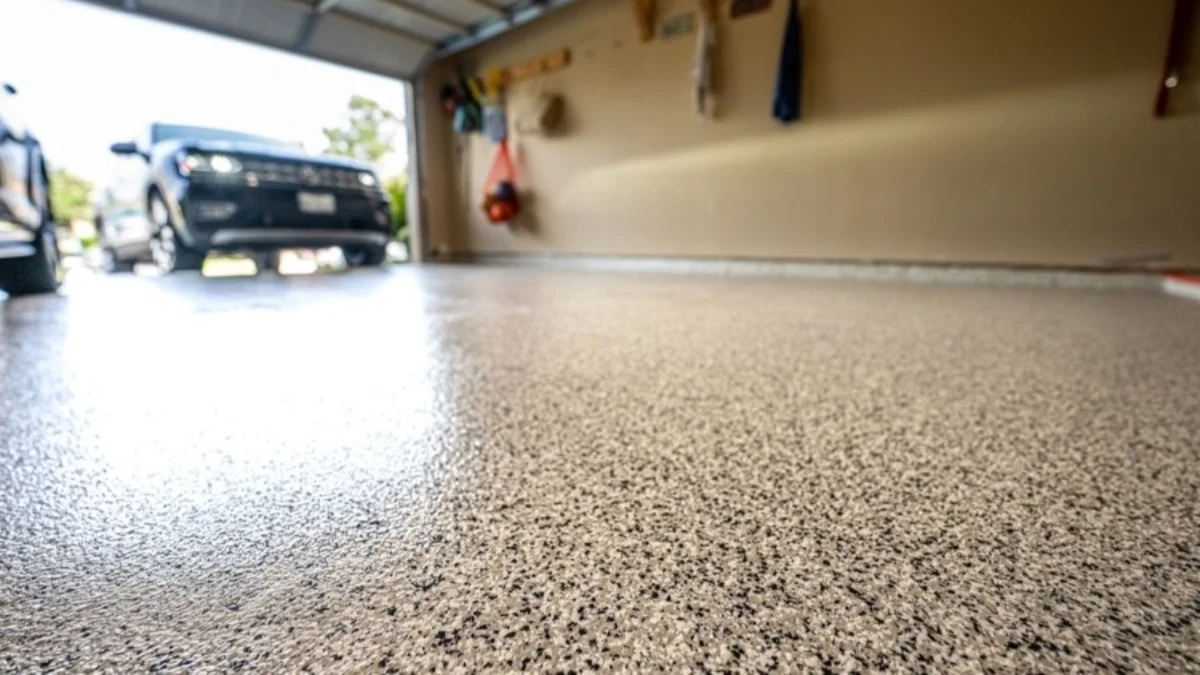
Epoxy floors are one of the toughest flooring surfaces available — chemical-resistant, nonporous, and easy to maintain when cleaned correctly. For routine cleaning, a dust mop and occasional damp mopping with diluted dish soap or a pH-neutral cleaner handles most messes. For oil stains, tire marks, and chemical spills, the right treatment makes removal straightforward without damaging the coating. This guide covers everything from weekly maintenance to deep cleaning stubborn stains on garage epoxy floors, basement floors, and commercial epoxy surfaces.
What You’ll Need
- Soft-bristle broom or dust mop
- Microfiber mop or soft-bristle scrub brush
- Mild dish soap or pH-neutral epoxy floor cleaner
- Warm water
- Bucket
- Isopropyl alcohol or degreaser (for oil/grease)
- Kitty litter or sawdust (for fresh chemical/oil spills)
- Plastic scraper (for stuck debris)
- Garden hose with spray nozzle (for garage floors)
- Wet/dry vacuum or mop (for drying)
Safety and Precautions
- Never use soap with citrus additives on epoxy floors. Citrus-based degreasers and soaps containing citric acid will de-gloss the epoxy surface over time, leaving a dull, chalky appearance.
- Avoid acidic cleaners. Vinegar, muriatic acid, and many commercial tile cleaners are too acidic for epoxy — they etch the surface with repeated use.
- Don’t use abrasive scrubbing pads. Steel wool and stiff wire brushes scratch epoxy floors permanently. Use soft-bristle brushes and microfiber mops only.
- Clean chemical spills immediately. Brake fluid, battery acid, and some solvents can penetrate or damage epoxy if left to sit. These require immediate cleanup and neutralization.
- Avoid soap buildup. Too much soap in the mop water leaves a residue that makes epoxy floors sticky and dulls the finish. Use minimal soap — a few drops per gallon of water is sufficient.
Step-by-Step: Routine Epoxy Floor Cleaning
Sweep or Dust Mop First
Begin every cleaning session by sweeping or dust mopping to remove dry debris — grit, dust, leaves, and loose material. On garage floors, these particles act as abrasives under foot and vehicle traffic, accelerating surface wear. Use a soft-bristle broom or a microfiber dust mop for best results. A leaf blower works well for large garage floors if the door is open.
Mix a Mild Cleaning Solution
Fill a bucket with warm water and add 2–3 drops of mild dish soap per gallon (not citrus-based). Alternatively, use a commercial pH-neutral epoxy floor cleaner diluted according to label directions. More soap doesn’t clean better on epoxy — excess soap leaves a dulling residue that requires additional rinsing to remove.
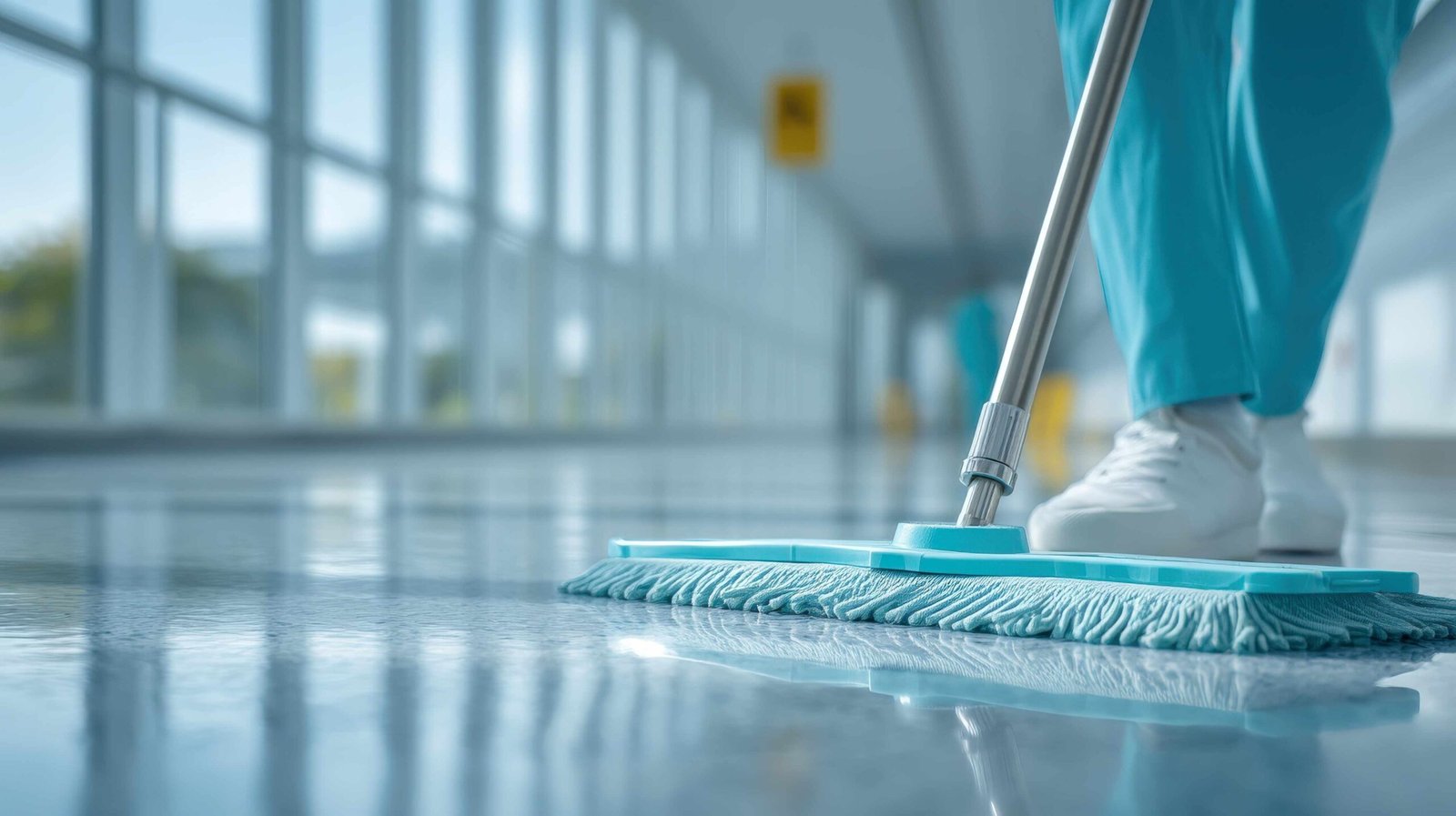
Mop the Floor
Use a microfiber mop or soft-bristle deck brush to mop the floor. Work in sections from the back of the space toward the exit so you’re not walking over clean areas. Apply moderate pressure and make overlapping passes. For garage floors, a hose-down followed by soft scrubbing with a long-handled brush is equally effective for large areas.
Rinse with Clean Water
Rinse the floor with clean water — either by mop with a clean bucket of water or by hose for garage floors. This step removes all soap residue and prevents the dulling buildup mentioned above. It’s a step many people skip and the #1 cause of dull-looking epoxy floors.
Dry the Floor
Allow the floor to air dry, use a wet/dry vacuum to speed drying, or use a dry microfiber mop. For indoor epoxy floors, running a fan or opening windows helps. Wet floors can be slippery, so ensure adequate dry time before the space is used again.
How to Remove Oil and Grease from Epoxy Floors
Oil and grease stains on garage epoxy floors are the most common challenge. Here’s the most effective approach:
- Fresh oil spills: Cover immediately with kitty litter, sawdust, or an oil-absorbent pad. Let it absorb for 15–30 minutes, then sweep up and dispose. Wipe remaining residue with a cloth dampened with isopropyl alcohol or a commercial degreaser.
- Dried/set oil stains: Apply a generous amount of commercial degreaser (Simple Green, Zep, or similar) directly to the stain. Let it dwell for 5–10 minutes, then scrub with a soft-bristle brush. Rinse thoroughly with water. Repeat for heavy stains.
- Automotive fluid stains: Brake fluid, power steering fluid, and similar automotive fluids respond to the same degreaser treatment. Rinse extremely thoroughly after treatment.
How to Remove Tire Marks from Epoxy Garage Floors
Black tire marks are one of the most common epoxy floor complaints. They’re caused by plasticizers in rubber tires transferring to the epoxy surface. The good news is they’re surface marks, not stains, and respond well to cleaning:
- Apply isopropyl alcohol (70–91%) to a cloth and wipe the tire marks using firm circular pressure.
- For heavier marks, use a commercial tire mark remover or a diluted degreaser.
- A soft-bristle scrub brush with the degreaser solution applied directly to the marks works well for larger areas.
- Rinse and dry after treatment.
- To prevent tire marks, use foam parking pads or mats where vehicle tires rest — this prevents the plasticizer transfer entirely.
How to Remove Chemical Stains from Epoxy Floors
Chemical resistance is one of epoxy’s strengths, but some chemicals do stain or etch the surface if left too long:
- Battery acid: Rinse immediately with water, then neutralize with a baking soda solution (1/4 cup per gallon). Rinse again thoroughly.
- Rust stains: Apply a commercial rust remover rated for use on concrete or epoxy. Let dwell per product instructions, scrub gently, and rinse well.
- Paint: Fresh paint wipes off with a damp cloth. Dried latex paint can usually be removed with isopropyl alcohol. Oil-based paint may require a small amount of mineral spirits — test in a hidden area first.
- Bleach stains/discoloration: Bleach can cause permanent discoloration on pigmented epoxy floors. Prevention is the only solution — always dilute bleach heavily before it contacts epoxy and rinse immediately after use.
How to Deep Clean an Epoxy Floor
For annual or semi-annual deep cleaning of garage or commercial epoxy floors:
- Remove all items from the floor.
- Sweep and remove all debris.
- Apply a commercial epoxy floor cleaner or a diluted degreaser to the entire floor.
- Let it dwell for 5–10 minutes.
- Scrub with a long-handled soft-bristle brush or an automatic floor scrubber.
- Rinse thoroughly with a garden hose (garage) or clean mop water changes (indoor).
- Allow to dry completely — usually 1–2 hours in a ventilated garage.
- Inspect for any areas needing spot treatment and re-treat as needed.
Pro Tips for Epoxy Floor Maintenance
- Sweep weekly to prevent grit buildup. Sand and grit are the primary causes of epoxy floor scratching and dulling — removing them regularly is the most important maintenance step.
- Use walk-off mats at entrances. Capture dirt, oil, and moisture at the door before they reach the epoxy surface.
- Wax or seal annually for high-traffic areas. A thin coat of commercial floor wax applied annually adds a sacrificial layer that protects the underlying epoxy coating and makes cleaning easier.
- Use felt pads under equipment and shelving. Metal feet and legs can scratch epoxy floors. Felt glides or rubber feet prevent this.
- Address delamination early. If you see lifting, bubbling, or peeling epoxy, address it before it spreads — small repairs are easy and inexpensive, but large delaminated areas require full recoating.
Common Mistakes When Cleaning Epoxy Floors
- Using vinegar or citrus cleaners. Both etch and de-gloss epoxy surfaces with repeated use. Use only pH-neutral products.
- Too much soap. Excess soap leaves a dull, sticky residue. Use minimal soap and always rinse thoroughly.
- Skipping the rinse step. Soap residue is the main cause of dull-looking epoxy floors. Always rinse after mopping.
- Using a wire brush or steel wool. These scratch the coating permanently. Soft-bristle only.
- Letting oil spills sit. Fresh spills clean up in minutes. Set stains take 10x longer to remove and may require multiple treatments.
Frequently Asked Questions
What’s the best cleaner for epoxy floors?
A pH-neutral, non-citrus dish soap diluted in warm water (2–3 drops per gallon) is the safest and most effective everyday cleaner for epoxy floors. For degreasing, Simple Green or Zep diluted according to product directions are popular choices that won’t damage the epoxy coating.
Can I use a pressure washer on epoxy garage floors?
Yes — a pressure washer can be used on exterior-grade and commercial epoxy garage floors for periodic deep cleaning. Keep the pressure at 1,200–1,500 PSI maximum and use a wide fan tip (40-degree). High pressure on a narrow tip can blast through the epoxy coating. Always test on a small area first.
Why does my epoxy floor look dull after cleaning?
Dullness after cleaning is almost always caused by soap residue buildup. Rinse more thoroughly after mopping — use two rinse passes with clean water. If dullness persists, the floor may have accumulated residue from multiple cleanings. Mop with a diluted vinegar solution (1 cup per gallon) to cut through the buildup, then rinse thoroughly. Note: while vinegar can remove soap residue in a one-time treatment, avoid regular vinegar use on epoxy.
How often should I clean an epoxy garage floor?
Sweep weekly and damp mop monthly for garages with regular vehicle traffic. After any fluid spills — oil, antifreeze, brake fluid — clean immediately regardless of your regular schedule. Annual deep cleaning handles buildup that routine maintenance misses.
Can I use bleach on epoxy floors?
Diluted bleach (1/4 cup per gallon of water) can be used for disinfecting epoxy floors in a pinch, but rinse immediately and thoroughly after use. Bleach can discolor pigmented epoxy and degrade the coating with repeated use. Use isopropyl alcohol or a commercial disinfectant for regular sanitation instead.
Conclusion
Cleaning epoxy floors is primarily about using the right products and avoiding the wrong ones. pH-neutral soap for regular mopping, thorough rinsing every time, immediate spill cleanup, and annual deep cleaning — these four habits keep epoxy floors looking professional for years. The biggest mistakes are using acidic cleaners, too much soap, and skipping the rinse. Get those three right and your epoxy floor maintenance becomes one of the easiest tasks in your home.
For related flooring care guides, see our articles on how to clean concrete floors and how to clean epoxy countertops. If your garage has bare concrete areas alongside epoxy, our concrete steps cleaning guide covers both surfaces.
