
Dirty eyeglasses are one of the most easily preventable sources of visual frustration — and most people clean them wrong. Wiping lenses with a shirt or paper towel actually scratches the coating over time. The correct method takes under a minute: lukewarm water, a drop of dish soap, and a microfiber cloth. This guide covers how to properly clean eyeglass lenses, frames, nose pads, and hinges so your glasses stay clear, comfortable, and last longer.
What You’ll Need
- Lukewarm water (not hot)
- Mild dish soap (lotion-free, fragrance-free preferred)
- Microfiber cleaning cloth (designated for glasses only)
- Lens cleaning spray (optional, as an alternative to soap and water)
- Cotton swabs or a soft toothbrush (for frames and nose pads)
- Lens cleaning wipes (for on-the-go cleaning)
Safety and Precautions
- Never use hot water. Hot water can damage anti-reflective, anti-scratch, and hydrophobic coatings on modern lenses.
- Never wipe dry lenses. Wiping a dry lens scratches the coating — even with a microfiber cloth. Always wet the lens before wiping.
- Avoid paper towels, tissues, and clothing. These surfaces have wood fibers or dust particles that scratch lens coatings over time, even if they feel soft.
- No acetone, ammonia, or alcohol (on coated lenses). Most modern lenses have coatings that are damaged by solvents. Use only approved lens cleaners or dish soap.
- Don’t use window cleaners like Windex. Ammonia-based glass cleaners strip anti-reflective coatings from prescription and fashion eyeglass lenses.
Step-by-Step: How to Clean Eyeglasses Properly
Wash Your Hands First
Before handling your glasses, wash your hands with soap and water and dry them completely. Oils, lotions, and residue from your hands transfer to the lenses immediately — starting with clean hands prevents adding more contamination while you clean.
Rinse Under Lukewarm Water
Hold your glasses under a gentle stream of lukewarm water (not hot). Rinse both lenses and the frame. This removes loose dust, debris, and large particles that would otherwise scratch the lens if you rubbed them in. Skipping this step and going straight to wiping is the main cause of lens scratches from cleaning.
Apply a Tiny Drop of Dish Soap
Place a single small drop of lotion-free, fragrance-free dish soap on each lens. Dish soaps with added moisturizers, hand creams, or heavy fragrances leave a residue that smears lenses. Dawn Original, Ivory, or any basic unscented dish soap works well.
Gently Rub All Surfaces
Using your fingertips, gently rub both sides of each lens in small circular motions for about 20–30 seconds. Then clean the frames, nose pads, and temples (arms). The nose pads in particular accumulate skin oils, makeup, and product residue — give them extra attention. Work your fingers into the grooves and along the inner edge where the frame holds the lens.
Rinse Thoroughly
Rinse all soap off completely under lukewarm water. Soap residue is the most common cause of smearing and fogging after cleaning. Make sure every part of the lens and frame is fully rinsed.
Shake Off Excess Water
Give the glasses a few gentle shakes to remove most of the water before drying. This reduces the chance of streaking during the drying step and speeds up the process.
Dry with a Clean Microfiber Cloth
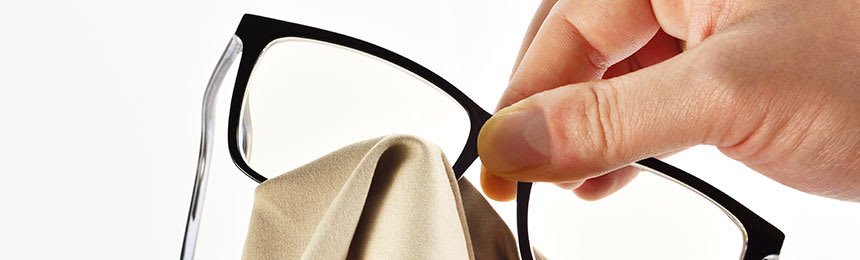
Use a clean, dedicated microfiber cloth to gently dry and polish the lenses. Use light circular motions. Make sure the cloth is clean — a microfiber cloth used on other surfaces picks up dust, oils, and particles that can scratch lenses. Wash your lens microfiber cloths regularly in warm water with a little dish soap and air dry.
How to Clean Eyeglass Frames
Plastic and Acetate Frames
Plastic frames clean up easily with the soap-and-water method described above. For grime buildup in the hinges, use a cotton swab dampened with water and a tiny amount of dish soap to work into the crevices. Rinse thoroughly. Avoid soaking plastic frames for extended periods — some acetate frames can warp with extended water exposure.
Metal Frames
Metal frames (titanium, stainless steel, aluminum) are durable and clean up well with the same soap-and-water method. Pay attention to the hinges, which accumulate skin oils and can become stiff. A soft toothbrush dampened with soapy water scrubs hinge area effectively. Dry thoroughly to prevent water spots, which show more on polished metal than plastic.
Cleaning Nose Pads
Nose pads — especially clear silicone ones — turn yellow and buildup skin oils, sweat, and makeup residue. Use a cotton swab dipped in diluted dish soap to scrub around and under the nose pad. For severely discolored silicone nose pads, soak a cotton ball in isopropyl alcohol and rub thoroughly. This strips away the yellowing effectively. If nose pads are deeply yellowed, replacement pads are inexpensive and widely available.
Cleaning Hinges
Stiff, creaky hinges are usually just dirty. Use a cotton swab dampened with water or a tiny amount of isopropyl alcohol to clean around the hinge screws and pivot areas. Work the hinge open and closed several times while cleaning to loosen debris. If a hinge is stiff even after cleaning, a tiny drop of sewing machine oil or eyeglass hinge oil applied to the screw pivot will restore smooth movement.
On-the-Go Eyeglass Cleaning
For cleaning away from home, there are two reliable options:
- Pre-moistened lens wipes: Single-use cleaning wipes designed for eyeglass lenses (like Zeiss Lens Wipes) are safe for coated lenses and effective for quick cleaning. These are formulated to be alcohol-free or contain only lens-safe concentrations of alcohol, unlike household wipes.
- Lens spray: A small bottle of lens cleaning spray with a microfiber cloth provides effective on-the-go cleaning that’s safer than dry wiping. Spray onto the lens (not the cloth), then gently wipe clean.
What you shouldn’t use on the go: shirt fabric, tissues, or paper napkins — even a single wipe with these materials can leave micro-scratches in lens coatings, especially anti-reflective coatings.
How to Clean Anti-Reflective (AR) Coated Lenses
Anti-reflective coatings are the most delicate part of modern prescription lenses. They smear more easily, show oils more visibly, and are damaged by solvents more readily than uncoated lenses. The same soap-and-water method applies, but with extra attention to:
- Always rinsing before wiping — never wipe dry AR lenses.
- Using only lotion-free soap — any residue shows on AR coatings.
- Using a clean, fresh microfiber cloth — even a slightly dirty cloth streaks AR coatings badly.
- Avoiding all ammonia, acetone, and alcohol-based cleaners.
Pro Tips for Eyeglass Care
- Keep a spare microfiber cloth everywhere. In your car, your desk, and your bag — having a clean cloth always accessible prevents the temptation to use shirt fabric or tissues.
- Wash your microfiber cloths regularly. A dirty microfiber cloth is worse than using a shirt — it has concentrated dust, oils, and debris from previous uses. Wash weekly if using daily.
- Don’t set glasses face-down. Setting glasses with the lenses facing the table scratches the coating even with a clean surface. Always set them upright or in a case.
- Store in a hard case. Soft pouches are better than nothing, but a hard case prevents accidental pressure or scratching from items in a bag.
- Clean daily. Daily cleaning with soap and water takes 60 seconds and prevents the buildup that eventually requires more aggressive cleaning.
Common Mistakes When Cleaning Eyeglasses
- Using shirt fabric or paper towels. The most common cause of lens scratching — these materials are too rough for coated lenses.
- Wiping dry lenses. Always wet before wiping — this alone prevents the majority of cleaning-related scratches.
- Using glass cleaner or Windex. Ammonia in these products strips AR coatings quickly.
- Using lotion soap. Moisturizing dish soaps and hand soaps leave a greasy film that smears more than it cleans.
- Cleaning too infrequently. Heavy buildup from infrequent cleaning requires harder rubbing to remove — increasing scratch risk. Daily cleaning keeps lenses easier to clean with minimal pressure.
Frequently Asked Questions
Can I use rubbing alcohol to clean eyeglass lenses?
Isopropyl alcohol (70%) can be used briefly for cleaning eyeglass frames and nose pads but should be avoided on lens coatings. Most anti-reflective, anti-scratch, and hydrophobic coatings are sensitive to alcohol and can be degraded with repeated use. Use lens cleaning spray or soap and water for the lenses themselves.
Why do my glasses look smeared after cleaning?
Smearing after cleaning is almost always caused by one of three things: soap residue not fully rinsed off, a dirty or used microfiber cloth, or wiping too hard with a dry cloth. Rinse more thoroughly, wash your microfiber cloth, and ensure the cloth is fully clean before use.
How do I remove scratches from eyeglass lenses?
Unfortunately, scratches in lens coatings cannot be truly repaired at home — the coating is damaged and no DIY product reverses this. Some “scratch repair” products fill scratches temporarily but don’t restore optical clarity. If scratches significantly affect your vision, lens replacement is the correct solution. Preventing scratches through proper cleaning and storage is far more effective than trying to repair them.
How often should I clean my glasses?
Daily cleaning with the soap-and-water method is ideal — it takes about 60 seconds and prevents gradual buildup that’s harder to remove. At minimum, clean whenever you notice smearing or blurriness affecting your vision.
Is it safe to use dish soap on all types of eyeglass lenses?
Yes — plain, lotion-free, fragrance-free dish soap is safe for virtually all prescription and fashion eyeglass lenses including those with anti-reflective, anti-scratch, photochromic (Transitions), and polarized coatings. It’s the cleaning method recommended by most opticians and lens manufacturers.
Conclusion
Cleaning eyeglasses correctly takes about 60 seconds and protects a significant investment in your vision. The method is simple: rinse, soap, rub gently, rinse thoroughly, and dry with a clean microfiber cloth. Avoid paper towels, shirt fabric, Windex, and dry wiping. Follow these guidelines and your lenses will stay clearer longer and last years without degraded coatings.
For more home cleaning guides, check out our article on how to clean mirrors without streaks and our guide on how to clean crystal glasses and vases. If you’re also dealing with lens fungus on camera equipment, see our guide to cleaning fungus from a lens.
