
To clean mirrors without streaks, spray a small amount of glass cleaner or a 50/50 vinegar-water solution onto a clean microfiber cloth (not directly on the mirror), then wipe in an S-pattern from top to bottom. Buff dry with a second clean dry cloth. Streaks almost always come from using too much product, spraying directly on the mirror, or using paper towels or old rags that leave lint. This guide covers the exact technique, the best products, and how to fix streaks on mirrors that seem impossible to get clean.
What You’ll Need
- Clean microfiber cloths (2–3 for best results)
- Glass cleaner (Windex or equivalent) OR white vinegar diluted 50/50 with distilled water
- Spray bottle (if using DIY solution)
- Rubbing alcohol 70% (for heavy grime or toothpaste spots)
- Cotton swabs (for corners and edges)
- Newspaper (old-school option — works well)
What to Avoid
- Paper towels — leave lint and tiny fibers on glass
- Old cotton rags — leave lint
- Too much spray — excess product = streaks
- Bleach — can damage mirror backing over time
- Ammonia near bathroom grout — fumes discolor sealants
Why Mirrors Streak (And How to Fix It)
Streaks on mirrors are caused by three things: excess cleaner that didn’t fully evaporate, lint from the cloth or paper towel, or cleaning in direct sunlight/heat which causes the cleaner to dry before you can buff it. Understanding the cause makes the fix obvious:
- Too much product: Use 2–3 sprays maximum. Less is more.
- Wrong cloth: Switch to a clean microfiber cloth.
- Cleaning in warm sunlit conditions: Clean mirrors in shade or when the surface is at room temperature.
- Product spray directly on mirror: Spray runs down to the edges and frames, leaving thick residue.
Safety and Precautions
- Never spray water or cleaners into mirror frames or edges. Moisture seeping behind the mirror’s edge damages the silver or aluminum backing layer, causing black spots and “foxing” (permanent black edge degradation that cannot be repaired).
- Keep cleaners away from painted or wooden frames. Glass cleaner can strip paint or finish from mirror frames — spray onto the cloth, never the mirror surface near the frame.
- Avoid vinegar on antique mirror backs. Antique mirrors often have thinner, more vulnerable silvering — vinegar’s acidity can accelerate edge damage if it seeps behind the glass.
Step-by-Step: How to Clean a Mirror Without Streaks
Step 1 — Start With a Dry Wipe
Before applying any liquid, wipe the mirror surface with a clean, dry microfiber cloth. This removes dust, loose debris, and dry toothpaste splatter. Cleaning dust off with a wet cloth creates muddy smears that are much harder to remove cleanly. The dry wipe takes 20 seconds and significantly improves the final result.
Step 2 — Apply Cleaner to the Cloth, Not the Mirror
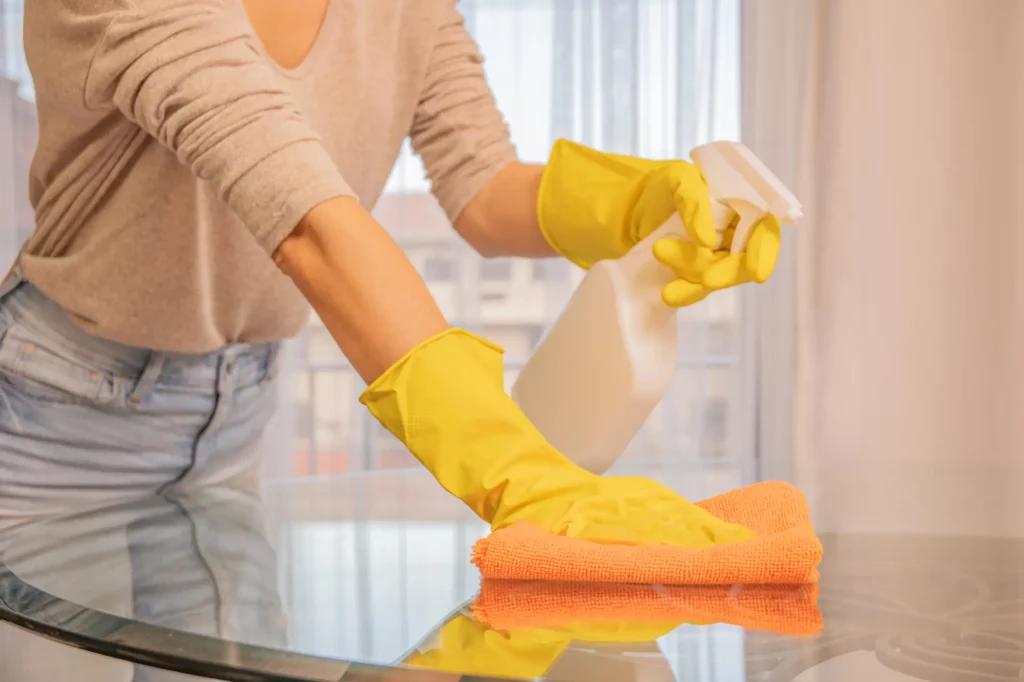
This is the most important technique change most people need to make. Spray 2–3 pumps of glass cleaner onto a clean microfiber cloth — not onto the mirror surface. Spraying directly on the mirror sends excess product running down the glass to the frame and bottom edge, where it pools and dries into streaks. Spraying onto the cloth gives you complete control over the amount of product applied.
If you’re using a DIY vinegar solution, mix distilled water and white vinegar in equal parts in a spray bottle. Distilled water is key — tap water contains minerals that leave residue on glass. Spray the cloth lightly and proceed the same way.
Step 3 — Wipe in an S-Pattern Top to Bottom
Wipe the entire mirror surface in overlapping S-shaped passes, starting at the top and working down. This top-to-bottom approach prevents drips from the top running down over already-cleaned areas. The S-pattern ensures full, even coverage without missing spots or leaving cross-hatch lines. Use light to moderate pressure — you don’t need to scrub a mirror.
For the edges, fold the cloth to a narrower edge and wipe the perimeter carefully — don’t press hard against the frame edge where moisture could be pushed behind the mirror.
Step 4 — Buff Dry Immediately
Before the cleaner dries, immediately buff the surface with a second clean, dry microfiber cloth using small circular motions across the entire surface. The buffing step is what prevents streaks — it removes the last traces of moisture and product before they can dry into streaks. This second cloth must be completely clean and dry — a cloth with any residue will re-streak the mirror.
Step 5 — Check in Different Lighting
Move your viewing angle or check the mirror in raking light (light hitting the surface at a sharp angle). Streaks that are invisible when looking straight at the mirror often show clearly in raking light. If streaks are visible, buff again with the dry cloth using more vigorous circular motions. A persistent streak usually means a tiny bit of cleaner residue — the dry buffing cloth removes it.
Removing Stubborn Stains from Mirrors
Toothpaste and Soap Splatter

Dried toothpaste is one of the hardest mirror stains to remove because it’s a chalky abrasive paste that bonds to glass. Don’t try to wipe it off dry — you’ll smear it. Dampen a cotton swab or cloth corner with warm water and hold it against the toothpaste for 30 seconds to soften it. Then gently loosen it with the swab or a fingernail, wipe clean, and do your regular mirror cleaning pass. For multiple dried toothpaste spots, use a small amount of rubbing alcohol on a cotton ball — it dissolves toothpaste quickly.
Hairspray Residue
Hairspray leaves a fine tacky film on bathroom mirrors that appears as a dull haze. Rubbing alcohol (70%) is the best removal method — dampen a cloth and wipe the affected area. Isopropyl alcohol dissolves the polymer film in hairspray quickly. Follow with the standard cleaning routine.
Hard Water Spots
Hard water mineral spots on mirrors are calcium carbonate deposits. Apply undiluted white vinegar to a cloth, press against the spots, and hold for 3–5 minutes. The acid dissolves the mineral deposits. Follow with the standard cleaning routine using distilled water to prevent new mineral deposits from tap water.
Best Cleaning Solutions for Mirrors
| Solution | Pros | Cons | Best For |
|---|---|---|---|
| Glass cleaner (Windex) | Easy, reliable, widely available | Contains ammonia — fumes in small bathrooms | General cleaning |
| Vinegar + distilled water (50/50) | Natural, no fumes, inexpensive | Slight vinegar smell while cleaning | Regular cleaning, mineral spots |
| Isopropyl alcohol 70% | Cuts grease and hairspray fast | Dries quickly — work fast | Hairspray residue, heavy grime |
| Dish soap + distilled water | Gentle, removes oils well | Residue if too much soap used | Oily smudges and fingerprints |
Pro Tips and Common Mistakes
- Use distilled water in your DIY cleaner. Tap water minerals are a major cause of streaking and white haze on glass — especially visible on mirrors. Distilled water contains no minerals and dries completely clear.
- Never clean mirrors in direct sunlight or in a hot bathroom. Heat and sunlight cause the cleaning solution to evaporate before you can buff it, leaving streaks and residue.
- Keep your microfiber cloths lint-free. Don’t wash microfiber in the same load as cotton towels or use fabric softener — both deposit lint that transfers to the mirror and causes streaking. See our guide on how to clean microfiber cloths for proper care.
- Fold the cloth to a clean section frequently. As one side of the cloth picks up grime and cleaner, fold to expose a fresh dry section. Using a dirty section of cloth re-deposits residue on the mirror.
- Newspaper actually works. Newspaper doesn’t leave lint and the ink acts as a mild polishing agent. Crumple it loosely for the buffing step — it’s an old-school professional window cleaning trick that still works.
Frequently Asked Questions
Why does my mirror always have streaks even after cleaning?
Persistent streaks despite cleaning are almost always caused by one of three issues: too much product (use much less), wrong cloth (switch to a fresh, clean microfiber cloth), or not buffing dry fast enough (the cleaner dries before you buff). The fix is typically: spray less cleaner onto the cloth rather than the mirror, and buff dry immediately with a second dry cloth while the mirror is still slightly damp.
Is vinegar safe for mirror cleaning?
Yes — diluted white vinegar (50/50 with distilled water) is safe for cleaning mirror glass. It’s not safe to let it seep behind the mirror edges, as vinegar’s acidity can accelerate the degradation of the silver or aluminum mirror backing if it contacts it repeatedly. Apply via a cloth, not by spraying directly on the mirror, and keep the edges dry.
How do I prevent my bathroom mirror from fogging?
Apply a thin layer of shaving cream to the mirror surface, rub in evenly, then wipe off with a dry cloth — leaving a nearly invisible film. This film breaks the surface tension of water vapor and prevents fogging for 1–2 weeks. Commercial anti-fog sprays also work and last longer. The shaving cream trick is free and surprisingly effective for keeping bathroom mirrors clear after showers.
Why does my mirror have black spots on the edges?
Black edge spots on mirrors are “foxing” or “silvering” — moisture that has seeped behind the glass over time, oxidizing and degrading the reflective backing. This is permanent damage that cannot be cleaned away. Prevention: never spray cleaning solution directly on the mirror and keep the edges dry. If widespread, the mirror needs to be replaced.
What is the best cloth for cleaning mirrors?
A clean, high-quality microfiber cloth is the best option — it’s lint-free, absorbent, and gentle on glass. Waffle-weave glass-specific microfiber cloths (sold for automotive detailing) give the most streak-free results. Crumpled newspaper is an effective old-school option. Avoid paper towels, cotton rags, or any fabric that sheds lint.
Conclusion
Streak-free mirrors come down to four things: spray onto the cloth not the mirror, use the right amount (very little), wipe top to bottom in an S-pattern, and buff dry immediately with a second clean cloth. Use microfiber, use distilled water, and clean in cool conditions. For related glass and surface cleaning guides, check out our articles on how to clean glass and frosted glass and how to clean microfiber cloths at GuideGrove.
