
To clean mineral deposits — the white, chalky, crusty buildup left by hard water — apply white vinegar or a mild acid solution directly to the deposit, let it soak for 15–30 minutes, then scrub gently and rinse. Mineral deposits are primarily calcium carbonate and magnesium carbonate, left behind when hard water evaporates. Acid dissolves these carbonates chemically, making vinegar, lemon juice, and commercial descalers (CLR, Lime-A-Way) the most effective removal tools. This guide covers every surface where mineral deposits commonly appear, from faucets and showerheads to glass, appliances, and floors.
What You’ll Need
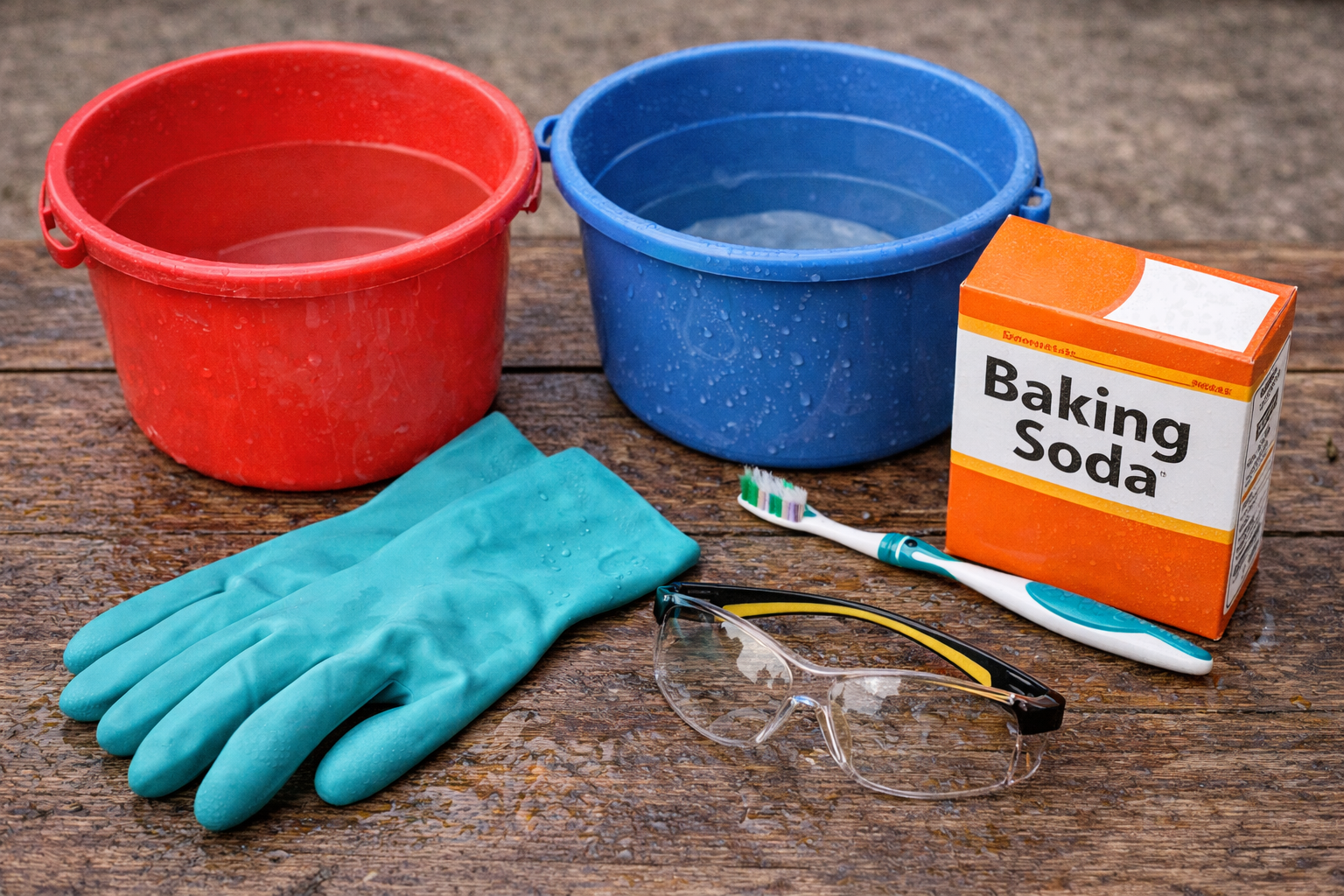
- White distilled vinegar (undiluted)
- Lemon juice (fresh or bottled)
- Commercial descaler (CLR, Lime-A-Way) — for heavy buildup
- Baking soda (for paste applications)
- Soft cloths and microfiber cloths
- Old toothbrush or soft-bristle brush
- Plastic scraper (for thick deposits)
- Rubber gloves
- Spray bottle
Understanding Mineral Deposits
Hard water contains dissolved calcium, magnesium, and other minerals. When hard water evaporates from a surface, these minerals remain as solid deposits — the white, gray, or tan chalky or crusty buildup you find around faucets, on shower glass, inside kettles, on tile, and around drain openings. The technical term is limescale or calcium carbonate scale, though “mineral deposits” and “hard water deposits” are used interchangeably.
Acids are the most effective removal method because calcium carbonate reacts with acids to form soluble calcium salts, CO2 gas (the fizzing you see), and water — essentially dissolving the deposit. This is why vinegar and commercial descalers work so well.
Safety and Precautions
- Never use acidic cleaners on marble, limestone, travertine, or calcium-based natural stone. Acid dissolves these stone surfaces the same way it dissolves mineral deposits — causing etching and permanent damage.
- Avoid vinegar on gold-plated fixtures, brass, or bronze with lacquer finishes. Acid strips protective lacquers and can damage the base metal underneath.
- Use gloves when handling commercial descalers. CLR and Lime-A-Way contain stronger acids — wear gloves and work in a ventilated area.
- Don’t leave descalers on chrome or nickel for extended periods. Even vinegar can dull chrome finishes with prolonged contact. Limit soak times to 1–2 hours maximum for chrome and nickel surfaces.
Step-by-Step: How to Clean Mineral Deposits
Step 1 — Assess the Severity
Light mineral deposits — soft, chalky white film that wipes off without much effort — respond quickly to a light vinegar application. Moderate deposits — hard, slightly crusty spots that resist wiping — need a 15–30 minute soak. Heavy deposits — thick, rock-hard calcification — may need multiple treatments, full-strength commercial descaler, or mechanical removal with a plastic scraper followed by chemical treatment.
Step 2 — Apply Your Descaling Agent
For light to moderate deposits: spray undiluted white vinegar directly onto the deposit. For surfaces you can’t spray (like vertical faucet bases), soak a cloth in vinegar and drape it over the deposit to hold it in contact. For flat surfaces like shower floors and tile, pour vinegar directly and let it pool over the affected area. For heavy deposits: apply commercial descaler per product directions.
Step 3 — Let It Soak
Allow the acid to work: light deposits need 10–15 minutes. Moderate deposits need 20–30 minutes. Heavy deposits may need 1–3 hours or overnight treatment. You can tell the reaction is working when you see fine fizzing on the surface — this is the CO2 released as the acid dissolves the calcium carbonate.
Step 4 — Scrub and Rinse
After soaking, scrub with a soft-bristle brush or old toothbrush to remove loosened deposits. Most of the deposit should brush away easily after a proper soak. Rinse thoroughly with clean water. For very thick deposits, use a plastic scraper to remove the bulk before scrubbing, then apply a second round of vinegar to the remaining thin layer.
Step 5 — Dry and Prevent Reoccurrence
Dry the surface completely after cleaning. The best prevention for mineral deposits is removing water before it evaporates — wiping down shower surfaces, faucets, and tile after every use eliminates most deposit formation. For fixtures prone to mineral buildup, monthly vinegar treatment prevents deposits from reaching the thick, hard stage that requires extended treatment.
Cleaning Mineral Deposits by Surface Type
Faucets and Fixtures
Wrap a vinegar-soaked cloth around the fixture and leave for 30–60 minutes. Scrub with a toothbrush, paying attention to the base where deposits accumulate around the perimeter. Rinse and dry. For the aerator (the mesh screen at the tip of the faucet), unscrew and soak in vinegar for 30 minutes. See our guide on how to clean a faucet aerator for full instructions.
Showerheads
Fill a plastic bag with vinegar, secure over the showerhead so the face is submerged, and leave for 1–3 hours. Remove, scrub with a toothbrush, and flush with hot water. See our full guide on how to clean limescale from a showerhead.
Glass Shower Doors and Windows
Spray undiluted vinegar on the glass and let soak for 15 minutes. Scrub with a non-scratch pad. For very heavy deposits, apply a paste of baking soda and vinegar (it will fizz — this is normal) and scrub. Rinse thoroughly. A squeegee used after every shower prevents almost all hard water buildup on glass.
Tile and Grout
Spray vinegar on tile surfaces and let soak. Use a soft brush to scrub deposits from tile and grout lines. Note: do not use vinegar on natural stone tile (marble, travertine, limestone, slate). For stone tile, use a dedicated stone-safe hard water remover or call a professional.
Toilet Bowl
Pour 1–2 cups of white vinegar into the toilet bowl and swirl to coat all surfaces. Let sit for 30 minutes to an hour, then scrub with a toilet brush and flush. For heavy mineral rings (brown or orange deposits from iron in the water), use a pumice stone (wet both the stone and toilet surface before using) — a gentle scrub with pumice removes mineral rings from porcelain without scratching.
Kettle and Coffee Maker
For kettles: fill halfway with equal parts water and white vinegar, bring to a boil, let sit 20 minutes, pour out, and rinse 2–3 times. For drip coffee makers: run a water-vinegar solution through the brewing cycle, then run 2–3 cycles of plain water. Repeat monthly in hard water areas.
Humidifiers
See our guide on how to clean a Levoit humidifier for detailed mineral deposit removal from ultrasonic humidifier basins and transducer discs.
Descaler Comparison
| Descaler | Effectiveness | Safe For | Avoid On |
|---|---|---|---|
| White Vinegar | High (moderate buildup) | Chrome, steel, plastic, tile, glass, grout | Marble, natural stone, lacquered brass |
| Lemon Juice | Moderate | Chrome, tile, glass | Same as vinegar |
| CLR | Very High (heavy buildup) | Most metals and tile (check label) | Natural stone, colored grout, painted surfaces |
| Lime-A-Way | Very High | Toilets, showers, sinks, tile | Natural stone, hardwood |
| Bar Keepers Friend | Moderate (surface scale) | Stainless steel, porcelain, ceramic | Natural stone |
Pro Tips and Common Mistakes
- Dry surfaces after every use to prevent deposits. This is the single most effective prevention method. 30 seconds of wiping a faucet or squeegeeing shower glass after use eliminates 90% of mineral buildup.
- Use distilled water in appliances. Using distilled water in humidifiers, steam irons, and kettles eliminates mineral deposit formation almost entirely in these appliances.
- Don’t let deposits build up for years. Fresh, light deposits take 10 minutes to remove. Year-old, rock-hard calcification may require multiple treatments, mechanical removal, or professional descaling. Monthly quick maintenance is far more efficient than annual deep cleaning.
- Consider a water softener in severe hard water areas. If you’re dealing with significant mineral deposits throughout your home, a whole-house water softener removes calcium and magnesium before they reach your fixtures — eliminating deposits at the source.
Frequently Asked Questions
What is the fastest way to remove hard water deposits?
For most household surfaces, undiluted white vinegar applied and left to soak for 20–30 minutes is the fastest effective method. For very heavy, old deposits, a commercial descaler like CLR (applied for 2–5 minutes as directed) works faster than vinegar. The key with all methods is adequate soak time — scrubbing without soaking takes much longer and risks scratching surfaces.
Can I use vinegar on tile grout?
Yes, vinegar is safe on ceramic and porcelain tile grout. It dissolves mineral deposits in grout effectively. However, don’t use vinegar on natural stone tile (marble, travertine, etc.) — the acid etches the stone. Also avoid using vinegar on colored grout regularly — repeated acid exposure can slowly fade grout color over time.
Why do my faucets get mineral deposits so quickly?
Fast-building deposits mean you have very hard water — high levels of dissolved calcium and magnesium. The higher the water hardness (measured in grains per gallon or milligrams per liter), the faster deposits form. A whole-house water softener is the most effective long-term solution. Short-term: more frequent cleaning (monthly) and drying fixtures after use slows buildup significantly.
Are mineral deposits harmful?
Mineral deposits themselves are not harmful — calcium and magnesium are naturally occurring minerals. However, they can reduce water flow in faucet aerators and showerheads, damage appliances (kettles, coffee makers, humidifiers) by insulating heating elements, and harbor bacteria if porous deposits develop in humid environments. Keeping them cleaned prevents these practical problems.
What is the brown ring in my toilet — is that mineral deposits?
Brown or orange rings in toilets are typically a combination of mineral deposits and iron oxidation (rust) from iron in the water. Standard vinegar treatment dissolves the mineral component. For the iron staining, a pumice stone (wet both surfaces first) or an iron-specific toilet bowl cleaner removes the brown color without bleach. Bleach actually makes iron staining worse by oxidizing the iron further.
Conclusion
Cleaning mineral deposits always starts with the right acid for the surface: white vinegar for most home surfaces, commercial descalers for heavy buildup, and specialized stone-safe products for natural stone. The key variable is soak time — give the acid enough contact time to work chemically, and most deposits come off with minimal scrubbing. For related guides, see our articles on how to clean limescale from showerheads and how to clean a faucet aerator at GuideGrove.
