
Dust-caked fan blades reduce airflow efficiency and spread allergens and debris throughout your home every time they spin. Cleaning a fan takes 15–30 minutes and restores airflow to near-new levels. The approach varies by fan type: ceiling fans just need a blade wipe-down, box fans often need disassembly, and tower fans require a compressed air or vacuum approach for their internal grilles. Here’s how to clean every type of household fan thoroughly and safely.
What You’ll Need
- Microfiber cloth or soft rag
- Can of compressed air
- Vacuum with brush attachment
- Mild dish soap and warm water
- Screwdriver (for box fans with removable grilles)
- Soft-bristle brush or old paintbrush
- Pillowcase (for ceiling fan blades)
- Step ladder (for ceiling fans)
Safety and Precautions
- Always unplug the fan before cleaning. Never clean an electrical appliance while plugged in. For ceiling fans, turn off the switch and the circuit breaker if you’re cleaning the motor housing.
- Don’t use excessive water near motors or electrical components. Moisture in a fan motor causes damage and creates a shock hazard. Wring cloths out well and avoid spraying water into grilles.
- Use a stable ladder for ceiling fans. Don’t stand on chairs or other unstable surfaces — ceiling fan work involves reach and movement that requires a stable platform.
- Let fan components dry completely before reassembling and plugging in.
How to Clean a Box Fan
Unplug and Take Outside
Unplug the fan and take it outside or into a garage before cleaning. Box fans release a lot of accumulated dust when cleaned — doing this outdoors prevents you from spreading all that dust back into your home.
Remove the Front Grille
Most box fans have snap-off or screw-secured front grilles. Check if yours has release tabs on the sides (snap-off) or perimeter screws (use a Phillips screwdriver). Remove the front grille completely to access the blades.
Vacuum or Blow Out Loose Dust
Before wiping, use compressed air to blow out the dust from both the grilles and the blades, or vacuum thoroughly with a brush attachment. This removes the bulk of loose material so the wiping step doesn’t just push dust around.
Wash the Grilles
Wash both the front and back grilles in warm soapy water. A soft brush or old toothbrush reaches into the grid openings easily. Rinse thoroughly and set aside to air dry completely before reassembly.
Wipe Fan Blades
Wipe each blade with a cloth dampened with soapy water. Dry immediately with a dry cloth. If the blades are removable, you can wash them in the sink. Avoid getting water into the motor housing — just wipe the blades themselves.
Reassemble When Dry
Allow all parts to dry completely before snapping or screwing the grille back on. Reassemble, plug in, and check that the fan operates normally.
How to Clean a Tower Fan
Tower fans have internal blades protected by a vertical grille housing — the blades themselves are usually inaccessible without full disassembly. The most practical approach:
- Compressed air: Direct compressed air into the intake vents (usually at the back of the unit) and exhaust grilles (front) to blast out accumulated dust. Do this outdoors. Make several short bursts from different angles.
- Vacuum the exterior grilles: Use a vacuum with a soft brush attachment to clean the front and rear grilles thoroughly. This removes surface dust and some interior dust without disassembly.
- Wipe the exterior: Wipe the casing with a barely damp cloth. Pay attention to the controls, base, and any vents.
- For deep cleaning: Some tower fans (Dyson, Honeywell) allow removal of the back intake cover for better access. Consult your manual — many models can be partially disassembled with just a screwdriver for thorough cleaning.
How to Clean a Ceiling Fan
Turn Off and Secure the Fan
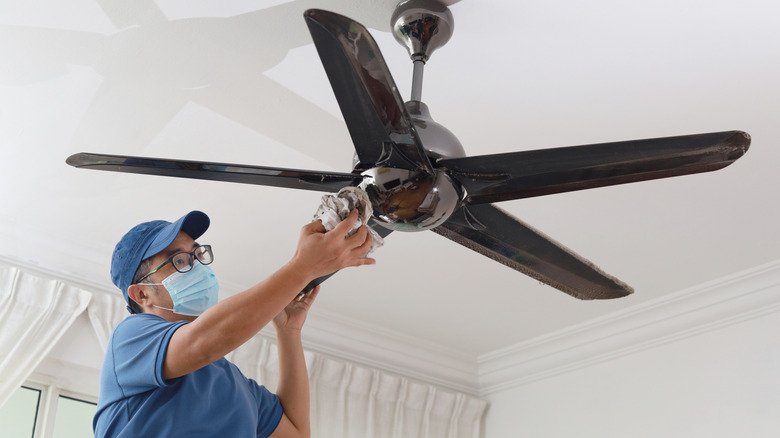
Turn off the ceiling fan at the wall switch and allow the blades to stop completely. For a thorough cleaning involving the motor housing or light kit, turn off the circuit breaker for added safety. Set up a stable ladder directly beneath the fan.
Use the Pillowcase Method for Blades
The pillowcase method is the best approach for ceiling fan blades — it cleans the blade and catches all the dust without it falling on you or the floor below. Slide an old pillowcase over each blade and wipe from base to tip while holding the case closed around the blade. The dust falls into the pillowcase instead of the room. Take the pillowcase outside to shake out the dust.
Wipe the Motor Housing
Wipe the fan motor housing with a barely damp microfiber cloth. Pay attention to any vents on the housing where dust builds up. Dry immediately.


Clean the Light Kit (If Applicable)
Remove glass light shades and wash them in warm soapy water. Wipe bulbs with a dry cloth only (cleaning a hot or warm bulb with a wet cloth risks cracking it). Wipe the light fixture frame with a damp cloth and dry.
Polish Blades if Desired
For wooden ceiling fan blades, a light coat of furniture polish or wood conditioner applied after cleaning keeps the wood from drying out and makes future cleaning easier. For white or painted blades, a simple damp wipe-down is all that’s needed.
How to Clean a Desk or Pedestal Fan
Desk and pedestal fans clean similarly to box fans — most have removable front grilles secured by clips or screws. Remove the grille, wipe blades, wash the grille in soapy water, let everything dry, and reassemble. The main difference is scale — desk fans are smaller and easier to handle. Check the rear grille as well since it’s often overlooked but accumulates just as much dust.
Pro Tips for Fan Maintenance
- Clean fans at the start of every season. Before bringing fans out of storage in spring or summer, clean them first — stored fans often have more dust than fans in regular use.
- Don’t forget the motor vent holes. The small holes in the motor housing are intake vents. Use compressed air or a vacuum to clean these — a clogged motor vent causes overheating and reduced fan life.
- Wipe blades monthly during heavy use seasons. A quick monthly wipe-down prevents the heavy caking that makes annual deep cleaning so labor-intensive.
- Use a dryer sheet on ceiling fan blades after cleaning — the anti-static properties slow dust accumulation on the blade surfaces between cleanings.
- Balance ceiling fan blades after cleaning — sometimes accumulated dust was actually providing slight balance compensation. A blade balancing kit ($5–10 at hardware stores) corrects any wobble that appears after cleaning.
Common Mistakes When Cleaning Fans
- Cleaning while plugged in. Always unplug first — this is an absolute safety requirement.
- Getting water in the motor. Moisture in the motor causes damage. Wring cloths thoroughly and avoid spraying water directly into any opening.
- Using the pillowcase method with a thin pillowcase. Use an old, thick pillowcase — thin ones don’t contain the dust as effectively and may tear.
- Skipping the grille. Cleaning the blades but not the grille leaves half the dust in place and it quickly accumulates back on the newly cleaned blades.
- Reassembling before fully dry. Damp components inside an electrical appliance are a hazard. Ensure complete drying before plugging back in.
Frequently Asked Questions
How often should I clean my fans?
At minimum, clean fans once per season — before storage in fall and before pulling them out in spring. Ceiling fans used year-round benefit from monthly blade wiping and quarterly deep cleaning of the grille and housing. Heavy-use box fans in dusty environments may need monthly cleaning to maintain good airflow.
Can I wash fan blades in the dishwasher?
Plastic fan blades from some small desk fans can go in the top rack of the dishwasher on a gentle cycle if they’re completely separated from all electrical components. However, this isn’t recommended for most fans — the heat and water pressure can warp plastic or damage painted surfaces. Hand washing in soapy water is safer and nearly as fast.
Why does my fan smell musty after cleaning?
A musty smell after cleaning means the fan wasn’t fully dry before being plugged back in, or there was mold growing inside the housing that got disturbed. Allow at least an hour of drying time after cleaning. If the smell persists, disassemble further to check for mold inside the motor housing area and clean with a compressed air blast and a dry cloth.
How do I clean a Dyson fan?
Dyson bladeless fans have no traditional blades — they work via a jet of air from the circular amplifier. Wipe the outer surface with a damp microfiber cloth. Use compressed air to clean the inlet at the base where air is drawn in. The amplifier ring can be wiped inside and out with a barely damp cloth. Dyson recommends cleaning the filter base monthly — this usually just requires vacuuming the exterior inlet vents.
How do I get mold out of a tower fan?
Tower fan mold usually grows on the interior blades and is hard to address without disassembly. Start by blasting with compressed air outdoors. Then use compressed air combined with a light mist of diluted white vinegar (1:1 water) directed into the intake vents, followed immediately by compressed air drying. If the mold smell persists, full disassembly per the manufacturer’s instructions is required for thorough cleaning.
Conclusion
Cleaning fans regularly improves air quality, maintains cooling efficiency, and extends the lifespan of your appliances. The basics are consistent across fan types: unplug first, remove what you can, blow or vacuum out the loose dust, wash the grilles and wipe the blades, and let everything dry completely before reassembly. Schedule cleaning at the start and end of each season and monthly wipe-downs during peak use, and you’ll never deal with heavily caked dust again.
For related home cleaning guides, check out our article on how to clean ceilings — often the surface that catches fan-dispersed dust most visibly. Our guide on how to clean dust mites covers the bigger picture of reducing airborne allergens in your home.
