
Cork is a naturally soft, porous material that requires a gentle touch. Whether you’re cleaning a cork floor, cork board, cork coasters, or cork bath mats, the core rule is the same: avoid excess moisture and harsh chemicals. For everyday cleaning, a dry dust mop or vacuum handles most debris. Stubborn stains respond to a barely damp cloth with mild soap — and that’s usually all you need. Here’s the full breakdown for every cork surface in your home.
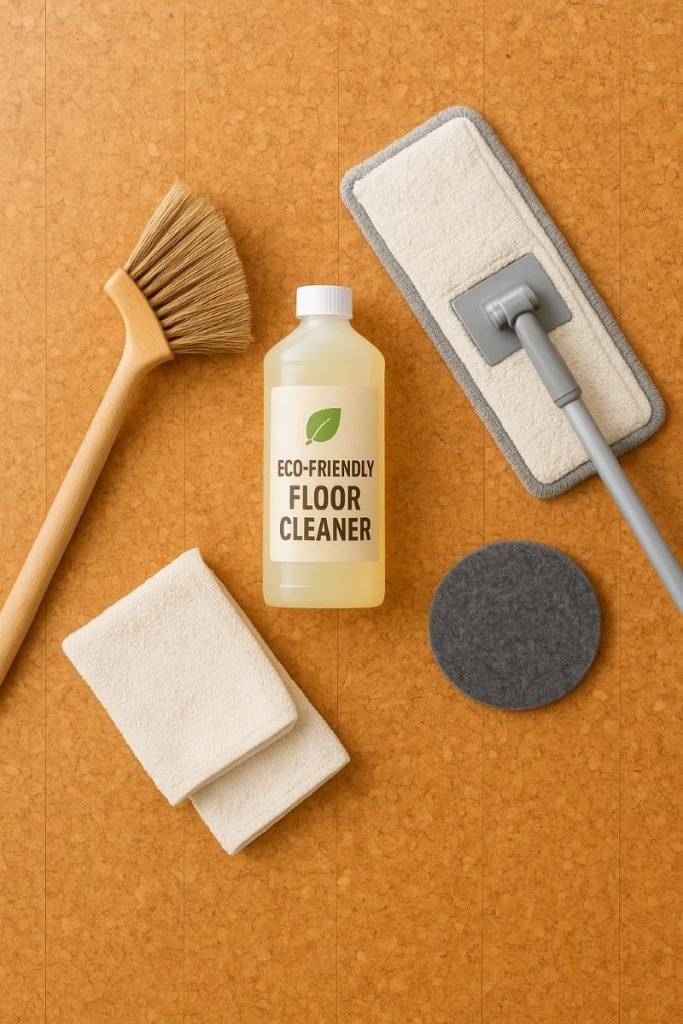
What You’ll Need
- Dry dust mop or soft-bristle vacuum attachment
- Microfiber mop or cloth
- Mild dish soap or pH-neutral floor cleaner
- Warm water
- Spray bottle
- Baking soda (for odor or mild stains)
- White vinegar (diluted, for mold/mildew)
- Soft-bristle scrub brush
- Clean dry towel
- Cork floor sealant or wax (for periodic maintenance)
Safety and Precautions
- Never soak cork. Excess water causes cork to swell, warp, and separate from adhesive. Use damp — never wet — cloths and mops.
- Avoid steam cleaners. The heat and moisture from steam mops will damage cork flooring and void most manufacturer warranties.
- No ammonia or bleach-based cleaners. These strip the cork’s natural oils, dry it out, and can cause crumbling or discoloration over time.
- Check for sealant first. Sealed cork floors are more water-resistant and forgiving. Unsealed cork is extremely sensitive to moisture and requires extra care.
- Test cleaners in a hidden area before applying to the full surface, especially if your floor finish is unknown.
Step-by-Step: Cleaning Cork Floors
Dry Dust or Vacuum First
Before introducing any moisture, remove loose dirt, dust, and debris with a soft dust mop or vacuum using a hard floor attachment. Avoid vacuums with beater bars — the rotating brush can scuff and nick the cork surface. This dry step prevents grinding grit into the cork during mopping, which would cause micro-scratches over time.
Mix a Gentle Cleaning Solution
Add 2–3 drops of mild dish soap or a pH-neutral cork floor cleaner to a bucket of warm water. Alternatively, mix 1/4 cup white vinegar per gallon of water for light disinfecting — the vinegar smell dissipates as it dries. Avoid highly acidic or alkaline solutions; cork has a natural pH balance and harsh chemicals disrupt it.
Dampen the Mop — Not Dripping Wet
Dip your microfiber mop in the cleaning solution and wring it out until it’s barely damp. The mop should not drip or leave standing water on the surface. If you’re mopping a large area, wring out frequently to maintain the right level of dampness throughout.
Mop in the Direction of the Cork Grain
Clean cork floors by mopping in long, consistent strokes in the same direction as the cork’s grain or tile orientation. This prevents pushing dirt into seams between tiles. Overlap slightly with each pass to avoid missing spots.
Spot-Treat Stains with Baking Soda Paste
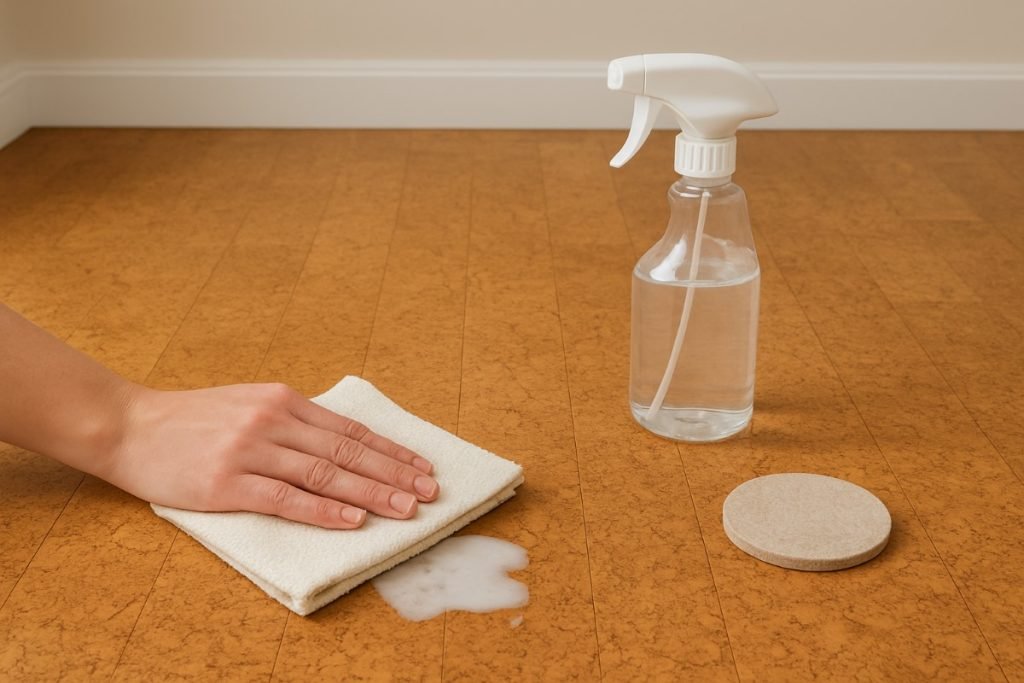
For food stains, scuffs, or discoloration, mix baking soda with just enough water to form a paste. Apply it to the stain and let it sit for 5 minutes, then gently rub with a soft-bristle brush or cloth using circular motion. Wipe clean with a barely damp cloth. This is safe for both sealed and unsealed cork when used sparingly.
Dry the Floor Immediately
After mopping, dry the floor quickly using a clean, dry towel or allow it to air dry in a well-ventilated area. Do not let water sit on cork for more than a few minutes. Running a fan or opening windows speeds up drying and prevents any moisture from being absorbed into the cork beneath the sealant.
Reseal the Floor Periodically
Sealed cork floors should be resealed every 3–5 years depending on traffic. When the floor starts to look dull, absorbs water readily, or shows wear through the finish, it’s time to reseal. Apply a water-based polyurethane or a manufacturer-approved cork floor wax according to product directions. Resealing restores water resistance and extends the floor’s life significantly.
How to Clean Other Cork Surfaces
Cork Boards and Wall Tiles
Use a dry or very lightly dampened cloth to wipe down cork boards. Remove stuck-on debris by gently picking it off or using a soft eraser. Never spray water directly onto a cork board — it will cause the backing to buckle. For deodorizing, sprinkle baking soda on the surface, let it sit for 15 minutes, then brush off gently.
Cork Coasters and Trivets
Rinse coasters under cool water after use and let them air dry completely standing upright. Do not soak them or put them in the dishwasher. For stains, scrub gently with a soft brush and a tiny drop of dish soap. Rinse immediately and allow to dry fully before use to prevent mold growth.
Cork Bath Mats
Cork bath mats should be rinsed after every few uses to remove soap residue and body oils. Scrub with a soft brush and diluted dish soap, rinse thoroughly, and always stand them upright to dry — never lay flat while wet. Good air circulation prevents the mold and mildew that are the most common cork bath mat complaints.
Removing Mold from Cork
Mix equal parts white vinegar and water in a spray bottle. Spray directly onto the moldy area and let sit for 10 minutes. Scrub with a soft brush and wipe clean. Dry thoroughly. Avoid bleach on cork — it degrades the material. Preventing mold is about keeping cork surfaces dry between uses and ensuring adequate ventilation in bathrooms and basements.
Pro Tips for Cork Maintenance
- Place doormats at every entrance. Cork floors are easily scratched by grit and small stones tracked in from outside. Catching debris at the door extends time between deep cleanings significantly.
- Use felt pads under all furniture. Chairs, tables, and heavy appliances will dent and compress cork. Felt glides distribute weight and prevent permanent impressions.
- Keep indoor humidity between 40–60%. Cork expands in high humidity and contracts when air is too dry. Extreme swings cause gapping between tiles or planks. A humidifier in winter and dehumidifier in summer helps.
- Clean spills immediately. Cork is forgiving if you act fast. The longer a spill sits, the more it can seep through sealant into the porous material below.
- Never wax over polyurethane-sealed cork. Wax and polyurethane don’t bond well and will cause the finish to peel. Know which finish your floor has before applying any maintenance product.
Common Mistakes to Avoid
- Wet mopping with too much water. The single most damaging thing you can do to cork floors. Wring the mop until nearly dry.
- Using a steam mop. Steam forces moisture deep into cork and causes irreversible swelling and finish failure.
- Applying oil-based cleaners on sealed cork. Oil prevents adhesion and can cause the sealant to lift or bubble.
- Ignoring seams. Dirt and moisture accumulate fastest at tile seams. Pay extra attention to these areas during both cleaning and resealing.
- Using abrasive scrubbers. Steel wool, rough sponges, and scratch pads will damage the cork’s surface finish quickly.
Frequently Asked Questions
Can I use a steam mop on cork floors?
No — steam mops damage cork flooring. The heat and moisture cause swelling, warping, and finish failure. Use a barely damp microfiber mop instead. Most cork flooring manufacturers explicitly void warranties if steam mops are used.
How often should I clean cork floors?
Dry dust mopping or vacuuming should happen 2–3 times per week in high-traffic areas. Damp mopping is needed only once every 1–2 weeks for normal residential use. High-traffic kitchens or entryways may need more frequent spot cleaning.
How do I remove black scuff marks from cork floors?
Try rubbing the scuff mark gently with a pencil eraser first. If that doesn’t work, dampen a cloth with a small amount of rubbing alcohol and rub the mark carefully. Wipe clean immediately and dry. Test in a hidden spot first to confirm your finish can handle alcohol.
Can I use vinegar on cork floors?
Diluted white vinegar (1/4 cup per gallon of water) is generally safe for sealed cork floors as a light disinfecting solution. However, avoid using it frequently or in higher concentrations — repeated acid exposure can gradually dull the sealant finish over time.
How do I know if my cork floor needs resealing?
Do a simple water bead test. Drop a few drops of water on the floor. If they bead up, the sealant is intact. If they absorb quickly and darken the cork, it’s time to reseal. You may also notice the floor looking dull and dry, or feeling rough underfoot.
Conclusion
Cleaning cork is all about using less moisture than you think you need. A dry mop for daily debris, a barely damp microfiber for deeper cleaning, and immediate drying after any wetness — these three habits will keep cork floors and surfaces in great shape for decades. Reseal every few years to maintain water resistance, and cork remains one of the most durable and comfortable floor options for any room.
For related flooring cleaning guides, check out our articles on how to clean linoleum floors and how to clean LVP flooring. You can also read our guide on how to clean concrete floors for basement and utility area surfaces.
