
To clean linoleum floors, sweep or vacuum first to remove grit, then damp mop with a mixture of warm water, a few drops of dish soap, and a splash of white vinegar. Dry promptly — linoleum is made from natural materials (linseed oil, wood flour, limestone) and sustained moisture causes it to warp, yellow, and deteriorate. Despite being durable, linoleum is sensitive to alkaline cleaners, bleach, and ammonia, all of which damage the natural binder that holds it together. This guide covers daily care, deep cleaning, stain removal, and how to restore shine to dull linoleum.
What You’ll Need
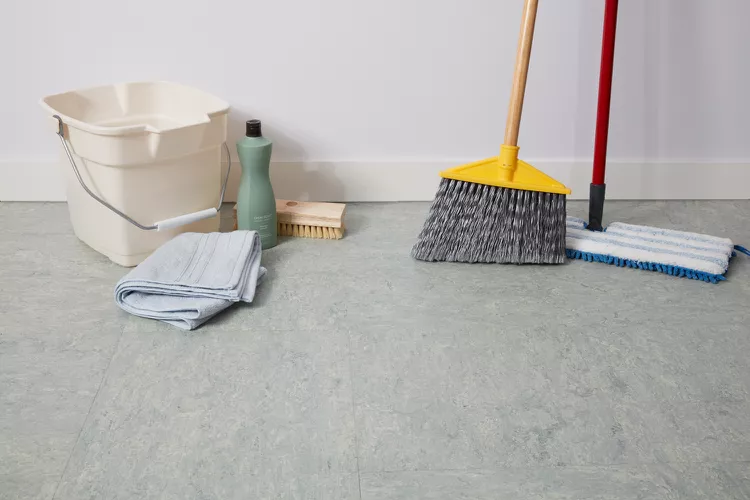
- Soft-bristle broom or microfiber dust mop
- Vacuum with hard floor setting
- Microfiber mop (flat head)
- Two buckets
- Mild dish soap
- White distilled vinegar
- Warm water
- Baking soda (for stubborn stains)
- Linoleum polish or floor wax (for shine restoration)
- Clean cloths or paper towels
Linoleum vs. Vinyl: Why the Difference Matters
Many homeowners confuse linoleum with vinyl. They look similar but require different care. True linoleum is a natural product made from linseed oil, cork powder, wood flour, limestone, and jute backing — it’s porous and sensitive to alkaline cleaners and excess moisture. Vinyl (PVC) is synthetic, fully waterproof, and more forgiving. If you’re unsure which you have: linoleum has a matte finish with color running all the way through the material; vinyl has a printed pattern layer with a clear wear layer on top.
Linoleum floors are most commonly found in older homes (pre-1960s) and in some modern eco-friendly renovations (Marmoleum is a popular brand). The cleaning methods in this guide are specifically for linoleum — not for vinyl.
Safety and Precautions
- Never flood linoleum with water. Standing water works into seams and the jute backing, causing swelling, staining, and eventual delamination. Always use a barely damp mop.
- Avoid alkaline cleaners. Ammonia, bleach, and strongly alkaline floor cleaners damage the linseed oil binder in linoleum, causing surface breakdown and yellowing.
- Don’t use abrasive scrubbers. Linoleum surface scratches easily — use only soft cloths and brushes.
- Avoid steam mops. Steam drives moisture and heat into the linoleum, accelerating the deterioration of the binder and causing warping.
- Don’t use rubber-backed mats on linoleum. Rubber reacts with the linseed oil in linoleum, causing permanent yellow staining wherever the rubber rests.
Step-by-Step: How to Clean Linoleum Floors
Step 1 — Sweep or Vacuum Thoroughly
Start with a thorough sweep or vacuum to remove all loose grit, dust, and debris. Grit left on linoleum acts as an abrasive when mopped — tiny particles scratch the surface and dull the finish over time. Use a soft-bristle broom or a microfiber dust mop. If vacuuming, use the hard floor setting with the beater bar off. Pay extra attention to corners and seams where debris accumulates.
Step 2 — Mix Your Cleaning Solution
In a bucket of warm water, add a few drops of mild dish soap and a 1/4 cup of white vinegar per gallon of water. This combination is gentle enough for linoleum, effective at cutting through grease and grime, and the vinegar’s mild acidity helps counteract any alkaline residue from previous cleaners. The vinegar smell dissipates as it dries — it won’t linger in the room.
Do not use more soap than a few drops — excess soap leaves a residue film on linoleum that dulls the surface and feels sticky underfoot.
Step 3 — Damp Mop the Floor
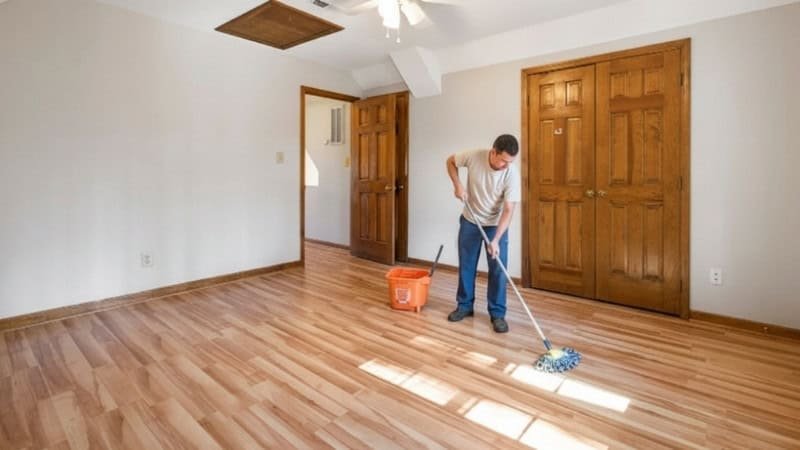
Dip your microfiber mop in the cleaning solution and wring it out until it’s just barely damp. You want the mop to leave no standing water on the surface — if you can see wet marks more than a few seconds after mopping, your mop is too wet. Mop in sections, working from the far end of the room toward the exit. Rinse the mop frequently in a second bucket of clean water and re-dampen with fresh solution as needed.
Step 4 — Rinse the Floor
After mopping, do a second pass with a mop dampened in plain clean water. This picks up soap residue that would otherwise leave a dull film. This step matters for linoleum because soap residue builds up over time and contributes to the yellowed, dingy appearance that makes old linoleum look worn out even when structurally fine.
Step 5 — Dry Promptly
Dry the floor as quickly as possible. Open windows, run a fan, or use a dry microfiber mop to absorb surface moisture. Linoleum should be fully dry within 5–15 minutes. Don’t walk on the floor until it’s fully dry, and don’t replace area rugs or furniture until the floor is completely dry underneath.
How to Remove Stains From Linoleum
| Stain Type | Method | Notes |
|---|---|---|
| Scuff marks | Rub with a pencil eraser or apply a small amount of WD-40 on a cloth, wipe clean | Wipe away WD-40 residue thoroughly |
| Dried food / grease | Baking soda paste (mixed with water to a thick paste); apply, let sit 5 min, scrub gently | Rinse thoroughly |
| Ink stains | Rubbing alcohol on a cloth, blot from outside in | Test on hidden area first |
| Rust stains | Cream of tartar + lemon juice paste; apply, let sit, wipe clean | Don’t use bleach |
| Yellowing from rubber mats | Oxalic acid-based cleaner or strong white vinegar solution | May be permanent if left long-term |
| Mold or mildew | Vinegar solution (full strength) applied with cloth; let sit 10 min, wipe clean | Address moisture source |
How to Restore Shine to Dull Linoleum
Old linoleum floors often look dull and yellowish — not because they’re dirty but because the surface wax or finish has worn away. Here’s how to restore the shine:
Step 1 — Strip Old Wax Buildup First
If the floor has been waxed previously and the wax has yellowed or built up unevenly, strip it before applying new wax. Mix 1 cup of white vinegar and 1 cup of water-based floor stripping solution in a bucket. Mop the floor generously with this mixture, let sit for 5 minutes, then scrub with a soft brush and mop clean. Rinse thoroughly and dry.
Step 2 — Apply Linoleum Polish or Floor Wax
Once the floor is clean and dry, apply a thin, even coat of linoleum-safe floor wax or polish (look for products specifically labeled for linoleum or natural floor coverings). Apply with an applicator mop in thin, even strokes. Allow to dry fully (typically 30 minutes) before applying a second thin coat. Two thin coats look better and last longer than one thick coat.
Step 3 — Buff for Extra Shine (Optional)
Once the final coat is dry, buff the floor with a clean, dry microfiber cloth or an electric floor polisher on the lowest setting. This brings out a deeper shine and helps the wax bond to the surface.
Pro Tips and Common Mistakes
- Never use a steam mop on linoleum. Steam is one of the fastest ways to damage linoleum — heat and moisture combination deteriorates the binder rapidly.
- Use only pH-neutral or mildly acidic cleaners. Linoleum is a natural material that tolerates mild acid (vinegar) but is damaged by alkaline cleaners (ammonia, bleach, many commercial floor cleaners).
- Clean spills immediately. Liquids soaking into linoleum seams or through surface scratches reach the jute backing and cause irreversible staining and delamination.
- Wax linoleum annually. Linoleum floors need periodic waxing to stay protected and shiny. Annual application is typical for most households; high-traffic areas may need bi-annual waxing.
- Use felt pads under all furniture. Linoleum dents under concentrated weight and scratches under hard furniture legs. Felt pads distribute the load and prevent surface damage.
Frequently Asked Questions
Can I use a Swiffer WetJet on linoleum?
The Swiffer WetJet solution is slightly alkaline and contains conditioning agents that are not ideal for linoleum. It won’t cause immediate damage, but regular use can dull the surface and cause residue buildup. A microfiber mop with a mild vinegar-water solution is a better long-term choice for linoleum care.
How do I get yellow stains out of linoleum?
Yellowing from rubber mats (the most common type) can be treated with a 1:1 white vinegar and water solution applied and left for 15–20 minutes before scrubbing. For stubborn rubber yellowing, an oxalic acid-based floor cleaner (sold at hardware stores) is more effective. UV-caused yellowing on older linoleum can sometimes be improved by floor refinishing, but in severe cases may be permanent.
Is it safe to use baking soda on linoleum?
Yes, baking soda is safe for spot stain removal on linoleum. Make a thick paste with water, apply to the stain, let sit for 5 minutes, then scrub gently with a soft brush and rinse thoroughly. Don’t use baking soda for general mopping — baking soda is alkaline, and regular full-floor use can gradually damage the linseed oil binder over time.
Why is my linoleum floor turning yellow?
The most common causes of linoleum yellowing are: rubber-backed mats left on the floor (rubber reacts with linseed oil), UV exposure through windows, alkaline cleaner residue buildup, and simple aging of the linseed oil binder. Removing rubber mats, improving ventilation, using the correct neutral-to-acidic cleaners, and applying fresh floor wax often significantly improves appearance.
How often should I clean linoleum floors?
Sweep or dust-mop linoleum daily or every other day to prevent grit buildup. Damp mop weekly in kitchens and bathrooms, every 1–2 weeks in lower-traffic areas. Wax annually, or when the floor looks dull and feels slightly rough underfoot. Address spills immediately — linoleum’s porous nature means liquids left on the surface can penetrate seams quickly.
Conclusion
Linoleum floors stay beautiful with simple, regular care: sweep daily, damp mop weekly with a mild vinegar-soap solution, dry quickly, and wax annually to protect and restore shine. The most important rules are to avoid excess water, stay away from alkaline cleaners, and never use rubber-backed mats. For more flooring care guides, check out our articles on how to clean LVP flooring and how to clean epoxy floors at GuideGrove.
