
Landscaping gravel and decorative rocks become dull, discolored, and weed-choked over time. Driveway gravel mixes with soil and fine sediment that fills the gaps and makes it look like dirt. Garden bed gravel gets stained by algae, organic material, and mineral deposits. The cleaning approach depends on your goals: surface cleaning for appearance, deep cleaning to remove sediment and debris, or weed control as part of the cleaning process. This guide covers how to clean and restore both driveway gravel and decorative landscaping rocks.
What You’ll Need
- Garden rake or landscape rake
- Garden hose with high-pressure nozzle or pressure washer
- Stiff-bristle push broom
- Wheelbarrow
- Wire mesh screen or gravel sieve (for washing gravel)
- Mild detergent or commercial landscape cleaner
- Vinegar (for algae treatment)
- Weed killer or landscape fabric (for weed prevention)
- Rubber gloves
Safety and Precautions
- Use caution with pressure washers. High-pressure water displaces gravel and can drive small stones at high velocity. Keep the nozzle at an appropriate distance and angle.
- Wear eye protection when using a pressure washer or high-pressure hose near loose gravel.
- Handle herbicides carefully if using weed killers. Apply on calm days to prevent drift onto desirable plants, and keep children and pets off the area during and after application per product instructions.
- Don’t use bleach near plants. Bleach runoff kills grass, plants, and soil microorganisms. If using bleach for algae treatment, contain the runoff away from garden beds.
Step-by-Step: Cleaning Driveway Gravel
Remove Debris and Leaves
Begin by raking the gravel to remove leaves, sticks, and surface organic debris. Use a landscape rake or stiff-tined garden rake to pull material to the sides for collection. Removing organic matter before washing prevents it from being washed into the gravel and continuing to break down and add to soil contamination.
Rake to Restore Depth and Distribution
Driveway gravel compacts and migrates over time — thin spots develop and edges push outward. Rake the gravel back to center, filling in ruts and thin areas. If the gravel has become significantly contaminated with soil, re-raking may need to be combined with partial removal and replacement of the most contaminated sections.
Hose Down with High Pressure
Use a garden hose with a high-pressure nozzle or a pressure washer on a low setting to flush the gravel. The water dislodges fine soil particles from between the stones and washes them off the surface. Work from one end of the driveway to the other, pushing the water toward drains or lower areas. Multiple passes are more effective than a single thorough pass.
Address Remaining Soil Contamination
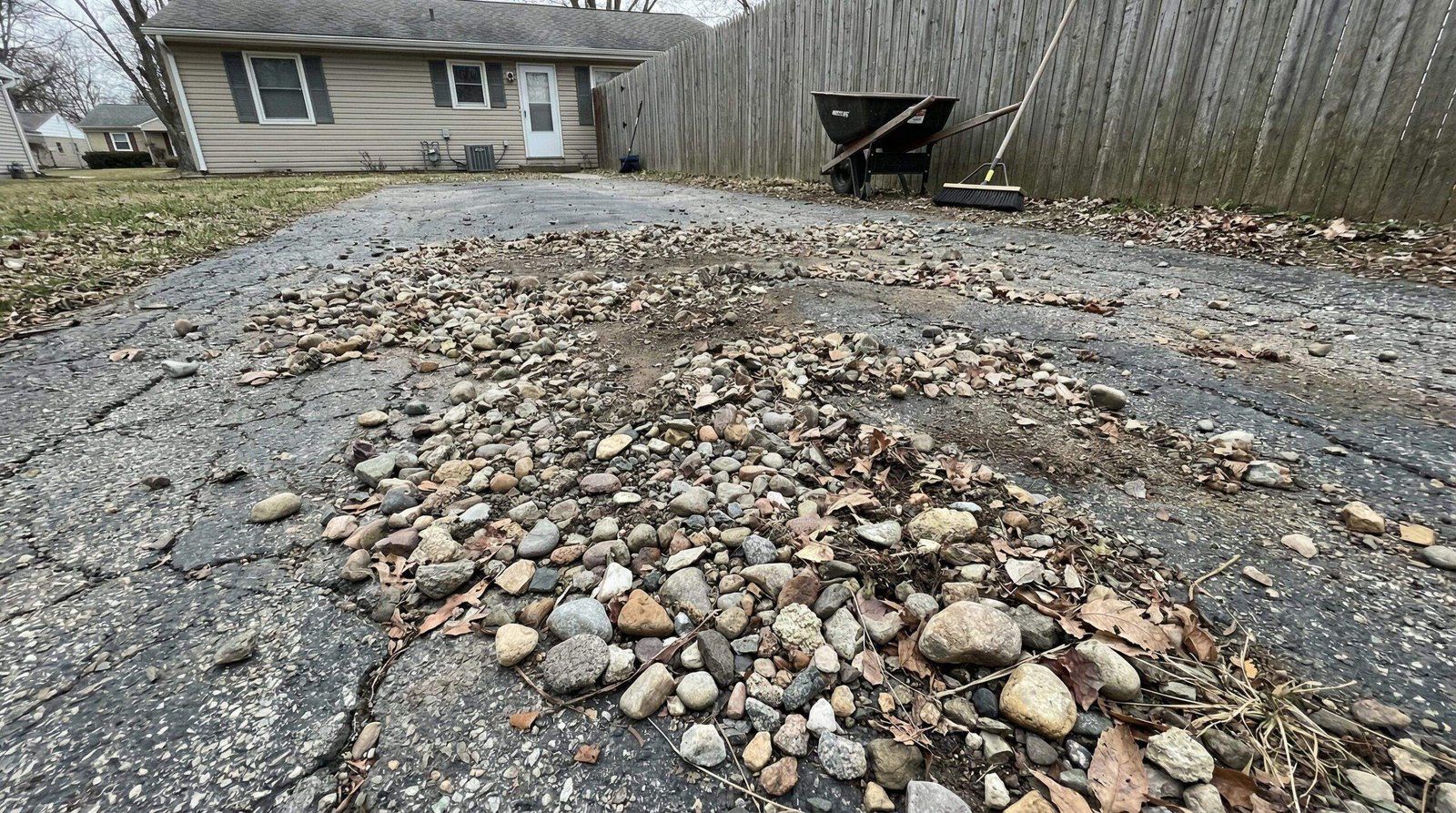
If the gravel has significant soil contamination (the stones are embedded in compacted dirt rather than sitting loose), a more intensive cleaning is needed. Shovel the most contaminated sections into a wheelbarrow. Spread the contaminated gravel on a wire mesh screen over the wheelbarrow, and use a hose to wash the stones while agitating them. The fine soil washes through the screen while the clean gravel remains. Return the cleaned gravel to the driveway area.
Apply Pre-Emergent Herbicide (Optional)
After cleaning, applying a pre-emergent herbicide prevents new weeds from germinating in the cleaned gravel. Follow product directions. Pre-emergent treatments are most effective in early spring before weed seeds germinate. Landscape fabric installed beneath the gravel is the most permanent weed prevention solution for new gravel installations.
Step-by-Step: Cleaning Decorative Landscaping Rocks and Garden Gravel
Remove Weeds and Pull Landscape Fabric (If Present)
Remove weeds by hand or with a weeding tool before cleaning. If there’s landscape fabric beneath the gravel, check its condition — torn or deteriorated fabric allows weeds through and may need replacement. Remove old fabric, clean the rocks separately, then replace with new fabric if needed.
Rake and Separate Debris
Use a landscape rake to turn the rocks and expose trapped leaves, soil, and debris buried beneath the surface layer. Rake debris to the sides for removal. This also re-fluffs compacted areas and restores the loose, clean appearance of the rock bed.
Hose or Pressure Wash to Restore Color
Rinse the decorative rocks with a garden hose or pressure washer. Wet rocks look dramatically better than dry ones — the water reveals their natural color and removes surface dust and dirt. For decorative white or light-colored gravel that’s turned yellow or orange from iron in the water, a more specific treatment is needed (see below).
Treat Algae and Biological Growth
Rocks in shaded, moist areas develop algae, moss, and lichens that make them look black or dark green. Apply a 1:1 dilution of white vinegar and water to the affected rocks. Let sit for 15–20 minutes. Scrub with a stiff brush and rinse thoroughly. Vinegar kills algae and moss effectively without harming the rocks. For larger areas, a commercial algae/moss killer formulated for use on rocks and hardscaping provides more consistent results.
How to Remove Stains from Landscaping Rocks
Iron/Rust Staining (Orange or Red Discoloration)
Orange staining on white or light rocks comes from iron in irrigation water or surrounding soil. Wet the rocks and apply oxalic acid solution (Iron Out or a similar product) per directions. Let sit for 10–20 minutes, then scrub and rinse. For large areas, mixing Iron Out into a sprayer allows broad application. The oxalic acid dissolves iron oxide deposits effectively.
Oil Stains (From Vehicles on Driveway Gravel)
Oil stains on driveway gravel are difficult to remove completely but can be significantly reduced. Apply a commercial degreaser (Simple Green or Zep) to the stained stones and let dwell for 10 minutes. Scrub and rinse with a pressure washer. For heavily stained areas, removing and replacing the most contaminated section of gravel is more practical than cleaning.
Mineral Deposits and White Crust
White mineral crust on decorative rocks from hard water irrigation is calcium carbonate scale. Diluted white vinegar (1:1 with water) or a commercial calcium/limescale remover dissolves these deposits. Apply, let sit 10–15 minutes, scrub with a stiff brush, and rinse thoroughly.
Washing Aquarium Gravel
Aquarium gravel requires a different approach than outdoor landscaping gravel. For new aquarium gravel, rinse in a bucket with repeated water changes until the water runs completely clear — new gravel releases significant dust and fine particles. For established aquarium gravel, use a gravel vacuum during water changes to siphon debris and waste from between the stones without removing the beneficial bacteria colony. Full removal and washing of established aquarium gravel disrupts the nitrogen cycle and requires cycling the tank again.
Pro Tips for Gravel and Rock Maintenance
- Add fresh gravel annually. Landscaping gravel compacts, migrates, and decomposes slightly over time. Adding a thin top-dressing layer annually maintains depth and restores appearance without full replacement.
- Install landscape fabric beneath all new gravel installations. Fabric dramatically reduces weed intrusion and soil contamination that are the biggest long-term maintenance challenges.
- Edge properly. Plastic or metal landscape edging prevents gravel from migrating onto adjacent grass or garden areas, keeping the border clean and reducing the amount of gravel mixing with soil.
- Clean rocks in fall after leaf season. The heaviest organic contamination happens in fall — cleaning after leaves have finished dropping removes the bulk of the season’s debris in one pass.
Frequently Asked Questions
How do I clean white landscaping rocks that have turned orange?
Orange discoloration is iron staining from irrigation water or soil. Apply Iron Out or a similar oxalic acid-based rust remover to the wet rocks. Let sit per product directions, scrub, and rinse thoroughly. The iron deposits dissolve and the natural white color is restored. Prevent recurrence by using a chelated iron filter on your irrigation system if the staining is from sprinkler water.
Can I pressure wash landscaping rocks?
Yes — a pressure washer on a moderate setting (1,000–1,500 PSI) with a 25–40 degree fan tip effectively cleans decorative rocks. Keep the nozzle at least 12 inches from the surface to avoid displacing smaller stones. High-pressure cleaning reveals the natural color of the rocks dramatically. It’s the fastest cleaning method for large rock beds.
How do I stop weeds from growing through landscaping gravel?
The most effective solution is landscape fabric installed beneath the gravel layer. For existing gravel beds, apply a pre-emergent herbicide in early spring to prevent weed seeds from germinating. Weed regularly by hand for any that do emerge, pulling before they set seed. A vinegar and dish soap spray kills existing weeds in rock beds without toxic chemical runoff.
How do I clean aquarium gravel without removing it?
Use a gravel vacuum (siphon tube) during regular water changes to clean between the stones while leaving them in place. Insert the tube into the gravel and the siphon action draws water and debris up through the tube and out. Work in sections covering about 1/3 of the gravel bed per water change to avoid disrupting the entire bacterial colony at once.
Why do my landscaping rocks turn green?
Green color on rocks is algae or moss growth, especially common in shaded, moist areas. Treat with diluted white vinegar or a commercial algae killer. Improve drainage and increase sunlight exposure if possible — algae grows fastest in consistently moist, shaded conditions. Applying a wetting agent or horticultural vinegar (20% concentration) provides longer-lasting control than standard 5% household vinegar.
Conclusion
Cleaning gravel and landscaping rocks primarily involves raking, pressure washing, and targeted chemical treatment for staining. Driveway gravel needs periodic deep cleaning to remove soil contamination through washing on a mesh screen. Decorative rocks need high-pressure rinsing to restore color and vinegar treatment for algae. The most effective long-term maintenance combination is landscape fabric beneath the gravel, proper edging to prevent migration, and annual debris removal and raking.
For related outdoor maintenance guides, check out our articles on how to clean concrete and how to clean bricks. For driveway surfaces, our guide on how to clean asphalt covers the hard surface alternative to gravel.
