
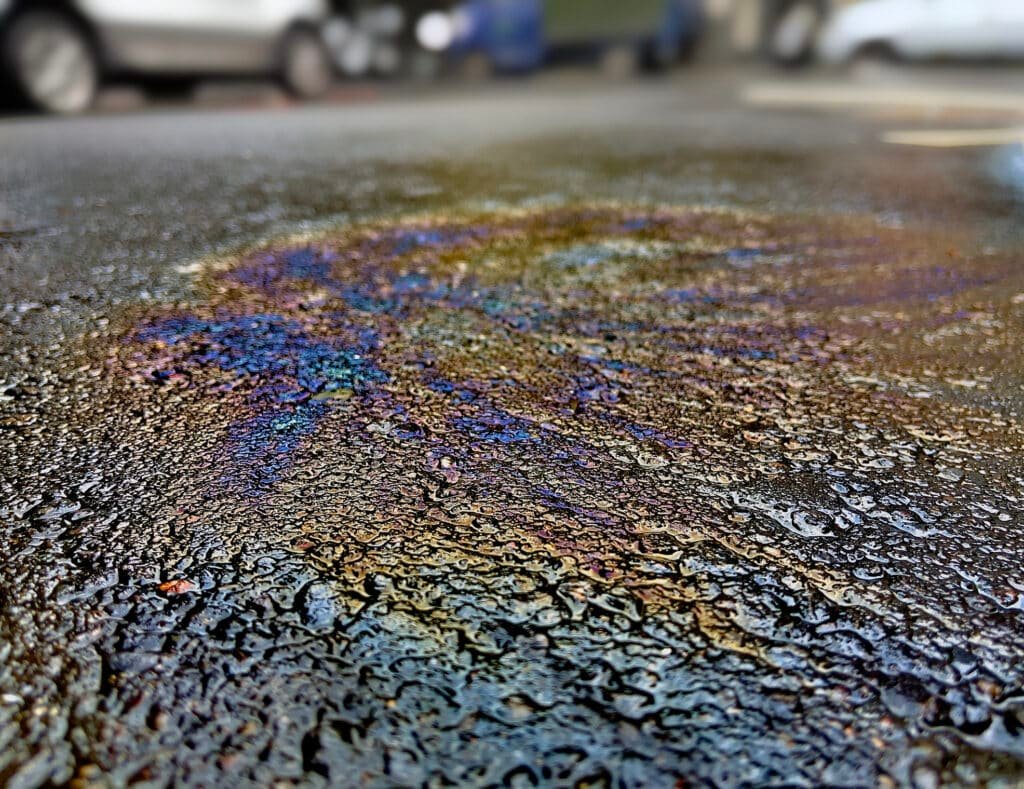
An asphalt driveway gets stained by motor oil, power steering fluid, rust, moss, and general traffic grime — and neglecting these stains shortens the asphalt’s lifespan. You can clean most asphalt stains with dish soap, a degreaser, or a pressure washer. Oil stains require a dedicated degreaser or absorbent material applied before washing. This guide covers how to clean all common asphalt problems, from fresh oil spills to long-set stains and biological growth.
What You’ll Need
- Pressure washer (1,500–3,000 PSI) or garden hose with spray nozzle
- Commercial degreaser or TSP (trisodium phosphate) cleaner
- Dish soap (Dawn or similar)
- Cat litter, sawdust, or dry sand (for fresh oil spills)
- Stiff-bristle push broom
- Wire brush (for cracks and edges)
- Spray bottle
- White vinegar (for moss and algae)
- Rubber gloves and safety goggles
Safety and Precautions
Wear rubber gloves and safety goggles when using degreasers, TSP, or pressure washers — cleaning chemicals and high-pressure water spray can irritate eyes and skin. Work with the pressure washer pointed away from your body and bystanders. Degreasers and asphalt cleaning products should not run into storm drains — contain runoff where possible or use eco-friendly formulas when drainage to storm systems is unavoidable. Be careful of slippery wet asphalt after cleaning — wet asphalt is significantly more slippery than dry.
Removing Fresh Oil and Fluid Spills
Absorb the Spill Immediately
Pour cat litter, sawdust, or dry sand generously over a fresh oil or fluid spill as soon as possible. The absorbing material pulls the oil up from the asphalt surface before it can penetrate deeply into the pores. Let it sit for at least 30 minutes — longer for large spills. Sweep up the saturated material and dispose of it properly (not in the regular recycling or compost).
Apply Dish Soap or Degreaser
Pour undiluted dish soap (Dawn works particularly well because of its degreasing agents) directly onto the remaining stain. Alternatively, spray a commercial degreaser per product directions. Let the soap or degreaser sit on the stain for 5 to 10 minutes to penetrate and break down the remaining petroleum compounds.
Scrub with a Stiff Brush
Scrub the stained area vigorously with a stiff-bristle push broom or wire brush. Work the soap into the pores of the asphalt. Add a small amount of water if needed to create a lather, and continue scrubbing for several minutes. The friction and the surfactant chemistry together lift the petroleum residue from the asphalt surface.
Rinse Thoroughly
Rinse the area with a garden hose using strong water pressure, or with a pressure washer. Flush the cleaning solution and loosened oil residue away from the driveway. Repeat the dish soap and scrub process a second time if a stain shadow remains.
Removing Old, Set-In Oil Stains
Old oil stains that have penetrated deep into the asphalt require a stronger approach than fresh spills.
Apply a Commercial Degreaser or TSP
Mix TSP (trisodium phosphate) at four tablespoons per gallon of water, or use a commercial asphalt degreaser like Simple Green Heavy Duty, Oil Eater, or a dedicated driveway cleaner. Apply to the stained area and let soak for 15 to 20 minutes.
Scrub Aggressively
Scrub with a stiff wire brush or push broom using significant pressure and effort. Old stains require mechanical scrubbing combined with the chemical action to lift petroleum that has bonded to the asphalt over time.
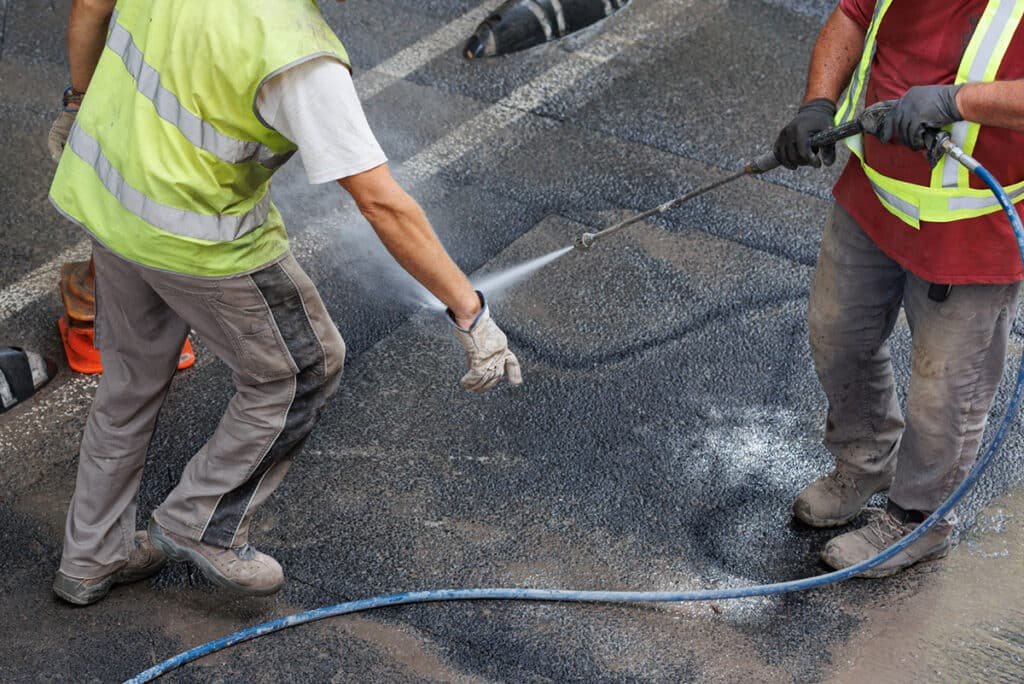
Pressure Wash at 2,000–3,000 PSI
For old stains, pressure washing at 2,000 to 3,000 PSI after the degreaser application delivers the most effective cleaning. Use a 15 or 25-degree nozzle held 8 to 12 inches from the surface. The high pressure combines with the loosened stain material to flush it from the asphalt pores. Multiple treatment sessions may be needed for deeply embedded old stains.
Accept Residual Staining
Very old oil stains may leave a permanent shadow or discoloration even after thorough cleaning — the petroleum has permanently altered the asphalt’s composition in that area. Applying a coal tar sealer over the entire driveway after cleaning is the best way to visually unify the surface and hide residual staining.
Removing Moss, Algae, and Biological Growth
Apply White Vinegar or Bleach Solution
For moss, algae, and green biological staining: spray undiluted white vinegar directly onto the affected areas. For heavier growth, mix one cup of household bleach per gallon of water and apply with a sprayer. Let either solution dwell for 15 to 20 minutes. The acid in vinegar or the chlorine in bleach kills the biological growth.
Scrub and Rinse
Scrub the area with a stiff push broom to break up the dead biological material. Rinse thoroughly with a garden hose or pressure washer. Most moss and algae lifts away easily after the kill treatment.
Address the Root Cause
Moss and algae grow on asphalt that stays moist — from shade trees, poor drainage, or low spots that hold water. Trimming overhanging vegetation and improving drainage (filling low spots, adjusting grading) prevents recurring biological growth more effectively than repeated cleaning.
General Asphalt Driveway Cleaning
Sweep and Clear the Surface
Before pressure washing or applying any cleaner, sweep the driveway thoroughly to remove loose sand, gravel, leaves, and debris. This prevents debris from clogging pressure washer nozzles and spreading grime instead of removing it.
Apply Driveway Cleaner or Dish Soap
For general surface grime and tire marks, wet the driveway and apply a driveway cleaner or dish soap solution. Let dwell for five minutes.
Pressure Wash at 1,500–2,500 PSI
Using a 25-degree nozzle, work in overlapping passes from the top of the driveway toward the street. Maintain consistent distance (8–12 inches) and speed to clean evenly without concentrated damage in any one area. Work with the slope so water drains away as you clean.
Sealing After Cleaning
Once the driveway is clean and fully dry — typically 48 hours after washing — applying an asphalt sealer is the single best thing you can do to protect it. Sealcoating fills oxidized surface pores, blocks water infiltration that causes cracking, provides UV protection, and gives the driveway a fresh, uniform black appearance that hides staining. Most residential driveways benefit from sealing every two to three years. Clean and repair any cracks before sealing.
How Often to Clean an Asphalt Driveway
- Immediately: Fresh oil, fluid, or chemical spills
- Spring: Full pressure wash after winter to remove road salt, sand, and debris
- Fall: Clean before applying sealer if needed
- As needed: Moss and algae treatment when growth is first noticed — don’t wait
Pro Tips
- Treat spills immediately: The longer any fluid sits on asphalt, the deeper it penetrates. A fresh spill takes five minutes to absorb and clean; a week-old spill can take an hour and still leave a shadow.
- Seal cracks before cleaning season: Water that enters cracks and freezes in winter causes significant asphalt heaving and cracking. Fill cracks with asphalt crack filler before the first frost each year.
- Don’t seal over oil stains: Sealcoating over an uncleaned oil stain seals in the contamination and prevents the sealer from bonding properly. Always clean first, verify the stain is removed or minimized, then seal.
- Keep degreaser off adjacent lawn: Most degreasers and TSP cleaners are harmful to grass and plants. Direct runoff away from lawn areas or use eco-friendly formulas in areas where runoff contacts vegetation.
Frequently Asked Questions
What is the best cleaner for asphalt driveways?
For general cleaning: a commercial driveway cleaner or dish soap with pressure washing. For oil stains: a commercial degreaser (Simple Green Heavy Duty, Oil Eater, or Zout) or TSP solution. For moss and algae: diluted bleach or undiluted white vinegar. The right cleaner depends on the specific problem — there’s no single best product for all asphalt cleaning needs.
Will a pressure washer damage my asphalt driveway?
No, if used correctly. Use 1,500–3,000 PSI with a 15 or 25-degree nozzle, keep 8–12 inches from the surface, and maintain consistent movement. Problems occur when using a zero-degree nozzle or staying in one spot — this creates divots and surface damage. Asphalt handles pressure washing well because it’s dense and porous rather than brittle like concrete.
How do I remove rust stains from asphalt?
Rust stains on asphalt come from metal furniture, planters, or vehicles. Apply a commercial rust remover formulated for outdoor surfaces, let dwell per product directions, then scrub and rinse. Oxalic acid-based products work particularly well on rust. Move the rust-causing source and add rubber feet to prevent recurrence.
Why does my asphalt turn gray over time?
Asphalt oxidizes when exposed to UV light and air, causing the black color to fade to gray. This is a normal aging process that doesn’t indicate structural damage but does mean the surface is becoming more porous and less resistant to staining. Regular sealcoating every two to three years prevents and reverses oxidation-related graying.
How long should I wait to seal after cleaning my asphalt driveway?
Wait at least 48 hours after cleaning — longer if the weather has been humid or cool. The asphalt must be completely dry for sealer to bond properly. Sealer applied to a damp surface will peel, bubble, or fail to adhere within the first season.
Conclusion
Clean asphalt isn’t just about appearance — it’s about extending the life of a significant home investment. Oil stains that are allowed to soak in degrade the asphalt binder, moss and water infiltration cause cracking, and years of surface oxidation without sealing make a driveway look old before its time. The routine is simple: address spills immediately, do a full pressure wash annually in spring, treat biological growth when it first appears, and seal every two to three years. For other concrete and paved surface maintenance, check out our guide on how to clean a pond — if your property includes a water feature near your driveway, that guide covers the water and algae management adjacent outdoor spaces need.
