Artificial grass needs regular maintenance to stay clean, odor-free, and looking natural — it doesn’t clean itself the way real grass does through soil biology and decomposition. The routine is simple: rinse weekly, remove debris regularly, treat pet waste immediately, and deep clean with diluted cleaner every few months. This guide covers all of it — from the basics to odor removal and stain treatment for both residential lawns and pet areas.
What You’ll Need
- Garden hose with spray nozzle
- Stiff-bristle push broom or artificial turf power brush
- Leaf blower or rake (plastic tines — not metal)
- White vinegar or enzyme-based pet odor cleaner
- Mild dish soap
- Turf deodorizer or infill deodorizer granules (for pet areas)
- Rubber gloves (for pet waste cleanup)
- Plastic scoop or bag for solid waste
Safety and Precautions
Do not use bleach on artificial grass — it discolors the fibers and can damage the backing material. Avoid using harsh chemical solvents. Never use metal rakes or wire brushes on artificial turf — they tear the synthetic fibers and pull them from the backing. Artificial grass can get very hot in direct sun — surface temperatures can exceed 150°F on hot days. Do not clean when the surface is excessively hot; either rinse with cool water first to bring the temperature down, or clean early in the morning before peak heat.
Routine Maintenance: Weekly Care
Remove Debris with a Leaf Blower or Plastic Rake
Blow leaves, twigs, and debris off the artificial grass using a leaf blower set to low speed. Alternatively, use a plastic-tine rake held at a slight angle to collect debris without pulling at the fibers. Remove debris before it decomposes into the infill, which is where odors develop. Pay attention to edges and corners where debris accumulates.
Rinse with a Garden Hose
Rinse the entire artificial grass surface weekly with a garden hose using a moderate spray. This washes dust, pollen, bird droppings, and loose particles into the drainage system. Most artificial turf has permeable backing that drains water quickly. Rinsing also helps cool the surface in hot weather and keeps the fibers upright and clean-looking.
Brush the Fibers Upright
After rinsing and allowing to dry, use a stiff-bristle push broom or power brush to sweep the turf fibers upright against the natural grain (typically sweep from the seam lines outward). High-traffic areas flatten the fibers over time — regular brushing maintains that natural, upright appearance. Brush against the lay of the fibers, not with it.
Cleaning Up Pet Waste
Remove Solid Waste Immediately
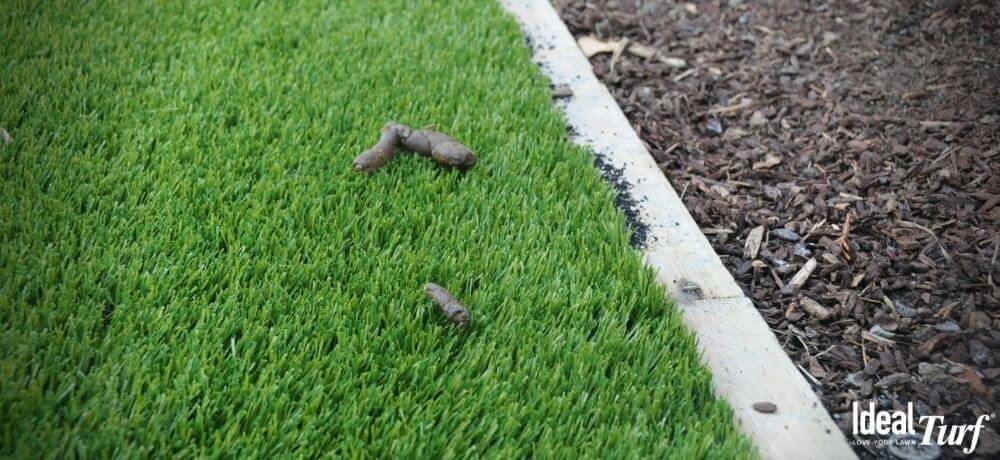
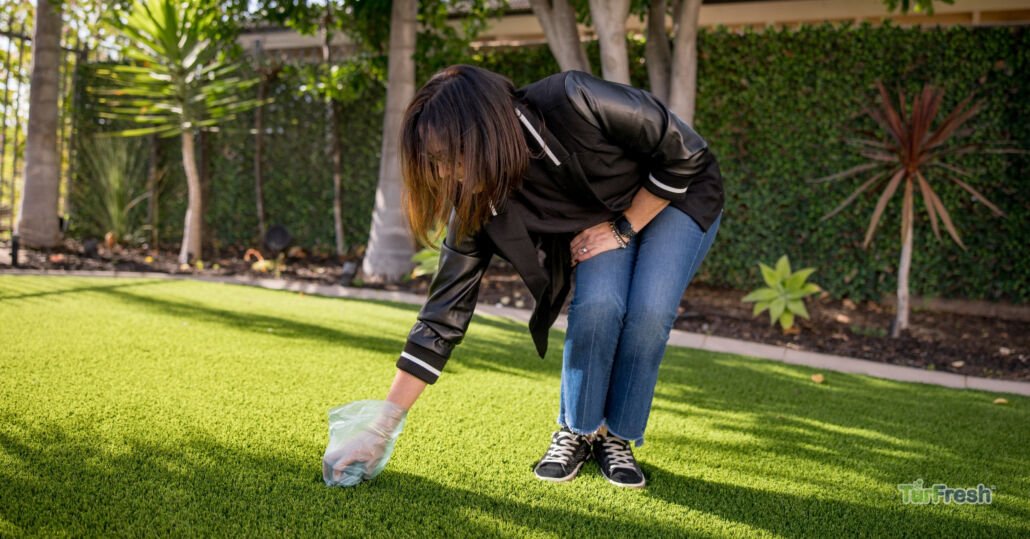
Pick up solid pet waste as soon as possible using a plastic scoop or bag. The longer solid waste sits on artificial turf, the deeper it works into the infill where it’s harder to remove and where odor-causing bacteria thrive. Dispose of waste in a sealed bag.
Rinse the Area Thoroughly
After removing solid waste, rinse the affected area with water. For urine, rinse the area immediately after the pet urinates — this dilutes and flushes the urine through the drainage holes in the backing before bacteria have time to process it into ammonia compounds (the source of the smell).
Apply an Enzyme Cleaner for Odors
For pet urine odors that have developed despite rinsing, apply an enzyme-based pet odor cleaner (like Nature’s Miracle, Simple Solution, or Biokleen Bac-Out) directly to the affected area. Follow product directions for contact time — typically five to ten minutes. Rinse with water after the contact time. Enzyme cleaners break down urine compounds at a molecular level; no other type of cleaner eliminates the actual odor source as effectively.
Apply Turf Deodorizer for Ongoing Pet Use Areas
For areas with daily pet use, broadcast a specialized artificial turf infill deodorizer (zeolite-based granules or antibacterial infill) over the pet area. These products are worked into the infill layer and continue neutralizing odors between cleanings. Reapply every four to six weeks.
Deep Cleaning (Quarterly or Biannually)
Mix a Mild Cleaning Solution
Mix a mild soap solution: a few drops of dish soap per gallon of water. Some turf manufacturers also recommend a diluted solution of white vinegar (equal parts water and vinegar) as a deodorizing rinse.
Apply and Scrub with a Stiff Brush
Apply the cleaning solution to the turf surface and use a stiff push broom to scrub in both directions across the fibers. This works the cleaner into the infill layer where debris and bacteria accumulate. Focus extra scrubbing effort on pet areas and high-traffic paths.
Rinse Thoroughly
Rinse the entire surface with a garden hose until the water runs clear. Residual soap in the infill reduces drainage over time — rinse more than you think is necessary.
Brush Fibers Upright After Drying
Once the surface has drained and is no longer soaking wet, brush the fibers upright with a stiff broom. This step completes the deep clean by restoring the natural appearance of the turf.
Removing Specific Stains from Artificial Grass
| Stain Type | Treatment |
|---|---|
| Pet urine | Rinse immediately, then enzyme cleaner |
| Food or drink spills | Rinse, then mild soap solution; rinse again |
| Grease or oil | Blot with cloth, then mild dish soap solution |
| Chewing gum | Apply dry ice or frozen gel pack to harden, then scrape off with a plastic spatula |
| Paint | Act immediately while wet — rinse with water; dried paint may require solvent spot treatment |
| Mold or algae | Diluted white vinegar solution; scrub and rinse thoroughly |
How Often to Clean Artificial Grass
- Weekly: Remove debris and rinse with garden hose
- Immediately: Remove pet waste and rinse
- Monthly: Apply enzyme cleaner and brush fibers in pet areas
- Quarterly: Full deep clean with mild soap solution and thorough rinse
- Annually: Top up infill material if it has compacted significantly
Pro Tips
- Don’t use pressure washers on artificial turf: High-pressure washing displaces infill material, disrupts fiber backing, and can force debris deeper into the infill layer. A garden hose with moderate pressure is all that’s needed.
- Direct sunlight is your friend: UV light naturally reduces bacteria on artificial turf. Avoid creating shaded spots over turf where mold and bacteria thrive.
- Keep BBQ and fire pits off artificial turf: High heat can melt or singe synthetic fibers permanently. Create clearance between any heat source and artificial grass.
- Replace infill as needed: Over time, silica sand or rubber crumb infill compacts and reduces drainage. Adding fresh infill annually in high-use areas maintains drainage and fiber support.
Frequently Asked Questions
How do I get rid of the pet urine smell from artificial grass?
The most effective solution is an enzyme-based cleaner — these break down uric acid compounds that cause persistent odor, which vinegar and soap cannot fully address. Apply directly to the affected area, allow the contact time specified on the product, and rinse. For heavy pet use areas, zeolite infill deodorizer added to the infill layer provides ongoing odor control between cleanings.
Does rain clean artificial grass?
Rain rinses surface debris and dilutes recent contamination, but it does not clean artificial grass in any meaningful sense — it doesn’t address infill contamination, pet waste residue, or odors that have developed in the infill layer. Regular maintenance is still required regardless of rainfall.
Can I use a pressure washer on artificial grass?
Avoid it. Pressure washing displaces infill, disrupts fiber orientation, and can damage the backing. A garden hose with moderate pressure from a spray nozzle provides sufficient cleaning power for artificial turf without the risks.
Why does my artificial grass smell bad even after cleaning?
Persistent odor almost always comes from the infill layer — bacteria have colonized the material below the visible fibers. Surface rinsing doesn’t reach it. Use an enzyme cleaner that penetrates into the infill, and consider replacing infill in severely odorous areas if the problem persists despite multiple treatments.
How long does artificial grass last with proper maintenance?
High-quality artificial grass maintained properly typically lasts 15 to 25 years. The primary factors that shorten lifespan are UV degradation (reduced by UV-stabilized fibers in quality products), heat damage from fire sources, infill compaction, and fiber breakdown from abrasive cleaning methods. Regular gentle maintenance and proper installation with good drainage extend lifespan significantly.
Conclusion
Artificial grass is low-maintenance compared to real grass, but it does require consistent care — especially in pet areas where odor can become a serious problem without regular enzyme treatment. The weekly rinse and debris removal routine prevents most issues from developing. Deep cleaning quarterly keeps the infill layer clean and the drainage performing well. For other outdoor surfaces that require similar regular care, check out our guide on how to clean a wood fence — another outdoor structure that benefits from scheduled cleaning and protective treatment.
