
Artificial flowers collect dust fast — especially in high-traffic rooms or near HVAC vents. Most fabric, silk, and plastic artificial flowers can be cleaned with a combination of compressed air, a gentle shake in a bag of salt, or a light hand-wash with mild soap. The method depends on the material and how soiled the flowers are. This guide covers quick dusting, deep cleaning, and restoring artificial flowers that have faded or look tired.
What You’ll Need
- Compressed air can (or hair dryer on cool setting)
- Table salt or baking soda
- Large paper bag or zip-lock bag
- Mild dish soap
- Warm water
- Soft cloth or microfiber towel
- Soft-bristle brush or small paintbrush
- Hair dryer (cool setting for reshaping)
Safety and Precautions
Before cleaning any artificial flower arrangement, check the construction: flowers with hot glue, loose embellishments, foam bases, or paper components should not be wet cleaned — they’ll dissolve or detach. Check for a care tag if present. For delicate silk flowers with hand-painted details, avoid any wet method — dry cleaning only. Test any wet cleaning method on a single, inconspicuous petal before treating the whole arrangement.
Method 1: Quick Dusting (Weekly Maintenance)
Use Compressed Air
Hold the compressed air can upright and use short bursts to blow dust off the petals, leaves, and stems. Work from the top of the arrangement down so displaced dust falls away from already-cleaned areas. Hold the flowers steady with one hand while blowing with the other. This is the fastest method for routine weekly dusting and works on all artificial flower types.
Hair Dryer on Cool Setting
If you don’t have compressed air, a hair dryer set to cool (no heat) works well for dust removal. Keep it 12–18 inches away from the flowers to avoid reshaping petals from the airflow force. This also works well for larger arrangements that are difficult to take down.
Soft Brush for Delicate Flowers
For flowers with intricate details, a small soft paintbrush or an unused makeup brush gently sweeps dust from between petals and from crevices that compressed air can’t fully reach. This is the safest method for hand-painted or embellished artificial flowers.
Method 2: Salt Bag Shake (Light to Moderate Dust)
This classic method uses salt as a light abrasive that shakes dust free from fabric petals without water or chemicals.
Place Flowers in a Paper Bag with Salt
Pour approximately one cup of table salt or coarse kosher salt into a large paper bag. Place the artificial flowers — stems and all, or just the flower heads if they detach — into the bag. Close the bag securely.
Shake for 20–30 Seconds
Hold the bag closed and shake vigorously for 20 to 30 seconds. The salt acts as a gentle abrasive, dislodging dust and light grime from the fabric petals without damaging them.
Remove and Tap Clean
Remove the flowers from the bag and gently tap the stems against your palm to shake off the salt. A light shake outside or over a trash bag removes residual salt particles. For any remaining salt in tight petal areas, use compressed air or a soft brush to clear it out.
Method 3: Hand Washing (Heavy Dust and Grime)
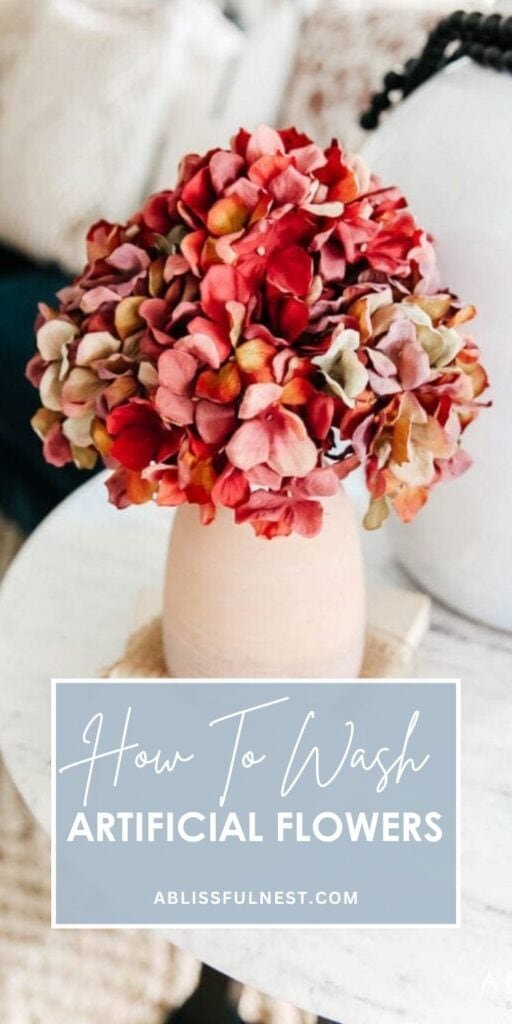
For plastic or polyester artificial flowers with significant buildup — kitchen flowers near cooking areas that have absorbed grease, or flowers that have gone years without cleaning — a gentle hand wash is the most effective approach.
Check That the Flowers Are Washable
Plastic, polyester, and most synthetic fabric flowers are washable. Silk, foam, paper, and flowers with hot-glue construction are not. If you’re unsure, test a single petal by dipping it in plain water and checking for color bleeding or structural damage before committing to washing the whole piece.
Mix a Gentle Soap Solution
Mix a few drops of mild dish soap in a basin of cool water. Avoid hot water — it can reshape plastic petals and cause fabric colors to run. The solution should be barely soapy, not foamy.
Dip and Swirl the Flowers
Hold the artificial flower stems and dip the flower heads into the soapy water. Swirl gently, then lift and repeat. For very dirty flowers, hold the stem and use a soft cloth to gently wipe each petal individually while the flower is submerged.
Rinse in Clean Water
Dip the flowers into a clean basin of plain cool water and swirl to rinse. Repeat once with fresh water to ensure all soap is removed. Soap residue left on artificial flowers leaves a sticky film that attracts even more dust after drying.
Shake Off and Air Dry
Shake the flowers gently to remove excess water from the petals. Stand the flowers upright in a vase or lay them on a clean towel in a well-ventilated area. Allow to air dry completely — this typically takes one to four hours depending on the flower density. Do not use heat to dry — it can melt, warp, or discolor plastic petals.
Method 4: Damp Wipe for Individual Flowers or Plastic Stems
For large, single-stem artificial flowers or arrangements where you can’t remove the flowers from a display, dampen a soft microfiber cloth with plain water (or a very diluted mild soap solution for greasy surfaces) and gently wipe each petal individually. Follow with a dry cloth wipe to remove moisture. This method is best for plastic flowers and gives you precise control over which areas you wet.
Reshaping Artificial Flowers After Cleaning
Fabric petals sometimes flatten or get slightly misshapen during washing or from long-term storage. Use a hair dryer on the lowest warm setting held 12–15 inches away to gently warm the petals while reshaping them with your fingers. The gentle heat makes fabric and polyester petals more pliable, allowing you to coax them back into a natural shape. Work on one petal at a time and hold the shape as the material cools.
How Often to Clean Artificial Flowers
- Dust weekly or biweekly: Using compressed air or a soft brush
- Salt bag treatment: Monthly in dusty environments
- Hand wash: Once or twice a year for most arrangements, or when visibly grimy
- Immediately: After any kitchen splatter or exposure to smoke, candles, or strong odors
Pro Tips
- Store in bags when not displaying: Artificial flowers stored in sealed bags or boxes don’t accumulate dust between display seasons.
- Avoid direct sunlight: UV light fades the dyes in fabric artificial flowers significantly faster than indirect light. Position arrangements away from direct sun exposure to extend their color life.
- No heat on plastic: Never use hot water, a hot hair dryer setting, or direct sunlight to dry plastic flowers — heat permanently deforms them.
Frequently Asked Questions
Can I put artificial flowers in the washing machine?
Only very durable plastic or polyester flowers with no glued parts — and even then, use a mesh laundry bag on the gentlest cycle with cold water and minimal detergent. Most artificial flower arrangements are too delicate for a washing machine. The salt bag method and hand washing are safer and just as effective.
How do I get the musty smell out of artificial flowers?
Sprinkle baking soda over the arrangement and let it sit for several hours. Shake or blow off the powder with compressed air. For persistent odors, lightly mist the flowers with a diluted white vinegar solution (1 part vinegar to 4 parts water), allow to air dry completely, and the vinegar odor will dissipate taking the musty smell with it.
How do I clean artificial flowers that can’t get wet?
Use compressed air or a soft brush only. For stubborn surface dust on delicate pieces, press a piece of tape (like masking tape) gently against the dusty surface and peel off — it lifts surface dust without moisture or movement that could dislodge delicate parts.
Will cleaning remove color from silk artificial flowers?
Silk artificial flowers are at risk of color bleeding when wet. Test a single petal in water first — if color bleeds into the water, don’t wet clean. Use only compressed air and soft brush cleaning for color-sensitive silk flowers.
How do I prevent artificial flowers from getting dusty so fast?
Apply a light coat of anti-static spray (like Static Guard) to the cleaned arrangement. Anti-static spray creates a surface charge that repels dust particles, significantly extending the time between cleaning sessions.
Conclusion
Clean artificial flowers look fresh and realistic — dusty ones look obviously fake. The good news is that maintenance takes only minutes with compressed air or the salt bag method. Reserve hand washing for significant buildup or kitchen arrangements that accumulate grease. The main rule to remember: no heat for plastic, no water for delicate silk or paper flowers, and always test before committing to a wet cleaning method on a full arrangement. For keeping other decorative home elements looking their best, see our guide on how to clean a marble top table — another decorative piece that benefits from careful material-specific cleaning.
