
A wood fence develops gray weathering, green algae, black mold, and mildew over time — and cleaning it every one to two years prevents rot and dramatically extends the fence’s life. You can clean a wood fence with a garden hose and wood cleaner solution, or with a pressure washer on a low setting. This guide covers both methods and the right approach for different levels of buildup.
What You’ll Need
- Garden hose with spray nozzle (or pressure washer on low setting)
- Wood fence cleaner or deck cleaner (oxygenated bleach-based)
- Household bleach (for mold/mildew — diluted)
- Stiff-bristle scrub brush
- Pump garden sprayer or large bucket
- Safety goggles and rubber gloves
- Drop cloths or plastic sheeting (for plants near fence)
- Wood brightener (optional — for post-cleaning restoration)
- Sealer or stain (for follow-up protection)
Safety and Precautions
Wear safety goggles and rubber gloves when mixing and applying cleaning solutions — fence cleaner and bleach solutions can irritate eyes and skin. Cover or wet down any plants, shrubs, or grass near the fence before applying cleaning solution — oxygenated cleaners are generally plant-safe but chlorine bleach solutions are not. After cleaning, rinse plants near the fence with clean water. If using a pressure washer, never exceed 1,500 PSI on wood — higher pressure splinters the wood surface and causes more damage than it fixes.
Method 1: Garden Hose and Cleaning Solution (Recommended)
Wet Down the Fence
Before applying any cleaner, thoroughly wet the fence with your garden hose. A pre-wet prevents the cleaning solution from absorbing too quickly into dry wood, which reduces its effectiveness. Work section by section — wet 10 to 15 linear feet at a time to keep the process manageable.
Apply Wood or Deck Cleaner
Mix your oxygenated deck cleaner per the manufacturer’s directions — typically two to four ounces per gallon of water. Use a garden pump sprayer or a large sponge to apply the solution to the fence, working top to bottom. Let the solution sit for 10 to 15 minutes. You should see visible foaming or color change as the cleaner reacts with algae, mold, and weathered wood fibers.
Scrub with a Stiff Brush
Use a stiff-bristle scrub brush to work the cleaning solution into the wood grain, especially in heavily discolored or mold-affected areas. Scrub with the grain of the wood to avoid raising the grain or creating cross-grain scratches that trap future debris. Apply moderate pressure — the chemistry does most of the work; aggressive scrubbing isn’t necessary.
Rinse Thoroughly from Top to Bottom
Rinse with a garden hose using a firm spray nozzle. Work from the top rail down to the bottom boards so you’re always rinsing dirt and cleaner residue downward. Rinse until no cleaning solution remains on the wood. Leftover cleaner residue can inhibit stain or sealer adhesion if you plan to apply a finish afterward.
Address Mold and Mildew Spots with Diluted Bleach
For black mold spots or persistent green mildew that the deck cleaner didn’t fully remove, mix one cup of household bleach per gallon of water. Apply to the affected areas only with a brush or sprayer, let sit for five minutes, then rinse thoroughly. Bleach kills mold and mildew effectively but should be used as a targeted spot treatment rather than an all-over application to protect nearby plants and soil.
Method 2: Pressure Washing
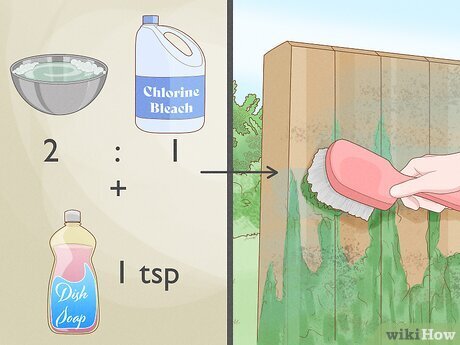
Pressure washing is faster for large fences but carries more risk of wood damage if done incorrectly.
Use the Correct Settings
Set the pressure washer to 1,200–1,500 PSI maximum. Use a 25-degree (green) or 40-degree (white) nozzle tip — never use a 0-degree (red) or 15-degree (yellow) tip on wood. These concentrated nozzles will split and splinter wood fibers irreparably. Keep the wand 12–18 inches from the fence surface.
Move Consistently Along the Grain
Move the pressure washer wand in smooth, even strokes parallel to the wood grain. Never stop the wand while the trigger is pressed — stationary pressure creates gouges and raised grain. Overlap each pass slightly to avoid lines.
Apply Fence Cleaner Before Pressure Washing
For best results with a pressure washer, apply wood cleaner with a garden sprayer, let it dwell for 10–15 minutes, then pressure wash it off. Using the pressure washer alone without cleaner removes loose dirt but doesn’t treat embedded algae or gray weathering.
After Cleaning: Brightening and Protecting the Wood
Apply a Wood Brightener (Optional)
If your fence has significant gray weathering that the cleaning didn’t fully address, apply a wood brightener (oxalic acid-based) after cleaning and before the wood fully dries. Brighteners neutralize tannin stains, restore natural wood color, and prepare the surface to better accept stain or sealer. Apply per manufacturer’s directions, let dwell five minutes, then rinse.
Let the Fence Dry Completely
A freshly cleaned fence needs to dry thoroughly before stain or sealer application — usually 48–72 hours of dry weather. Applying stain or sealer to damp wood traps moisture and causes peeling and adhesion failure. The wood should not feel damp when you press a dry cloth against it.
Apply Stain or Sealer
A stain or water-repellent sealer applied after cleaning dramatically extends the time between future cleanings and protects against UV graying, moisture absorption, and biological growth. Semi-transparent stains provide UV protection while showing the natural wood grain. Clear sealers preserve the natural look but need reapplication more frequently — typically annually.
How Often to Clean a Wood Fence
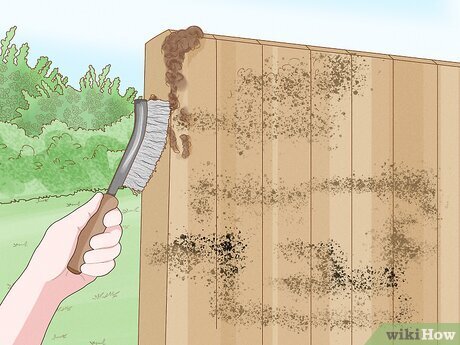
Clean a wood fence every one to two years in most climates. In humid, shaded environments where mold and algae grow more aggressively, clean annually. In dry climates with full sun exposure, every two years is typically sufficient. Inspect the fence each spring — if you see green algae starting on the boards or significant gray weathering, it’s time to clean and reapply protectant before the damage progresses into the wood fibers.
Pro Tips
- Clean before repainting or staining: Never stain or paint a dirty fence — cleaning is always the first step before any finish application for proper adhesion.
- Check posts at ground level: Fence posts are most vulnerable to rot at the ground line. During cleaning, inspect posts carefully for soft spots or rot — these need repair or replacement regardless of how clean the rest of the fence looks.
- Work on a cloudy day: Direct sunlight causes cleaning solution to dry on the wood before it can work effectively. Overcast conditions give the chemistry time to penetrate and do its job.
- Pre-wet plants: Saturating nearby grass and plants with water before applying cleaner reduces the uptake of cleaning solution and protects them from chemical stress.
Frequently Asked Questions
What’s the best cleaner for a wood fence?
Oxygenated (oxygen bleach) deck and fence cleaners are the most recommended for general cleaning — they’re effective on algae, mold, and weathering and are safer for surrounding plants than chlorine bleach. Products like Defy Wood Cleaner or Oxiclean-based deck cleaners are widely available and work well. For targeted mold treatment, diluted household bleach is effective and economical.
Can I use chlorine bleach on my wood fence?
Diluted chlorine bleach (one cup per gallon of water) is effective for killing mold and mildew on wood fences. Use it as a spot treatment on problem areas. Avoid using chlorine bleach as an all-over treatment — it can lighten wood unevenly and harms nearby plants and soil if not carefully managed.
Will pressure washing damage my wood fence?
Only if done incorrectly. At 1,200–1,500 PSI with a 25 or 40-degree nozzle, pressure washing is safe for wood fences. Problems occur when people use too-close nozzles, too-high pressure, or hold the wand stationary — all of which splinter and damage wood fibers.
How do I know if my fence needs cleaning vs. replacing?
Surface gray weathering, algae, and mold are cleaning problems. Soft, spongy wood, cracking deep into the grain, significant rot at post bases, or boards that flex and creak are structural problems that require board-by-board assessment and likely partial or full replacement.
Should I stain or seal my fence after cleaning?
Yes — always. A stain or sealer applied to a clean, dry fence is the most effective way to protect wood from UV damage, moisture, and biological growth. Without a protective coating, cleaned wood will re-gray and re-develop algae significantly faster than treated wood.
Conclusion
Cleaning a wood fence is a straightforward two-to-three hour project that pays back years of extended fence life. The combination of oxygenated cleaner, a scrub brush, and a thorough rinse handles the majority of fence conditions — pressure washing is faster but requires more care to use correctly on wood. Following the clean with a stain or sealer turns a one-time cleaning into multi-year protection. For outdoor structure maintenance, also see our guide on how to clean a metal roof — similar algae and weathering challenges apply to metal roofing with different solutions.
