
Bluestone is a dense natural stone used for patios, pool decks, steps, and walkways — and it needs specific care because it’s sensitive to acids. Clean bluestone with a pH-neutral stone cleaner, a stiff brush, and water. Avoid vinegar, bleach, and muriatic acid — all of which etch or discolor the surface. This guide covers routine cleaning, stain removal, efflorescence treatment, and sealing to keep bluestone looking sharp year after year.
What You’ll Need
- pH-neutral stone cleaner (specifically labeled safe for natural stone)
- Garden hose with spray nozzle or pressure washer (max 1,500 PSI)
- Stiff-bristle scrub brush or push broom
- Efflorescence remover (for white mineral deposits)
- Oxygen bleach (for moss and algae — not chlorine bleach)
- Clean water
- Rubber gloves and safety goggles
- Stone sealer (penetrating sealer designed for bluestone)
- Paint roller or brush (for sealer application)
Safety and Precautions
Never use acids on bluestone — no vinegar, lemon juice, muriatic acid, CLR, or acidic deck cleaners. Bluestone contains calcium carbonate and will etch permanently on contact with acid, creating dull pitting that cannot be reversed without professional resurfacing. Similarly, avoid chlorine bleach — it can discolor and degrade stone over time. Do not use a pressure washer above 1,500 PSI — higher pressure forces water into the stone’s pores and can cause spalling. Always test any new cleaner on an inconspicuous corner before treating the full surface.
Routine Cleaning
Sweep or Blow Off Debris First
Remove leaves, dirt, and loose debris with a push broom or leaf blower before any wet cleaning. This prevents organic matter from being ground into the stone surface during scrubbing and keeps your rinse water cleaner.
Pre-Rinse with Water
Wet the entire bluestone surface with a garden hose. Pre-rinsing removes loose surface grime and helps prevent cleaning solution from absorbing too quickly into dry stone before it has time to work.
Apply pH-Neutral Stone Cleaner
Dilute your pH-neutral stone cleaner per the product label directions. Apply to the wet surface using a pump sprayer or bucket. Let the solution sit for five to ten minutes — don’t let it dry on the stone.
Scrub with a Stiff Brush
Use a stiff-bristle scrub brush or push broom to scrub the surface in sections. Work in circular motions or back-and-forth passes to reach into the texture of the stone. Focus additional effort on stained areas, grout lines, and areas near planters or drains where organic debris accumulates.
Rinse Thoroughly from High to Low
Rinse the entire surface with a garden hose, working from the highest point toward drains or the edge of the patio. Rinse until no cleaner residue remains and the water running off is completely clear. Soap residue left on bluestone creates a film that attracts future dirt faster.
Removing Efflorescence (White Powdery Deposits)
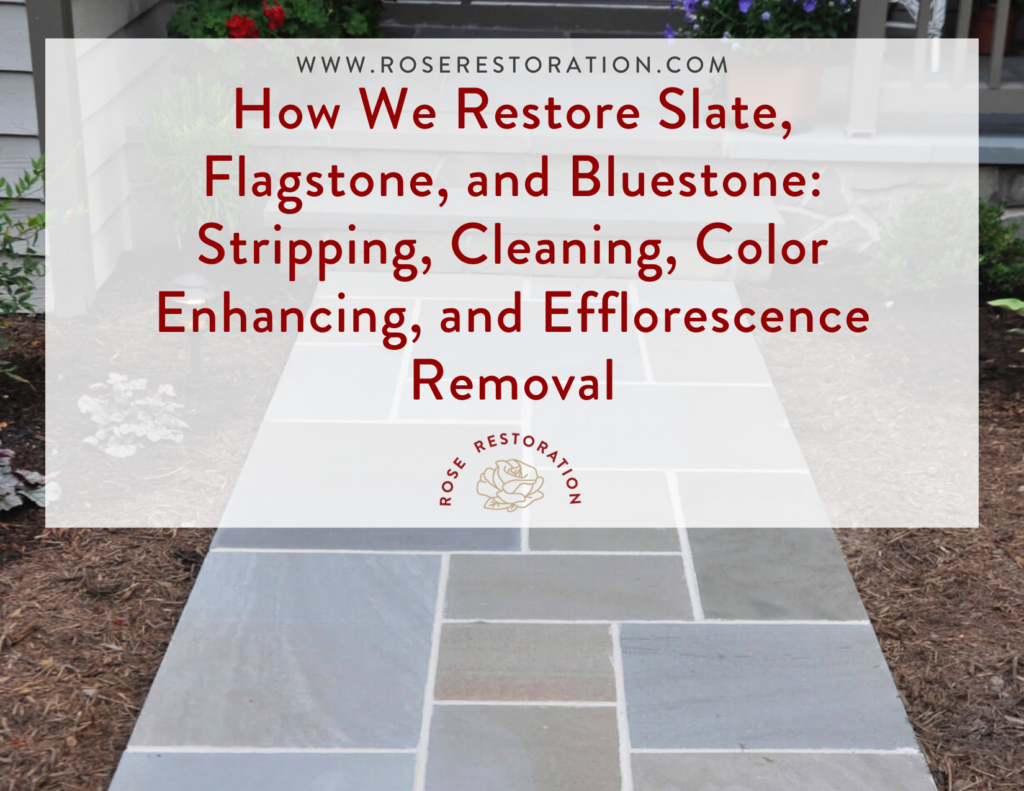
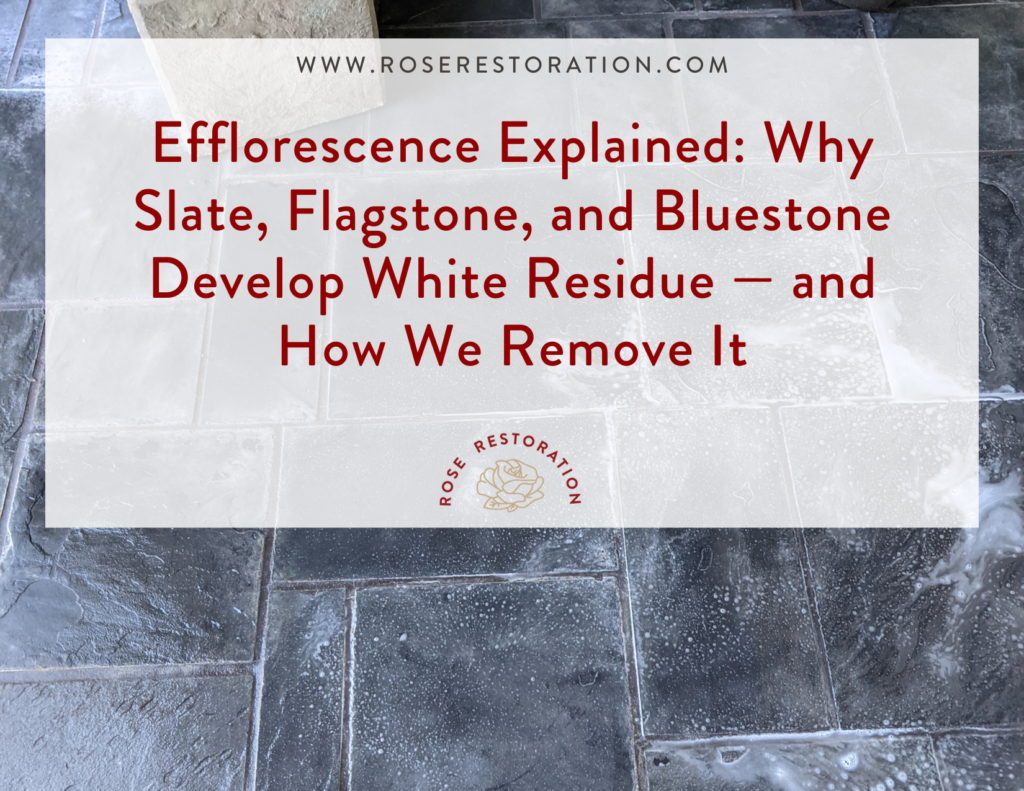
Efflorescence is the white, chalky residue that appears when water moves through the stone and deposits mineral salts on the surface. It’s very common on bluestone patios and steps, especially in humid climates or areas with poor drainage. Use a dedicated efflorescence remover — most are mildly acidic but formulated to be safe for natural stone at recommended dilution. Apply per the product label, scrub gently, and rinse thoroughly. Never use muriatic acid as a DIY substitute — it permanently etches bluestone. For very light efflorescence, a dry stiff brush before wetting the stone can remove surface deposits before they spread.
Removing Moss, Algae, and Organic Staining
Moss and algae are common on shaded bluestone surfaces in damp climates. Use an oxygen bleach solution (not chlorine bleach) — mix per product directions and apply to the affected areas. Let it soak for 15 to 20 minutes, then scrub with a stiff brush and rinse thoroughly. Oxygen bleach is safe for natural stone and effective against biological growth without the discoloration risk of chlorine bleach. For recurring moss, address the underlying cause — trim overhanging vegetation to increase sunlight and airflow over the stone.
Removing Oil and Grease Stains
For BBQ grease, cooking oil, or motor oil on bluestone, apply a commercial poultice made for natural stone (available at stone supply stores) or make a DIY poultice by mixing a stone-safe degreaser with an absorptive powder (diatomaceous earth, talc, or flour). Spread a thick layer over the stain, cover with plastic sheeting, tape the edges, and let it dry for 24 to 48 hours. As the poultice dries, it draws the oil out of the stone pores. Remove, scrub away residue, and rinse. Repeat if staining remains.
Removing Rust Stains
Rust stains on bluestone come from metal furniture legs, planters, or iron minerals in the water. Use a rust remover formulated specifically for natural stone — standard rust removers contain hydrofluoric or oxalic acid at concentrations that can damage stone. Apply per product directions, rinse promptly and thoroughly. Move rust-causing metal items and add rubber feet or pads to prevent recurrence.
Pressure Washing Bluestone
Pressure washing is effective for routine cleaning of large bluestone surfaces. Use a maximum of 1,500 PSI with a 25 or 40-degree nozzle. Keep the wand 12 to 18 inches from the surface and work in consistent sweeping passes following the slope of the patio or walk. Never use a 0 or 15-degree nozzle on natural stone — the concentrated spray etches and pits the surface. Apply cleaning solution first, let it dwell, then pressure wash off for best results on dirty or stained surfaces.
Sealing Bluestone After Cleaning
Sealing cleaned bluestone is highly recommended — it prevents staining, slows biological growth, and simplifies future cleaning. Use a penetrating (impregnating) sealer specifically labeled for natural bluestone. Apply after the stone is completely clean and fully dry — typically 48 to 72 hours after washing. Apply with a paint roller or brush per the product directions, allow to absorb, and wipe off any excess before it dries on the surface. A quality penetrating sealer typically lasts two to four years on an outdoor patio.
How Often to Clean Bluestone
- Sweep and rinse: Weekly or after heavy wind and rain
- Full pH-neutral wash: 1–2 times per year (spring and fall)
- Efflorescence treatment: When white deposits appear
- Biological growth treatment: When moss or algae is first noticed
- Re-seal: Every 2–4 years
Pro Tips
- pH neutral is the non-negotiable rule: Every product that contacts bluestone — cleaner, sealer, even dishwater runoff — should be pH neutral. One acid treatment can permanently damage a surface that took years to develop character.
- Test in a hidden corner first: Before treating the full patio, test any product on a corner or behind furniture. Stone varies — even same-quarry stone can react differently to cleaning products.
- Clean before the growing season: Spring cleaning removes the winter accumulation before moss and algae begin their active growing season, dramatically reducing biological growth problems through summer.
Frequently Asked Questions
Can I use bleach on bluestone?
No chlorine bleach — it discolors and degrades natural stone over time. Use oxygen bleach only for biological growth treatment. Oxygen bleach is pH-neutral and safe for natural stone surfaces.
Why is my bluestone turning white?
White deposits are almost always efflorescence — mineral salts brought to the surface by moisture movement through the stone. It’s not permanent damage; treat with an efflorescence remover, improve drainage to reduce moisture, and seal the stone to slow future mineral migration.
Can I use a pressure washer on bluestone?
Yes, at 1,500 PSI maximum with a 25 or 40-degree nozzle. Higher pressure forces water into the stone pores and can cause spalling or surface damage over time.
How do I remove leaf stains from bluestone?
Leaf tannin stains respond well to oxygen bleach solution or a dedicated stone cleaner. Apply, let dwell for 15 minutes, scrub, and rinse. For persistent tannin staining, a poultice treatment may be needed. Remove fallen leaves promptly before they have time to stain the surface.
How long after sealing can I use the bluestone?
Most penetrating sealers are dry to foot traffic within 2 to 4 hours but need 24 to 48 hours to fully cure before the stone is exposed to standing water or heavy use. Check the specific product’s curing time recommendations.
Conclusion
Bluestone is low-maintenance stone when you follow the right protocol — pH-neutral cleaners, no acids, and a penetrating sealer applied every few years. The most common mistake homeowners make is using an acid-based cleaner out of frustration with efflorescence or stains, causing permanent damage that no amount of cleaning fixes. Oxygen bleach for biology, efflorescence remover for mineral deposits, and a poultice for oil stains covers the full range of bluestone cleaning needs safely. For other outdoor hard surface cleaning, see our guide on how to clean a slate hearth — similar stone chemistry, similar care principles.
