
Formica is a brand of high-pressure laminate — a decorative surface layer bonded to a particleboard or MDF core. It’s one of the most common countertop materials in American homes because it’s affordable, durable, and low-maintenance. Formica handles most cleaning products well, but abrasive cleaners and harsh chemicals can permanently scratch or dull the surface. For everyday cleaning, mild dish soap and warm water is all you need. For stains, baking soda, rubbing alcohol, and diluted bleach handle virtually every problem. Here’s the complete guide.
What You’ll Need
- Mild dish soap
- Warm water
- Microfiber cloth or soft sponge
- Baking soda
- Isopropyl alcohol (rubbing alcohol)
- White vinegar
- Diluted bleach (for tough stains on light-colored Formica only)
- Spray bottle
- Clean dry cloth
- Furniture polish or laminate countertop polish (for shine maintenance)
Safety and Precautions
- Never use abrasive cleaners or steel wool. Ajax, Comet powder, green scrubbing pads, and steel wool all scratch Formica permanently — the scratches cannot be repaired without replacing the laminate.
- Avoid harsh solvents. Acetone, paint stripper, and industrial solvents can dissolve or cloud the Formica decorative layer.
- Keep seams and edges dry. Formica is waterproof on the surface, but the particleboard core swells when water repeatedly infiltrates through seams or damaged edges. Wipe edges and seams dry after cleaning.
- Avoid standing water. Prolonged water pooling on Formica seams causes edge swelling and delamination over time.
- Use trivets for hot items. Formica can handle brief heat but prolonged contact with hot cookware (above 275°F) causes irreversible heat blistering and discoloration.
Step-by-Step: Everyday Cleaning
Wipe Down with Mild Soapy Water
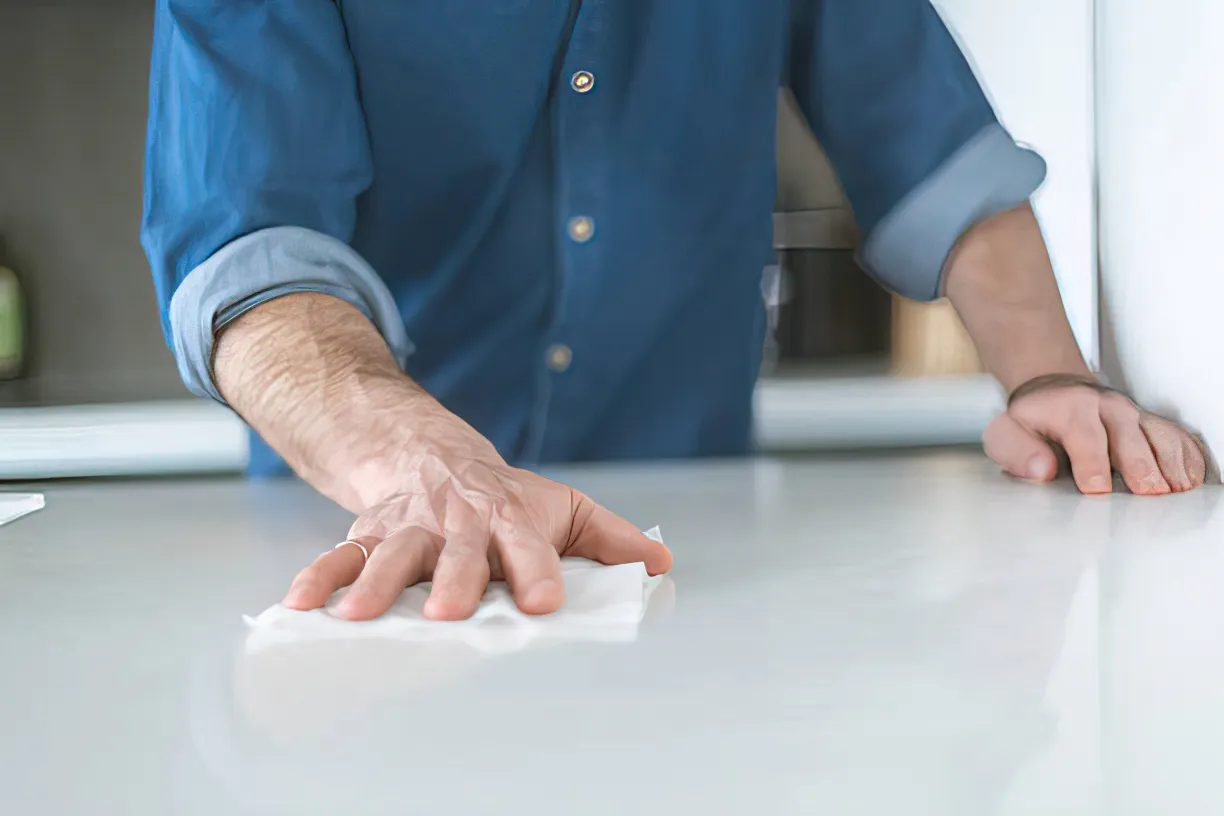
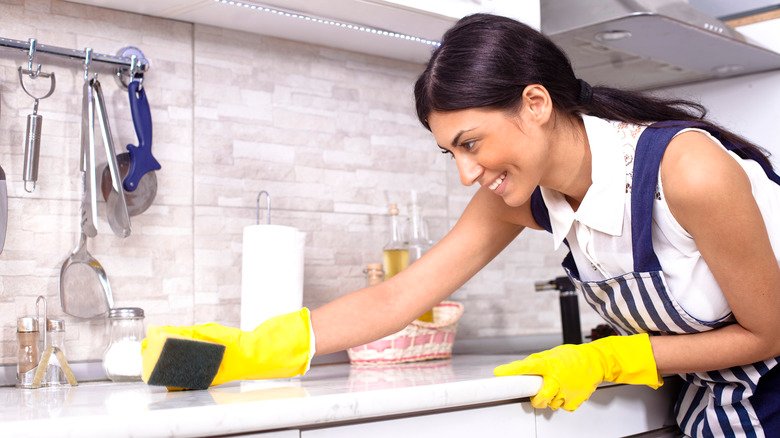
Mix a few drops of mild dish soap in warm water. Wipe the entire counter surface with a damp microfiber cloth or soft sponge. Work in the direction of the grain or pattern to prevent visible circular marks. This handles food residue, cooking splatters, and general grime effectively.
Rinse with Clean Water
Wipe the surface with a clean, damp cloth to remove all soap residue. Soap left on Formica creates a dull, filmy buildup over time that’s harder to remove than regular cleaning residue.
Dry the Surface Completely
Wipe dry with a clean cloth, paying particular attention to the edges, seams, and areas around the sink. Keeping these areas dry is the key to preventing swelling and delamination in laminate countertops.
How to Remove Stains from Formica
Food and Beverage Stains (Coffee, Wine, Juice)
For fresh stains, dish soap and warm water usually removes them completely. For stains that have dried, dampen the stain with warm water to soften it, then apply a paste of baking soda and water. Let sit for 5–10 minutes, scrub gently with a soft cloth in circular motion, and rinse. Baking soda is mild enough to clean Formica without scratching.
Grease and Cooking Oil
Dampen a cloth with isopropyl alcohol (70%) and wipe the greasy area in circular motions. Alcohol cuts through cooking grease effectively without leaving residue. Follow with a soapy water wipe and rinse dry.
Ink and Marker
Apply isopropyl alcohol directly to a cotton ball and dab the ink stain. Work from outside the stain inward to prevent spreading. Rub gently — alcohol removes most ink types from Formica without scratching. Rinse with soapy water after the stain is removed.
Permanent Marker and Paint
For permanent marker on Formica, try isopropyl alcohol first. If that doesn’t work, acetone (nail polish remover) can be used carefully — apply to a cotton ball, dab the mark only, and rinse immediately with water. Test in a hidden area first since acetone can dull some Formica finishes.
Rust Stains
Rust from metal cans or dish hardware sitting on the counter responds well to Bar Keepers Friend liquid applied with a soft cloth. Rub gently, let sit for 1–2 minutes, then rinse thoroughly. Bar Keepers Friend’s oxalic acid dissolves iron oxide without damaging Formica when used briefly and rinsed immediately.
Stubborn Dark Stains on Light Formica
For berries, turmeric, or deeply pigmented stains that don’t respond to baking soda, a diluted bleach solution (1 tablespoon per cup of water) can be applied to light or white Formica only. Apply with a cotton ball, let sit for 5 minutes, and rinse thoroughly. Do not use on dark or patterned Formica — bleach will cause permanent discoloration.
How to Remove Burnt Marks from Formica
Minor scorch marks from brief heat contact can sometimes be reduced by gently rubbing with baking soda paste. For more significant heat blistering or discoloration, the damage is in the decorative layer itself and cannot be cleaned out. Minor areas of heat damage can sometimes be hidden with laminate repair paste or filler in a matching color (available at hardware stores). Significant heat damage means the countertop section needs replacement.
How to Restore Shine to Formica
Over time, Formica can look dull from minor scratching and product buildup. A light application of furniture polish (Pledge Original) or a dedicated laminate countertop polish restores the surface sheen. Apply with a soft cloth, buff lightly, and wipe off the excess with a clean dry cloth. This also provides a minor protective barrier that makes the next cleaning easier. Reapply every 1–3 months for kitchen counters.
How to Clean Formica Edges and Seams
Edges and seams between Formica sections are the most vulnerable areas because water infiltration leads to swelling. Clean these areas carefully:
- Use a barely damp cloth rather than a soaking wet one in these areas.
- Wipe seams dry immediately after cleaning.
- If you notice any lifting at edges or seams, apply laminate contact cement immediately before water damage advances — small delaminating areas are easy to reglue; large areas require countertop replacement.
- For built-up grime in seam grooves, use a toothbrush with a tiny amount of baking soda paste to scrub the seam, then rinse and dry immediately.
Pro Tips for Formica Countertop Care
- Always use a cutting board. Knives scratch Formica’s decorative layer. Even a single deep cut cannot be repaired without replacing the laminate sheet.
- Use trivets for hot pots and appliances. Coffee makers, toasters, and electric griddles can heat the surface sufficiently to cause blistering over time.
- Wipe spills immediately. Formica resists staining when cleaned promptly. Dark stains only become problems when given time to set.
- Don’t stand or sit on Formica countertops. Laminate is supported by particleboard which cracks under concentrated point loads — cracked core causes visible delamination of the surface layer.
- Polish annually to maintain appearance. Furniture or laminate polish fills micro-scratches and maintains the luster that newer countertops have.
Common Mistakes When Cleaning Formica
- Using abrasive cleaners. Scouring powders, Brillo pads, and abrasive sponges permanently scratch Formica.
- Leaving water on seams and edges. The most common cause of Formica countertop damage is water infiltration through seams over time.
- Using bleach on dark Formica. Bleach permanently discolors and fades dark or patterned laminate surfaces.
- Scrubbing too aggressively. Formica doesn’t require hard scrubbing for most stains — let the cleaning solution do the work before applying pressure.
- Ignoring edge delamination. Small lifting at edges progresses quickly — address it immediately with contact cement before water damage makes it irreparable.
Frequently Asked Questions
Is Formica the same as laminate?
Formica is a brand name for high-pressure laminate countertop material. It’s the most recognized brand, but many other manufacturers produce essentially the same product under different names. When people say “laminate countertop,” they usually mean the same type of surface. All general laminate cleaning guidelines apply to Formica and vice versa.
Can I use Clorox wipes on Formica?
Yes — disinfecting wipes like Clorox wipes are generally safe for Formica countertops when used occasionally for sanitizing. The bleach and alcohol content is low enough for brief contact without damaging the surface. However, don’t use them as the primary cleaning method — the residue they leave can dull Formica over time with daily use. Use for disinfecting after food prep, then follow with a quick water wipe.
How do I fix a scratch on Formica?
Light surface scratches on Formica can be reduced with laminate repair paste or a laminate fill stick in a matching color, available at hardware stores. Apply per product directions and buff lightly. Deep scratches that cut through the decorative layer to the core material cannot be fully repaired — the affected section needs replacement. This is why cutting boards are essential on Formica.
Can bleach be used on Formica?
Diluted bleach (1 tablespoon per cup of water) can be used on light-colored or white Formica for stubborn staining. Apply briefly, then rinse thoroughly. Never use bleach on dark, bold-colored, or patterned Formica — it causes permanent bleaching and discoloration. For most cleaning needs, baking soda and dish soap are safer and equally effective alternatives.
What should I use to disinfect Formica after preparing raw meat?
A diluted bleach solution (1 tablespoon per quart of water) or 70% isopropyl alcohol spray both effectively disinfect Formica after raw meat prep. Apply, let sit for 1 minute, and wipe clean with water. Both are safe for occasional use on light and dark Formica when properly diluted and rinsed promptly.
Conclusion
Formica is one of the most forgiving countertop materials for everyday use — mild soap and water handles most cleaning, and stains that resist daily cleaning respond to baking soda, rubbing alcohol, or Bar Keepers Friend. The most important rules are no abrasives, no bleach on dark surfaces, and keeping seams and edges dry. Follow these guidelines and Formica countertops stay clean and serviceable for decades.
For related countertop care guides, check out our articles on how to clean Corian countertops and how to clean epoxy countertops. If you’re also dealing with the kitchen sink, our guide on how to clean a porcelain sink covers an adjacent surface that needs similar care.
