
Fiberglass is a durable, lightweight composite material used throughout the home and outdoors — bathtubs, shower surrounds, garage doors, RV exteriors, and boat hulls. It has a gel coat finish that’s susceptible to staining, yellowing, and chalking if cleaned with the wrong products. For everyday cleaning, mild dish soap and warm water handles most surface grime. For soap scum, hard water stains, and yellowing, more targeted methods are needed. This guide covers how to clean fiberglass surfaces in every context, from bathroom fixtures to boat care.
What You’ll Need
- Mild dish soap or fiberglass-safe cleaner
- Warm water
- White vinegar or CLR (for mineral deposits)
- Baking soda
- Isopropyl alcohol (for stubborn stains)
- Marine gel coat polish or automotive paste wax
- Soft sponge or microfiber cloth (non-scratch)
- Soft-bristle scrub brush
- Spray bottle
- Rubber gloves
Safety and Precautions
- Never use abrasive cleaners or steel wool on fiberglass. Scratching the gel coat permanently dulls the surface and makes it more susceptible to staining and water penetration.
- Avoid bleach on colored fiberglass. Undiluted bleach can permanently bleach and yellow fiberglass gel coats. Use diluted bleach sparingly on white fiberglass only, and rinse immediately.
- Don’t use strong acid cleaners. Muriatic acid and other strong acids etch fiberglass gel coat permanently.
- Test new cleaners in a hidden area first. Some commercial bathroom cleaners contain acids or abrasives that aren’t clearly labeled but can damage fiberglass finish.
- Wear rubber gloves when using any chemical cleaner, including CLR and commercial fiberglass cleaners.
Step-by-Step: Cleaning a Fiberglass Tub or Shower
If you are cleaning one specific bathroom fixture, use the dedicated guides for a fiberglass shower or a fiberglass tub. This broader guide covers fiberglass care across multiple surface types.
Rinse the Surface First
Before applying any cleaner, rinse the entire tub or shower with warm water. This removes loose soap residue and debris that would otherwise get worked into the surface during scrubbing. For a shower, simply run the water for a minute. For a tub, use a cup or handheld sprayer.
Apply Mild Dish Soap or Fiberglass Cleaner
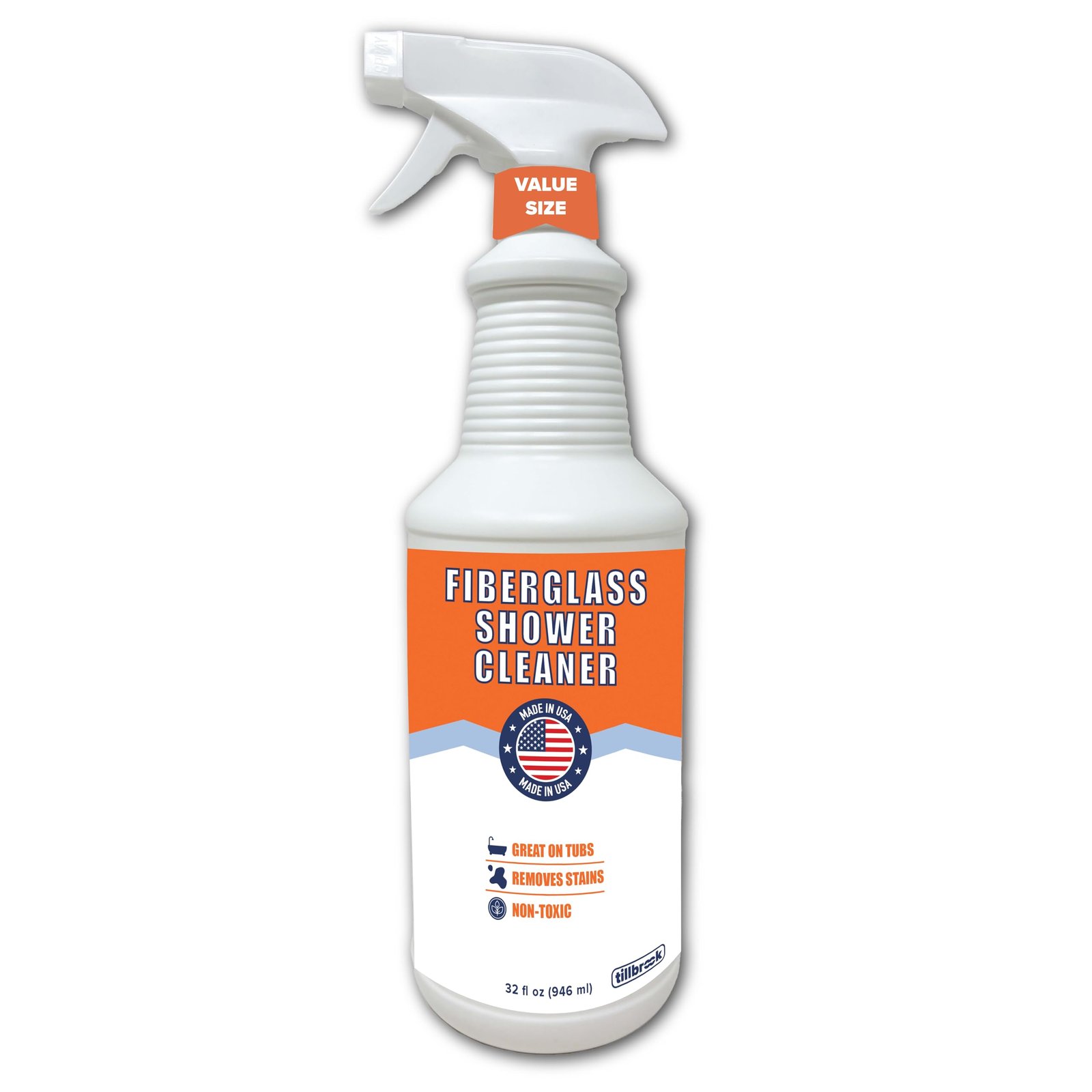
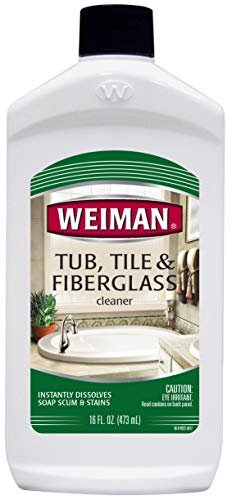
Apply a small amount of mild dish soap directly to a damp soft sponge or microfiber cloth. For tougher cleaning, use a commercial fiberglass cleaner (Soft Scrub without bleach, Bar Keepers Friend liquid, or Bon Ami powder work well — all are gentle enough for fiberglass when used with a non-scratch pad). Avoid any product containing bleach, acid, or aggressive abrasives.
Scrub with Light Circular Motion
Work in small sections using circular motion with a non-scratch sponge or cloth. Apply moderate pressure — the goal is to lift surface grime, not scratch the gel coat. For textured fiberglass floors (anti-slip texturing), use a soft-bristle brush to get into the texture.
Treat Soap Scum with Baking Soda
For soap scum buildup that dish soap doesn’t cut through, mix baking soda and warm water into a paste. Apply directly to the soap scum and let it sit for 10–15 minutes. Scrub gently with a non-scratch pad in circular motion. The mild abrasive action of baking soda removes soap scum effectively without scratching. Rinse thoroughly.
Remove Hard Water Stains with Diluted Vinegar
White mineral deposits around faucets, drains, and the waterline respond to vinegar’s mild acidity. Spray a 1:1 mixture of white vinegar and water directly on the deposits. Let sit for 5–10 minutes, then scrub with a soft brush and rinse thoroughly. For severe calcium scale, CLR applied per product directions and rinsed immediately is more effective. Never use CLR on colored gel coat — test on white fiberglass only.
Rinse Completely and Dry
Rinse the entire surface thoroughly with clean water to remove all cleaning product residue. Wipe down with a dry microfiber cloth to prevent water spots and encourage faster drying. Leaving water on fiberglass regularly contributes to mineral deposit buildup over time.
How to Clean a Yellowed Fiberglass Tub or Shower
Yellowing is one of the most common fiberglass problems and is caused by a combination of cleaning product residue, mineral staining, UV exposure, and aging of the gel coat. For moderate yellowing that’s not deeply set into the gel coat:
- Apply a paste of baking soda and hydrogen peroxide to the yellowed surface.
- Let it sit for 30 minutes to several hours.
- Scrub gently with a non-scratch pad in circular motions.
- Rinse thoroughly and repeat as needed.
For more significant yellowing, a commercial fiberglass restoration product like Rejuvenate or a marine gel coat cleaner/polish applied with a soft cloth can restore considerable brightness. These products contain mild abrasives and oxidation removers that work on surface yellowing. For deep, penetrating yellowing that affects the gel coat below the surface level, professional refinishing is the only complete solution.
How to Clean and Restore a Fiberglass Boat Hull
Marine fiberglass has the same gel coat construction as bathroom fiberglass but faces far more aggressive challenges: UV exposure, saltwater, algae, and oxidation cause the characteristic chalky, faded appearance on neglected boat hulls.
- Wash first: Scrub the hull with a marine boat soap diluted in warm water using a soft-bristle boat brush. Rinse thoroughly. Never use household dish soap on fiberglass boats — the detergents strip wax protection.
- Remove oxidation: For chalky, oxidized gel coat, apply a marine fiberglass oxidation remover or compound (3M Marine Fiberglass Restorer, Star Brite, etc.) using a soft cloth with circular motions. This removes the surface oxidation layer and restores color and gloss.
- Polish: After compounding, apply a marine gel coat polish to restore shine and fill micro-scratches.
- Wax: Apply a marine carnauba or polymer wax as a protective top coat. Wax prevents UV damage, makes future cleaning easier, and maintains gloss between seasons.
- Bottom paint (if the hull has anti-fouling paint on the underwater sections) requires different products — do not use regular fiberglass cleaners on painted bottom surfaces.
How to Clean a Fiberglass Garage Door
Fiberglass garage doors accumulate road grime, oxidation, and mildew. Wash with a soft brush or sponge and a diluted mild detergent solution (1 cup of mild cleaner per gallon of warm water). Rinse thoroughly. For mildew, a diluted bleach solution (1 cup per gallon of water) applied with a soft brush and rinsed immediately removes biological growth effectively on white or light fiberglass. After cleaning, apply an automotive paste wax to preserve the finish and protect against future weathering.
How to Restore and Protect Fiberglass Surfaces
After cleaning any fiberglass surface thoroughly, applying a protective wax extends the clean and protects the gel coat from future staining and UV degradation:
- Apply a thin coat of automotive paste wax (Turtle Wax, Meguiar’s) or marine wax to the clean, dry surface using a soft cloth.
- Allow to haze (5–10 minutes), then buff off with a clean microfiber cloth.
- Wax fiberglass tubs and showers every 3–6 months, marine surfaces annually, exterior surfaces annually or per manufacturer recommendation.
- Waxed surfaces repel water and soap much more effectively, making regular cleaning faster and easier.
Pro Tips for Fiberglass Maintenance
- Squeegee shower walls after every use. A 30-second squeegee after showering prevents soap scum and mineral buildup from forming in the first place — it’s the most effective single maintenance habit.
- Use liquid soap instead of bar soap. Bar soap leaves significantly more soap scum residue than liquid body wash and liquid hand soap. The switch alone reduces buildup rates dramatically.
- Apply Rejuvenate or Gel Gloss annually. These shine-restoring products fill micro-scratches, restore luster, and provide a protective coating in one step — ideal for maintaining fiberglass tubs and showers with minimal effort.
- Avoid colored bath bombs and fizzing tablets. These products contain dyes and ingredients that stain fiberglass quickly and are difficult to remove. If used, rinse the tub immediately after draining.
Common Mistakes When Cleaning Fiberglass
- Using abrasive cleaners or green scrubbing pads. Scratches the gel coat permanently.
- Using undiluted bleach. Yellows and degrades the gel coat with repeated use.
- Leaving cleaner residue. Not rinsing completely causes dulling and residue buildup.
- Skipping wax protection. Unwaxed fiberglass stains more easily and requires more aggressive cleaning, accelerating surface wear.
- Using household dish soap on fiberglass boats. Strips the wax protection and dries out the gel coat — use marine-specific cleaners for boats.
Frequently Asked Questions
What’s the best cleaner for a fiberglass shower?
Mild dish soap and warm water handles everyday cleaning. For soap scum, baking soda paste is the safest option. For mineral deposits, diluted white vinegar or CLR works well. Bar Keepers Friend liquid is effective for heavier staining without the scratch risk of the powder version. Avoid anything with bleach, acid, or “scrubbing action” marketed for tile — these often contain abrasives or acids that damage fiberglass gel coat.
How do I remove rust stains from a fiberglass tub?
Rust stains on fiberglass tubs come from metal drain hardware, shaving products, or water with high iron content. Apply Bar Keepers Friend paste to the rust stain, let sit for 2–3 minutes, and scrub gently with a soft cloth. Rinse thoroughly. For severe rust staining, a commercial rust remover formulated for fiberglass (check the label) is more effective. Prevent recurrence by removing metal items from the tub between uses and addressing iron in the water supply if that’s the source.
Can I use a Magic Eraser on fiberglass?
Magic Erasers (melamine foam) are mildly abrasive and work on some fiberglass stains, but they can dull the gel coat finish with heavy use. Test in a hidden area first. Use with light pressure and limit use to stubborn spots rather than whole-surface cleaning. Follow with a wax application to restore gloss after using a Magic Eraser.
How do I get scratches out of fiberglass?
Minor surface scratches in fiberglass gel coat can be reduced or eliminated using a marine or automotive polishing compound applied with a soft cloth in circular motions. For deeper scratches that go through the gel coat into the fiberglass layers, a gel coat repair kit with color-matched gel coat is needed. Very deep structural damage requires professional repair.
How often should I clean a fiberglass shower?
Weekly cleaning with mild soap and a squeegee after each use is the ideal routine. Monthly deep cleaning for soap scum and mineral deposits keeps the surface pristine. Annual waxing provides a protective barrier that makes all routine cleaning easier and protects the gel coat from UV and chemical degradation.
Conclusion
Fiberglass is a tough, long-lasting material when maintained correctly — the key is gentle cleaners, non-scratch application, thorough rinsing, and periodic waxing. Mild soap for daily use, baking soda paste for soap scum, diluted vinegar for mineral deposits, and wax every few months covers the complete maintenance routine. The biggest mistakes are using bleach, abrasive cleaners, or steel wool — avoid those three and your fiberglass surfaces will look great for decades.
For related bathroom and surface care guides, check out our articles on how to clean cultured marble and how to clean limescale from a showerhead. For exterior home surfaces, our aluminum siding cleaning guide covers outdoor gel coat and composite materials in a similar way.
