
Getting locked out of a room or your home is frustrating, but most residential lock situations have a straightforward solution that doesn’t require a locksmith. The method depends on the lock type: interior privacy knobs unlock with a coin or pin, bathroom locks have a small slot on the exterior knob, deadbolts require a key or professional help, and smart locks can often be reset or overridden through the manufacturer’s app. This guide covers every common residential lock-out scenario with clear, DIY-friendly solutions.
What You’ll Need
| For Interior Door Lockouts | For Exterior Door Lockouts |
|---|---|
| Coin (dime or quarter for privacy knobs) | Spare key from neighbor, lockbox, or hide-a-key |
| Small flathead screwdriver or butter knife | Smart lock override code or manufacturer app |
| Straightened paper clip or bobby pin | Locksmith (for keyed deadbolts) |
| Credit card or flexible shim (for spring latches) | Bump key or lock pick set (not recommended for DIY) |
| Remove pin tool (often included with door hardware) | Replacement lock (if lock is broken) |
Safety and Precautions
- Only use these methods on your own home. These lock bypass techniques are for your personal property only. Attempting to unlock a door you don’t own or don’t have authorization to access is trespassing and potentially illegal regardless of your reason.
- Call 911 in emergencies. If a person is trapped, injured, or in danger behind a locked door, call 911 immediately — do not waste time on DIY methods. Emergency personnel can and will force entry quickly and safely.
- Document the emergency first, then unlock. If you believe someone is in danger behind a door, call for help first. DIY lock-opening methods take time; professional responders are equipped for fast, safe forced entry.
Method 1: Unlock an Interior Privacy Knob (Bedroom / Bathroom)
The Coin or Pin Slot Unlock — Under 30 Seconds
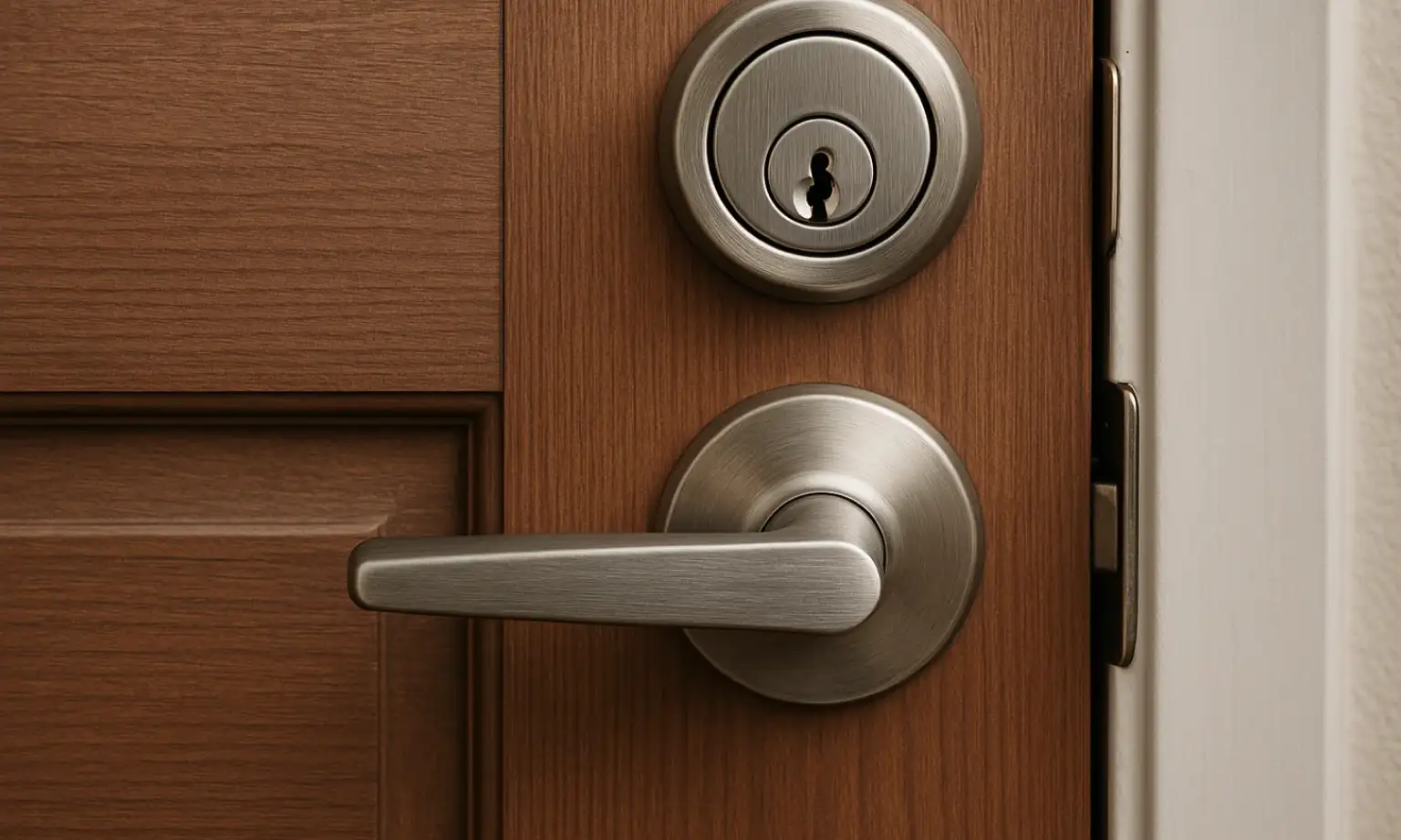
Interior privacy knobs (the kind used on bedrooms and bathrooms) are designed to be opened from outside without a key for safety reasons. There’s always an emergency unlock mechanism on the exterior side.
- Look at the center of the exterior knob face. You’ll see one of two things: a small slot (looks like a flathead screw slot) or a small round hole.
- If there’s a slot: insert the edge of a coin (a dime works perfectly) into the slot and turn it. The turn releases the privacy lock. A thin flathead screwdriver, a butter knife edge, or any thin flat object also works.
- If there’s a small hole: insert a straightened paper clip, a bobby pin, or the included release pin that came with the hardware. Push straight in — the pin depresses a release mechanism inside the knob. The door will unlock.
- This works on virtually all residential interior privacy knobs regardless of brand (Schlage, Kwikset, Baldwin, etc.). The exact unlock method may vary slightly but all use one of these two approaches.
Method 2: Unlock a Privacy Lever (Modern Lever Handle)
Same Principle as Knobs — Slightly Different Location
- Look at the lever handle itself, on the underside or the neck near the rose plate. There’s typically a small hole or slot in one of these locations.
- Insert a paper clip, pin, or the small included release tool straight in and push. For lever handles with a slot: use a coin or flathead to turn.
- Some modern lever privacy sets require inserting the tool at a specific angle — try straight in first, then at a slight angle if that doesn’t work.
Method 3: Unlock a Spring Latch With a Credit Card
Works on Interior Doors Without a Deadbolt
A spring latch (the angled bolt that clicks into the strike plate) can sometimes be pushed back using a flexible plastic card on doors that don’t have a deadbolt. This only works when the latch angled face is accessible from between the door and frame.
- Insert a credit card or plastic hotel key card into the gap between the door edge and the frame at the latch level.
- Tilt the card toward the latch and push it toward the angled face of the bolt. While pushing, lean on the door to compress any weatherstripping and widen the gap.
- Push the card into the gap while simultaneously pushing against the door with your shoulder. If the latch retracts, the door will open.
- This method is effective only on interior doors without weatherstripping and on spring latches with the angled face accessible. It does NOT work on deadbolts.
Method 4: Remove the Door Hinge Pins
For Interior Doors Where Hinges Face the Same Side as You
If a door hinges on your side of the door (the pins are accessible), you can remove the hinge pins to swing the door off without touching the lock at all.
- Place the tip of a flathead screwdriver under the hinge pin head from below.
- Tap the screwdriver handle upward with a hammer to drive the pin up and out. Start with the bottom hinge, then the top.
- With both pins removed, pull the door toward you — it will swing away from the hinges and you can access the inside without opening the lock.
- Note: This only works when the hinge pins are on your side. Exterior doors typically have the hinges on the inside, making this method unavailable from outside.
Method 5: Use a Keypad or Smart Lock Override
For Locked Out of Keypad or Smart Locks
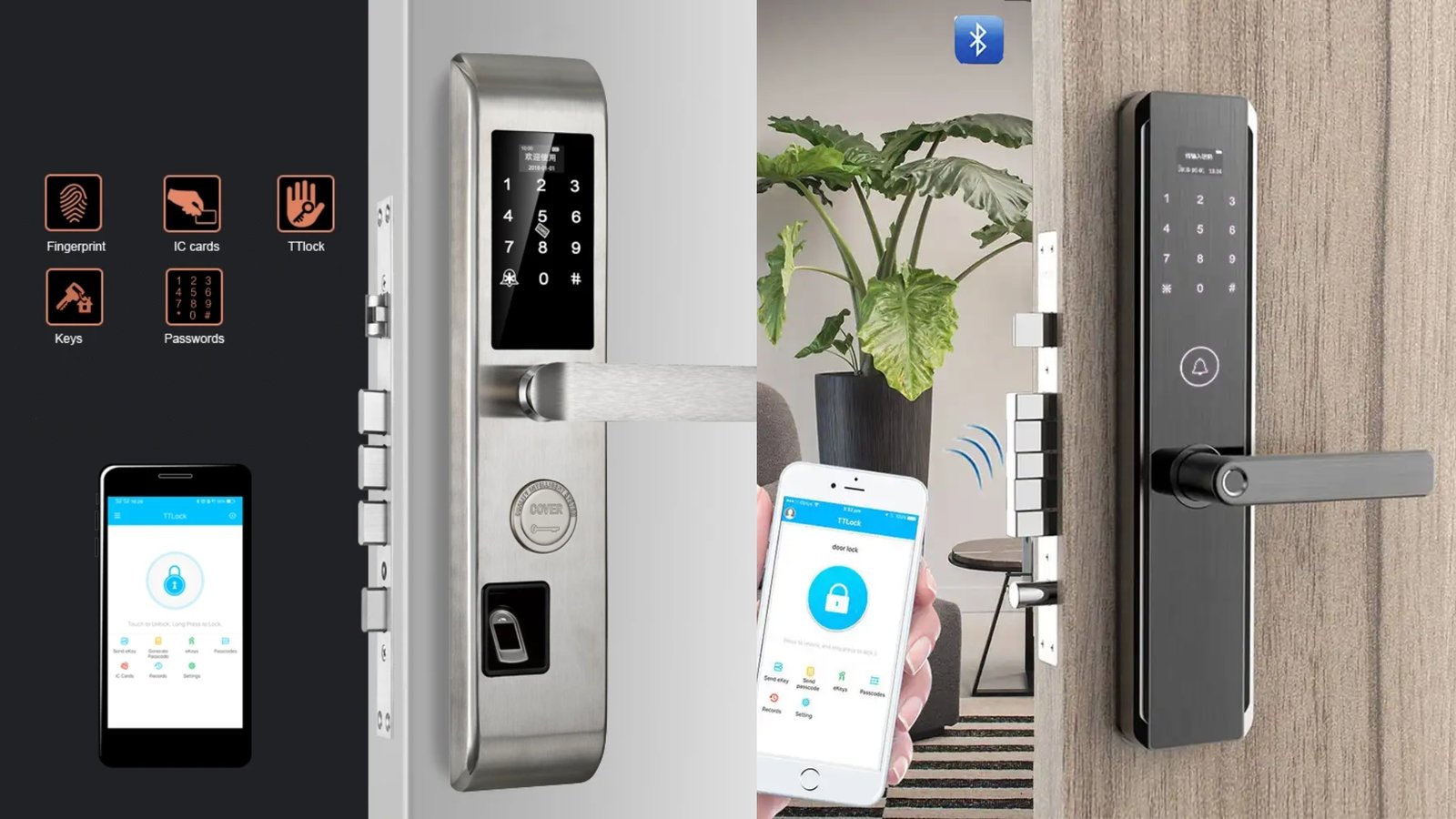
- For dead battery: most smart locks and electronic keypad locks have a physical key override slot — check the bottom or back of the lock body for a covered key cylinder. If you have the key, this is the simplest solution.
- For forgotten code: many electronic locks allow master code reset. Check the manufacturer’s instructions — this typically requires holding a button on the interior side of the lock while entering a master or programming code.
- For smart locks with mobile app control: if the phone app shows the lock as connected, you may be able to unlock it remotely from the app while standing at the door, through a family member’s phone, or by calling tech support for the manufacturer.
- For completely dead electronics with no physical key: contact the manufacturer’s support line. Most will walk you through a reset procedure or advise on mechanical bypass specific to your model.
Method 6: Call a Locksmith for Exterior Deadbolts
The Right Tool for the Right Job
Residential deadbolts are designed to resist bypass without the key. Lock picking, bump keys, and other bypass methods are not practical DIY solutions and can damage the lock. A licensed locksmith can open most deadbolt locks in 5–10 minutes with professional tools and no damage to the lock or door.
- Average residential locksmith call-out cost: $65–150 depending on time of day and location
- Emergency or after-hours calls may cost $150–250
- A locksmith can also re-key or replace the lock at the same visit if needed
Before calling a locksmith: check all other entry points (back door, window that may be unlatched, garage door if you have a code). Also check whether a neighbor has a spare key, or if your homeowner’s insurance covers locksmith call-outs (many policies do).
Method 7: Unlock a Car in an Emergency
Use Official Channels — DIY Car Unlock Is Risky
If keys are locked in a vehicle (especially if a child or pet is trapped), call 911 immediately — this is a true emergency. For non-emergency car lockouts, contact roadside assistance (AAA, insurance company roadside service, or your car manufacturer’s assistance line). Most modern cars can also be unlocked via manufacturer apps (Toyota app, Honda Link, OnStar, etc.).
Pro Tips and Common Mistakes
- Keep a spare key somewhere accessible. The best solution to being locked out is prevention. A spare key at a trusted neighbor’s home, in a coded lockbox mounted near the door, or stored digitally via smart lock codes takes 10 minutes to set up and eliminates lockout anxiety permanently.
- Don’t damage the door or frame trying to force entry. Kicking a door open damages the door frame and strike plate, and depending on your rental status, may result in a repair bill. The credit card method and pin-slot method are non-destructive. Anything more aggressive risks costly damage.
- Know the lock type before starting. The pin-slot method on a privacy knob and the credit card on a spring latch take 30 seconds. Trying the wrong method on the wrong lock type wastes time. A 10-second assessment saves 10 minutes of frustration.
Troubleshooting
| Situation | Best Method | Notes |
|---|---|---|
| Locked out of bedroom — interior privacy knob | Coin or pin slot | 30 seconds; works on virtually all residential knobs |
| Locked out of bathroom — lever handle | Pin hole or slot on lever neck | Use paper clip or included release pin |
| Spring latch interior door, no deadbolt | Credit card method | Works only on spring latches with accessible face |
| Hinges on accessible side | Remove hinge pins | Works on interior doors; usually not possible from outside |
| Smart lock — dead battery | Physical key override | Check bottom of lock body for covered key slot |
| Exterior deadbolt — no key | Call a locksmith | Most practical and non-destructive solution |
Frequently Asked Questions
How do I unlock a door without a key?
The method depends on the lock type. Interior privacy knobs use a coin in the slot or a pin in the small hole on the exterior knob — no key needed. Spring latches can sometimes be slipped with a credit card. Deadbolts require a key, a locksmith, or hinge pin removal if accessible. Smart locks can often be overridden via app or master code reset.
Can I unlock a deadbolt without a key?
Without a key, the most practical option is a licensed locksmith — they can pick or open most residential deadbolts in minutes. DIY options like lock picks or bump keys require practice and tools that most people don’t have. If the deadbolt has a thumb turn on the interior side, you can also unlock it from inside by reaching through a pet door, mail slot, or nearby window if accessible (though this is rarely practical for most homes).
How do I unlock a bedroom door that is locked from the inside?
Interior privacy locks are always designed to be openable from outside without a key. Look at the exterior knob: if there’s a slot, insert a coin and turn. If there’s a small hole, push a paper clip or bobby pin straight in. Either will release the privacy lock immediately.
What is the easiest way to get back into my house if I’m locked out?
In order of ease: 1) Try a spare key from a lockbox, neighbor, or another entry point. 2) Use the smart lock app if you have one. 3) Try any unlocked windows, back door, or garage code. 4) Call a locksmith. Attempting to break in yourself often costs more in repairs than a locksmith visit.
Is it legal to pick your own lock?
In most US states, picking your own lock on your own property is legal. Possession of lock pick tools without a locksmith license is legal in most (but not all) states — some states restrict possession with intent to commit a crime, but personal use for your own property is typically not restricted. Check your state’s specific laws if you’re uncertain.
Conclusion
The right method for unlocking a door depends entirely on the lock type, and knowing which method to try first saves time and prevents unnecessary damage. Interior privacy knobs are the easiest — a coin or paper clip and you’re in within 30 seconds. Spring latches yield to a credit card on many interior doors. Deadbolts are the one case where calling a professional locksmith is genuinely the best option for most homeowners. And the absolute best solution remains a spare key stored somewhere accessible — it takes 10 minutes to set up and pays off the first time it’s needed.
If your lock needs to be replaced after a lockout, our guide on how to change door locks covers the full replacement process for deadbolts and knob sets. And if the door frame was damaged during the lockout, our tips on how to repair a door frame cover the kick-in damage repair process specifically.
