
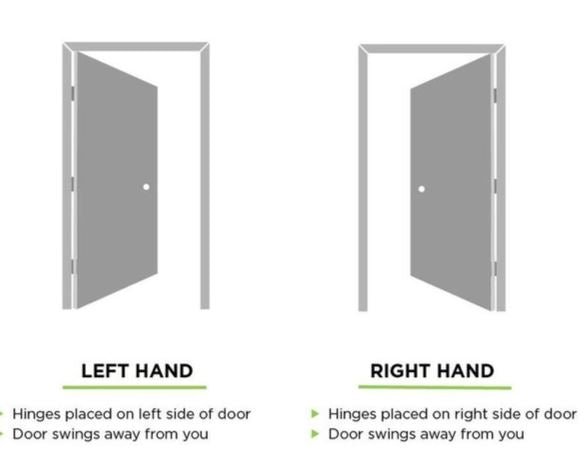
Door swing — or door handing — describes which side the hinges are on and which direction the door opens. You need to know this before ordering a pre-hung door, replacing hardware, or communicating with a supplier. The standard method: stand on the side the door swings toward (the push side), face the door, and note which side the hinge is on. Hinge on the left = left-hand door. Hinge on the right = right-hand door. It takes about 10 seconds once you understand the rule.
What You’ll Need
- No special tools needed — just the door in question
- If measuring for ordering: a measuring tape for door dimensions
- If sketching a floor plan: graph paper or a simple sketch pad
Safety and Precautions
- Confirm the swing before demolition. If you’re ordering a replacement door, verify the handing from the existing door before removing it. Once the old door is down, it’s harder to verify the original swing without the frame context.
- Check local codes for egress doors. Emergency egress doors (particularly basement egress and bedroom doors in some jurisdictions) may have specific swing requirements. Verify with local building codes before changing a door swing direction.
Step 1: Understand the Standard Handing Terminology
Industry Standard — Used by Door Manufacturers and Suppliers
| Term | What It Means |
|---|---|
| Left Hand (LH) | Hinges on the left when standing on the push side (swing side). Door swings away from you to the right. |
| Right Hand (RH) | Hinges on the right when standing on the push side. Door swings away from you to the left. |
| Left Hand Reverse (LHR) | Hinges on the left when on the push side, but door swings toward you (inswing from the pull side). Common on exterior doors where “push side” is outside. |
| Right Hand Reverse (RHR) | Hinges on the right when on the push side, swings toward you. |
Key rule: Always determine handing from the push side of the door (the side you push to open it). This is the exterior side of a front door, or the hallway side of a bedroom door.
Step 2: Determine the Door Swing in 10 Seconds
The Universal Method
- Go to the side of the door you push to open it. For a front door, stand outside. For an interior door, stand on the side where the door swings away from you when opened.
- Face the closed door.
- Look at which side the hinges are on from this position.
- Hinges on your left: Left-hand door (LH)
- Hinges on your right: Right-hand door (RH)
That’s it. If you can see the hinges, you can determine the handing in seconds.
Step 3: Determine an Inswing vs. Outswing Door
The Second Variable After Handing
In addition to which side the hinges are on (left or right), you also need to know whether the door swings in or out.
- Inswing: Door swings into the room or space (away from you when you push it from outside). Standard for interior doors and most exterior residential doors in the US (pushes in from outside).
- Outswing: Door swings outward toward you when you open it from inside. Common in coastal areas, in Florida, and in some commercial applications for hurricane resistance. Also used when interior space is limited.
Note whether the door opens inward or outward and combine this with the handing: “Left-hand inswing” or “Right-hand outswing” is the complete description most suppliers need.
Step 4: Handing for Pre-Hung Doors
What to Tell the Supplier When Ordering
- Stand on the exterior side (the side you’re facing when you approach the door from outside the room).
- Note which side the hinges are on. Note whether the door swings toward you or away from you.
- Use this formula: [hinge side] hand [inswing or outswing]. Example: “Right hand inswing” = hinges on the right from the exterior, door swings into the building when pushed from outside.
- Provide the door width, height, thickness, and the handing when ordering. Most suppliers and home centers will ask for all four pieces of information.
Step 5: Handing for Door Hardware
Does Your Lock or Lever Handle Have Handing?
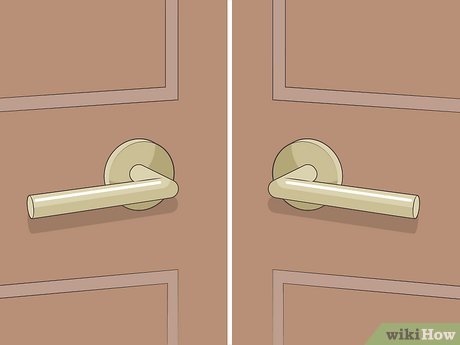
Most door knobs and lever handles are not handed — they work on doors of any swing. However, some specialty hardware (certain levers, French door handles, and multi-point locks) may require specific handing. Check the product description or packaging before purchasing.
- Round knobs: usually universal (not handed)
- Lever handles: many are convertible; some require the correct hand (check spec sheet)
- Multi-point lock mechanisms: always handed — order specifically for left or right hand
- Euro cylinder locks: not handed (the cylinder itself is symmetrical)
How to Change the Swing Direction of a Door
Possible but Requires Re-Framing or Re-Hanging
Reversing a door swing (changing from right-hand to left-hand) is possible but involves re-routing the hinge mortises, relocating the door stop, and moving the strike plate and handle bore. It’s a practical DIY job for an existing door slab. Reversing inswing to outswing requires different hardware and may require re-framing.
- Remove the door from its hinges and remove the door stop strips from the frame.
- Fill the existing hinge mortises with epoxy wood filler and let cure.
- Relocate the door stop strips to the opposite side of the frame.
- Transfer hinge mortise locations to the opposite side of the door, cut new mortises, and install hinges.
- Relocate the lockset bore to the opposite side (this is a significant hole — fill the old hole with a wooden plug or epoxy filler and bore a new hole).
- Rehang the door, install the lock hardware, and relocate the strike plate.
Pro Tips and Common Mistakes
- Always determine handing from the push side. Standing on the wrong side is the most common source of confusion. Push side = exterior of a front door = hallway side of a bedroom door.
- Take a photo of the existing door before ordering. A photo with notes (which side hinges are on, which way it opens) removes any ambiguity when talking to a supplier by phone or online.
- Double-check with the supplier before ordering a pre-hung door. Pre-hung doors cannot be easily returned once hung. Confirming the handing with the supplier before finalizing the order saves a costly mistake.
- Interior and exterior door conventions can differ. Some suppliers use “interior view” (from inside the room) rather than “push side” as the reference. Always ask the supplier which convention they use to ensure you’re both describing the same thing.
Frequently Asked Questions
What is door handing?
Door handing (also called door swing or door hand) describes which side the hinges are on and which direction the door opens. It’s used by door manufacturers, hardware suppliers, and contractors to ensure the correct door or hardware is ordered for a specific opening. The determination is always made from the push side of the door.
Is a left-hand door the same as a left-hand reverse door?
No. A left-hand door (LH) has hinges on the left from the push side and swings away from you (outswing from the push side). A left-hand reverse door (LHR) has hinges on the left from the push side but swings toward you (inswing from the push side). The “reverse” designation refers to the swing direction, not the hinge side.
How do I know if my new door hardware is handed?
Check the product packaging or spec sheet. Most round knob sets are universal (work on any swing). Many lever sets are either universal or include instructions for setting the handing. Specialty hardware like multi-point locks will specify “left hand” or “right hand” and it’s critical to order the correct one.
Can any door be made into a left-hand or right-hand door?
A solid wood or solid-core door slab can be re-hung on either side with sufficient carpentry work (new hinge mortises, relocated lockset bore). However, pre-hung door units are fixed at the factory and cannot be easily re-handed. Fiberglass and steel door slabs can typically be re-hung if needed.
How do I determine door swing for a barn door or sliding door?
Sliding doors don’t have a traditional swing designation. Instead, describe which direction the door slides (left or right) and whether the door is front-mounted or bypass-mounted. For a barn door, the typical description is “slides left” or “slides right” when viewed from the main side of the door.
Conclusion
Determining door swing comes down to one key reference: stand on the push side, face the door, and note which side the hinges are on. Hinge on the left = left-hand door. Hinge on the right = right-hand door. Add the inswing or outswing designation and you have the complete handing description that any supplier or hardware retailer needs to fill your order correctly. Ten seconds of observation prevents a costly mis-order.
Once you know the swing, you’re ready to order or install. See our full guide on how to hang a door for the complete installation process, or our step-by-step walkthrough on how to install a door knob for the hardware installation that follows once the door is in the frame.
