
A rotted or damaged door sill (the flat wood piece at the base of an exterior door opening) is one of the most common exterior door repairs. Water collects at the threshold area, and if the sill isn’t sealed well, it absorbs moisture and eventually rots from the bottom up. Replacing a door sill is a half-day project for most DIYers — you remove the old sill with a reciprocating saw, cut the new sill to fit, seal it properly, and reinstall the threshold on top. This guide covers the full process for both wood and composite replacement sills.
What You’ll Need
| Tools | Materials |
|---|---|
| Reciprocating saw or oscillating multi-tool | Replacement door sill (wood, composite, or aluminum) |
| Pry bar and hammer | Exterior wood primer (for wood sill) |
| Circular saw or miter saw | Construction adhesive |
| Drill/driver | 3-inch galvanized screws or stainless deck screws |
| Utility knife | Paintable exterior caulk |
| Level | Wood preservative (for any remaining framing wood) |
| Measuring tape and pencil | Flashing tape (for moisture barrier) |
| Chisel | Exterior paint to match |
Safety and Precautions
- Wear eye protection and gloves when using a reciprocating saw. Cutting through an old sill often involves nails, staples, and embedded fasteners. Sparks and flying metal fragments are a real hazard.
- Test for lead paint before cutting or sanding (homes built before 1978). Old painted sills may contain lead paint. Use a lead test kit. If positive, use wet-cutting techniques and proper disposal per EPA RRP guidelines.
- Inspect the subfloor and framing before installing the new sill. If rot has spread to the subfloor or the jack studs on either side of the door, those must be repaired before the new sill goes in. Installing a new sill on rotten framing will fail quickly.
Step 1: Remove the Old Threshold and Inspect the Sill
Take Everything Apart Before Ordering Materials
- Remove the door from its hinges: tap hinge pins out with a flathead screwdriver and hammer. Set the door aside or prop it against a wall.
- Remove the interior threshold: the aluminum or composite threshold typically screws down from above. Remove the screws and pry the threshold up with a putty knife or pry bar.
- With the threshold removed, assess the sill: probe the wood with a screwdriver. Any area that penetrates easily is rotted and must be removed. Note the sill width (front to back) and length (jamb to jamb) for replacement sizing.
- If rot is minor and localized to surface areas (under 1/2 inch deep): skip to the epoxy repair option in Step 2B. For rot that penetrates through the sill thickness, proceed with full replacement.
Step 2A: Remove the Old Door Sill (Full Replacement)
Reciprocating Saw and Pry Bar
- Use a reciprocating saw to cut the old sill into sections. Make two or three vertical cuts across the sill width to divide it into manageable pieces.
- Use a pry bar to lift and remove each section. Work carefully to avoid damaging the door jamb legs or the finished floor inside.
- Remove any remaining fasteners from the subfloor or framing with a pry bar or pliers.
- Inspect the subfloor below the sill and the bottom of the door jamb legs. If the subfloor shows rot, treat with wood hardener and epoxy filler, or replace the affected section of subfloor before proceeding.
- Apply wood preservative to any framing members that show early signs of moisture or light discoloration — this halts the decay process.
Step 2B: Repair Minor Rot With Epoxy Filler (Alternative to Full Replacement)
For Surface Rot That Hasn’t Penetrated the Full Thickness
- Remove all soft, punky wood with a chisel — dig until you reach solid material on all sides.
- Apply a wood hardener product (Minwax Wood Hardener or similar) to any remaining soft but solid wood. Let cure per the label.
- Pack two-part epoxy wood filler firmly into the void. Overfill slightly — epoxy can be shaped and sanded when cured.
- Let cure fully (24 hours for hardness), shape with a chisel, sand smooth, prime, and paint. Re-install the threshold on top.
Step 3: Measure and Cut the New Sill
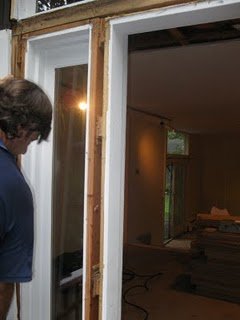
Match the Profile and Dimensions Exactly
- Measure the opening: the sill length (jamb to jamb), the sill width (front to back, which typically matches the door jamb depth), and the thickness of the old sill to match the height relative to the finished floor.
- Door sill stock is available at lumber yards and home centers. Common materials: Douglas fir or southern yellow pine (traditional wood, affordable, requires sealing), composite (rot-resistant, low maintenance), and aluminum (typically used as the threshold/top piece only, not the structural sill).
- Cut the new sill to length. For an angled exterior slope (the sill should slope slightly downward toward the exterior for drainage), set your saw at 5–7 degrees from square before cutting the outside edge, or use a pre-angled sill stock.
- Cut the sill ends to fit around the door jamb legs: the sill typically notches slightly under the jamb legs on each side. Mark and cut these notches with a jigsaw or handsaw for a tight fit.
Step 4: Prepare and Seal the New Sill Before Installation
This Step Determines How Long the New Sill Lasts
- Prime all six sides of the new wood sill with exterior oil-based primer before installation. This is the step most people skip and then wonder why the sill rots again in five years.
- Apply flashing tape or self-adhering membrane to the subfloor area under the sill location. This creates a waterproof barrier at the most vulnerable moisture point.
- Apply a heavy bead of construction adhesive to the bottom of the new sill where it contacts the subfloor and framing.
Step 5: Install the New Sill
Set, Fasten, and Seal
- Set the new sill in position. Check that it’s level across its width and that the slope (if you angled the exterior edge) directs water toward the outside.
- Drive 3-inch galvanized or stainless screws through the sill and into the framing below. Use stainless steel or hot-dipped galvanized fasteners — standard screws will rust and stain the new wood within a few years.
- Apply a bead of exterior caulk along all joints: where the sill meets each door jamb leg, and where the sill meets the exterior threshold/floor edge.
- Smooth all caulk with a wet finger and allow to cure per the label before installing the threshold on top.
Step 6: Re-Install the Threshold and Rehang the Door
Final Steps
- Position the aluminum or composite threshold on top of the new sill, centered in the opening. Drive the threshold screws through the threshold into the sill.
- Rehang the door and check the bottom gap: the door sweep or bottom seal should contact the threshold with light, even pressure across the full width.
- Apply final exterior caulk at the exterior base of the sill where it meets the porch, step, or exterior wall. This completes the moisture seal from outside.
- Allow all caulk to cure fully, then touch up the sill paint to cover screw heads and any bare wood edges.
Pro Tips and Common Mistakes
- Prime all six sides before installation — not just the visible top. The bottom and end grain of a wood sill absorb the most moisture. If these aren’t sealed before installation, the sill will begin absorbing water from below immediately.
- Use stainless or galvanized fasteners. Standard steel screws rust through exterior wood in 3–5 years and stain the sill with rust streaks. The hardware upgrade costs pennies more and lasts decades longer.
- Slope the sill toward the exterior. A flat sill puddles water. Even a 5-degree slope toward the outside is enough to allow water to run off rather than soak in.
- Address the source of water before replacing the sill. If the sill rotted because of a failing threshold seal, missing caulk at the exterior, or an overhang that doesn’t adequately protect the door area, fix those issues before installing a new sill. Otherwise the new one will rot too.
Troubleshooting

| Problem | Likely Cause | Fix |
|---|---|---|
| New sill shows rot within 2 years | Not primed before install; water source not fixed | Address water intrusion; replace with composite sill for better longevity |
| Threshold screws won’t tighten | Sill wood soft or screw holes stripped | Use longer screws; fill stripped holes with epoxy before re-driving |
| Door now hits the threshold too hard | New sill is thicker than original | Plane or sand the sill top, or adjust the door sweep height |
| Gap at sides where sill meets jamb | Sill not notched deeply enough for jamb legs | Widen the notch cut; caulk the gap with appropriate exterior caulk |
| Water puddles on sill surface | Sill installed level instead of sloped | Remove and re-install with a 5-degree outward slope |
Frequently Asked Questions
How do I know if my door sill needs replacing?
Probe the sill wood with a flathead screwdriver — if it penetrates easily, the wood is soft and rotted. Visible cracks, peeling paint, dark staining, and sponginess underfoot when stepping in the doorway are all signs of rot. Surface discoloration without softness can often be repaired with epoxy filler rather than full replacement.
What is the difference between a door sill and a threshold?
The door sill is the structural wood member at the base of the door frame — the piece that sits on the subfloor and supports the door assembly. The threshold is the metal or composite cover piece that sits on top of the sill, provides the finished surface you step over, and contains the adjustable rubber seal for the door bottom. Both need to be in good condition for a properly sealed door.
Can I replace just the threshold without replacing the sill?
Yes, if the sill itself is structurally sound. A worn or damaged threshold can be removed and replaced independently. Unscrew the old threshold, slide it out, position the new one over the sill, and drive the screws. This is a 30-minute job when the sill below is solid.
What material is best for a replacement door sill?
Composite door sills (PVC or fiber-composite) are the most rot-resistant and require the least maintenance. They cost more than wood but will outlast a wood sill significantly in wet or humid climates. For wood sills: Douglas fir and southern yellow pine are the standard choices — use a naturally decay-resistant species or treat thoroughly with preservative before installation.
How long does a door sill replacement take?
With tools on hand, the full project — removal, inspection, material prep, installation, and sealing — takes 4–6 hours for most DIYers. Allow additional drying time for the wood hardener (if used) and caulk cure time before hanging the door.
Conclusion
Replacing a door sill is a half-day project that pays off in energy efficiency, security, and preventing further structural damage. The most important steps are: inspect the subfloor and framing for rot spread before installing the new sill, prime all six faces of the wood sill before it goes in, slope it slightly toward the exterior, and seal all joints with exterior caulk. Done correctly, a new door sill should last 15–25 years before needing attention again.
Once the sill is in place, complete the moisture protection with our guide on how to seal and weatherproof a door for the full weatherstripping treatment. And if the door frame above the sill also has damage, our guide on how to repair a door frame covers the frame repair methods that pair directly with sill replacement work.
