
Most furniture damage during a move happens in the first and last ten feet — when pieces are being loaded, unloaded, and carried through doorways. Proper packing is what prevents scratched legs, dented corners, shattered glass, and torn upholstery. Packing furniture isn’t complicated, but it does require the right materials and a specific sequence. This guide covers how to prepare, wrap, and protect every major furniture type before a move.
What You’ll Need
Packing Materials
- Moving blankets or furniture pads (rent or purchase)
- Stretch plastic wrap (multiple rolls)
- Bubble wrap (for glass and fragile surfaces)
- Packing tape and stretch wrap tape
- Zip-lock bags (for hardware, screws, and small parts)
- Cardboard sheets (for protecting tabletops and flat surfaces)
- Foam corner protectors
- Mattress bags (for mattresses and box springs)
Tools
- Screwdrivers and Allen wrenches (for disassembly)
- Marker (for labeling bags and components)
- Tape measure
Safety and Precautions
- Never tape directly to wood furniture finishes — packing tape pulls off varnish and lacquer. Always wrap with plastic stretch wrap or a moving blanket first, then tape over that.
- Do not over-wrap with stretch wrap on upholstery — tight plastic wrap can compress and permanently flatten fabric pile on velvet and some microfiber.
- Protect glass table tops and mirror furniture separately from the frame — glass wrapped together with the frame and subject to frame movement will crack. Remove and pack glass panels independently.
- Label all hardware bags clearly and keep them with the corresponding furniture piece — losing screws during a move makes reassembly a frustrating guessing game.
Step-by-Step: How to Pack Furniture for Moving
Step 1 — Disassemble What You Can
Before packing anything, disassemble furniture as much as practical. Remove table legs and store them alongside the tabletop. Break down bed frames into rails, headboard, and footboard. Detach mirrors from dressers. Separate sectional sofa pieces. Pull all drawers from dressers and chests. Each disassembled component is lighter, easier to protect, and less likely to be damaged in transit. Keep all hardware — bolts, screws, Allen bolts, cam locks — in a labeled zip-lock bag. Tape or rubber-band the bag to the main body of the piece it belongs to.
Step 2 — Clean Furniture Before Wrapping
Wrapping dirty furniture traps grit and debris against the surface, which can scratch finishes during the move. Quickly wipe down wood surfaces with a dry cloth and spot-clean any obvious grime. Allow damp surfaces to dry completely before wrapping — moisture trapped under plastic wrap can cause mildew on upholstery and raise the grain on wood surfaces. This step takes 15 minutes and prevents damage that’s expensive or impossible to reverse.
Step 3 — Protect Wood Furniture with Moving Blankets
Moving blankets are the standard protection method for wood furniture — tables, dressers, wardrobes, chairs, and cabinets. Drape a moving blanket over the piece, covering all surfaces, and secure it with stretch wrap wound around the outside of the blanket. Don’t tape directly to the wood or finish. For table legs, wrap each leg individually with a strip of moving blanket secured with stretch wrap. Wrap table corners and edges with foam corner protectors under the blanket for extra protection on the most vulnerable points.
Step 4 — Protect Glass Tops and Mirrors
Glass table tops and mirrors require separate, careful packing. Cover the glass surface with a layer of bubble wrap, starting from the center and wrapping outward. Secure the bubble wrap with tape (over the bubble wrap only, not on the glass). Then wrap the entire piece in a moving blanket and secure with stretch wrap. Glass pieces should travel upright in the moving truck — never flat. Mark them clearly with “GLASS – FRAGILE” on the exterior of the wrap using a marker on tape so movers know how to position them in the truck.
Step 5 — Pack Upholstered Furniture
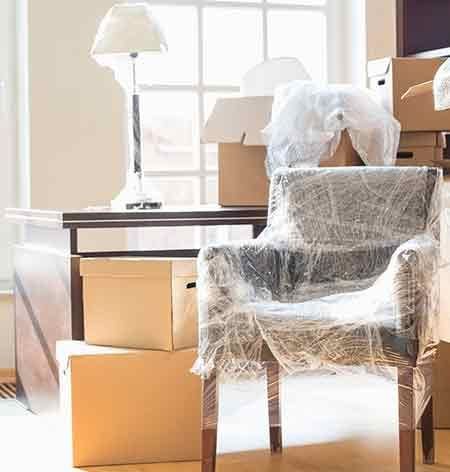
Sofas, chairs, and ottomans need protection from dirt, moisture, and scratches during transit. Wrap upholstered pieces in moving blankets first to cover the entire surface. Then wrap lightly with stretch plastic wrap to hold the blanket in place and prevent it from shifting. Don’t pull stretch wrap extremely tight on upholstered pieces — firm but not compressing. For high-pile or delicate fabrics like velvet, lay the blanket over the piece and use minimal stretch wrap, or secure with moving straps instead. Remove and pack sofa cushions separately in large garbage bags.
Step 6 — Prepare Dressers and Chests
Remove all drawers from dressers and chests and pack them separately. Wrap each drawer individually with stretch wrap to keep the contents inside (or remove contents and pack them in boxes). Wrap the empty dresser frame in a moving blanket and secure with stretch wrap. Leaving drawers in place during a move creates a piece that’s harder to carry (drawers slide open unexpectedly) and is more susceptible to drawer face damage when bumped. Stack individual drawers flat in the truck, wrapped-side down.
Step 7 — Protect Mattresses
Mattresses are highly susceptible to stains, moisture, and tears during moves. A mattress bag (available in twin, full, queen, and king sizes at moving supply stores) slips over the mattress and seals it completely. This is the only reliable way to keep a mattress clean during a move. Standard plastic mattress bags are inexpensive ($5–$15). Place the mattress in the bag before leaving the bedroom — it’s difficult to wrangle a full-size mattress into a bag in a truck. Transport mattresses upright against the side of the truck, not flat on the floor (where they can be damaged by items placed on top).
Step 8 — Wrap Chairs and Table Legs
Chair legs and table legs are the most frequently damaged components in any furniture move. Wrap individual legs with foam pipe insulation (slit lengthwise) or strips of moving blanket, secured with stretch wrap. Pay special attention to curved or carved legs — the high points are what contacts door frames and walls. For chairs with removable legs, remove and pack them with the chair in the same blanket wrap. For chairs where legs are fixed, wrap each leg and then cover the whole chair in a moving blanket.
Step 9 — Label Every Piece
Once pieces are wrapped, label them. Use a marker on a piece of tape applied to the outside of the wrap: “Dining Room – Large Table,” “Master Bedroom – Dresser,” etc. For multi-component pieces (bed frames, sectional sofas, modular shelving), number the components: “Bookcase Part 1 of 3,” “Bookcase Part 2 of 3.” Labeling ensures everything lands in the right room at the destination and speeds up reassembly significantly. Include an arrow labeled “THIS SIDE UP” on any piece that has a correct orientation — particularly important for items with drawers or fragile features.
Step 10 — Load the Truck in the Right Order
Pack the truck heaviest items first against the cab, lightest items last (nearest the truck door). Large upholstered pieces (sofas, mattresses) go along the walls upright. Wood furniture goes next. Boxes fill the center and gaps. Never place heavy boxes on top of upholstered furniture — the weight compresses cushions and frames. Secure the load with moving straps attached to the truck’s tie-down rings to prevent shifting during transit. Shifting loads are the primary cause of moving damage after improper packing.
Pro Tips for Packing Furniture
- Rent moving blankets rather than buying them unless you move frequently — most truck rental companies (U-Haul, Penske, Budget) rent blankets by the day at $1–$2 each.
- Use drawers as moving boxes for small, light items — wrap the drawer with stretch wrap to keep contents inside. This maximizes truck space efficiently.
- Photograph complex assembly furniture (shelving systems, modular units) from multiple angles before disassembly — the photos are your reassembly guide at the destination.
- Tape “DO NOT STACK” on glass and fragile pieces in large, visible text — even experienced movers can miss a small “fragile” label in a crowded truck.
Common Mistakes to Avoid
- Taping directly to wood finishes or upholstery: Tape pulls off lacquer, varnish, and fabric fibers. Always wrap first, then tape over the wrap.
- Leaving drawers in dressers: Drawers slide open unpredictably, shift the weight of the piece unexpectedly, and get damaged when the dresser is bumped. Remove them.
- Transporting glass flat: Glass panels transported flat are easily cracked by items placed on top. Always transport glass vertically.
- Skipping mattress bags: A single mattress moved without a bag often arrives with stains, tears, or scuff marks that are impossible to remove. The $10 bag is always worth it.
Frequently Asked Questions
Should I disassemble furniture before moving?
Yes, whenever practical. Disassembled furniture is lighter, fits more easily through doorways and stairways, and is less prone to damage. The extra 20–30 minutes of disassembly typically saves hours of wrestling with stuck pieces and significantly reduces the risk of damage. Always keep hardware organized in labeled bags attached to the piece.
How do I protect wood furniture during a move?
Moving blankets are the best protection for wood furniture. Drape them to cover the entire piece, including all legs and corners, and secure with stretch wrap. Add foam corner protectors on the most vulnerable edges. Never tape directly to the wood surface. Load wood furniture in the truck so surfaces won’t rub against metal walls or other hard items during transit.
How do I pack a sofa for moving?
Remove all cushions and pack separately in large plastic bags. Wrap the sofa frame in moving blankets from every angle, securing with stretch wrap. Wrap the legs individually with strips of blanket. For moving through doorways, most sofas go through on their end (standing upright) or in the “sofa pivot” position. In the truck, stand sofas against the wall vertically.
Do I need a mattress bag for moving?
Yes. Mattresses are porous and absorb moisture, dirt, and odors easily during a move. A proper mattress bag ($5–$15 at hardware or moving supply stores) completely prevents contamination. Without one, mattresses frequently arrive at the destination with stains or tears from contact with the truck floor and walls. This is one of the most overlooked but easiest precautions in any move.
How far in advance should I start packing furniture for a move?
Start disassembling non-essential furniture (guest room beds, extra tables, storage units) two to three weeks before the move date. Pack essential furniture (beds, dining tables, main sofa) the day before or moving morning. Create a “last night essentials” box for bedding and items you need the last night, so these are the last items packed and the first items accessible at the destination.
Conclusion
Packing furniture for a move comes down to three rules: disassemble everything you can, wrap every surface before taping, and never transport glass flat. Use moving blankets on wood furniture, mattress bags for mattresses, stretch wrap to hold blankets in place, and foam corner protectors on vulnerable edges. Label every piece and every hardware bag. Take 20 minutes to pack correctly and you’ll arrive at your new home with furniture that looks exactly how it left.
For the carry and load process itself, see our complete guide on How to Move Heavy Furniture. Once you’re in the new place, check out How to Level Furniture to make sure every piece is stable on the new floors.
