
Moving heavy furniture without the right technique is how people end up with back injuries, scratched floors, and dented doorframes. The key is using the right tools — furniture sliders, dollies, and moving straps eliminate most of the brute force required. Moving furniture upstairs adds complexity: weight distribution on stairs, stairway clearances, and coordination between two people are all critical. This guide covers both flat-ground moves and stair carries so you can get the job done safely.
What You’ll Need
Tools and Equipment
- Furniture sliders (felt for hardwood/tile, plastic for carpet)
- Furniture dolly (flat platform dolly or appliance dolly with straps)
- Moving straps (shoulder/forearm straps for stair carries)
- Moving blankets or furniture pads (to protect surfaces)
- Tape measure (to check doorways, stairwell width)
- Stretch wrap (to hold drawers closed and protect corners)
- Flathead screwdriver and Allen wrenches (for disassembly)
Safety Gear
- Closed-toe shoes with good grip (no flip-flops or sandals)
- Work gloves (improves grip, protects hands)
- Back brace (optional but helpful for heavy lifts)
Safety and Precautions
- Never move very heavy furniture alone. Items over 100 lbs (most sofas, dressers, wardrobes) require at least two people — preferably three for stair carries.
- Lift with your legs, not your back. Squat down, keep your back straight, grip the piece, and stand using your leg muscles. Back injuries from improper lifting can be severe and long-lasting.
- Measure doorways and stairwell width before moving. Most doorways are 32–36 inches wide. Standard sofas are 32–36 inches deep — getting a sofa through a standard doorway often requires tilting it to its side and sometimes the “pivot” technique.
- Clear the path completely before moving anything — remove rugs, extension cords, and obstacles that could cause a trip while carrying.
- Communicate constantly with your moving partner — count together before lifting, agree on direction, and have a clear signal to stop if someone needs to rest.
Before You Start: Plan the Route
Walk the entire route from current location to destination before touching the furniture. Note the narrowest points — doorway widths, stairway turns, ceiling heights at landings. Measure any piece wider than 30 inches at its widest point and compare to your tightest doorway. Determine the best angle to tilt each large piece through doorways. Remove any doors from hinges that are too narrow — most interior doors can be removed by tapping out the hinge pins with a flathead screwdriver and hammer.
Step-by-Step: How to Move Heavy Furniture on Flat Ground
Step 1 — Disassemble Everything You Can
Before moving any large piece, disassemble it as much as possible. Remove legs from tables and sofas. Detach headboards and footboards from bed frames. Remove shelves and drawers from dressers. Detach sectional sofa pieces. Each disassembled component is lighter, easier to carry, and less likely to get stuck in doorways. Keep all hardware in a labeled zip-lock bag taped to one of the components. A wardrobe that weighs 300 lbs assembled may be four components each under 80 lbs when disassembled.
Step 2 — Use Furniture Sliders for Sliding on Hard Floors
Furniture sliders are inexpensive discs that go under furniture legs, turning a 200-lb scraping drag into a smooth glide. On hardwood, tile, and laminate floors, use felt-bottom sliders — they glide easily without scratching. On carpet, use hard plastic sliders — felt grabs carpet fibers, while smooth plastic slides over them. Tip the furniture slightly to place sliders under each leg or corner. Once all corners are on sliders, one person can often slide a large dresser or sofa across a room with one hand. Sliders are the single most useful furniture moving tool you can own.
Step 3 — Use a Flat Dolly for Long Distance Moves
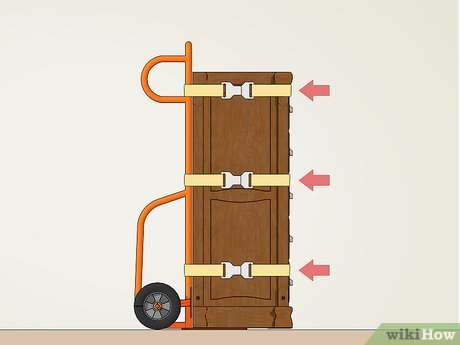
For moving furniture from one room to another or out to a truck, a flat platform dolly (also called a furniture dolly or hand truck) lets you roll rather than carry. Tip the piece onto the dolly, secure with stretch wrap or a ratchet strap so it doesn’t shift, then roll. On hard floors, dollies are extremely efficient. On carpet, they require more effort. For appliances, a two-wheel appliance dolly with a securing strap allows a single person to tilt and roll large, upright items like refrigerators and washing machines.
Step 4 — Navigate Doorways
Most large furniture pieces need to be tilted to fit through a standard doorway. For sofas: stand the sofa on its end (cushions pointing up) and carry it through in the upright position if it’s short enough to fit (most sofas are 3 feet deep — well under a standard 8-foot ceiling). If it doesn’t fit upright, try the “sofa pivot”: tilt the sofa to stand on its end in the doorway, then pivot and rotate it through. Remove door hinge pins if the door itself is in the way. Protect doorframe edges with moving blankets.
Step 5 — Carry Using Proper Lifting Form
Stand close to the piece, feet shoulder-width apart. Squat down — don’t bend at the waist — keeping your back straight and upright. Grip the piece firmly at a solid structural point (a leg, rail, or frame edge — not a drawer pull or decorative element that can break off). On the count of three with your partner, stand up together, using leg muscles to drive the lift. Keep the load close to your body — the further out you hold it, the more strain on your lower back. Walk carefully with controlled steps, not shuffling.
Step-by-Step: How to Move Heavy Furniture Upstairs
Step 1 — Measure the Stairway First
Measure the stairway width, the ceiling height at the landing turn, and the height of the upstairs hallway. Compare against the furniture dimensions in multiple orientations — standing upright, on its side, end-over-end. Most standard stairways are 36 inches wide, which means a 35-inch wide dresser can theoretically fit — but the landing turn requires extra maneuvering room. Long furniture (sofas, bed frames) often requires creative angling around landing turns that can only be figured out by trial and approach.
Step 2 — Use Moving Straps for Stairs
Moving straps (forearm/shoulder straps) are the best tool for moving furniture upstairs. They distribute the weight across your shoulders and core rather than concentrating it in your hands and arms, significantly reducing fatigue and injury risk. Loop the straps under the furniture piece and adjust so the furniture hangs level between two people. The person going up the stairs first takes the upper end; the person below controls the lower end. Work in sync — the upper person lifts and steps back, the lower person guides and supports the lower end.
Step 3 — Position People Correctly on the Stairs
The person at the upper (destination) end controls the pace and direction. The person at the lower end provides support and controls lowering if needed. Never have the lower person pushing hard — most of the force should come from the upper person lifting. Keep the piece tilted back slightly (upper end higher) — this keeps the weight over the center of gravity and reduces the pull-forward force on the upper person. If a third person is available, have them spot and guide from the side.
Step 4 — Navigate the Landing Turn
The 90-degree or 180-degree landing turn is the hardest part of stair moving. Pause on the landing, set the piece down momentarily if needed, and reassess the angle needed to navigate the turn. For long pieces like sofas and bed frames, you’ll need to rotate the piece — experiment with angles before committing to any direction. The classic couch pivot at a stair landing involves standing the couch on its end, rotating around the newel post, and lowering it back down. Go slowly, communicate constantly, and don’t force — forced angles damage walls, railings, and furniture.
Step 5 — Protect Walls and Stairs
Wrap furniture corners in moving blankets to protect walls from dings and the furniture from scratches. Place non-slip rubber mats on the stairs before carrying — carried furniture can shift weight unexpectedly and cause a slip. Lay a moving blanket on the landing to set pieces down without scratching. After the move, check stair treads and wall corners for any damage that occurred during the move.
Pro Tips for Moving Heavy Furniture
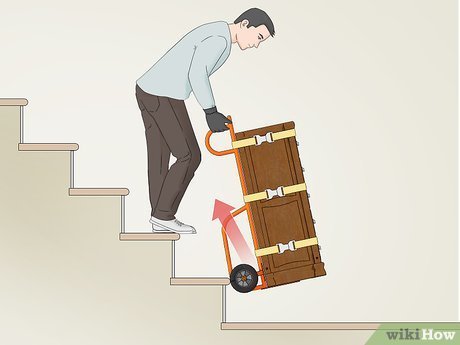
- Rent an appliance dolly from a hardware store for the day — it typically costs $15–$25 and eliminates most of the hard lifting for heavy upright pieces.
- Move furniture in the morning when you’re fresh — fatigue causes poor form, and poor form causes injuries.
- Use moving blankets on hardwood stairs to prevent both scratches to the furniture and slip-and-fall risk from smooth furniture bases on smooth stair treads.
- For very heavy items (pianos, cast iron stoves), hire professionals — the risk to yourself and your home from improper moving techniques is too high.
Common Mistakes to Avoid
- Moving fully loaded furniture: Remove all items from drawers, shelves, and cabinets before moving. Even a partially loaded dresser weighs significantly more than an empty one, and shifting interior weight changes the balance unexpectedly.
- Using doorknobs or handles as handholds: Decorative hardware can snap off under body weight. Always grip solid structural points — a frame rail, a leg, a solid edge.
- Trying to get a sofa through a doorway with force: Force damages walls, doorframes, and furniture. Take the piece back, reassess the angle, and try a different orientation.
- Skipping the path assessment: The most common moving day problem is discovering mid-carry that the piece won’t fit through a doorway. Measure and plan before lifting.
Frequently Asked Questions
How do you move a heavy dresser by yourself?
Solo dresser moving is possible with furniture sliders. Remove all drawers (move them separately), place felt sliders under each corner of the empty dresser frame, and slide the dresser across hard floors with controlled pushes. For carpet, use plastic sliders. For getting a dresser through a doorway alone, tilt it to one side and angle it through. Never drag a loaded dresser — the weight can topple it suddenly.
How do you move a heavy sofa through a narrow doorway?
The “sofa hook” technique works for most situations: stand the sofa on its end (cushions facing up), and angle it through the doorway diagonally. For sofas too long to stand upright, try the “pivot” — stand it upright in the doorway opening and rotate around the doorframe. If the sofa truly won’t fit, remove the sofa legs (usually just screws) to gain 3–5 inches of clearance and try again. As a last resort, remove the interior door from its hinges to gain an extra 1.5–2 inches.
What is the best tool for moving heavy furniture?
For flat-surface moves, furniture sliders are the most useful all-around tool — they eliminate friction and allow one or two people to move heavy pieces smoothly. For stair moves, moving straps are the best investment — they shift the weight to your core and legs (your strongest muscles) and free your hands for balance and control. A furniture dolly is best for long-distance transport within a home or to a truck.
How many people do you need to move a sofa upstairs?
At minimum two strong adults. Three is better — two to carry and one to guide and assist at tight corners. For very heavy sofas (over 250 lbs) or tight stairways with sharp turns, four people makes the process significantly safer and faster.
How do you protect hardwood floors when moving furniture?
Use felt furniture sliders under all legs and contact points. Lay moving blankets or heavy cardboard on the floor along the move path. Avoid sliding furniture directly on hardwood — even felt sliders can scratch if debris gets trapped underneath. Lift and place rather than drag wherever possible.
Conclusion
Moving heavy furniture safely is about tools, planning, and technique — not brute strength. Disassemble everything you can, use furniture sliders on flat floors, and use moving straps on stairs. Measure doorways and stairways before starting, communicate constantly with your moving partner, and protect floors and walls with blankets. Done right, even a heavy wardrobe upstairs is a manageable two-person job.
Once the furniture is in its new spot, check our guide on How to Level Furniture to make sure everything is stable on its new floor. If you’re prepping for a bigger move, see our article on How to Pack Furniture for Moving for protection and wrapping techniques.
