
Getting rid of old furniture takes more than dragging it to the curb. Depending on the piece’s condition, your location, and how quickly you need it gone, your options range from free donation pickup to paid junk removal services. This guide covers every route — from earning a little money by reselling, to donation, recycling, and disposal — so you can choose the right method for your situation and avoid leaving a sofa sitting on your driveway for a week.
What You’ll Need
Tools (for disassembly/removal)
- Screwdrivers and Allen wrenches (for disassembling flat-pack or modular furniture)
- Moving blankets or old sheets (to protect floors and doorways during removal)
- Furniture dollies or sliders (for heavy pieces)
- Tape measure (to check doorway clearances)
- Utility knife (for cutting down large upholstered items if recycling padding separately)
Information to Have Ready
- Furniture dimensions and current condition (for online listings or donation calls)
- Approximate weight (for scheduling haul-away services)
- Your ZIP code (for finding local donation and recycling options)
Safety and Precautions
- Never carry heavy furniture alone. Even simple pieces can injure your back, strain shoulders, or cause falls on stairs. Use sliders, dollies, or recruit help.
- Check stairway and doorway clearances before starting to avoid getting stuck mid-move.
- Disassemble large pieces (beds, wardrobes, sectional sofas) before attempting removal — moving a disassembled piece is almost always safer and easier than moving it whole.
- Do not place furniture at the curb without checking local ordinances — many municipalities have bulky item rules and scheduled pickup programs; leaving furniture outside at wrong times can result in fines.
Step-by-Step: How to Dispose of Old Furniture
Step 1 — Assess the Condition and Choose the Right Path
Your best disposal option depends directly on the furniture’s condition.
- Good condition (no major stains, damage, or odors): Donation, resale, or give-away are all viable and preferred options. Reusing furniture keeps it out of the landfill and helps others.
- Fair condition (minor wear, small stains, slightly dated style): Donation is usually still possible through some organizations. Free give-away platforms like Facebook Marketplace (free section) or Craigslist free section often attract takers for fair-condition pieces.
- Poor condition (significant damage, strong odors, mold, or pest history): Donation is not appropriate. Recycling or disposal via junk removal or municipal bulky item pickup are the right options.
Step 2 — Donate to a Local Charity Organization
Donating furniture in good condition is the best outcome — the piece stays useful, you get a tax deduction receipt, and it’s often free to arrange. Major organizations that accept furniture donations in the US include Habitat for Humanity ReStores, Salvation Army, Goodwill, local furniture banks, and AMVETS. Many of these offer free pickup for large items — call ahead to schedule and confirm they currently accept the type of furniture you have. Donation requirements vary: most require furniture to be free of major damage, stains, bed bugs, and strong odors. Disassemble large pieces and have them ready to carry out for pickup.
Step 3 — Sell or Give Away Online
For furniture in good or fair condition, selling online is worth attempting before disposal. Facebook Marketplace, Craigslist, Nextdoor, and OfferUp are the primary platforms for local furniture resale. List the item with clear photos from multiple angles, honest description of condition, and dimensions. Priced reasonably, most solid wood and brand-name furniture sells within a week. For items you just want gone quickly, list them for free — items labeled “free” on Facebook Marketplace typically generate pickup inquiries within hours.
Step 4 — Schedule Municipal Bulky Item Pickup
Most US cities and counties offer scheduled bulky item pickup services for large furniture — often free or low-cost for residents. Check your municipality’s public works or sanitation department website, or call 311 (available in most major cities) to schedule. Most programs require you to call ahead and are not the same as regular trash day — furniture left at the curb without a scheduled pickup may not be collected and can result in a fine. Typical rules: schedule in advance, place items at the curb the morning of your scheduled day, maximum item count per pickup, and no hazardous materials.
Step 5 — Hire a Junk Removal Service
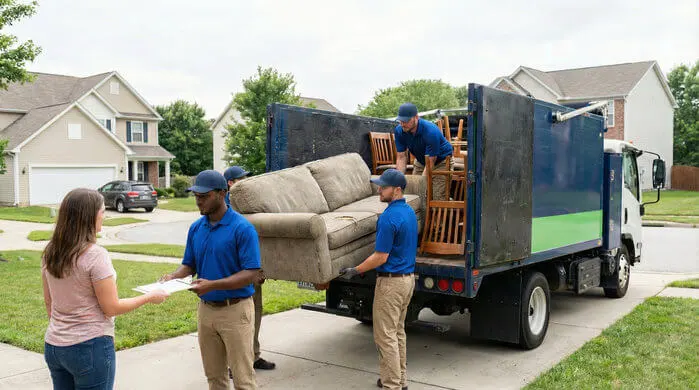
If speed and convenience are the priority, junk removal services take anything — regardless of condition — and handle all the heavy lifting. Companies like 1-800-GOT-JUNK, Junk King, LoadUp, and local independent services charge based on volume (how much space the items take in their truck). Expect to pay $75–$250 for a single large piece, or $200–$500 for a full room of furniture. Most offer online booking and same-day or next-day service. Some junk removal services sort donations from recyclables and deliver usable pieces to charities — check before booking if this matters to you.
Step 6 — Recycle Materials Separately
If you’re willing to disassemble furniture, individual materials can often be recycled separately. Metal components (drawer slides, chair bases, metal frames) can go to a scrap metal recycler. Solid wood can go to a wood recycling facility or be repurposed as firewood or mulch. Foam cushion filling is difficult to recycle through municipal programs but can be taken to specialized foam recyclers. Upholstery fabric in good condition can be donated to theater groups or textile recyclers. Call your local solid waste authority to find material-specific recycling options in your area.
Step 7 — Disassemble for Easier Transport
Before any removal method — donation, junk removal, or curb pickup — disassemble large furniture pieces for easier handling. Remove legs from tables and sofas, detach bed frames into individual components, unscrew sectional pieces, and empty and detach drawers from dressers. Keep screws and hardware in a labeled bag taped to one of the components — this helps if the recipient wants to reassemble the piece. Disassembled furniture is significantly easier to carry through doorways and stairways, and takes up less space in a haul-away truck (which can lower your cost).
Step 8 — Check Retailer Take-Back Programs
When replacing old furniture with new, many retailers offer take-back or haul-away services. IKEA has a furniture buy-back program (for IKEA pieces in reasonable condition) and accepts some items for recycling. Many appliance and mattress retailers include haul-away of old items as part of a new purchase delivery. Ashley, Restoration Hardware, and other major retailers occasionally offer haul-away for large pieces. Ask before completing your new purchase — it may be included in the delivery fee or available as a low-cost add-on.
Quick Reference: Disposal Options by Condition
| Condition | Best Option | Cost |
|---|---|---|
| Excellent / Good | Donate (Habitat ReStore, Salvation Army) or sell online | Free (or earn money) |
| Fair | Free listing on Facebook Marketplace / Craigslist | Free |
| Poor / Damaged | Municipal bulky item pickup | Free or low-cost |
| Any condition | Junk removal service | $75–$500 |
| New purchase | Retailer haul-away / buy-back | Free or low-cost add-on |
Pro Tips for Furniture Disposal
- Call donation centers before driving there — most have specific hours and maximum items per visit, and requirements change. A call saves a wasted trip.
- Take clear photos of the piece before listing online — well-lit, clutter-free photos from multiple angles dramatically increase how quickly items are claimed.
- For free listings, mark “must pick up by [date]” — adding urgency reduces the number of people who express interest and then don’t show.
- Do not donate furniture with known bed bug or pest history — this spreads infestations and is ethically problematic regardless of how good the piece looks otherwise.
Common Mistakes to Avoid
- Leaving furniture at the curb without scheduling: Illegal dumping can result in fines. Always schedule bulky item pickup with your municipality.
- Donating damaged or heavily stained items: Charities have to pay to haul and dispose of items they can’t sell — donating unusable items wastes their resources and is not the goodwill gesture it appears to be.
- Moving a sofa alone: Sofas are awkward, heavy, and responsible for more moving injuries than almost any other household item. Always get a helper.
- Forgetting to remove items from drawers and shelves: This sounds obvious but is a common oversight — check all drawers, doors, and compartments before any piece leaves the house.
Frequently Asked Questions
Will Habitat for Humanity pick up furniture from my house?
Many Habitat for Humanity ReStore locations offer free furniture pickup. Availability varies by location — check the Habitat ReStore website (habitat.org/restores) and enter your ZIP code to find your local store’s contact information and pickup scheduling. Items must be in good, sellable condition — no major damage, stains, or odors.
How do I get rid of a couch for free?
The easiest free options: (1) List it as free on Facebook Marketplace or Craigslist — it will likely be claimed within hours. (2) Schedule a free municipal bulky item pickup through your city or county waste department. (3) Contact local charities for free donation pickup if the sofa is in good condition.
Can I put furniture in a dumpster?
Most municipal trash dumpsters prohibit large furniture — check local waste disposal rules. If you’re renting a roll-off dumpster specifically for a cleanout project, furniture is generally accepted. Many junk removal companies also accept all furniture types, including sofas, mattresses, and large wood pieces.
What furniture is hardest to donate?
Mattresses and upholstered items with stains or odors are the hardest to place with charities. Particleboard furniture (IKEA-style flat-pack) in poor condition is also difficult to donate because it doesn’t survive disassembly and reassembly well. Large sectional sofas can be challenging because few charities have vehicles large enough to transport them and storage space is limited.
How do I dispose of a mattress?
Mattresses require special disposal. Options include: municipal mattress pickup (call your waste department — many cities have a specific mattress disposal program), mattress recycling centers (mattress components — metal springs, foam, fabric — are recyclable), retailer take-back when purchasing a new mattress (most retailers offer this service), or junk removal services that handle mattresses (typically $50–$100 extra for a mattress alongside other junk removal).
Conclusion
Disposing of furniture responsibly comes down to condition: donate good pieces, give away fair pieces online, and schedule municipal pickup or hire junk removal for items that can’t be reused. Always disassemble large pieces before removal to make the process easier and safer. Avoid curb dumping without scheduling, and never donate furniture that’s too damaged to be sold and reused.
If your furniture just needs some work before it’s ready to donate or sell, see our guide on How to Restore Wooden Furniture — a few hours of refinishing can mean the difference between a donation and a dumpster. For moving pieces out of your home safely, check out How to Move Heavy Furniture.
