
Installing a bay window is one of the more involved DIY window projects — it requires enlarging or creating an opening in the wall, building structural support, setting the window unit level and plumb, and weatherproofing it thoroughly. Done right, a bay window adds substantial light, space, and curb appeal. This guide walks you through the full process from rough opening to interior finish, including the support cable and knee-wall seat options that most guides skip.
What You’ll Need
Tools
- Tape measure and pencil
- 4-foot level
- Circular saw and reciprocating saw
- Drill and impact driver
- Framing square
- Chalk line
- Pry bar
- Caulk gun
- Hammer
- Safety glasses and work gloves
Materials
- Bay window unit (pre-assembled factory unit)
- Temporary support wall lumber (2x4s) for load-bearing work
- Header lumber (doubled 2×10 or LVL beam — sized per local code)
- Jack studs and king studs (2×4 or 2×6 to match wall)
- Structural support cables or knee wall lumber (for bay window seat/cantilever support)
- L-brackets or lag screws (for window-to-framing attachment)
- Cedar shims
- Housewrap or building wrap
- Self-adhering flashing tape (wide format, min. 4-inch)
- Exterior silicone caulk (paintable)
- Drip cap flashing (metal)
- Backer rod
- Insulation (rigid foam or fiberglass batt)
- Interior finish trim and drywall
Safety Precautions
Bay window installation involves cutting through exterior walls, which may be load-bearing. Before removing any studs, determine if the wall carries roof or floor loads. If it does, you must install a temporary support wall parallel to and 2 feet from the exterior wall before cutting any framing. Failure to support load-bearing walls can cause ceiling sag, framing failure, or worse. If you have any doubt about load-bearing status, consult a structural engineer or licensed contractor.
Bay window units are large and very heavy — typical units weigh 200–500 pounds. Have at least three people for the lift: two to carry the unit and one to guide it into position from outside. Never attempt this with fewer than two helpers.
When cutting exterior wall sheathing, watch for electrical wiring, plumbing, and insulation inside the wall cavity. Probe the wall with a stud finder and outlet detector before cutting.
Plan Your Bay Window Installation
Bay windows come in standard configurations: the most common is a 30/45 degree angle on the two side “casement” or fixed windows, with a large center picture window. Sizes typically range from 6 to 10 feet wide and 3 to 5 feet tall.
Decide on the support method before you start. Bay windows cantilever out from the wall — they need either: (a) a structural knee wall below (creates a window seat), (b) support cables attached from the header above, or (c) a combination. The factory instructions for your specific bay window unit will specify which method is required. Do not skip support — unsupported bay windows sag and crack sealant, causing water infiltration within a few years.
Check with your local building department about permit requirements. In most jurisdictions, cutting a structural opening and installing a window larger than 24 square feet requires a permit.
How to Install a Bay Window Step by Step
Step 1: Mark and Frame the Rough Opening
Mark the rough opening on the interior wall at the correct height and width per your bay window unit’s installation instructions (usually unit width + 3 inches for framing clearance, and unit height + 3 inches). The rough opening for a bay window is larger than a standard window because you’re framing the angled “bucks” (returns) on each side.
If this is a new opening (not replacing an existing window), install a temporary support wall before cutting any studs. The temporary wall should be 2 feet from the exterior wall, running parallel to it, and fully supported at top and bottom plates.
Step 2: Install the Header
Cut away the interior wall finish material (drywall) to expose the framing in the rough opening area. Remove the existing studs within the opening. Install the new header — a doubled 2×10, 4×10, or LVL beam sized per your local code for the span — across the top of the opening, supported by jack studs on each side. Add king studs beside the jack studs for full-height rigidity. The header must be fully supported before you proceed.
Step 3: Cut the Exterior Wall
From the inside, drill reference holes at the four corners of the rough opening through the exterior sheathing. Go outside and snap chalk lines connecting these holes. Use a circular saw set to the depth of the sheathing only (do not cut deeper than necessary) to cut along the chalk lines. Use a reciprocating saw for corners and areas near framing members. Remove the cut section of siding and sheathing. Peel back the housewrap and fold it inward — you’ll lap new housewrap over it later.
Step 4: Frame the Seat and Support System
If using a knee wall: frame a small 2×4 knee wall below the rough opening that will support the bottom of the bay window unit and create the window seat box. The knee wall extends from the house foundation line or floor joist to the sill height of the window. Frame it like a small stud wall, then sheathe the exterior face with plywood.
If using support cables: install the cable anchor hardware into the header above (or into the rim joist above the opening) per the manufacturer’s instructions. The cables angle down from inside the attic or wall cavity to the outer corners of the bay window unit. Do not tension the cables until the window is set.
Step 5: Apply Flashing to the Rough Opening
Before setting the window, flash the rough opening: apply self-adhering flashing tape to the sill (bottom) first, wrapping it up the sides. Then flash the sides, and finally the top. Each layer should overlap the one below (sill flashing over nothing, sides over sill, head over sides). This sequence ensures water that gets behind the window always sheds outward. Install metal drip cap flashing at the top of the opening before applying the head flashing tape.
Step 6: Apply Sill Caulk and Set the Window
Run two beads of exterior silicone caulk along the sill flashing where the window unit will sit. With your helpers, lift the bay window unit from outside and guide it into the rough opening. The unit will rest on the sill plate of the rough opening (or on the knee wall top plate if using that support method). Do not fully seat the unit until it is positioned correctly.
Step 7: Shim, Level, and Plumb
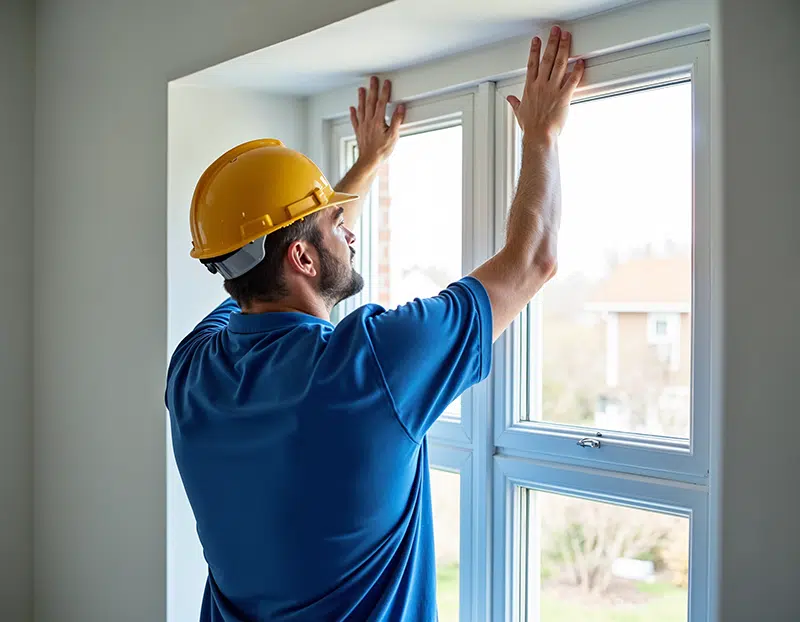
Place a level across the window sill unit from inside. Slide cedar shims under the unit at the corners to bring it level. Check the side jambs for plumb. The bay window unit needs to be level side-to-side and plumb front-to-back (not leaning into or away from the house). Once level and plumb, temporarily tack-nail through the exterior casing into the framing to hold the unit while you check your measurements.
Step 8: Fasten the Window Unit
Drive screws or nails through the window unit’s nailing fin (the flat flange around the exterior perimeter) into the framing around the rough opening. Follow the manufacturer’s fastener schedule — typically one fastener every 16 inches around the perimeter. At the top corners, drive two 3-inch structural screws through the window framing into the header. If using support cables, attach the cable ends to the outer corners of the unit and tension per manufacturer specs.
Step 9: Weatherproof the Exterior
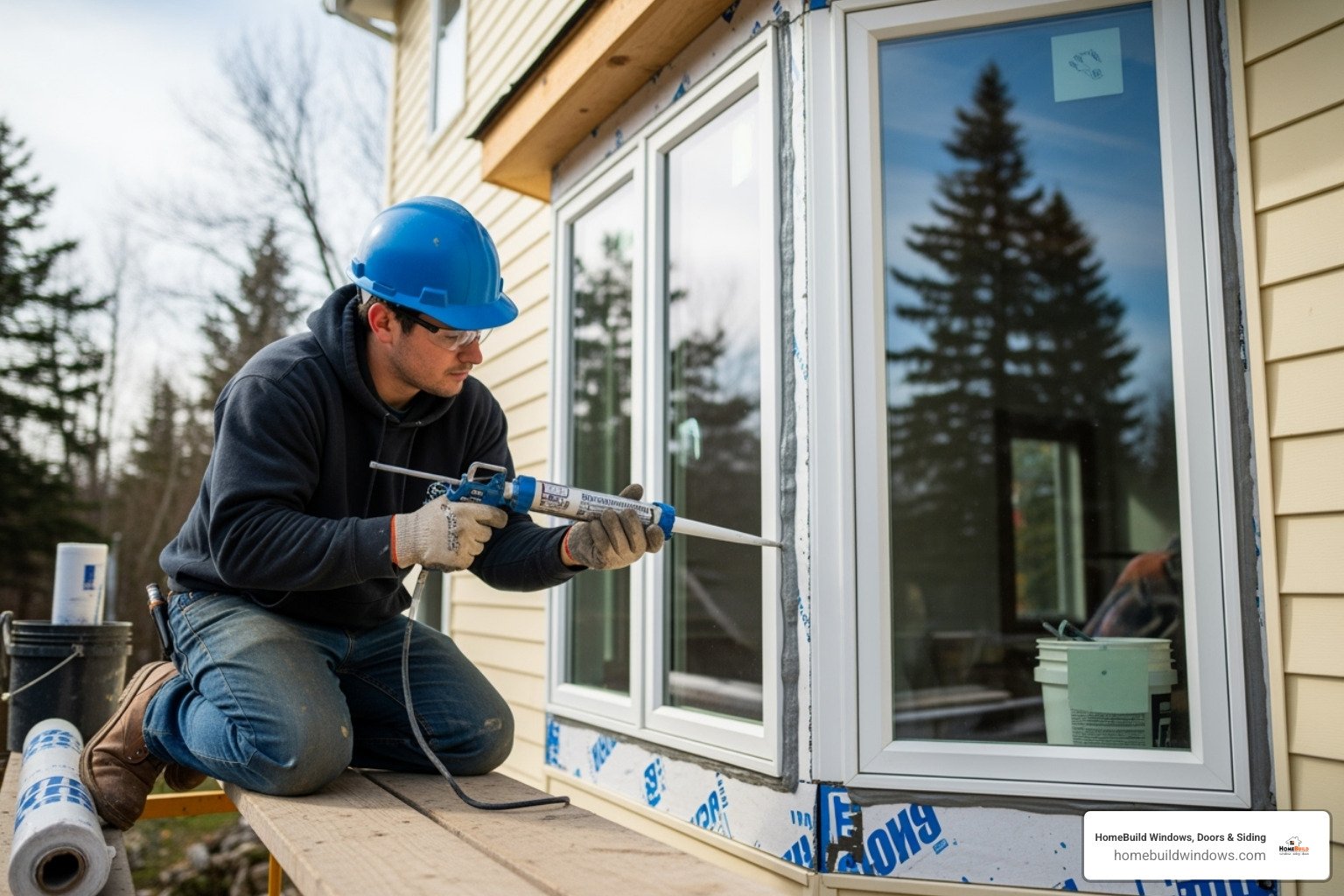
Lap the previously folded-back housewrap over the sides of the window unit. Tape all seams with flashing tape. Apply exterior caulk around the perimeter of the window’s nailing fin, leaving the bottom corners open (weep gap for drainage). Flash the top of the window opening with a metal drip cap and lap new housewrap over it. Install backer rod in any large gaps before caulking.
Step 10: Insulate, Finish the Interior, and Install the Seat
Fill the cavity between the window unit and the rough framing with rigid foam insulation or fiberglass batt. Install the interior extension jambs (wood strips that extend the window frame to the interior wall face), then install the window seat board (if using a knee wall), side casings, and head casing. Paint or stain all raw wood before final installation to prevent moisture absorption. Hang and adjust the windows per the manufacturer’s instructions, and install hardware.
Pro Tips and Common Mistakes
- Buy a factory-assembled unit: Don’t try to build a bay window unit from scratch. Factory units are precisely angled and sealed — field-built units almost always develop air and water leaks at the angled joints.
- Never skip the support system: The number one cause of bay window failure is missing or undersized support. Use the cable or knee wall method as specified — a bay window in open cantilever will visibly sag within 3–5 years.
- Flash sill-first, always: Reversing the flashing sequence (head first) traps water. Sill → sides → head is the only correct order.
- Leave weep holes at the sill: Don’t seal the very bottom corners of the nailing fin caulk. Leave two gaps of about 1/2 inch at each bottom corner for moisture weep drainage.
- Use only silicone caulk outside: Latex caulk deteriorates quickly on exterior applications. Use 100% silicone or polyurethane exterior caulk rated for 50 years.
Troubleshooting
The Bay Window Is Leaking at the Top
This is almost always a flashing failure at the head. Check that the metal drip cap is installed and that housewrap laps over the top of the window, not under it. Re-tape the head flashing seam with fresh flashing tape and apply a fresh bead of caulk under the drip cap.
The Bay Window Unit Is Difficult to Open or Sagging
Sagging means the support system is insufficient or the window was installed without support. Add cable support from the header above or reinforce the knee wall below. Do not attempt to re-level the unit without addressing the root cause — it will sag again.
There’s Condensation Between the Glass Panes
Failed insulated glass unit (IGU) seals cause inter-pane condensation. This is a glass manufacturing issue, not an installation problem, and is typically covered under the window manufacturer’s warranty. Contact the manufacturer for a replacement glass unit.
Frequently Asked Questions
Do I need a permit to install a bay window?
In most US jurisdictions, yes — if the installation involves cutting a new opening in an exterior wall or enlarging an existing one, a building permit is required. Check with your local building department before starting. Inspections typically cover the header sizing, structural support, and weatherproofing.
How long does bay window installation take?
For a competent DIYer, plan 2–3 days: one day for framing and opening, one day for setting the window and weatherproofing, and one day for interior finish work. This assumes no unexpected framing complications. Professionals typically install in 6–8 hours for the rough work and weatherproofing, with interior trim work separate.
Can a bay window be load-bearing?
Bay windows themselves are not load-bearing, but the wall they’re installed in may carry structural loads. The header installed above the rough opening is what carries those loads. Always install an appropriately sized header — undersized headers cause sagging and cracking over time.
How much does it cost to install a bay window?
Bay window units range from $800 to $4,500 depending on size, material (vinyl vs. wood vs. fiberglass), and glass package. Professional installation adds $600–$2,000. A DIY installation with proper materials can cost $1,000–$2,500 total depending on the unit selected and whether structural work is needed.
What’s the best material for a bay window?
Vinyl bay windows are the most popular for DIY installation — they’re lightweight, low maintenance, and don’t require painting. Wood bay windows offer superior aesthetics and can be painted or stained, but require more maintenance. Fiberglass bay windows offer the best strength-to-weight ratio but cost significantly more.
Conclusion
Bay window installation is a substantial project, but it’s fully achievable for a prepared DIYer who takes the time to frame correctly, install proper structural support, and weatherproof meticulously. The three areas where most DIY bay windows fail are inadequate support, skipped or reversed flashing, and missing weep drainage. Nail those three details and your bay window will be watertight and structurally sound for decades.
For related projects, visit our guides on How to Replace a Window and How to Install Window Insulation Film to keep your new bay window energy-efficient.
