
Dirty sliding glass door tracks are one of the most overlooked maintenance items in a home — and one of the most satisfying to fix. Built-up grit, dead insects, leaves, and dried lubricant residue create friction that makes even a well-adjusted door drag and grind. A deep clean of both the bottom track and top channel restores smooth sliding in about 30–45 minutes. This guide covers cleaning, lubricating, and maintaining aluminum, vinyl, and steel tracks.
What You’ll Need
| Tools and Supplies | Cleaning Agents |
|---|---|
| Stiff-bristle brush (old toothbrush works great) | White vinegar |
| Vacuum with crevice tool | Dish soap (a few drops) |
| Butter knife or flat putty knife | Baking soda (for heavy buildup) |
| Old towels or rags | Spray bottle with water |
| Cotton swabs | Rubbing alcohol (for stubborn residue) |
| Dry silicone lubricant spray | WD-40 (for rust only — wipe clean before lubricating) |
| Paper towels | — |
Safety and Precautions
- Don’t use oil-based lubricants in door tracks. WD-40, petroleum jelly, and similar products feel smooth initially but attract dust and dirt rapidly, building up into a sticky paste that worsens the problem. Use dry silicone lubricant spray only.
- Be careful lifting or removing the door. Sliding glass doors are heavy — often 50–100 lbs or more. If the door needs to come out of the frame for deep cleaning, have a second person help and wear closed-toe shoes.
- Avoid harsh abrasive cleaners on aluminum tracks. Abrasive scrubbers scratch aluminum, which creates rough edges that collect more dirt and can chip off into the track. Use soft brushes and non-abrasive cleaning solutions.
Step 1: Remove Loose Debris From the Track
Dry Removal First — Before Any Liquid
- Slide the door fully open. Use a vacuum cleaner with a crevice tool to remove all loose dirt, debris, insects, and leaves from both the bottom track groove and the top channel. Move the door back and forth to expose the full track length.
- Use a butter knife or thin putty knife wrapped in a rag or paper towel to scrape out compacted material from the track corners. The groove profile traps debris tightly — work the knife along the full length of each corner.
- For deep corners: use a cotton swab or fold a paper towel into a narrow strip and drag it through the groove.
- Vacuum again after the scraping step to remove all loosened material before adding any moisture.
Step 2: Deep Clean the Bottom Track
Baking Soda and Vinegar for Heavy Buildup
- Sprinkle baking soda generously into the bottom track groove. The baking soda acts as a mild abrasive and deodorizer.
- Pour or spray white vinegar directly onto the baking soda. The fizzing reaction loosens caked-on dirt and oxidized residue. Let it work for 5–10 minutes.
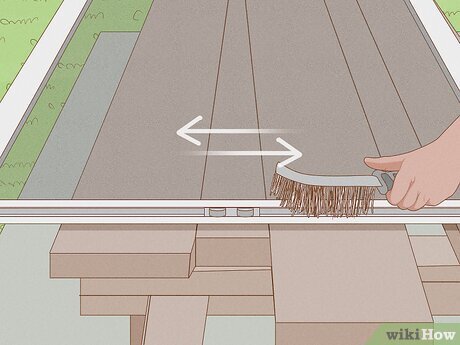
- Scrub the track with a stiff-bristle brush — an old toothbrush is ideal for getting into the groove corners. Use short, firm strokes along the full track length.
- For particularly stubborn spots: apply a small amount of dish soap directly to the bristles and scrub again.
- Wipe the track clean with a damp rag, then dry completely with a clean towel. Moisture left in the track can accelerate oxidation on metal tracks.
- Repeat the process on any section that still shows dark residue or discoloration.
Step 3: Clean the Top Channel
Often Ignored — Also Critical
The top channel guides the door and also accumulates dust, oxidized metal, and debris. It’s narrower than the bottom track and harder to reach but just as important for smooth operation.
- Spray white vinegar or a diluted dish soap solution into the top channel with a spray bottle.
- Use a long-handled brush, a folded rag on a butter knife, or a cotton swab to scrub the channel walls and base. Work along the full length.
- Wipe clean with a damp cloth or paper towel wrapped around a butter knife to reach the channel interior.
- Dry the channel thoroughly — leave the door open for 10–15 minutes before lubricating.
Step 4: Clean the Rollers (If the Door Still Drags)
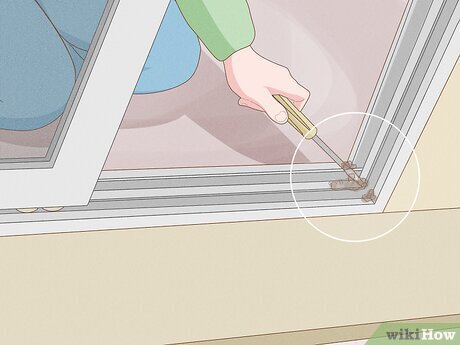
Inspect and Clean the Wheels That Carry the Door
The bottom of a sliding glass door rides on two or four rollers (wheels) that run in the bottom track. Dirty or damaged rollers are a common cause of stiff sliding even after the track is clean.
- Look along the bottom edge of the door — you should see the roller housings at each end of the door panel. Some are visible from the inside edge, others are accessed from below.
- Use a cotton swab and rubbing alcohol to clean each roller wheel and its housing. Remove any hair, debris, or caked-on dirt from around the axle.
- Spin each roller with your finger — it should spin freely. If a roller is jammed, cracked, or won’t spin, it needs replacement (see Step 6).
- Most rollers have an adjustment screw (usually a Phillips head) on the door edge that raises or lowers the roller height. If the door is dragging on the track surface rather than riding on rollers, turn the adjustment screw to raise the door until there’s a small clearance over the track surface.
Step 5: Lubricate the Track
Dry Silicone Only — No Oil
- Confirm the track is completely clean and dry before lubricating. Any remaining dirt will mix with the lubricant and create paste buildup.
- Shake the dry silicone spray can and apply a light, even coating along the full bottom track groove. Hold the can 4–6 inches away and apply in a slow, continuous pass.
- Slide the door back and forth several times to distribute the lubricant and work it into the roller wheels.
- Spray a light coat into the top channel as well — use a straw applicator if included with the can to direct the spray.
- Wipe away any overspray from the door frame or glass immediately with a dry cloth.
Do not use: WD-40 (oil-based, attracts dirt), petroleum jelly, cooking spray, or 3-in-1 oil. These all leave oily residues that attract and hold dirt.
Step 6: Replace Worn Rollers (If the Door Still Drags After Cleaning)
A Clean Track Won’t Fix a Bad Roller
- To access the rollers, you typically need to remove the door: slide it to the center of the opening, tilt the top of the door inward to release it from the top channel, then lift the door up and out of the bottom track. Have a helper ready.
- With the door removed and lying flat on a padded surface, locate the roller housing on each bottom corner. Remove the Phillips screw and pull the roller assembly out.
- Take the old roller to a hardware store or sliding door parts supplier to match the wheel diameter, width, and housing style. Brand and model information may be printed on the door edge or inside the roller housing.
- Snap or screw the new roller assembly in place. Test by rolling each wheel before re-hanging the door.
- Reinstall the door: place the bottom edge on the track, tilt upright into the top channel, and lower. Adjust the roller height screws until the door glides smoothly and sits level.
Pro Tips and Common Mistakes
- Clean tracks quarterly, not annually. Sliding doors used daily accumulate debris fast. A quick 10-minute vacuum and wipe every 3 months prevents the buildup that turns into a 45-minute deep-clean job.
- Don’t skip drying between cleaning and lubricating. Spraying lubricant over a damp track dilutes it and causes it to run rather than coat. Let the track air dry for at least 10 minutes first.
- Check the weatherstripping while you’re in there. Sliding door weatherstripping runs along the side jambs and often deteriorates around the same time the track gets dirty. If it’s torn or compressed flat, replace it now while the door is pulled and the area is clean.
- A clean track won’t fix a bent track. If the bottom track has a dent, bend, or raised section, the door will always drag at that point regardless of cleanliness. Bent aluminum tracks can sometimes be tapped flat with a rubber mallet; severely damaged tracks need replacement.
Troubleshooting
| Problem | Likely Cause | Fix |
|---|---|---|
| Door still drags after cleaning and lubricating | Worn rollers or bent track | Inspect and replace rollers; tap out track dents |
| Door skips or jumps while sliding | Debris lodged in track or damaged roller | Deep-clean again; check roller for flat spot |
| Track gets dirty again very quickly | Oil-based lubricant attracting dirt | Strip all lubricant with rubbing alcohol; use dry silicone only |
| Door is hard to slide in hot weather only | Frame expansion in heat | Adjust roller height screws slightly to compensate |
| Water seeps under the door at the track | Weep holes in the track are blocked | Clear weep holes (small holes at the outer track edge) with a toothpick |
Frequently Asked Questions
How often should I clean sliding glass door tracks?
For a door used daily, a quick vacuum and wipe every 2–3 months prevents heavy buildup. A deep clean with baking soda and vinegar twice a year — spring and fall — is a good maintenance schedule. Doors in dusty environments or near beaches may need more frequent attention.
What is the best lubricant for sliding glass door tracks?
Dry silicone spray lubricant is the best choice. It reduces friction without attracting dust and doesn’t leave an oily residue. Brands like WD-40 Dry Lube, 3M Silicone Lubricant, or Blaster Dry Lube all work well. Avoid any petroleum-based or oil-based products, including standard WD-40, which creates a sticky residue over time.
Why does my sliding door keep jumping off the track?
This is usually caused by a bent or damaged track, worn rollers that no longer engage the track correctly, or debris in the track that forces the door up. Clean the track thoroughly, inspect the rollers for damage, and check the full track for dents or bends. Adjust the roller height if the door sits too high in the track.
Can I clean the door tracks without removing the door?
Yes — for routine cleaning, you don’t need to remove the door. Slide it fully to one side to expose the track, clean and lubricate what’s accessible, then slide it the other way and repeat. Only remove the door if you need to clean underneath the rollers or replace them.
What’s the black residue in my sliding door track?
The black residue is typically a mix of oxidized aluminum particles, dried lubricant, dirt, and organic debris. The aluminum track wears slightly over years of use, and the fine particles mix with moisture and dirt to form a dark paste. The baking soda and vinegar treatment effectively dissolves and lifts this residue.
Conclusion
Sliding glass door tracks are a high-traffic maintenance point that most homeowners overlook until the door becomes genuinely hard to move. The baking soda and vinegar method cuts through years of buildup in one session, and following up with dry silicone lubricant keeps the door gliding smoothly for months. Make it a quarterly habit and you’ll never deal with a grinding, dragging sliding door again.
While you’re maintaining the door area, it’s worth checking the weatherstripping too — see our complete guide on how to seal and weatherproof a door for the full treatment. And if you’re also dealing with aluminum window frames that need cleaning, our guide on how to clean aluminum window frames covers the same kind of oxidation and dirt removal for window tracks.
