
Cleaning a sofa the right way starts with one thing most people skip: the care tag. That tiny label tells you exactly what cleaning method is safe for your specific fabric. Use the wrong cleaner on a polyester couch and you get shrinkage; use water on a dry-clean-only fabric and you get a permanent watermark. This guide covers cleaning methods for every major sofa fabric — polyester, microfiber, linen, foam cushions — plus targeted stain removal for common messes including urine, pee stains, and sofa cushion odors.
What You’ll Need
- Vacuum with upholstery attachment
- Mild dish soap
- White vinegar
- Rubbing alcohol (70% isopropyl)
- Baking soda
- Spray bottle
- Clean white microfiber cloths (3–4)
- Soft-bristle brush (upholstery brush)
- Cold water
- Enzyme cleaner (for urine and biological stains — Nature’s Miracle or similar)
- Hair dryer or fan (for drying)
Safety Precautions
Always check the care tag before applying any liquid cleaner. The tag uses standardized codes: W = water-based cleaners safe; S = solvent/dry-clean only; WS = both water and solvent safe; X = vacuum only, no liquid. Ignoring these codes can permanently damage fabric, void warranties, and cause shrinkage or water staining. Test any cleaning solution on a hidden area (back of a cushion or under the sofa skirt) before applying to a visible surface.
Step 1: Vacuum the Entire Sofa First
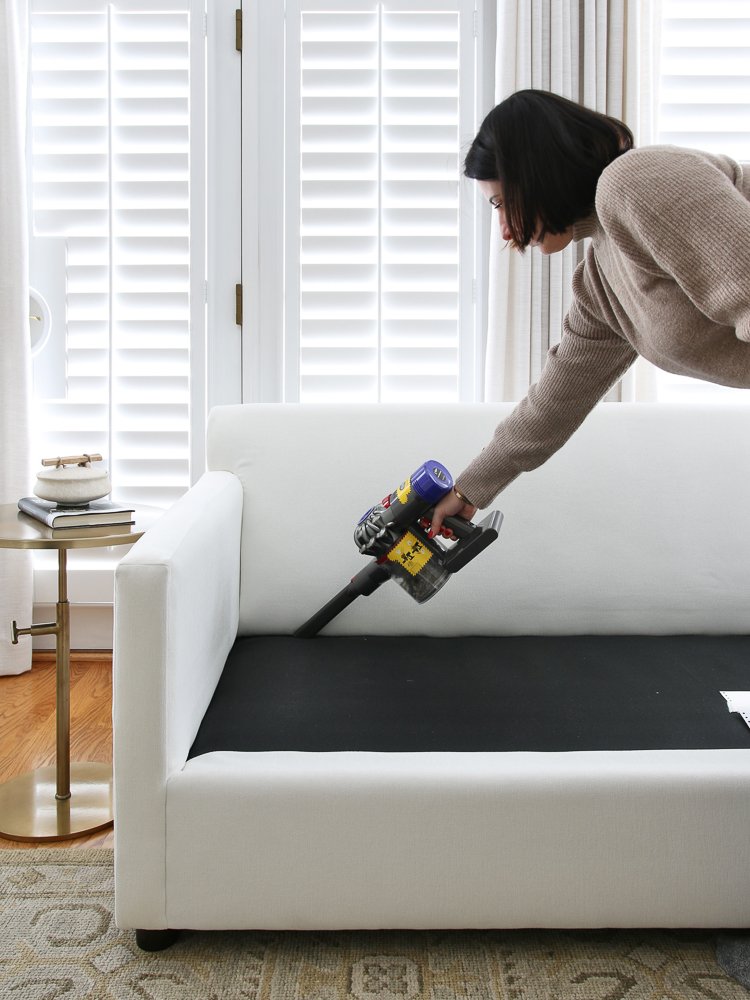
Remove all cushions and vacuum every surface — seat base, back, armrests, underneath cushions, and the cushions themselves on all sides. Use the crevice tool for seams and the upholstery brush attachment for main surfaces. This removes dry debris, pet hair, crumbs, and dust before any liquid is applied. Wet cleaning over loose debris pushes it deeper into the fabric — always vacuum first, every time.
Cleaning by Fabric Type
Polyester and Synthetic Fabric Sofas (W or WS tag)
Mix 1 teaspoon of mild dish soap with 2 cups of cold water in a spray bottle. Spray lightly onto the sofa surface — do not saturate. Blot with a clean white microfiber cloth using firm, straight strokes (never circular, which spreads stains). Work from the outside of any stain inward. Rinse by blotting with a cloth dampened with plain cold water. Dry with a fan or hair dryer on a cool setting. Polyester is one of the most forgiving sofa fabrics — it tolerates water well and dries quickly.
Microfiber Sofas (usually S or WS tag)
Most microfiber sofas have an S or WS code. For S-coded microfiber, do not use water — use rubbing alcohol instead. Pour rubbing alcohol into a spray bottle, lightly mist the dirty area, and scrub gently with a clean white sponge or brush. The alcohol evaporates quickly and lifts oils and dirt without water staining. Once dry, brush the microfiber in one direction with a clean soft brush to restore the nap. For WS-coded microfiber, the dish soap and water method above also works well.
Linen and Cotton Sofas (W tag)
Mix 1 tablespoon white vinegar with 1 tablespoon dish soap and 2 cups of cold water. Apply with a cloth, blotting carefully — do not rub. Linen is prone to watermarks if over-wetted; use a minimal amount of solution and dry quickly with a fan. Never use hot water or a hot dryer on linen — it causes significant shrinkage.
Velvet Sofas (S or WS tag)
Velvet requires special care to avoid crushing the pile. For S-coded velvet, use a dry cleaning solvent sparingly on a cloth — blot, never rub. For WS velvet, lightly mist with cold water and blot with a white cloth. After drying, restore the velvet pile by brushing gently in one direction with a soft velvet brush while the fabric is still slightly damp. Avoid pressing down on velvet when wet — it permanently crushes the pile.
How to Clean Couch Cushions and Foam Cushion Covers
Step 1: Remove Cushion Covers If Possible
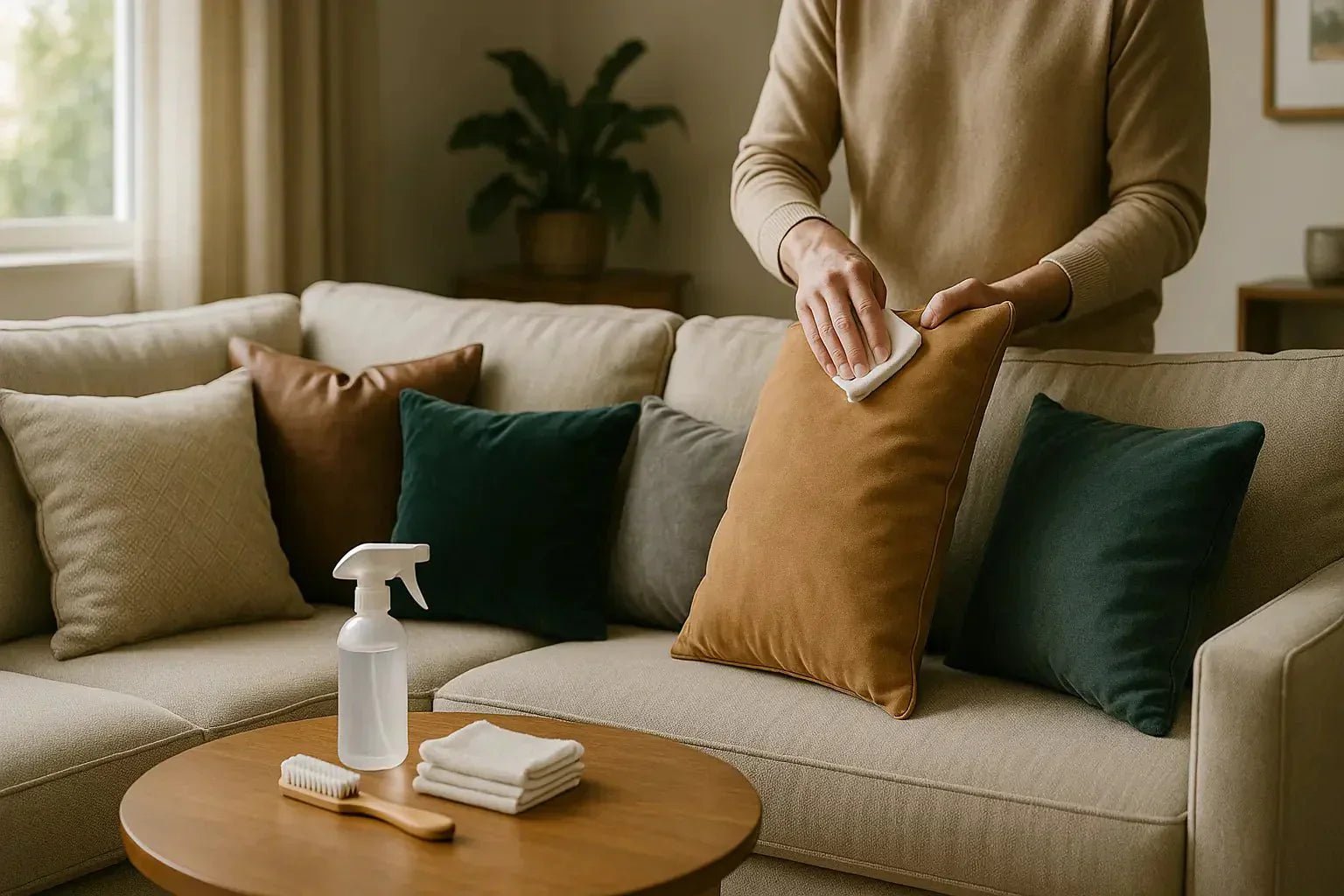
Many sofa cushion covers have zippers and are machine washable. Check the care tag on the cover itself — if it says machine wash, use cold water on a gentle cycle with mild detergent. Air dry flat or tumble dry on low — heat can shrink covers. Do not put foam cushion inserts in the washing machine — they absorb water and become extremely heavy, which can damage the machine and cause the foam to tear.
Step 2: Clean Foam Cushion Inserts
For foam cushion inserts that cannot go in the washer: spot clean with a solution of 1 teaspoon dish soap mixed with 2 cups of water. Apply with a damp cloth, gently pressing the solution into the foam. Rinse by pressing a cloth dampened with plain water into the foam repeatedly. Squeeze (don’t wring) excess moisture out. Stand the foam cushion on its edge in a well-ventilated space to air dry — this can take 24–48 hours. Drying foam flat traps moisture inside, which leads to mildew. A fan directed at the foam dramatically speeds drying time.
Step 3: Deodorize with Baking Soda
Sprinkle baking soda liberally over cushions and the sofa base. Let it sit for 20–30 minutes (or up to several hours for strong odors). Vacuum thoroughly. Baking soda absorbs odors from fabric at a molecular level — it’s the safest and most effective deodorizer for upholstery. For pet odors, let baking soda sit for 2–4 hours before vacuuming.
How to Remove Specific Stains
Urine and Pee Stains (Fresh)
Act immediately — fresh urine is far easier to remove than dried urine. Blot up as much liquid as possible with dry white cloths, pressing firmly. Do not rub — rubbing spreads the stain and pushes it deeper. Mix 1 cup cold water, 1 tablespoon white vinegar, and 1 tablespoon dish soap. Apply to the stain and blot. Follow with a generous application of enzyme cleaner (Nature’s Miracle or OxiClean Odor Blaster) — enzyme cleaners break down the uric acid crystals in urine that cause persistent odor. Allow the enzyme cleaner to sit for 10–15 minutes, then blot dry. Sprinkle baking soda over the damp area and let sit 1 hour, then vacuum. Skip the enzyme step and the odor will return as the area rehumidifies.
Dried Urine Stains
Dried urine is harder — the uric acid has crystallized in the fabric fibers. Rehydrate the stain by dampening with cold water, then apply enzyme cleaner generously. Cover with plastic wrap to prevent evaporation and let sit for 1–2 hours. Remove the plastic, blot up the liquid, and allow to air dry completely. Repeat if the odor persists — dried urine may need 2–3 enzyme treatments to fully eliminate.
Red Wine, Coffee, and Food Stains
Blot immediately to absorb as much as possible. Apply cold sparkling water or club soda to the stain — the carbonation lifts the pigment. Follow with the dish soap solution (1 tsp soap, 2 cups cold water) and blot. For tannin stains (wine, coffee, tea), a paste of baking soda and cold water applied for 5 minutes before blotting helps lift the pigment.
Grease and Oil Stains
Cover the fresh grease stain with cornstarch or baking soda and let sit 15–20 minutes to absorb the oil. Brush off gently. Apply a small amount of dry-cleaning solvent or dish soap directly to the stain with a cloth and blot. Rinse with cold water and blot dry. Do not use hot water on grease — it sets the stain.
Pro Tips and Common Mistakes
- Always blot — never rub: Rubbing spreads stains, frays fabric, and pushes liquids deeper into cushioning. Blotting lifts material upward out of the fiber.
- Cold water only for stains: Hot water sets protein-based stains (urine, blood, egg) permanently. Always use cold or room-temperature water when treating fresh stains.
- Don’t oversaturate the fabric: Excess moisture soaks into foam cushioning and causes mildew. Use the minimum amount of cleaning solution needed — less is always better.
- White cloths only: Colored cloths can transfer dye to light-colored upholstery. Always use clean white microfiber cloths for sofa cleaning.
- Dry completely before using: Damp upholstery compresses differently, attracts more dirt, and can develop mildew if sat on while wet. Ensure full drying before use.
Troubleshooting
The Sofa Has a Ring or Watermark After Cleaning
Watermarks form when cleaning solution dries at the edges of a wet area. To remove: dampen the entire cushion face evenly with clean water (not just the ring area), which prevents a new boundary from forming as it dries. Blot gently and dry quickly with a fan. Feathering the edges of any wet area while cleaning — gradually dampening a wider area than the stain — prevents rings from forming in the first place.
The Odor Returns After the Sofa Dries
Returning odor after drying almost always means an enzyme cleaner was not used — the odor compound (usually uric acid from urine or organic matter) was masked, not broken down. Apply a fresh enzyme cleaner treatment, allow extended dwell time (1–2 hours), and ensure the foam cushioning was also treated, not just the cover.
Frequently Asked Questions
Can I use a steam cleaner on my sofa?
Only on W or WS-coded fabrics. Steam is effective at killing bacteria and lifting deep-set soil but can damage S-coded fabrics, crush velvet, and warp some synthetic finishes. For polyester and linen sofas, steam cleaning is safe and effective. For microfiber, check the tag — many microfiber sofas are S-coded and should not be steamed.
How often should I clean my sofa?
Vacuum weekly. Spot-treat stains immediately as they occur. Deep clean (full wash/treatment) every 6–12 months, or more frequently for households with children or pets.
What is the best sofa cleaner for polyester?
A DIY solution of 1 teaspoon dish soap in 2 cups cold water outperforms most commercial fabric cleaners for polyester. For stubborn stains, a commercial upholstery cleaner like Bissell Fabric Cleaner or Folex Instant Carpet Spot Remover works well on polyester without leaving residue.
How do I get the smell out of a couch?
Sprinkle baking soda over the entire sofa, let sit 2–4 hours, then vacuum thoroughly. For biological odors (urine, vomit, sweat), use an enzyme cleaner before the baking soda treatment. For general musty odors, allow the sofa to air out in a well-ventilated room for 24–48 hours after cleaning.
Can I put couch cushion covers in the washing machine?
If the cover’s care tag says machine washable — yes. Use cold water, gentle cycle, mild detergent. Air dry flat or tumble dry low. Do not put the foam insert in the machine. If the tag says dry clean only, follow that instruction — machine washing a dry-clean-only cover can cause shrinkage, color bleeding, or fabric damage.
Conclusion
Cleaning a sofa successfully comes down to reading the care tag first, using the correct method for your fabric type, blotting rather than rubbing, and using enzyme cleaner for any biological stains. Regular vacuuming and prompt stain treatment keep upholstery looking fresh far longer than any periodic deep clean can restore. For related furniture care, see our guides on How to Clean Vinyl Furniture and How to Clean a Rug.
