
Cleaning a leather sofa correctly keeps the hide supple, prevents cracking, and maintains its color — done wrong, the wrong cleaner strips the protective finish and dries out the leather irreversibly. The good news: leather is one of the easier sofa materials to clean if you use mild soap, warm water, and finish with a conditioner. This guide covers routine cleaning, stain removal, and specific care for white leather and colored leather that shows every mark.
What You’ll Need
- Mild dish soap (a few drops only)
- Distilled or clean warm water
- White microfiber cloths (4–5)
- Soft-bristle brush (for seams)
- Leather conditioner (Leather Honey, Chamberlain’s Leather Milk, or similar)
- Rubbing alcohol (for ink stains — test first)
- White vinegar (for mildew)
- Baking soda (for grease)
- Commercial leather cleaner (optional — Murphy’s Oil Soap works for many leather types)
Safety Precautions
Never use bleach, ammonia, acetone, or saddle soap on furniture leather — these strip the protective finish. Avoid harsh “all-purpose” sprays that contain solvents. Never wet leather and leave it to air dry without conditioning — drying without conditioner causes the natural oils to evaporate, leading to cracking. Always test any cleaner on the inside seam or base of the sofa before applying to visible surfaces. White leather is especially unforgiving — any cleaner that reacts with the dye shows immediately.
Identify Your Leather Type First
Furniture leather falls into three categories that affect cleaning:
- Protected/pigmented leather: The most common type — has a factory-applied coating that makes it durable and spill-resistant. Can be cleaned with mild soap and water. Most sofas sold at furniture retailers are protected leather.
- Aniline/semi-aniline leather: Natural-looking, very soft, with no protective coating. Shows the hide’s natural markings. Extremely sensitive — water spots easily. Requires leather-specific products only, no water-based cleaners.
- Bonded/faux leather: A manufactured leather-look material. Cleans like vinyl — mild soap and water, no conditioner needed.
To test: put a single drop of water on a hidden area. If it beads up and sits, you have protected leather. If it soaks in within seconds, you have aniline leather requiring specialist products.
How to Clean a Leather Sofa Step by Step
Step 1: Dust and Vacuum
Wipe the entire sofa with a dry microfiber cloth to remove surface dust. Vacuum along seams and under cushions with the soft upholstery attachment. Dust on leather, if not removed before wet cleaning, becomes an abrasive paste that scratches the surface finish.
Step 2: Mix Your Cleaning Solution
Add 2–3 drops of mild dish soap to a bowl of warm water — not hot. The solution should be barely sudsy. Dip a clean white microfiber cloth, wring until almost dry. Too much water on leather causes spotting.
Step 3: Wipe in Circular Motions
Working in sections, wipe the leather surface in gentle circular motions with the damp cloth. Do not scrub. Work from the back of the sofa forward, and from the top down. Change to a fresh section of cloth as it picks up dirt. For heavily soiled seams and crevices, use a soft-bristle brush dipped in the solution and scrub gently along the seam direction.
Step 4: Rinse With a Clean Damp Cloth
Wipe the cleaned area with a fresh cloth dampened with plain warm water to remove all soap residue. Soap left on leather dries to a dulling film and can affect the finish long-term. The rinse step is as important as the cleaning step.
Step 5: Dry Gently — No Heat
Buff dry with a clean dry microfiber cloth. Do not use a hair dryer, heat gun, or any direct heat source — heat dries out leather rapidly. Allow to air dry completely at room temperature before applying conditioner.
Step 6: Apply Leather Conditioner
Apply a small amount of leather conditioner to a clean cloth and work it into the leather in circular motions. The conditioner replenishes the natural oils that cleaning removes and prevents the drying and cracking that eventually destroys leather furniture. Let the conditioner absorb for 10–15 minutes, then buff off any excess with a dry cloth. Condition after every cleaning and at minimum twice per year. This single maintenance habit is what separates leather sofas that last 20+ years from those that crack and peel within 5.
Cleaning White Leather Furniture
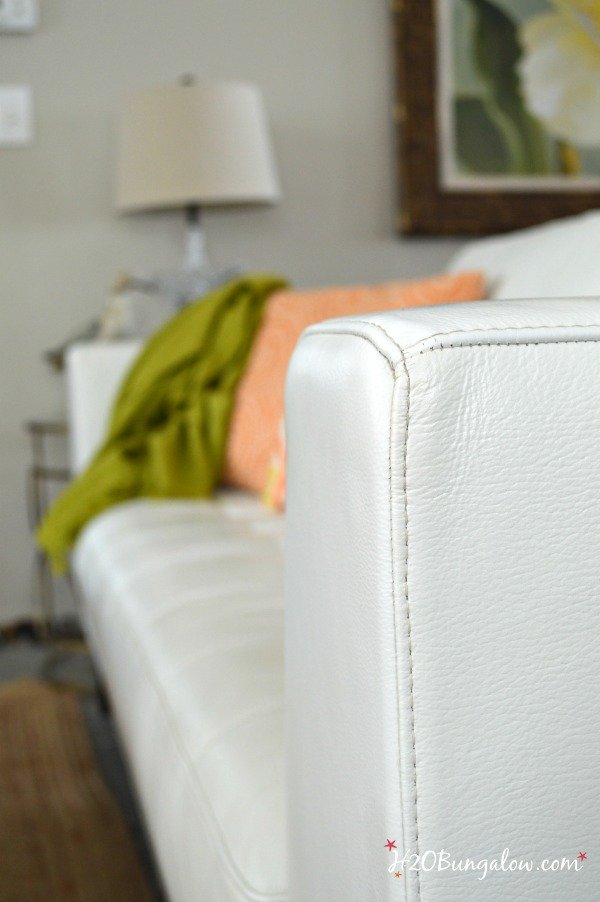
White leather shows every mark, scuff, and dye transfer from clothing or bags. For routine cleaning, the mild soap method above works well. For the yellowing that develops on white leather over time (from body oils and UV), add a small amount of white toothpaste (non-gel, non-whitening) to a damp cloth and rub in circular motions — the gentle abrasive in toothpaste removes yellowed oxidation without damaging the leather finish. Rinse immediately and condition. For denim or clothing dye transfer (the blue rub-off from jeans that’s common on white leather), apply a small amount of rubbing alcohol to a white cloth and dab gently on the transferred dye. Test in a hidden area first — on some white leathers, alcohol can affect the finish. Apply conditioner immediately after any alcohol treatment.
Removing Specific Stains
Ink Stains
Dab — do not rub — with a white cloth moistened with a small amount of rubbing alcohol. Blot repeatedly and rotate to a clean cloth section. Rinse with damp cloth and condition immediately. For ballpoint pen, isopropyl alcohol is highly effective. For permanent marker, professional leather ink remover products are safer than alcohol.
Grease and Oil
Apply a small amount of cornstarch or baking soda directly to the grease spot. Let sit 20–30 minutes to absorb the oil. Wipe off gently. Apply mild soap solution and wipe clean. Do not use dish soap in excess — it can strip leather finish over time. The absorption step is key for grease — applying liquid cleaner to fresh grease spreads it further.
Mildew
Mix equal parts white vinegar and water. Apply to a cloth and wipe the mildewed area. The acetic acid kills mildew spores. Wipe with a plain damp cloth to rinse. Condition immediately after — vinegar is mildly acidic and can dry leather if not followed by conditioner.
Pro Tips and Common Mistakes
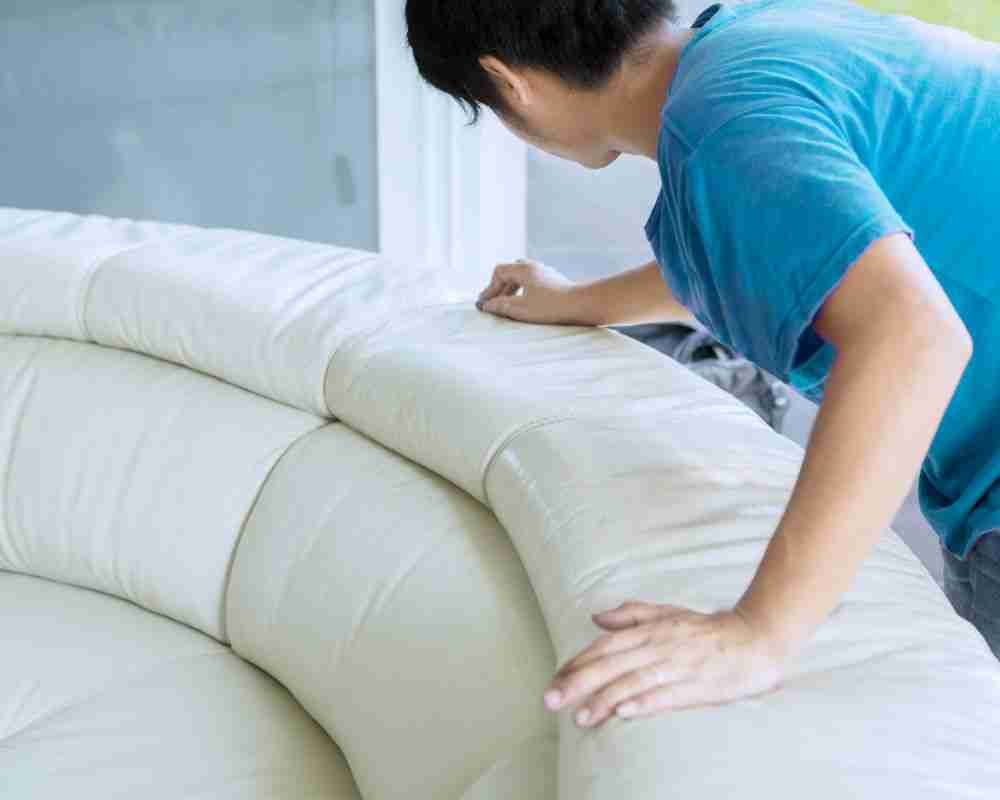
- Condition every time you clean: Every cleaning removes some of leather’s natural oils. Conditioning replaces them. Skipping conditioning after cleaning is the primary cause of premature leather cracking.
- Use distilled water if your tap water is hard: Hard water leaves mineral deposits on leather that dull the finish. Distilled water prevents this.
- Keep leather away from direct sun and heat vents: UV and heat are leather’s biggest enemies. Direct sunlight fades and dries leather rapidly — position sofas away from windows or use UV-blocking window film.
- Blot spills immediately: Leather’s protective coating repels liquids for a short time. Blotting within seconds of a spill prevents most stains from penetrating the finish.
Frequently Asked Questions
How often should I condition my leather sofa?
Condition after every cleaning and at minimum twice per year — once in spring and once in fall. In dry climates or homes with central heating, condition 3–4 times per year. Leather in dry conditions loses moisture faster.
Can I use baby wipes on leather furniture?
Baby wipes work for quick surface cleaning but many contain alcohol, fragrance, or lotion that can dull or streak leather finish over time. For occasional spot cleaning, they’re acceptable. For regular maintenance, mild soap and water followed by conditioning is always preferable.
Why is my leather sofa peeling?
Peeling is almost always bonded leather (faux leather) delaminating — this is a manufacturing failure that cannot be repaired long-term. On genuine leather, what looks like peeling is usually the protective finish coat cracking and flaking from lack of conditioning. A leather repair kit with color-matched pigment and finish restorer can address genuine leather finish peeling.
What is the best way to remove a stain from white leather?
For most stains on white leather: mild soap and warm water first. For dye transfer (jeans, bags): rubbing alcohol dabbed gently. For yellowing: non-gel white toothpaste in circular motions. For any treatment, always follow with leather conditioner immediately.
Conclusion
Cleaning leather furniture is a three-step sequence: clean with mild soap, rinse, condition. The conditioning step is non-negotiable — leather without conditioner dries, cracks, and ages rapidly. Done consistently every few months, these three steps maintain leather furniture in excellent condition for decades. For related furniture care, see our guides on How to Clean a Sofa and How to Clean Vinyl Furniture.
