
Concrete balconies collect dirt, algae, oil stains, rust marks from furniture, and — in shaded or damp conditions — mold and mildew that make the surface slippery and unsightly. The cleaning method depends on what you’re dealing with: general grime and green algae respond to a good scrub with a TSP-substitute solution; oil and rust require targeted treatments; mold needs a diluted bleach solution. Pressure washing speeds up most of these jobs significantly. This guide walks through the complete process.
What You’ll Need
Tools
- Stiff-bristle scrub brush or deck brush with long handle
- Garden hose with spray nozzle
- Pressure washer (optional but highly effective — 1,500–3,000 PSI for concrete)
- Bucket
- Safety glasses and rubber gloves
- Old clothes or protective clothing
Materials
- TSP-substitute (trisodium phosphate substitute, or OxiClean for general cleaning)
- Diluted bleach solution (1 cup bleach per gallon of water) — for mold and mildew
- Concrete degreaser (for oil and grease stains)
- Oxalic acid or rust remover (for rust stains)
- White vinegar (for mild calcium/mineral deposits)
- Concrete sealer (for post-cleaning protection, optional)
Safety and Precautions
- Check below before washing. Water runoff from a balcony falls on whatever is below — neighboring balconies, furniture, pedestrians, or a patio. Cover anything below that could be damaged, or plan the cleaning when the area below is clear.
- Pressure washers on concrete can etch the surface if held too close or on too high a setting. Keep the nozzle at least 8–12 inches from the surface and use a 25–40 degree fan nozzle, never a zero-degree pinpoint nozzle.
- Bleach solutions will discolor or damage plants. Cover any planters or vegetation on or near the balcony before applying bleach solution.
- Wear rubber gloves and safety glasses when working with TSP-substitute, bleach solutions, or chemical stain removers.
- Concrete is slippery when wet — wear rubber-soled shoes and be aware of the increased slip hazard during washing.
Step-by-Step: How to Clean a Concrete Balcony
Step 1 — Clear and Sweep the Balcony
Remove all furniture, planters, rugs, and items from the balcony. Sweep the entire surface thoroughly to remove loose dirt, leaves, and debris. A clean starting surface means the cleaning solution works directly on the stains and grime rather than getting tied up in loose debris. Sweep toward a dustpan rather than toward the drain if possible — large amounts of debris can clog drain screens.
Step 2 — Wet the Entire Surface
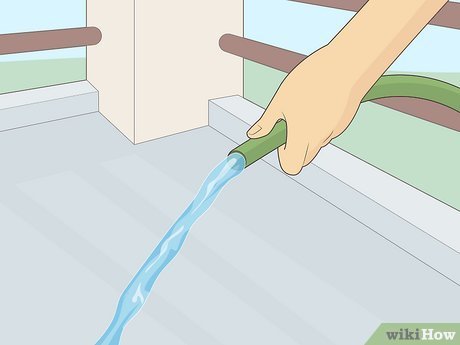
Pre-wet the concrete with a garden hose before applying any cleaning solution. Wetting the concrete prevents the cleaner from soaking into dry pores too quickly and gives it more time to work on the surface stains. A wet concrete surface also produces more visible foam/suds from cleaning products, which helps you track coverage. Start from the far end and work toward the drain or edge to direct water flow.
Step 3 — Apply the General Cleaning Solution
For general dirt, grime, and green algae: mix TSP-substitute (follow package dilution instructions — typically 1/2 cup per gallon of water) or mix OxiClean (2 scoops per gallon of water) in a bucket. Apply generously to the wet concrete surface, starting from the far end and working toward the drain. Allow the solution to sit for 5–10 minutes. This dwell time allows the cleaning agents to penetrate and loosen dirt and algae from the concrete pores.
Step 4 — Scrub with a Deck Brush
Use a stiff-bristle deck brush to scrub the cleaning solution into the concrete surface with firm back-and-forth strokes. Work in sections approximately 4 feet square to maintain control. Pay extra attention to corners, edges near the railing base, and the drain area — these spots accumulate the most grime. Visible green areas (algae) will lighten noticeably as you scrub. Add more cleaning solution to dry areas that absorbed the first application before fully scrubbing.
Step 5 — Treat Mold and Mildew with Bleach Solution
For black, green, or gray mold and mildew: mix 1 cup of household bleach per gallon of water. Apply to the affected areas and allow to sit for 10–15 minutes — the bleach breaks down the mold’s cell structure. Scrub with the deck brush. Do not mix bleach with the TSP-substitute or any other cleaner containing ammonia — the combination produces toxic chloramine gas. Rinse the general cleaning solution off completely before applying bleach to any area.
Step 6 — Remove Oil and Grease Stains
Oil and grease from furniture, grills, or tracked-in residue requires a dedicated concrete degreaser. Apply the degreaser directly to the oil stain, allow it to sit for the time specified on the product label (usually 5–15 minutes), then scrub with a stiff brush. For old, set-in oil stains, cover the stain with an absorbent material (cat litter, baking soda, or commercial oil absorbent), leave overnight to draw oil from the pores, sweep up, then apply degreaser and scrub.
Step 7 — Remove Rust Stains from Metal Furniture
Rust stains on concrete (from metal furniture or planters that sat in standing water) require an acid-based rust remover or oxalic acid cleaner. Apply to the rust stain, allow to sit for the specified time, scrub, and rinse thoroughly. Rinse the area several times after applying oxalic acid or rust remover — acid residue left on concrete continues to react and can weaken the surface over time. CLR (Calcium Lime Rust remover) is effective for mild rust staining; commercial concrete rust removers are needed for severe staining.
Step 8 — Rinse Thoroughly
Once all cleaning and treatment steps are complete, rinse the entire balcony thoroughly with a garden hose or pressure washer, starting from the far end and rinsing toward the drain or balcony edge. Use enough water pressure to flush all cleaning solution residue from the surface and drain. Multiple rinse passes are important — cleaning product residue left on concrete surfaces attracts dirt and can cause white streaking when dry. Rinse until the water running off the surface is clear.
Step 9 — Pressure Wash (If Available)
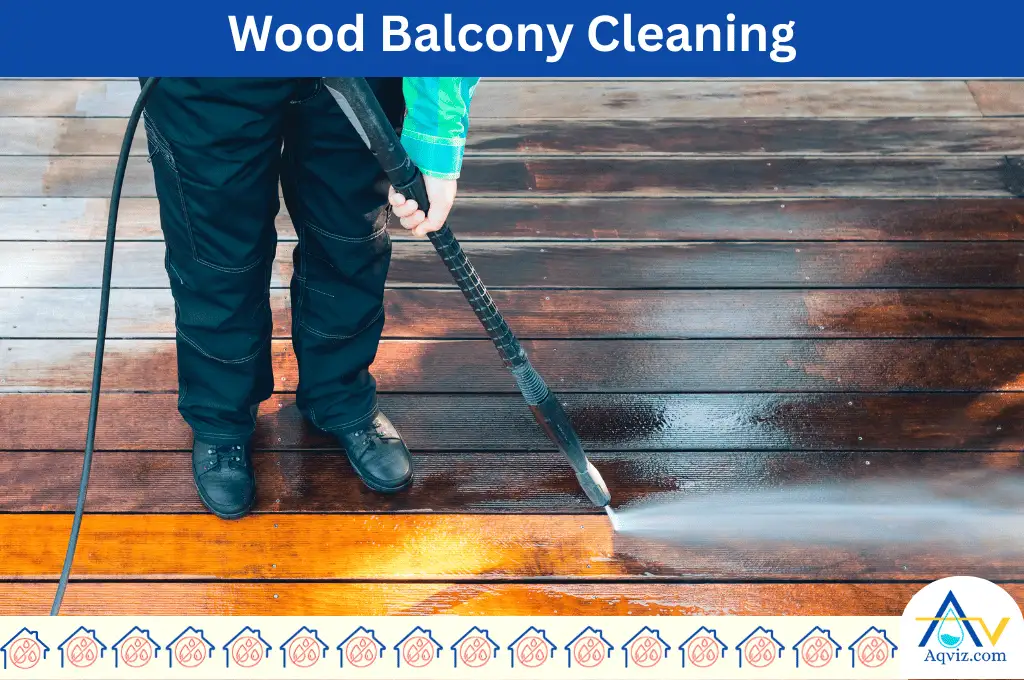
A pressure washer dramatically improves balcony cleaning results by combining water pressure with the cleaning solutions applied in previous steps. Use 1,500–2,500 PSI for standard residential concrete, with a 25-degree fan nozzle held 8–12 inches from the surface. Start at the far corner and work in overlapping passes toward the drain. Do not stop the pressure washer in one spot — keep moving constantly to avoid etching the surface. After a pressure wash rinse, most balcony surfaces look dramatically cleaner even without the scrubbing steps.
Step 10 — Seal the Concrete (Optional)
Once the balcony is clean and fully dry (allow 24–48 hours after washing), apply a concrete sealer to protect the surface from future staining and water penetration. Use a penetrating concrete sealer (silane-siloxane type) appropriate for outdoor concrete and apply per manufacturer’s instructions using a roller or sprayer. A sealed balcony resists oil stains, prevents algae from taking hold in porous surface areas, and is significantly easier to clean at the next maintenance cycle.
Pro Tips for Concrete Balcony Cleaning
- Clean on a cool, overcast day when possible — direct sun causes cleaning solutions to evaporate too quickly before they can work, and makes rinsing harder to time correctly.
- A pressure washer pays for itself on concrete cleaning jobs — even a basic 1,500 PSI electric pressure washer ($100–$150) cuts cleaning time by 60–70% and produces significantly better results on concrete.
- Use rubber feet on all outdoor furniture on your balcony — plastic and rubber feet prevent rust stains from metal furniture legs and reduce the dark marks where furniture contacts wet concrete.
- Clean annually at minimum — spring cleaning removes winter grime and mold buildup; fall cleaning clears leaf tannin stains before winter.
Frequently Asked Questions
Can I use bleach on concrete?
Yes — a diluted bleach solution (1 cup per gallon of water) is safe for concrete and highly effective for mold, mildew, and algae. Full-strength bleach is not recommended — it can discolor some concrete surfaces and is harsh on drain systems. Always rinse thoroughly after bleach application. Never use bleach near plants or on colored/stamped concrete without testing on a hidden area first.
How do I remove green algae from a concrete balcony?
Green algae responds to both bleach solution (most effective) and TSP-substitute or OxiClean solution (more plant-friendly). Apply either solution, allow to dwell for 10–15 minutes, scrub with a stiff deck brush, and rinse thoroughly. For thick algae growth, a pre-rinse with the garden hose to loosen the top layer before applying cleaner improves effectiveness.
What is the best way to clean a concrete balcony without a pressure washer?
Apply TSP-substitute or OxiClean solution, allow to dwell, scrub with a stiff long-handled deck brush, then rinse with a garden hose set to high pressure. Multiple scrub-and-rinse cycles may be needed for heavily soiled concrete. Working in sections (about 4 square feet at a time) and maintaining adequate solution dwell time produces the best results without a pressure washer.
How often should I clean my concrete balcony?
At minimum once a year — ideally twice (spring and fall). In humid climates or shaded north-facing balconies, more frequent cleaning (quarterly) is needed because algae and mold grow significantly faster in those conditions. A sealed balcony may only need annual cleaning; unsealed porous concrete benefits from more frequent treatment.
Can I paint or seal my concrete balcony after cleaning?
Yes — cleaning is the essential first step before any sealing or coating. Wait at least 48 hours after washing for the concrete to fully dry before applying sealer or concrete paint/stain. Applying to a damp surface causes adhesion failures, peeling, and trapping of moisture under the coating. A penetrating sealer is better for outdoor balconies than a film-forming sealer, which can peel when subjected to freeze-thaw cycles.
Conclusion
Cleaning a concrete balcony is a systematic process: clear the surface, wet the concrete, apply the right cleaner for the specific stain (TSP-substitute for general grime, bleach for mold, degreaser for oil, oxalic acid for rust), scrub thoroughly, and rinse completely. A pressure washer makes the job faster; sealing after cleaning dramatically reduces future maintenance effort. An annual or twice-yearly cleaning keeps a concrete balcony looking presentable and prevents the progressive staining and biological growth that becomes much harder to remove over time.
For other outdoor surface cleaning, see our guide on How to Clean Concrete Floors. And for keeping your outdoor space organized, check out our article on How to Build a Backyard Firepit.
