
A cloudy mirror isn’t just dirty — the cloudiness usually comes from a combination of product overspray (hairspray, aerosol deodorant), toothpaste splatter, hard water mineral deposits, and cleaning product residue that was never fully removed. Standard glass cleaner often makes it worse by leaving streaks. The solution is a two-step approach: remove the residue layer with the right cleaner, then achieve a streak-free finish with the right technique and cloth.
What You’ll Need
Tools
- Microfiber cloth (lint-free, clean)
- Newspaper or coffee filters (great streak-free alternatives)
- Spray bottle
- Cotton swabs (for edges and corners)
Materials — Choose Based on the Cloudiness Cause
- Rubbing alcohol (isopropyl, 70% or 91%) — best for hairspray and product residue
- White vinegar — best for water spots and mineral deposits
- Distilled water (mixed with vinegar for streak-free solution)
- Commercial glass cleaner (Windex or similar) — for maintenance after deep clean
- Chalk (for antique foxing cloudiness — see troubleshooting)
Safety and Precautions
- Never spray liquid directly at the mirror edge or the mirror backing — moisture at the edges reaches the backing of the mirror and causes oxidation (black or brown spots called “foxing” or “desilvering”). Always spray onto the cloth, then wipe the mirror.
- Avoid paper towels for final buffing — they leave lint and can scratch some mirror coatings. Use microfiber or newspaper.
- Don’t use abrasive cleaners on mirrors — they permanently scratch the glass surface.
- Ventilate the area when using rubbing alcohol in an enclosed bathroom.
Diagnose the Cloudiness Type
Before cleaning, identify what’s causing the cloudiness. Hairspray/product overspray: Appears as a fine, evenly distributed haze that doesn’t wipe away with a dry cloth. Water spots and mineral deposits: White, roundish spots or a general white film, concentrated near the sink area. Toothpaste splatter: Small white dots scattered across the lower portion of the mirror. Wax or product buildup: A greasy, smeared appearance that streaks when you try to wipe it. Foxing (backing deterioration): Black or brown spots on the glass that appear from behind the mirror — these are not surface dirt and cannot be cleaned away.
Step-by-Step: How to Clean a Cloudy Mirror
Step 1 — Dry Wipe to Remove Loose Dust
Before any wet cleaning, wipe the mirror surface with a dry, clean microfiber cloth to remove loose dust, hair, and dry particles. Cleaning over dust with a wet cloth creates muddy smears that require additional cleaning passes. This quick dry wipe reduces the cleaning steps needed and prevents superficial debris from scratching the glass when you start applying liquid.
Step 2 — Remove Hairspray and Product Residue with Rubbing Alcohol
Hairspray leaves a polymer film on mirrors that water-based cleaners can’t dissolve — it requires a solvent. Dampen a microfiber cloth with rubbing alcohol (70% or 91%) and wipe the entire mirror surface using overlapping circular motions. The alcohol dissolves the hairspray, aerosol deodorant film, and other polymer-based residues instantly. This step often reveals that the cloudiness was almost entirely hairspray-related — the mirror will look dramatically better after this pass alone. Buff dry with a clean, dry section of cloth.
Step 3 — Remove Water Spots and Mineral Deposits with Vinegar
Fill a spray bottle with a solution of equal parts white vinegar and distilled water. Spray onto a clean microfiber cloth (not directly on the mirror). Wipe the entire surface with long, straight strokes — top to bottom or side to side, not circular, to avoid spreading residue back over cleaned areas. For stubborn mineral deposits (white crusty buildup near the bottom of the mirror), apply undiluted white vinegar directly to a cotton swab and rub the specific deposit — allow to sit for a minute before wiping. The acetic acid in vinegar dissolves calcium deposits effectively without any abrasion.
Step 4 — Remove Toothpaste Splatter
Dry toothpaste spots respond to a damp cloth alone — wet the cloth with plain warm water and press it against the toothpaste spot for 10–15 seconds to rehydrate the dried paste, then wipe away. For stubborn toothpaste buildup, add a tiny amount of dish soap to the damp cloth and rub gently, then wipe clean. Never scrub dry toothpaste — dry calcium fluoride is abrasive enough to scratch glass if rubbed with pressure before rehydrating.
Step 5 — Final Streak-Free Polish
After all residue removal steps, finish with a streak-free pass using the right tool. Options: (A) Spray a small amount of glass cleaner onto a dry microfiber cloth and wipe in an S-pattern (top to bottom, side to side) across the full mirror. (B) Crumple newspaper (non-glossy black ink newsprint) into a ball and use it with a small spray of glass cleaner or the vinegar-water solution — newspaper’s texture grabs residue without leaving lint. (C) Coffee filters — same principle as newspaper, lint-free and slightly abrasive enough to polish.
Step 6 — Clean the Edges and Frame
Use a cotton swab dampened with rubbing alcohol to clean the very edges of the mirror glass where it meets the frame. This area collects toothpaste splatter, soap scum, and product residue that is missed by cloth wiping. Clean the mirror frame separately based on its material — wipe wood frames with a barely damp cloth, metal frames with glass cleaner, and plastic frames with a mild all-purpose cleaner.
Step 7 — Buff Dry Immediately
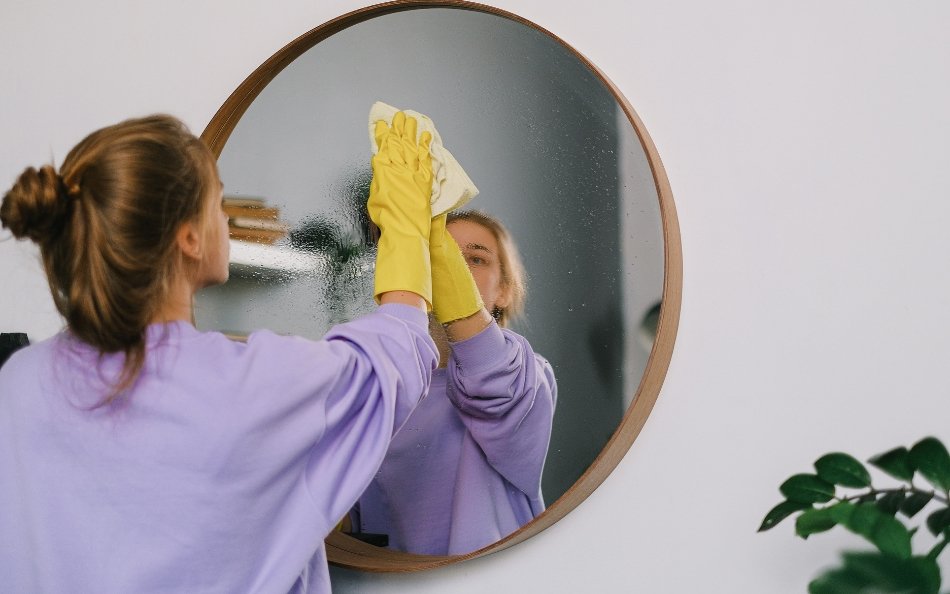
The final step in streak-free mirror cleaning is immediate drying. After any wet cleaning, immediately buff the surface with a clean, dry section of microfiber cloth (or fresh newspaper) before the cleaner can evaporate and leave residue. Use long, straight strokes or an S-pattern, applying slight pressure. The combination of the right cleaner and this immediate dry-buffing step produces the clear, mirror-bright finish that standard cleaning rarely achieves.
Pro Tips for Streak-Free Mirror Cleaning
- Always spray cleaner onto the cloth, never directly onto the mirror. Liquid sprayed directly onto the mirror runs down to the edge and seeps behind the backing, causing oxidation (black spots) over time.
- Clean mirrors in indirect light first to ensure you’re removing all residue, then check in direct light from the side — streaks only visible in raking light show you where a final pass is needed.
- Rubbing alcohol is the best first step for bathroom mirrors specifically, because hairspray and personal care product overspray is almost universally present.
- In hard water areas, a weekly vinegar wipe prevents mineral deposits from building up on bathroom mirrors and eliminates the need for periodic heavy-duty cleaning.
Troubleshooting: Mirror Problems That Aren’t Dirt
- Black or brown spots (foxing): These are permanent backing oxidation — the silver backing layer behind the glass is corroding. Caused by prolonged moisture exposure at the mirror edges. Cannot be cleaned. The mirror needs to be replaced or resilvered professionally.
- Mirror looks clean up close but cloudy from a distance: Usually fine scratches from previous aggressive cleaning. Scratches in mirror glass refract light at an angle, creating a diffuse, cloudy appearance. Cannot be removed without professional glass polishing.
- Yellow or amber tint: Old mirrors can develop a slight yellow cast from the silvering process aging. This is a property of the mirror material, not dirt — cleaning won’t change it.
Frequently Asked Questions
What is the best cleaner for a cloudy mirror?
For bathroom mirrors with hairspray and product buildup: rubbing alcohol (70% or 91%) applied with a microfiber cloth, followed by a vinegar-water solution for final cleaning. For kitchen or living room mirrors without product overspray: a vinegar-water solution (50:50) in a spray bottle is the best streak-free cleaner. Commercial glass cleaner is acceptable for maintenance but often leaves more residue than the vinegar solution.
Why does my mirror streak no matter what I do?
Streaking is almost always caused by one of three things: using a dirty or lint-shedding cloth, not drying the mirror fast enough after cleaning, or leaving traces of the previous cleaning product that the current cleaner isn’t compatible with. Try cleaning with rubbing alcohol first (removes most residues), then dry-buff with a clean microfiber cloth. If still streaking, switch to newspaper for the final buff.
Can I use Windex on a mirror?
Yes — standard glass cleaners like Windex work well for maintenance cleaning once the mirror has been properly deep-cleaned. For a heavily cloudy mirror with product buildup, Windex alone is usually insufficient — start with rubbing alcohol to strip the polymer residue, then follow with Windex or vinegar solution for the streak-free finish.
How do I prevent my bathroom mirror from getting cloudy?
The primary cause of bathroom mirror cloudiness is hairspray, deodorant, and grooming product overspray. Minimizing product use in front of the mirror or turning away from the mirror during spray application significantly reduces buildup. A weekly wipe with a microfiber cloth dampened with rubbing alcohol prevents major accumulation. Using an exhaust fan during shower also reduces steam-related water spotting on the mirror.
Can I use car wax on a mirror to prevent spotting?
Yes — a thin coat of car wax (Rain-X or a standard carnauba wax) buffed onto a clean mirror surface creates a hydrophobic layer that causes water droplets to bead and roll off rather than evaporating and leaving mineral spots. This works best on bathroom mirrors in hard water areas. Buff the wax to clear (no visible residue) and reapply every 1–3 months.
Conclusion
Cleaning a cloudy mirror requires identifying the residue type and using the right solvent: rubbing alcohol for hairspray and product buildup, white vinegar for water spots and minerals, damp cloth for toothpaste. Always spray onto the cloth (never the mirror), buff immediately with a dry microfiber cloth or newspaper, and clean the edges with a cotton swab. Done in sequence, these steps restore any mirror to crystal clarity.
For other bathroom cleaning challenges, see our guide on How to Clean a Bidet. And for keeping your bathroom tile looking great, check out our How to Clean Grout article.
