
Cast iron care is simpler than most people think — and the rules against soap and soaking are more flexible than cast iron folklore suggests. Routine cleaning takes two minutes; recovering a burnt or rusted skillet takes an afternoon. The goal in both cases is the same: remove food debris, dry thoroughly, and protect the seasoning layer that makes cast iron non-stick and rust-resistant. This guide covers both daily maintenance and full burnt-on recovery.
What You’ll Need
For Routine Cleaning
- Stiff nylon scrub brush or chain mail scrubber
- Hot water
- Mild dish soap (optional — it’s fine to use a small amount)
- Paper towel or lint-free cloth
- Neutral oil (flaxseed, vegetable, Crisco, or cast iron seasoning oil)
For Burnt-On Food Recovery
- Coarse kosher salt
- Chain mail scrubber or stiff nylon brush
- Hot water
- Paper towels
- Neutral oil
For Rust Removal and Re-seasoning
- Steel wool or chain mail scrubber
- Dish soap
- Oven
- Oven-safe neutral oil (flaxseed or vegetable shortening)
- Aluminum foil (to line oven rack)
Safety and Precautions
- Cast iron holds heat for a long time — always use oven mitts or a thick dry cloth when handling a cast iron skillet that’s been heated, even after removing it from the burner.
- Never plunge a hot cast iron pan into cold water — thermal shock can crack the iron permanently.
- Cast iron is heavy — a 10-inch skillet weighs 4–5 lbs, a 12-inch weighs 7–8 lbs. Handle carefully, especially when wet.
- When re-seasoning in the oven, the oil will smoke — ensure good ventilation. Wipe away all excess oil before putting in the oven to minimize smoke.
The “Never Use Soap” Myth Explained
The old rule against soap on cast iron came from the era of harsh lye-based soaps that actively stripped seasoning. Modern dish soap (a surfactant, not a lye product) used in small amounts and rinsed quickly is perfectly safe for cast iron’s seasoning layer. The actual rules are: avoid soaking in water, avoid the dishwasher, dry immediately and thoroughly, and re-oil after every wash. A small amount of dish soap used during washing and rinsed off quickly will not harm a well-seasoned cast iron skillet.
Step-by-Step: Routine Cast Iron Cleaning
Step 1 — Clean While Still Warm
The easiest time to clean a cast iron pan is while it’s still warm (not hot). Food residue hasn’t fully bonded to the surface when warm, and water helps loosen it more easily. Let the skillet cool for 5–10 minutes after cooking so it’s warm but not scalding. Run the warm skillet under hot water and scrub with a stiff nylon brush or chain mail scrubber. Use a small amount of mild dish soap if needed for greasy residue — scrub, rinse, and move quickly.
Step 2 — Scrub with Salt for Stubborn Food Residue
For stuck-on food that won’t release with a brush, add a tablespoon of coarse kosher salt to the skillet and scrub with a folded paper towel or a stiff brush. The salt acts as an abrasive that’s aggressive enough to dislodge food but not so hard as to damage the seasoning. This method is especially useful for burnt-on egg or stuck rice residue. After scrubbing, rinse the salt out thoroughly.
Step 3 — Dry Immediately and Completely
This is the most important step in cast iron care. After washing, immediately dry the skillet with a paper towel or cloth towel — remove all visible water. Then place the skillet on a stove burner over low heat for 2–3 minutes to evaporate any residual moisture in the metal’s pores. Cast iron is porous at a microscopic level and retains moisture that causes rust if not fully dried. The stovetop drying step is what separates rust-free well-maintained cast iron from rust-spotted neglected cast iron.
Step 4 — Apply a Thin Coat of Oil
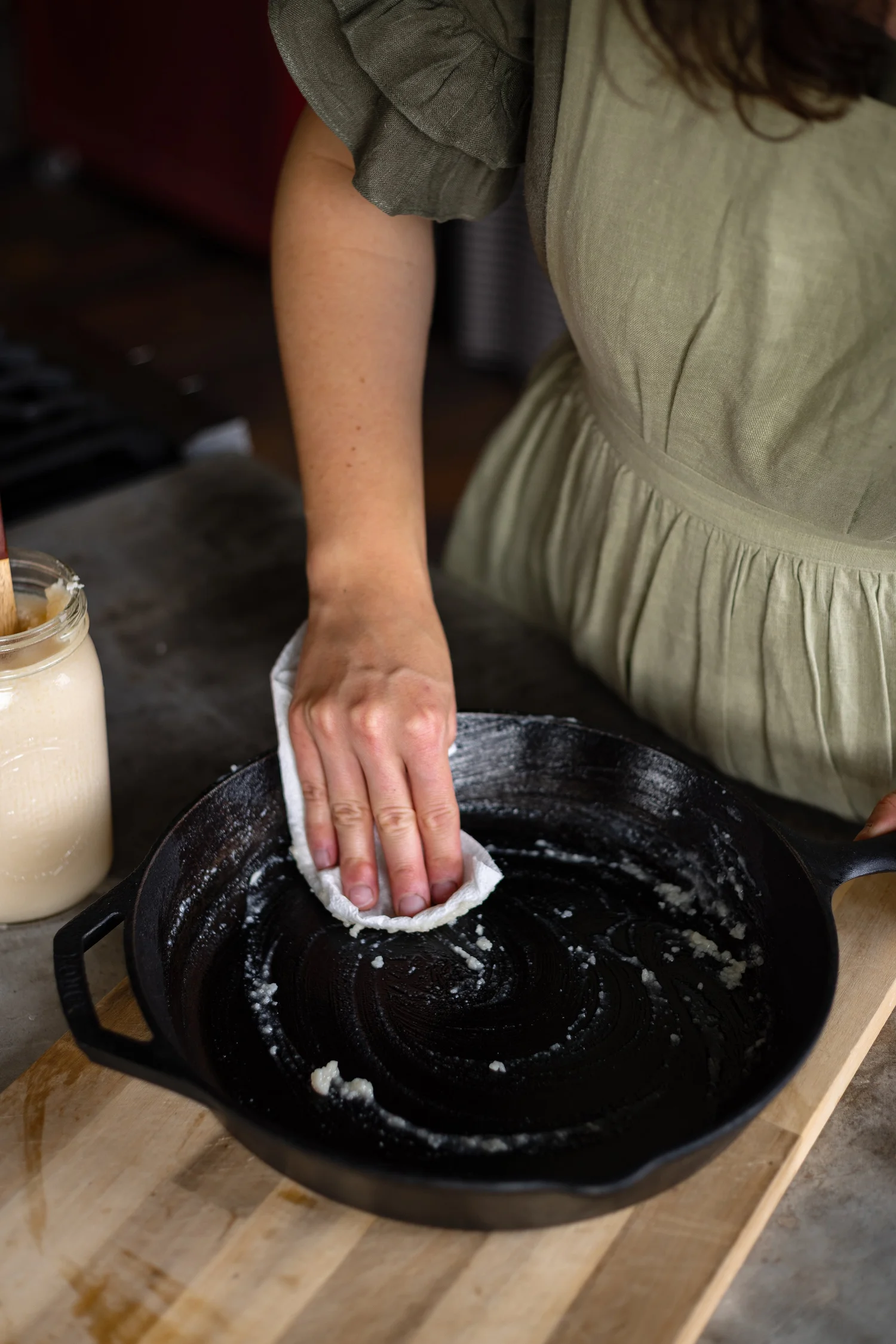
While the skillet is still warm from stovetop drying, apply a thin coat of neutral oil — a few drops on a paper towel. Rub the oil over the entire cooking surface, sides, and bottom. Then wipe it back almost completely with a fresh, dry paper towel — you want the thinnest possible film, not a visible oil coating. Too much oil causes a sticky, rancid seasoning layer. The thin film left behind maintains the seasoning and prevents rust during storage.
Step 5 — Store Properly
Store cast iron in a dry location. If stacking cast iron pans, place a paper towel between them to absorb any residual moisture and prevent metal-on-metal contact that can damage the seasoning surface. Avoid storing with lids on — trapped moisture promotes rust. A hook on a kitchen wall is an ideal storage method — the skillet stays dry and ready to use.
Step-by-Step: How to Clean a Burnt Cast Iron Skillet
Step 1 — Boil Water in the Skillet
For severely burnt-on food, fill the skillet with 1–2 inches of water and bring it to a boil on the stovetop. The boiling water lifts and loosens burnt residue through steam and heat action. Use a wooden spoon or spatula to gently scrape the bottom as the water boils — the loosened burnt bits will release and float in the water. Pour out the blackened water carefully.
Step 2 — Scrub with Chain Mail and Salt
After the boiling water loosens the worst of the burnt material, add coarse kosher salt to the still-warm skillet and scrub aggressively with a chain mail scrubber or stiff nylon brush. Chain mail is the most effective tool for removing burnt-on residue from cast iron — it’s aggressive enough for the toughest burnt carbon but won’t damage the underlying metal. Continue scrubbing and rinsing until the skillet bottom feels smooth (no crunchy burnt spots remaining).
Step 3 — Oven-Bake for Extremely Stubborn Burns (Nuclear Option)
If boiling and scrubbing haven’t fully removed the burnt residue, place the skillet upside down in a 500°F oven for one hour. The extreme heat burns off remaining carbonized residue, reducing it to ash that can be easily wiped away. Allow the skillet to cool completely in the oven before removing. Scrub off the ash residue and re-season (see next section). This method removes almost anything — it’s the same principle as an oven’s self-clean cycle.
Step 4 — Re-Season After Deep Cleaning
After any aggressive cleaning (boiling, salt scrubbing, oven baking), the seasoning will be depleted and the surface may look dull or have gray patches. Re-season before using: preheat your oven to 450–500°F. Dry the skillet completely on the stovetop. Apply a very thin coat of neutral oil (flaxseed or vegetable shortening) over the entire surface — cooking surface, sides, bottom, and handle. Wipe away almost all of it with a dry paper towel (thin is key). Place the skillet upside down in the oven on a middle rack, with aluminum foil on the lower rack to catch drips. Bake for one hour. Turn off the oven and allow the skillet to cool inside. Repeat 2–3 times for best results.
How to Remove Rust from Cast Iron
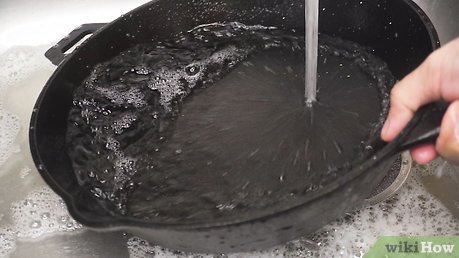
Rust on cast iron is completely repairable. Scrub the rust spots with steel wool and dish soap — this is the one time where aggressive scrubbing with soap is appropriate. Wash off all rust residue, rinse, and dry immediately on the stovetop. The surface may look raw and gray — that’s normal; all the old seasoning has been removed. Re-season following the same process described in Step 4 above (three rounds of thin oil coats baked at 450–500°F) to rebuild the protection layer.
Pro Tips for Cast Iron Care
- Flaxseed oil builds the hardest, most durable seasoning layer of any oil — but must be applied in extremely thin coats (one or two drops per coat) to avoid sticky polymerization problems.
- Cooking with oil or fat is the best ongoing seasoning maintenance — cooking bacon, fried chicken, or sautéed vegetables in oil builds seasoning passively with every use.
- Acidic foods (tomatoes, citrus, wine) in cast iron should be kept brief — extended cooking of highly acidic foods can strip seasoning and sometimes impart a metallic taste to the food.
- A well-seasoned skillet is nearly non-stick — if eggs are sticking, the skillet needs more seasoning (more uses with oil or another seasoning round in the oven).
Frequently Asked Questions
Can I use soap on cast iron?
Yes — modern dish soap in small amounts used briefly will not harm a well-seasoned cast iron skillet. The key is rinsing quickly, drying immediately, and re-oiling after each wash. The concern about soap was valid for old lye-based soaps (which could strip iron seasoning), but modern surfactant-based dish soaps are much milder.
How do I fix a sticky cast iron skillet?
Stickiness is caused by too much oil applied during seasoning — excess oil polymerizes into a gummy layer rather than bonding as smooth seasoning. Fix it by scrubbing the surface with coarse salt and a stiff brush (to remove the sticky residue), then re-season with an extremely thin oil coat (barely visible on the surface). The key is the thinnest possible application of oil, then fully baking it off in a hot oven.
How do I know when cast iron needs to be re-seasoned?
Signs that re-seasoning is needed: food sticking more than usual, visible rust spots, gray or dull surface color (vs. the deep black of well-seasoned iron), rough texture when running your finger across the surface, or visible flaking of old seasoning. Any of these signals the need for a re-seasoning round.
Is cast iron safe to use if it has a little rust?
Small surface rust spots are safe — rust on cast iron is iron oxide, not toxic. Scrub off the rust with steel wool, re-season, and the skillet is fully usable again. Extensive rust penetrating deeply into pitting may indicate the skillet is at end of life, but even seriously rusted vintage cast iron is often worth the restoration effort — the metal itself is extremely durable.
Can I put cast iron in the dishwasher?
Never. Dishwashers use harsh detergents and extended hot water exposure that strips all seasoning and causes immediate rust. Cast iron must always be hand-washed, dried immediately, and re-oiled. A single dishwasher cycle can undo months of carefully built seasoning.
Conclusion
Cast iron cleaning is fast when done right: clean while warm, scrub with a brush or salt, dry immediately on the stovetop, apply the thinnest possible coat of oil. For burnt-on messes, boil water, scrub with chain mail and salt, and re-season. For rust, scrub aggressively with steel wool, rinse, dry, and re-season. The entire daily routine takes two minutes; full recovery from severe burns or rust takes an afternoon but leaves the skillet as good as new.
For more home cleaning guides, see our article on How to Clean a Cloudy Mirror. And for deep cleaning your kitchen floor, check our guide on How to Clean Tile Grout.
