
A DIY backyard smokehouse doesn’t have to be a major construction project. A simple cold-smoking shed — essentially a small enclosed structure with a damper-controlled vent at the top and a firebox separate from the main chamber — can be built from 2×4 framing and exterior plywood for $200–$500. More permanent brick or cinderblock smokehouses are the traditional approach and last indefinitely. This guide covers both the simple wood-frame option and the traditional masonry approach.
What You’ll Need
For a Wood-Frame Smokehouse (4×4 feet)
- Pressure-treated 4×4 posts: 4 pieces at 7 feet
- 2×4 framing lumber: 20 pieces at 8 feet
- 7/16-inch OSB or exterior-grade plywood: 6 sheets
- Corrugated metal roofing: 2 sheets
- Stainless steel hanging rods or hardwood dowels (for hanging meat)
- Damper vent assembly (chimney cap and adjustable damper)
- Heavy-duty door hinges and latch
- Concrete deck blocks: 4 (for foundation)
- 3-inch exterior screws (1 box)
For the Firebox (External Cold-Smoke Design)
- Cinderblocks or firebricks: 30–40 blocks
- Mortar or fire-rated mortar mix
- 4-inch stovepipe: 10–15 feet
- Stovepipe elbow fittings
Safety and Precautions
- Site the smokehouse at least 15–20 feet from any building, fence, or combustible structure. A smoking fire is a sustained heat source — clearance is essential.
- A cold-smoking setup (separate firebox connected by a pipe) is safer than a hot-smoking chamber where the fire burns directly inside the structure. This guide uses a cold-smoke design with an external firebox.
- Check local ordinances regarding open burning and smoke regulations — some areas prohibit open-fire cooking outside designated areas.
- Never use pressure-treated lumber inside the smokehouse where it will be exposed to smoke that contacts food. Use only untreated cedar, hardwood, or stainless steel for interior surfaces.
- Food safety: Smoking is a cooking and preservation process that requires correct temperatures for food safety. Follow USDA guidelines for internal temperatures when smoking meats.
Understanding Smokehouse Design: Cold Smoke vs. Hot Smoke
Cold smoking keeps the chamber temperature below 90°F — used for curing and flavor (smoked salmon, prosciutto, bacon, smoked cheese). The fire/smoke source is in a separate firebox 10–15 feet from the chamber; the smoke cools as it travels through the pipe. Hot smoking maintains 165–275°F inside the chamber — used to fully cook meat (ribs, brisket, sausage). This guide builds a cold-smoke chamber with a separate firebox that can also be used for hot smoking by shortening the pipe run and using a smaller firebox.
Step-by-Step: How to Build a Wood-Frame Smokehouse
Step 1 — Choose the Location
Select a location at least 15–20 feet from any building, deck, or fence. The site should be relatively level. For a cold-smoke setup, plan for the external firebox to be 10–15 feet uphill or upwind from the chamber — this ensures smoke flows toward the chamber. Place the smokehouse with the firebox on the prevailing downwind side of the chamber so smoke is pushed into the chamber naturally by wind.
Step 2 — Build the Foundation Platform
Set four concrete deck blocks at the corners of a 4×4 foot footprint. Level all four blocks. Build a 4×4 foot pressure-treated floor frame from 2×6 lumber and set it on the deck blocks. Check for level across the frame. The floor frame should have interior joist support to handle the weight of loaded hanging rods (a full load of hanging meat can exceed 200 lbs). Cover the floor frame with 3/4-inch exterior plywood.
Step 3 — Frame the Walls
Build four wall sections from 2×4 framing at 7 feet tall. The front wall includes a door rough opening sized for a 24-inch door. The rear wall includes a 4-inch knockout for the incoming smoke pipe connection at low level (approximately 6 inches above the floor). Frame a 4-inch vent opening at the top of the rear wall for smoke exhaust. Tilt each wall up and nail to the floor platform. Connect the walls at each corner.
Step 4 — Add the Roof
Install a simple lean-to style roof (sloped in one direction) or a gable roof over the smokehouse frame. A lean-to (shed) roof is simpler: cut two different-height side walls to create the slope, add a top plate, and run rafters from the high side to the low side. Cover with OSB sheathing and corrugated metal roofing panels screwed to the sheathing. Install a chimney damper vent at the high side of the roof (or at the top of the rear wall just below the roofline) to control smoke draft.
Step 5 — Sheathe and Seal the Exterior
Cover all four walls with 7/16-inch OSB or exterior plywood, nailing at 6-inch intervals at edges. The smokehouse must be fairly airtight — gaps allow smoke to escape rather than filling the chamber. Seal all panel joints with exterior caulk. The bottom edge of the wall sheathing should close out on the floor platform with no visible gaps. Install the smoke inlet pipe fitting in the rear wall hole at floor level.
Step 6 — Install the Interior Hanging Rods
Install two or three rows of hanging rods inside the chamber at different heights. Use hardwood dowels (hickory or oak) or stainless steel pipe sized 1 to 1-1/4 inches in diameter, resting in notches cut into 2×4 wall cleats. The rods should be removable for cleaning. Space rows 18–24 inches apart vertically. Position hooks or S-hooks on the rods for hanging meat. Never use galvanized metal rods or fittings inside the chamber — the zinc coating outgasses toxic fumes under heat. Use stainless steel or hardwood only.
Step 7 — Build and Hang the Door
Build a tight-fitting door from 1×6 boards assembled with horizontal braces. The door must fit snugly — a smoky, leaking door wastes smoke and reduces temperature control. Weather-strip the door frame before hanging. Install with heavy-duty exterior hinges and a positive-locking latch. Install a small adjustable vent at the bottom of the door for controlling airflow into the chamber (more air = more combustion = more smoke flow; less air = slower smolder = denser smoke).
Step 8 — Build the External Firebox
Build a small firebox 10–15 feet from the smokehouse. A simple firebox can be built from cinderblocks stacked into a 2×2-foot enclosure with an open top and a metal grate inside. Mortar the blocks together with fire-rated mortar. Connect the firebox to the smokehouse with 4-inch stovepipe buried slightly below grade or run at ground level, rising to connect to the smokehouse’s low-level smoke inlet. The sloped pipe run (rising from firebox toward the chamber) helps draw smoke by convection. An access door on the firebox allows you to add wood chips and regulate the burn.
Step 9 — Seal and Test the System
Check all pipe connections for smoke-tight joints and seal with high-temperature silicone or pipe collar sealant where needed. Run a small test fire in the firebox and check that smoke flows through the pipe and enters the chamber correctly. Adjust the chimney damper (partially open) and the door vent to find the airflow balance that fills the chamber with a slow, steady flow of cool smoke. The chamber temperature at meat level should be measurable with a thermometer hung inside.
Pro Tips for Smokehouse Building
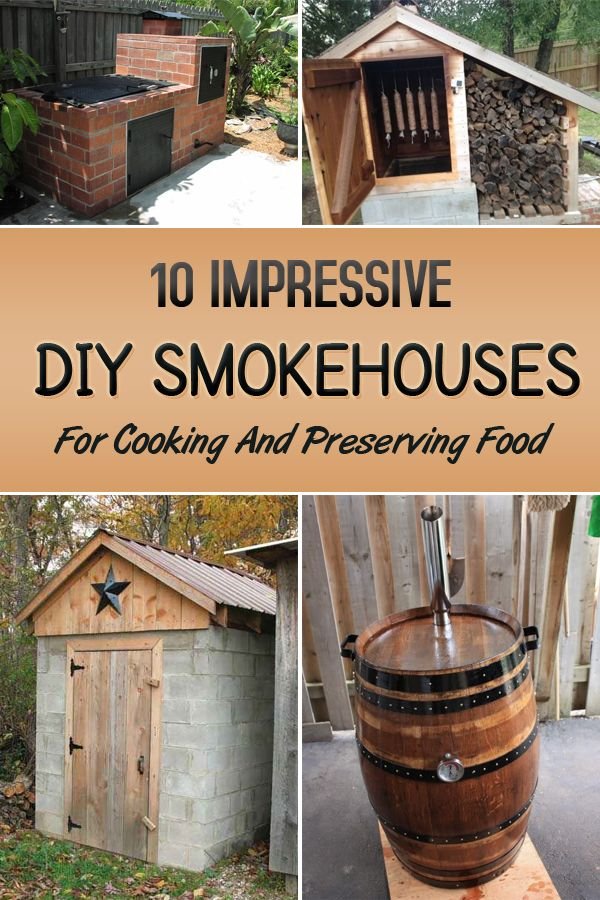
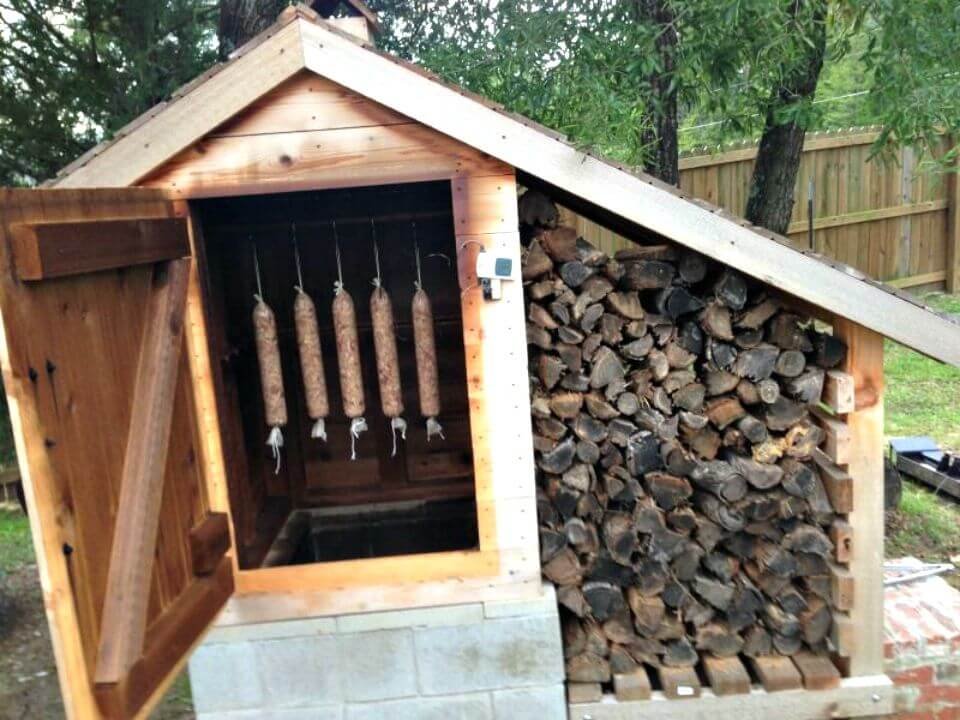
- Use dense hardwoods for smoking — hickory, oak, apple, cherry, and mesquite produce the best smoking flavors. Avoid softwoods (pine, cedar) entirely for food smoking — they contain resins that produce bitter, acrid smoke.
- A thermometer is essential. Install a dial thermometer at chamber height to monitor temperatures during use.
- Longer smoke runs = cooler smoke. For cold smoking, a 15-foot pipe run from firebox to chamber will cool the smoke significantly more than a 5-foot run. Add length if you find chamber temperatures rising too high.
- Season the smokehouse before first meat use by running two or three fires with no food inside — this builds up a protective smoke-resin coating on the interior walls that prevents moisture infiltration and improves smoking results.
Frequently Asked Questions
What size should a smokehouse be?
A 4×4 foot, 7-foot-tall smokehouse is adequate for most home users — it can hold 100–200 lbs of hanging meat. A 6×6 or 6×8 foot smokehouse is more comfortable to work in and can process a whole hog. The height matters: 7–8 feet of interior height allows for multiple hanging levels and keeps the smoke zone well above the fire zone.
What wood is best to build a smokehouse from?
Cedar is the traditional choice for smokehouse framing and interior surfaces — it’s naturally antimicrobial, resists moisture, and doesn’t impart off-flavors to the smoke environment. Rough-sawn oak is another traditional option. Use only untreated wood for any interior surface — pressure-treated lumber contains chemicals that are harmful in contact with food smoke.
Can I use a smokehouse year-round?
Yes — in fact, cold weather is ideal for cold smoking, as it’s easier to maintain low smoke temperatures when ambient temperatures are below 50°F. In hot summer weather, cold smoking requires more care to keep the chamber below 90°F. Hot smoking can be done year-round with firebox adjustment for temperature control.
Do I need a permit to build a smokehouse?
Requirements vary by location. A small wood-frame smokehouse under 120 square feet typically doesn’t require a building permit, but check your local codes. Open burning restrictions may apply to the firebox operation — check with your local fire department or municipality regarding burning regulations in your area.
How do I control the temperature in a smokehouse?
Temperature control comes from three adjustments: (1) size of the fire in the firebox — larger fire = more heat; (2) chimney damper position — more open = more draft = more airflow = higher combustion rate; (3) door vent position — controls air intake. Cold smoking requires a very small, smoldering fire; hot smoking uses a larger, more active fire. A dial thermometer hung at meat height gives you real-time feedback for adjustment.
Conclusion
Building a backyard smokehouse is a rewarding weekend project that combines carpentry skills with food culture. Frame a tight, well-ventilated chamber, build a separate external firebox connected by stovepipe, install stainless steel or hardwood hanging rods, and season the chamber before first use. Done correctly, a DIY smokehouse produces professional-quality smoked meats, fish, and cheese at a fraction of the cost of commercial smoking services.
For other functional outdoor structures, see our guide on How to Build a Greenhouse — a similar build approach applied to growing. And for protecting your outdoor property, check out How to Build a Wood Fence.
